
Tabelog 100 #33
Our verdict
Karma gives Mito a serious Indian-curry address without moving into the city’s higher-spend dining tier. Its Tabelog 100 Asian and Ethnic EAST selections in 2022, 2023, and 2024 matter because they place a modest Ibaraki curry room inside a regional conversation usually dominated by bigger urban markets.

Pearl is the En Primeur Club membership app — saves, bookings, and concierge access live there. Same editors, same standards.
- Address
- 2 Chome-8-10 Central, Mito, Ibaraki 310-0805, Japan
- Phone
- +81 29-232-3213
- Hours
- Mon 11:30 AM–2 PMTue ClosedWed 11:30 AM–2 PMThu–Fri 11:30 AM–2 PM, 5:30–10 PMSat 5:30–10 PMSun 11:30 AM–2 PM, 5:30–10 PM
- Website
- s.tabelog.com
- Directions
- Get directions
The menu
What to order
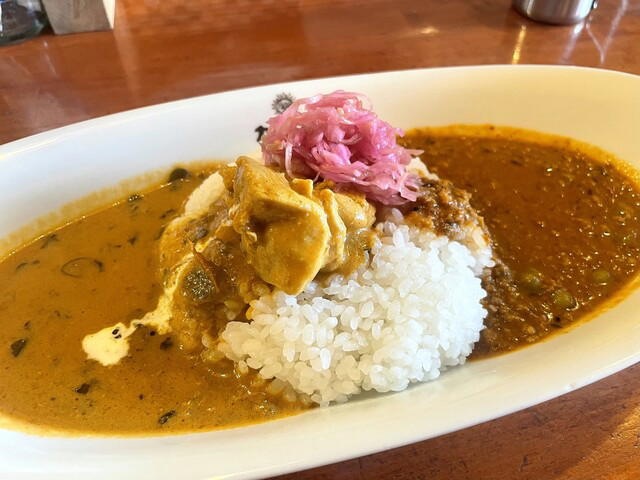
- Creamy egg curry
- Spicy South Indian curry
- Homemade chapati
- Chai
The approach is not the polished theatre of a capital-city dining room. Karma belongs to the quieter Mito mode: a focused Indian-curry address that reads as everyday at first glance, then gains weight through consistency. In regional Japan, that distinction matters. Ethnic-cuisine lists often skew toward larger dining markets; Karma appearing in Tabelog’s Hyakumeiten recognition in 2024 signals that this is not just a convenient curry stop, but part of a wider standard for specialist cooking.
The more interesting story is sourcing by implication rather than slogan. Indian curry in Japan has split into several lanes: quick lunch curry-rice, set-meal formats, spice cooking adapted to local habits, and hybrid rooms where Japanese rice culture quietly shapes the meal. Karma sits in the Indian and Indian-curry category, and that category is where ingredient judgment carries the dish. The cooking has to make sense for weekday lunch as much as dinner, so spice handling, rice quality, oil control, and vegetable freshness do more work than luxury cues. That is a different kind of seriousness from tasting-menu ambition, and Mito is a useful city in which to see it clearly.
Regional Indian curry judged on repetition, not spectacle
Japan’s strongest curry rooms often win loyalty through repeatability rather than novelty. The dish has to land at lunch, dinner, and on a simple everyday meal with the same command. Karma’s recognition by Tabelog’s Hyakumeiten program places it in a curated field, but the format remains grounded: Indian curry, a listed lunch and dinner budget of JPY 1,000–JPY 1,999, and a restaurant identity scaled around regular use rather than destination ceremony.
That balance separates it from some of Mito’s other dining choices. Agni also sits in the city’s Indian conversation, while marcador occupies a different local lane. Kimura Ya Honten points toward another everyday part of the city’s restaurant map, and Shirakawa represents a separate kind of occasion. Karma’s appeal is narrower and cleaner: it treats curry as the main argument, not as a supporting act inside a broader dining concept.
Ingredient sourcing is rarely visible in curry through named farms or luxury labels; it shows through structure. A curry room working at this price band has little room for camouflage. If onions are rushed, spice tastes raw. If rice is treated as filler, the plate collapses. If heat is used as blunt force, the meal loses depth. The 2024 recognition matters because it points to fundamentals that have held under public scrutiny, which is the mark of a kitchen built around routine discipline rather than a single photogenic plate.
Mito's low-key dining culture gives the curry more context
Mito does not sell dining with the intensity of Tokyo. Its restaurant culture is more practical, with everyday meals, local regulars, business lunches, and small specialist rooms doing much of the work. In that setting, ethnic cuisine has to earn trust through utility. It cannot rely only on novelty. Karma fits that local rhythm because the format works when curry itself is the reason for the visit, and the experience reads closer to a specialist meal than a broad all-purpose night out.
This is also where the city comparison becomes useful. Mito’s dining range is not thin; it is spread across different purposes. For other restaurants in the city, Our full Mito restaurants guide gives the broader map, while travellers building a longer stay can cross-check Our full Mito hotels guide, Our full Mito bars guide, Our full Mito wineries guide, and Our full Mito experiences guide. Those categories matter because Mito rewards planning by occasion: curry for an efficient meal, casual formats for group eating, and higher-spend restaurants when the evening is the point.
Within Japan’s broader casual-dining field, Karma also connects to a national pattern of single-specialty rooms carrying more authority than their price suggests. That pattern appears across cuisines and cities, including other modest restaurants where the central dish has to justify the visit on its own. The lesson is consistent: modest pricing does not mean casual execution. It means the margin for error is smaller.
How to read the room before choosing it
Karma is better understood as a focused curry address than a broad night-out restaurant. The decision is less about ceremony than about whether Indian curry is the meal you want. That makes it well suited to diners who value clarity: a defined category, a practical budget, and a reputation anchored by Tabelog’s 2024 Hyakumeiten recognition. For solo travellers, pairs, or small groups, the appeal is the same basic proposition: come for curry, not for a sprawling menu concept.
The strongest reason to choose it is editorial rather than decorative: Mito has a curry room with recognition in a category where consistency, spice balance, and ingredient handling are exposed. For a traveller passing through Mito, that is a sharper proposition than chasing a generic “local favourite.” For wider Japan planning, the same specialist logic applies across formats, where focused rooms often make more sense when read by category discipline than by scale.
Frequently asked questions
Does Karma work for a family meal?
It can, if the group is comfortable choosing a focused Indian-curry restaurant rather than a large all-purpose family restaurant. The appeal is the clear curry format and practical budget.
Is Karma better for a quiet night or a lively one?
It suits a straightforward curry meal more naturally than a big night out. The Tabelog Hyakumeiten 2024 listing signals recognition, but the main reason to go is the focused Indian and Indian-curry format.
How much does it cost to eat at Karma?
Pricing at Karma is listed as dinner: JPY 1,000 - JPY 1,999; lunch: JPY 1,000 - JPY 1,999.
Is Karma open every day?
Check the latest opening schedule directly with the restaurant before going. Karma is in Mito.
Comparison Snapshot
Comparable venues by cuisine and price in the same metro.
| Venue | Cuisine | Price | Awards | Notes |
|---|---|---|---|---|
| KarmaThis venue — the venue you are viewing | Indian curry house | $10–20 | Tabelog 100 #33 | Not listed |
| Agni | Sichuan & Chinese Dining Bar with Japanese-Western Influences | $10–20 | Tabelog 100 #74 | Mito |
| Kimura Ya Honten | Traditional Japanese wagashi shop | $1–10 | Tabelog 100 #72 | Minamimachi |
| Ogura Ya | Japanese Traditional Sweets | $1–10 | Tabelog 100 #85 | Mito |
| Taverna Hamburg | Italian-inflected hamburg steak & meat house | Not listed | Tabelog 100 #43 | Mito |
| Koji Koji | Sri Lankan | Not listed | Tabelog 100 #47 | Akatsuka |
Recognition history
Dated appearances from independent guides and award organizations, with the underlying list record or original source where available.
Tabelog 100 #33 · No. 33
Tabelog · Tabelog 100 - Asian cuisine / Ethnic cuisine - EAST - 2024
Continue exploring
More in Mito
Details
- Cozy
- Lively
- Casual Hangout
- Family
- Solo
- Group Dining
- Standalone
- A La Carte
- Set Menu
- Tea
- Vegetarian Friendly
Current opening hours
- Monday
- 11:30 AM–2 PM
- Tuesday
- Closed
- Wednesday
- 11:30 AM–2 PM
- Thursday
- 11:30 AM–2 PM, 5:30–10 PM
- Friday
- 11:30 AM–2 PM, 5:30–10 PM
- Saturday
- 5:30–10 PM
- Sunday
- 11:30 AM–2 PM, 5:30–10 PM
Hours can change for holidays and private events. Last verified .