Indian food in Beppu's Kannawa district occupies a specific niche: a counterpoint to the city's predominantly Japanese dining scene, arriving in a neighbourhood already defined by sulphurous steam and outdoor cooking traditions. Avatar Indian Restaurant in Kannawa sits within that context, offering a departure from kaiseki and ramen for visitors spending time around the hot spring clusters of northern Beppu.
 Discover on Pearl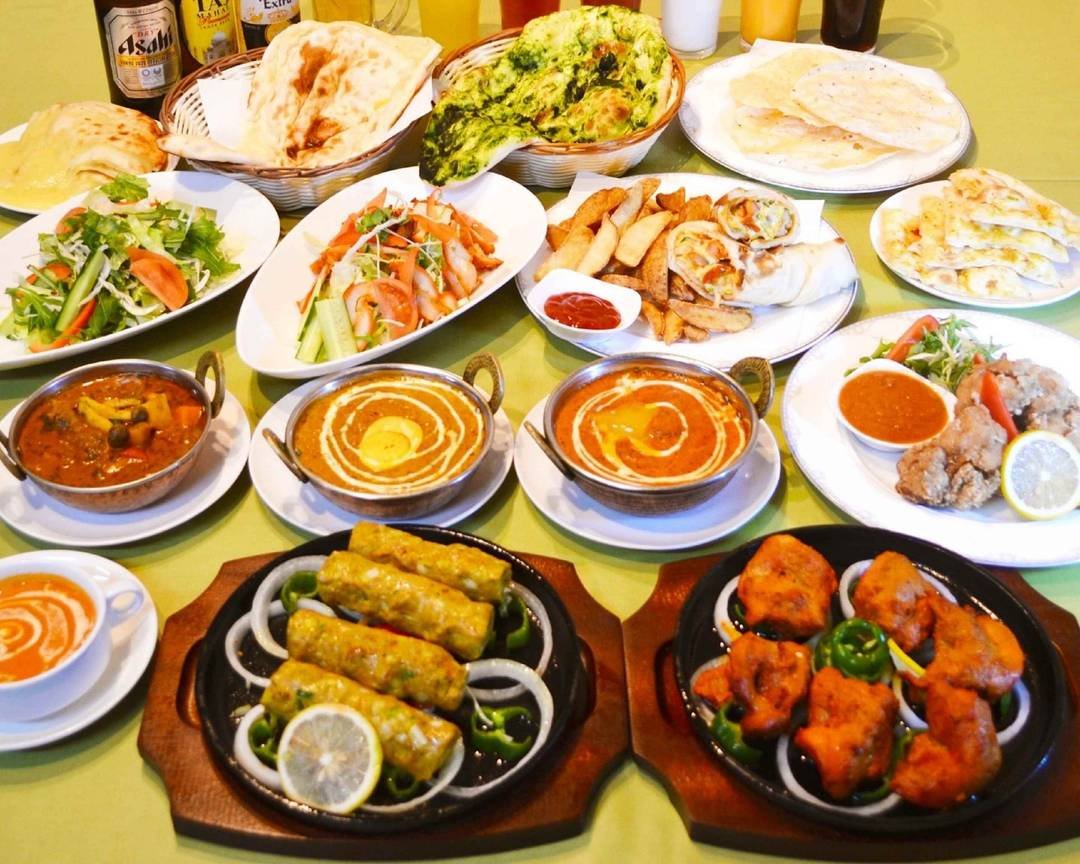
Indian Cooking in a City Built on Steam
Beppu is, above almost anything else, a city organised around heat. The Kannawa district, where Avatar Indian Restaurant operates, is the part of the city where that heat is most visible: steam vents rise from the road surface, cooking pots sit over natural geothermal sources, and the air carries a mineral edge that follows you from street to street. It is an unusual backdrop for Indian cuisine, but the logic is less strange than it first appears. Spice-forward cooking and geothermal tradition share an instinct for extracting flavour from raw heat, and Kannawa's visitor population, drawn from across Japan and increasingly from abroad, generates demand for dining variety that a resort district of its size might not otherwise sustain.
Indian restaurants in provincial Japanese cities tend to cluster around two models: the adapted suburban curry house, calibrated to Japanese palates with milder spice levels and yoshoku-adjacent presentation, and the more ingredient-focused approach that leans into subcontinent sourcing and technique. Where Avatar sits on that spectrum is not fully documented in publicly available records, but the Kannawa address places it within a neighbourhood where the dining audience is predominantly tourist rather than residential, which typically shapes menus toward accessibility and range rather than deep regional specialisation.
The shortlist, unlocked.
Hard-to-book tables, cellar releases, and concierge-planned trips.
Get Exclusive Access →Ingredient Logic in a Geothermal Town
Oita Prefecture, which surrounds Beppu, has a strong agricultural identity. Bungo beef, kabosu citrus, and shiitake mushrooms grown in the volcanic soil of the Kunisaki Peninsula are among the prefecture's most recognised products. The question of how an Indian kitchen in Kannawa negotiates that local supply chain is a genuinely interesting one. Indian cooking in Japan has, over the past two decades, moved toward a more deliberate sourcing posture in some kitchens, with Japanese-grown spices, domestic dairy for paneer, and regional vegetables appearing in menus that would once have relied entirely on imported ingredients.
That shift reflects a broader pattern visible across Japan's non-Japanese restaurant sector: the tension between authenticity of origin and responsiveness to local produce. At the high end of Japanese dining, venues like HAJIME in Osaka and Gion Sasaki in Kyoto have built reputations in part on how precisely they source from Japanese producers. That discipline has filtered outward into the broader restaurant culture, creating diner expectations around provenance that affect cuisines far outside kaiseki and French fine dining. An Indian kitchen operating in Oita in the current decade is working in that environment, whether or not it explicitly positions itself within it.
For comparison, kitchens like Atomix in New York City have demonstrated how non-Japanese cuisines can anchor themselves to rigorous sourcing frameworks without compromising culinary identity. The same argument applies in reverse in Japan: Indian cooking that engages with Oita's agricultural output has a more coherent story to tell than one that simply replicates a standard import-dependent model.
Beppu's Dining Scene in Context
Beppu's restaurant scene is not as formally documented as those of Kyoto, Tokyo, or Fukuoka, and Michelin has not extended its prefecture-level guide to Oita in the way it covers major urban centres. That means the competitive framing for any restaurant in Beppu is largely informal: peer sets are established by neighbourhood, cuisine type, and price bracket rather than by award tier. For visitors familiar with dining at Harutaka in Tokyo or Goh in Fukuoka, the register shifts considerably when eating in a geothermal resort town. Expectations calibrate differently, and the value proposition of a well-executed curry in Kannawa is not the same calculation as a Michelin-starred kaiseki in Kyoto.
Within Beppu itself, the dining options that attract repeat attention tend to be those that either lean into local ingredients with specificity or offer something genuinely distinct from the default onsen-town repertoire of ramen, tempura, and grilled seafood. Indian food occupies a clear gap in that landscape. Beppu restaurants like Ikkyu no Namida and ぎょうざ 湖月 represent the more local end of the city's dining range; Avatar sits in a different register, serving a cuisine type with no other obvious representative in the immediate Kannawa area.
For a broader orientation to eating and drinking in the city, the full 別府市 restaurants guide covers the range from neighbourhood standbys to more considered options across the city's distinct districts.
Planning a Visit
Beppu's Kannawa district is most practically reached by bus from Beppu Station, with the journey taking around twenty minutes depending on route and time of day. The neighbourhood is compact and walkable once you arrive, with the jigoku (hell spring) clusters and the main restaurant strip within easy reach of each other on foot. Because specific booking details, hours, and pricing for Avatar are not confirmed in available records, the most reliable approach is to check directly on arrival in Kannawa or through a current local listings source before making it a fixed plan. The restaurant's Kannawa address at 別府市, 大分県 874-0041 places it within the active tourist core of the district rather than on its periphery, which suggests walk-in trade is part of its operating model, though this cannot be confirmed without current operational data.
Visitors planning a wider Kyushu itinerary might also consider the dining contexts available in Fukuoka and Nara, where venues like akordu in Nara represent the more formally structured end of regional dining outside the major cities. The contrast with a casual Indian restaurant in a geothermal resort town is itself instructive: Japan's dining range, even outside Tokyo and Osaka, covers an unusually wide register.
Frequently Asked Questions
- Can I bring kids to Avatar Indian Restaurant?
- No confirmed data exists on family facilities or a children's menu, but Indian restaurants in Japanese tourist districts generally accommodate families without difficulty, and Kannawa's visitor demographic skews toward couples and family groups rather than solo diners.
- How would you describe the vibe at Avatar Indian Restaurant?
- If you are arriving from a day of walking the jigoku steam vents in Kannawa, the register is almost certainly casual and low-ceremony. Beppu's tourist core does not sustain the kind of formal dining atmosphere you find in Kyoto or Tokyo, and without award recognition on record, Avatar reads as a neighbourhood-facing option rather than a destination-dining experience. That framing changes if you are simply looking for something warm, spiced, and distinct from the onsen-town defaults.
- What dish is Avatar Indian Restaurant famous for?
- No signature dishes are documented in available records. Indian restaurants in Japan's provincial resort towns typically anchor their menus around a curry and naan format that travels well with the tourist audience, but specific dish information for Avatar requires a direct visit or current local source rather than anything confirmable here.
- Do I need a reservation for Avatar Indian Restaurant?
- No booking data is available on record. In a tourist-heavy district like Kannawa, demand peaks around midday and early evening when the jigoku crowds move through, so arriving outside those windows reduces the likelihood of a wait. If the restaurant has an informal walk-in policy, that fits the neighbourhood pattern, but confirming hours and capacity before visiting is advisable given the limited public information currently available.
- Is Avatar Indian Restaurant in Kannawa connected to a wider restaurant group or chain?
- No group affiliation or multi-location structure is documented in available records. The Kannawa address and the Japanese subtitle (アブタール 別府鉄輪店) suggest this is a single-site operation in Beppu's hot spring district, with 鉄輪 (Kannawa) appearing as a location identifier in the name itself. That kind of naming convention is common among independent restaurants in Japan that want to distinguish a specific branch or locale within a broader brand, though whether a parent location exists elsewhere is not confirmed by current public data.
In Context: Similar Options
These are the closest comparables we have in our database for quick context.
| Venue | Cuisine | Price | Awards | Notes |
|---|---|---|---|---|
| Avatar Indian Restaurant (アブタール 別府鉄輪店) | This venue | |||
| HAJIME | French, Innovative | ¥¥¥¥ | Michelin 3 Star | French, Innovative, ¥¥¥¥ |
| Harutaka | Sushi | ¥¥¥¥ | Michelin 3 Star | Sushi, ¥¥¥¥ |
| L'Effervescence | French | ¥¥¥¥ | Michelin 3 Star | French, ¥¥¥¥ |
| RyuGin | Kaiseki, Japanese | ¥¥¥¥ | Michelin 3 Star | Kaiseki, Japanese, ¥¥¥¥ |
| Crony | Innovative, French | ¥¥¥¥ | Michelin 2 Star | Innovative, French, ¥¥¥¥ |
Need a table?
Our members enjoy priority alerts and concierge-led booking support for the world's most difficult tables.
Get Exclusive AccessThe shortlist, unlocked.
Hard-to-book tables, cellar releases, and concierge-planned trips.
Get Exclusive Access →