August Wijnbar

August Wijnbar holds a Michelin Plate for 2024 and 2025, positioning it among the recognised farm-to-table addresses in the Flemish Brabant countryside around Sint-Kwintens-Lennik. The kitchen draws on local and seasonal sourcing. At the €€€ price tier, it sits below the starred Belgian fine-dining bracket but above the casual bistro range.
- Address
- Alfred Algoetstraat 2b, 1750 Lennik, Belgium
- Phone
- +32 2 532 42 20
- Website
- augustwijnbar.be
- Directions
- Get directions
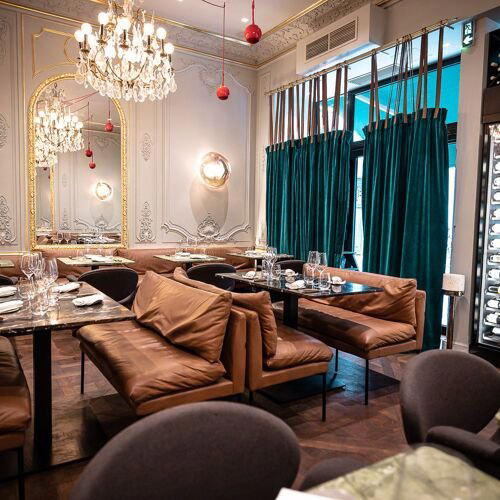
Where the Paysan Belt Meets the Plate
The villages spread across the Pajottenland, the rolling agricultural corridor southwest of Brussels, have long supplied the capital with produce before feeding it properly themselves. Sint-Kwintens-Lennik sits in that belt, and August Wijnbar, on Alfred Algoetstraat, occupies a position that feels consistent with the territory: a restaurant that takes the farming surroundings as its primary brief rather than its background decoration. Approaching from the road, the building reads quietly, no theatrical signage, no grand entrance sequence. The kind of address where the seriousness is communicated through what arrives on the table, not through what greets you at the door.
That restraint has register. A Michelin Plate in both 2024 and 2025, the guide's signal for kitchens delivering food worth seeking out, below the starred tier but above the unlisted mass, places August Wijnbar in a distinct position for the region. The consistency implied by the Michelin assessment is backed by volume. This is not a restaurant coasting on local novelty.
Farm-to-Table in the Flemish Brabant Context
The farm-to-table framing is now so widely claimed that it requires scrutiny wherever it appears. In the Pajottenland, the claim carries more structural weight than it might in an urban setting. The area around Lennik is genuinely agricultural, with small farms, orchards, and market gardens operating within close range of the village centre. A kitchen here has direct access to supply chains that urban restaurants in Brussels spend considerable effort constructing artificially. The sourcing premise is, in other words, geographic before it is philosophical.
Across Belgium, farm-to-table cooking sits on a spectrum. At the upper end, places like Willem Hiele in Oudenburg have built international recognition on hyper-local sourcing taken to an almost agrarian extreme. Further along, addresses like Au Gré du Vent in Seneffe represent the Wallonian expression of the same commitment. August Wijnbar's Michelin Plate, at the €€€ tier, positions it as a credible middle register: a kitchen serious enough to earn guide recognition, accessible enough to function as a regular destination rather than a twice-a-year occasion.
The name itself is worth noting. "Wijnbar", wine bar in Dutch, signals that the beverage program is not an afterthought. In Belgian restaurant culture, the combination of a sourcing-led kitchen with a deliberate wine selection has become a coherent format: the kind of place that treats what is poured as carefully as what is cooked, without escalating into the formality of a full tasting-menu operation. That format has found its audience across Flanders and Brussels alike, and the restaurant appears to execute it from a rural base rather than a city-centre one.
Where It Sits in the Belgian Fine-Dining Tier
To calibrate the restaurant properly, it helps to map the broader Belgian scene. The country's upper bracket is dense with recognised kitchens: Boury in Roeselare operates at three Michelin stars; Castor in Beveren and Cuchara in Lommel both hold two. Zilte in Antwerp and Hof van Cleve in Kruishoutem occupy similarly refined positions. Bartholomeus in Heist anchors the coast. These are €€€€ operations with prix-fixe structures and formal service codes.
The restaurant prices a tier below that bracket. At €€€, it is not competing with those kitchens on formality or ceremony. Its comparable set is the recognised-but-accessible address: good enough for the Michelin inspector's attention, priced and formatted for a dinner out rather than a dining event. In the Sint-Kwintens-Lennik context, it sits alongside Sir Kwinten and Ferment as part of a small cluster of serious restaurants in a village that punches above its size for dining.
For comparison outside Belgium, BOK Restaurant in Münster represents a similar farm-to-table approach in a German context, while d'Eugénie à Emilie in Baudour offers a Wallonian point of reference closer to home. The format is consistent across these addresses: seasonal menus anchored in local agriculture, wine selections that lean toward natural or low-intervention producers, and room sizes that keep service personal.
Planning Your Visit
Sint-Kwintens-Lennik is approximately 20 kilometres southwest of Brussels, reachable by car in under 30 minutes outside peak hours. The village is not well served by public transport, so driving or arranging a transfer is the practical approach. At the €€€ price point, the restaurant sits in the range where a two-course dinner with wine would typically land between €60 and €100 per person, though specific current pricing should be confirmed directly with the restaurant. Given the Michelin Plate recognition and the 322-review volume on Google, booking ahead is advisable, particularly for weekend evenings. Reservations are recommended.
Brussels remains the logical gateway, and Bozar Restaurant is worth considering as a capital-side counterpart for a multi-day itinerary.
Side-by-Side Snapshot
Comparable venues nearby, for context on price, style, and recognition.
| Venue | Cuisine | Price | Awards | Notes |
|---|---|---|---|---|
| August WijnbarThis venue — the venue you are viewing | Modern Belgian Wine Bar | $$$ | Michelin Plate | Not listed |
| Ferment | Belgian Brasserie | $$ | Bib Gourmand | Lennik |
| Sir Kwinten | Modern French Fine Dining | $$$$ | Michelin 2 Star | Sint-Kwintens-Lennik |
| Les Brigittines Aux marches de la Chapelle | Traditional Belgian Brasserie | $$$ | Michelin Plate | Grand' Place |
| René | Traditional Belgian Bistro | $$ | Michelin Plate | Anderlecht |
| Découverte | Modern Belgian Westhoek Cuisine | $$$ | Michelin Plate | City Center |
Recognition history
Dated appearances from independent guides and award organizations, with the underlying list record or original source where available.
Michelin Plate
Michelin
Michelin Plate
Michelin
Continue exploring
More in Sint-Kwintens-Lennik
Restaurants in Sint-Kwintens-Lennik
Browse all →
Bars in Sint-Kwintens-Lennik
Browse all →
Hotels in Sint-Kwintens-Lennik
Browse all →
Wineries in Sint-Kwintens-Lennik
Browse all →
At a Glance
- Lively
- Cozy
- Bohemian
- Date Night
- Casual Hangout
- Wine Cellar
- Extensive Wine List
- Local Sourcing
Current opening hours
- Monday
- Closed
- Tuesday
- Closed
- Wednesday
- 6:45–11:30 PM
- Thursday
- 12–2:30 PM, 6:45–11:30 PM
- Friday
- 12–2:30 PM, 6:45–11:30 PM
- Saturday
- 6:45–11:30 PM
- Sunday
- 12–2:30 PM
Hours can change for holidays and private events. Last verified .
Warm, offbeat, bohemian atmosphere with casual wine bar vibe.