Aubergine Carmel








2 Michelin Stars · La Liste Top Restaurants · Star Wine List
Our verdict
Aubergine at L'Auberge Carmel holds two Michelin stars in 2025 and a La Liste score of 88 points, placing it among the most decorated fine-dining rooms on the California Central Coast. Chef Justin Cogley runs an eight-course tasting menu built around Monterey-sourced ingredients in a nine-table dining room that books at least a month ahead. Smart business casual dress is required; reservations open Wednesday through Sunday evenings.

Pearl is the En Primeur Club membership app, where members save venues, book tables and use the concierge.
The menu
What to order
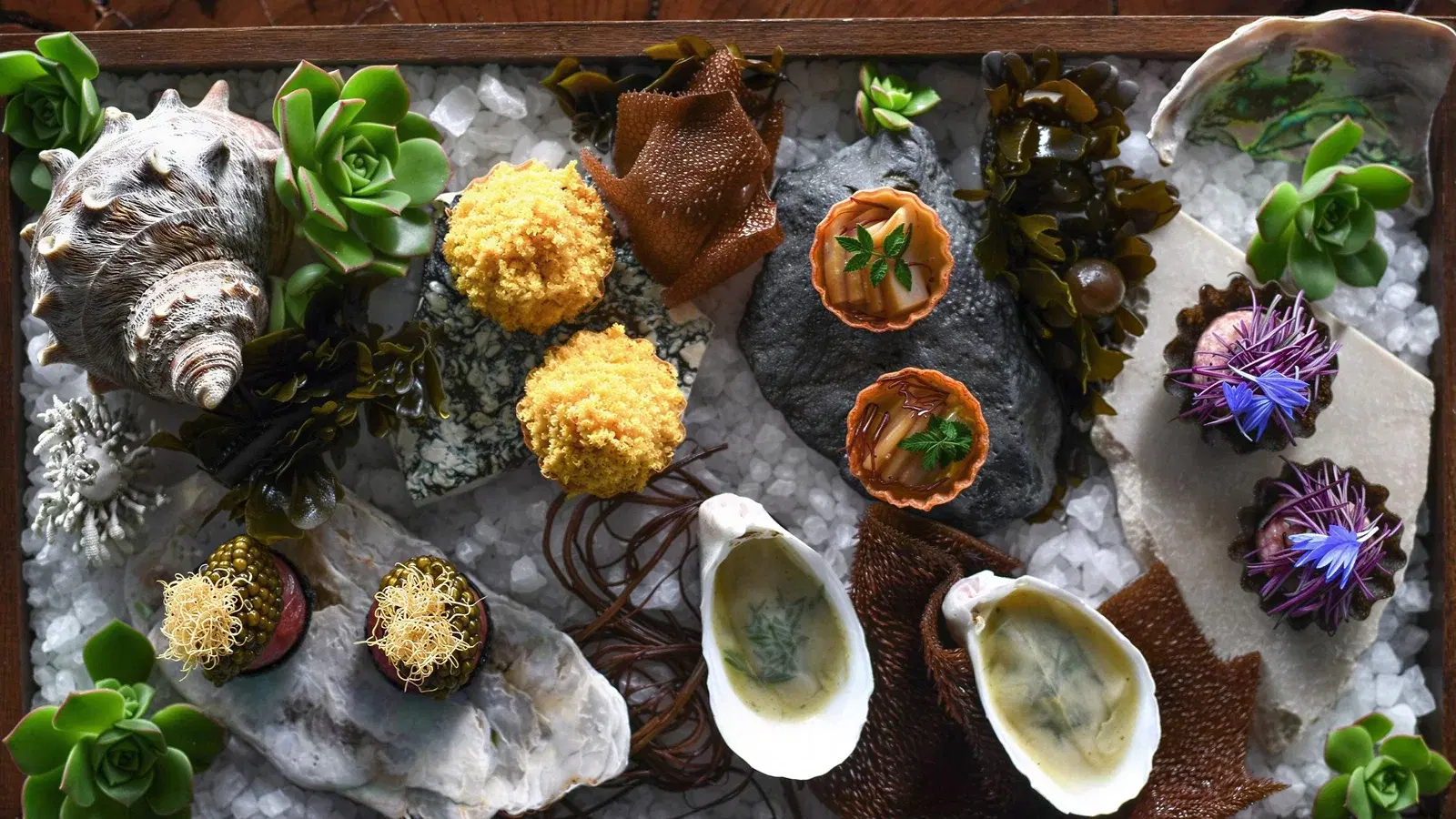
- Oyster with Yuzu Emulsion
- Artichoke Tart
- Ayu with Potato Squash
A 1929 Façade and What Lies Behind It
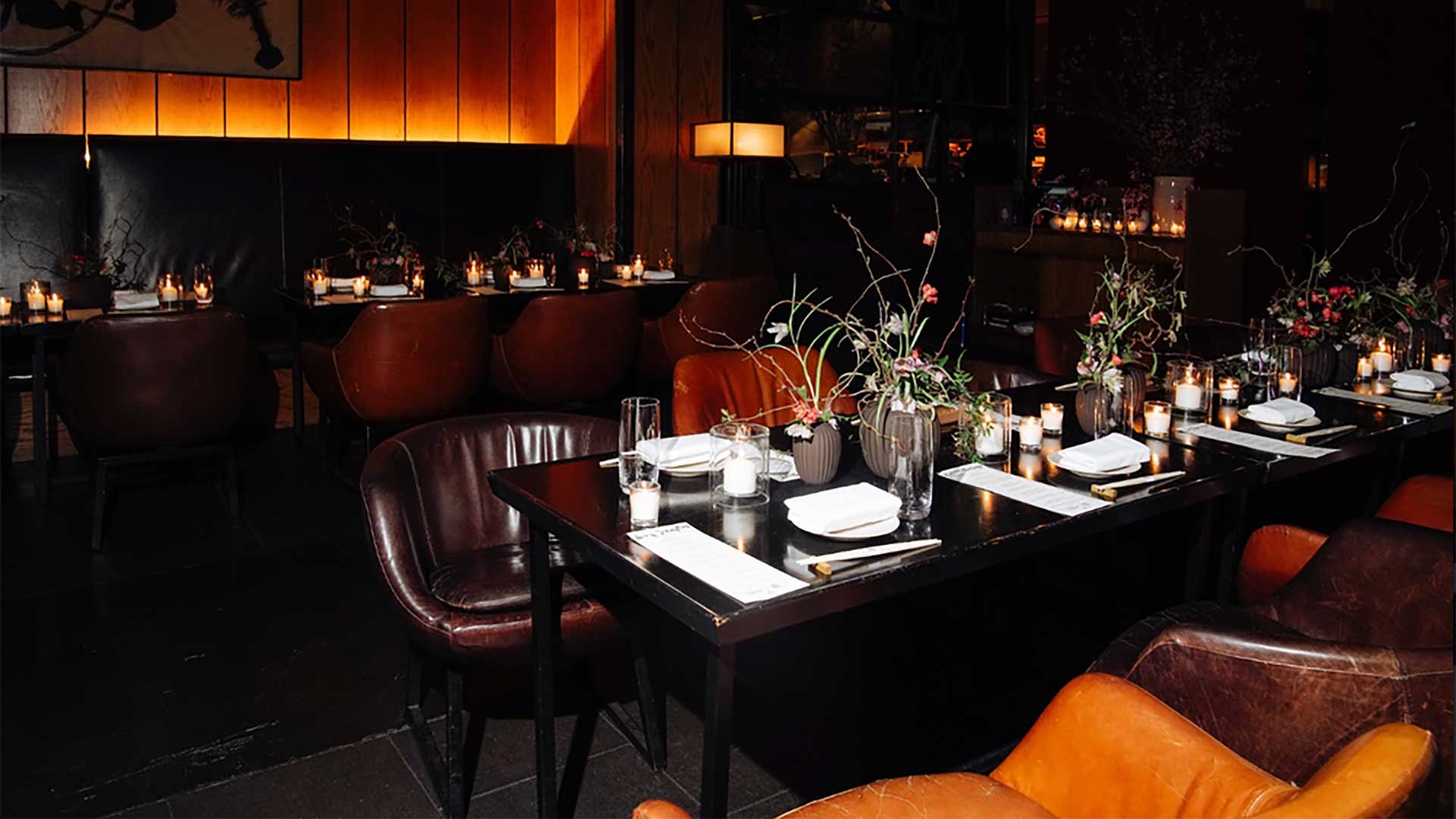
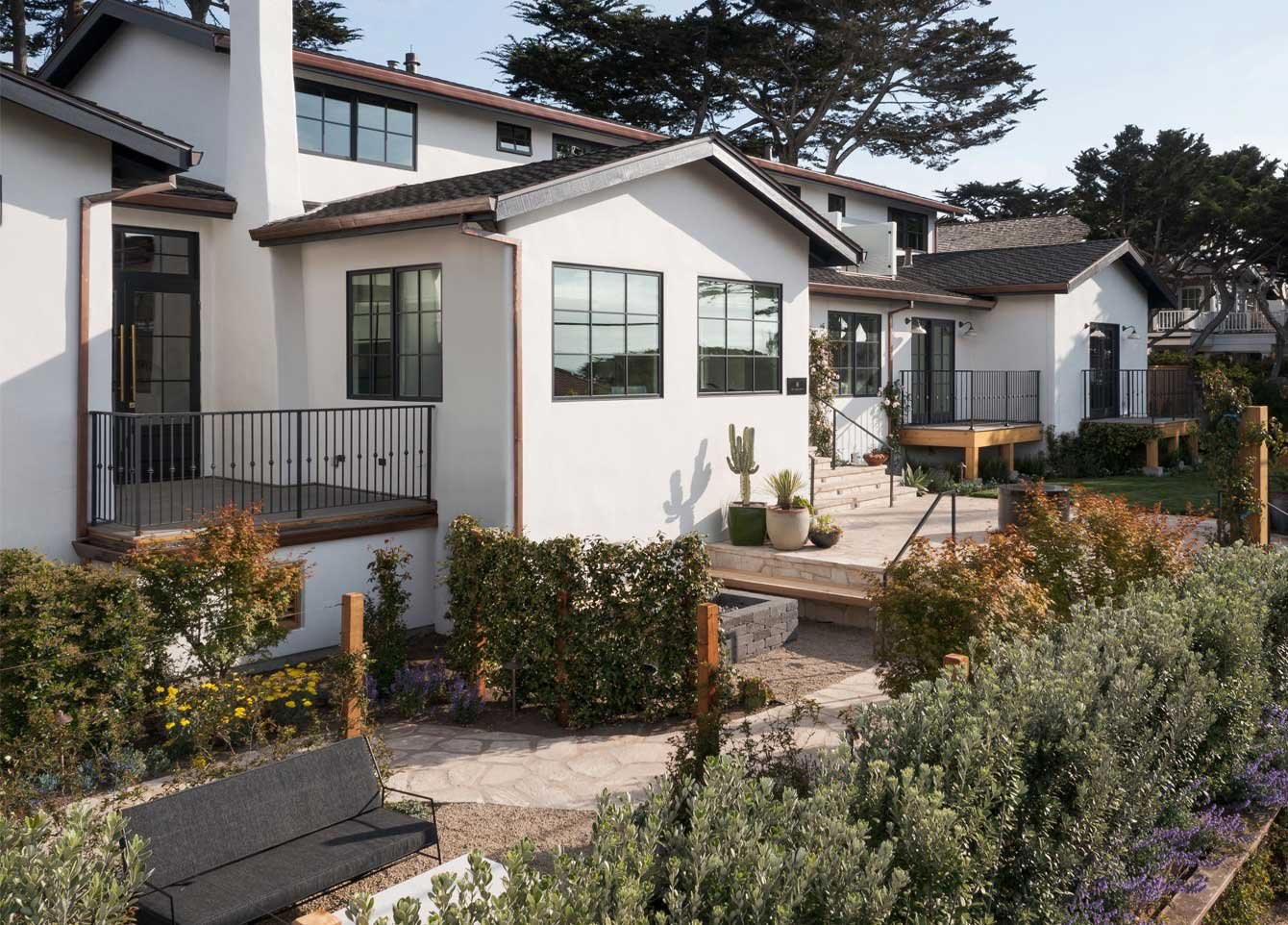
The Central Coast of California has quietly assembled a fine-dining tier that punches well above the region's size. Carmel-by-the-Sea, with its one-square-mile footprint and strict no-signage ordinances, is an unlikely home for a two-Michelin-star restaurant, yet that understated quality is precisely the point. Aubergine occupies a 1929 European-style building on Monte Verde at Seventh, and the entrance, a single rustic door giving onto a courtyard, sets a register that the dining room then sustains: intimate, deliberate, and shaped by a French coastal tradition that prizes restraint over spectacle.
French coastal cooking, at its most considered, is not about the pyrotechnics associated with modernist tasting menus. It traces a line from Escoffier's coastal Provence to the Breton seafood traditions that fed Parisian brasseries, and arrives today in kitchens that treat proximity to the sea as both a sourcing advantage and a philosophical one. Aubergine sits within that lineage while translating it through the specific terroir of Monterey Bay, where cold-water upwelling produces shellfish and red abalone of unusual quality. The French bistro tradition, at its root, has always been about this kind of direct local sourcing long before farm-to-table became a marketing category. What separates Aubergine from that casual bistro register is not its ambition but its scale of execution: the eight-course tasting menu, the multiple sommeliers, the handmade ceramic and shell service vessels.
The Format and What It Signals
Multi-course tasting formats at this price tier have proliferated across American fine dining over the past two decades, from Alinea in Chicago to The French Laundry in Napa, and the format now carries its own set of audience expectations. Within California specifically, comparisons with Single Thread Farm in Healdsburg and Lazy Bear in San Francisco are instructive: all three operate at the $$$$ tier, all use tasting menus as their primary format, and all lean on hyper-local sourcing as a central editorial argument.
The nine-table dining room enforces an intimacy that defines the experience structurally. Tables are limited to parties of four or fewer, with the wine cellar available for groups of six to ten. That constraint is not just atmospheric; it determines the service model. Several sommeliers and servers attend each table, and the staff's approach, attentive but not intrusive in the assessment of Michelin inspectors, reflects a European country-house register rather than the performance-forward style common in higher-capacity tasting venues. The French bistro tradition, at its finest, always carried this quality: the proprietor who knew every guest by name, the waiter who could discuss the provenance of every bottle. Aubergine scales that sensibility upward without abandoning its core.
Ingredients as Editorial Position
The sourcing at Aubergine is not incidental decoration. Monterey-raised red abalone, prepared in contemporary forms and accompanied by local seaweed and cranberry beans, functions as a signature that anchors the menu to a specific geography in a way that few ingredients can. Red abalone farming in the Monterey Bay area produces product of a quality that has attracted attention from kitchens far outside the region; its appearance on a tasting menu at this level signals a deliberate local sourcing argument rather than a fashionable nod to sustainability.
One imported element, Miyazaki Prefecture wagyu from Japan, sits in instructive contrast to that local framework. Its presence on the menu, presented pre-plating and triple-seared over Japanese charcoal, acknowledges that French coastal cooking has always accommodated the finest available ingredients regardless of origin, a tradition shared with 8 1/2 Otto e Mezzo Bombana in Hong Kong and Atomix in New York City, both of which layer imported luxury proteins within locally framed menus. The French bistro origin story involved the integration of regional products with the leading available pantry items; Aubergine applies that logic at a finer resolution.
Pastry program, led by Yolanda Santos, works within the same philosophy: housemade anise hyssop ice cream paired with wild blackberries represents a dessert approach that contrasts richness with lightness rather than stacking sweetness. This is structurally consistent with the French pâtisserie tradition, where a skilled pastry chef uses fermented dairy and foraged aromatics to cut through the weight of a long tasting menu.
Carmel's Fine-Dining Tier in Context
Aubergine's two Michelin stars (awarded in both 2024 and 2025) and La Liste score of 88 points (2026) place it in a category occupied by a small number of California coastal restaurants. The La Liste score dropped one point between 2025 (89 points) and 2026 (88 points), a marginal shift in a system that rewards consistency.
Within Carmel itself, the fine-dining tier is narrow. Chez Noir, a contemporary French/Spanish seafood-focused room operating at the same $$$$ price tier, represents the closest local peer in format ambition and ingredient philosophy, though without Michelin recognition. The remainder of the Carmel dining scene operates at lower price points and less formal formats: Casanova at the $$$ tier for European bistro dining, Akaoni for Japanese at $$$, and more casual options like Brunos Market and Deli and Cultura covering the accessible end of the spectrum. Aubergine occupies an unchallenged position at the top of that local hierarchy. For travelers building an itinerary around the wider region, see our full Carmel-by-the-Sea restaurants guide, along with our hotels guide, bars guide, wineries guide, and experiences guide for Carmel-by-the-Sea.
Chef Justin Cogley's name appears consistently in the awards documentation, and his tenure anchors the kitchen's reputation for creative cooking, the MICHELIN designation used alongside the two-star rating. Emeril's in New Orleans offers a useful comparison of how named-chef continuity shapes long-term restaurant reputation at the national level.
Planning an Evening at Aubergine
The practical parameters here are specific and worth understanding before booking. The dining room operates Wednesday through Sunday from 5 to 8 pm, closed Monday and Tuesday. The tasting menu runs approximately two and a half hours, which defines the evening as a commitment rather than an option within a larger night. Reservations should be made at least one month in advance for the nine-table room, and the capacity ceiling means that last-minute availability is rare. Dress code is smart business casual: jackets are encouraged for men, and shorts, T-shirts, and trainers are not permitted. The wine cellar, which accommodates six to ten guests, can be reserved for private gatherings and represents a distinct option for larger groups who would otherwise exceed the main dining room's party limit of four. On select dates each month, special menu offerings are listed in advance on the restaurant's website, worth checking when planning a visit around a specific occasion. Guests staying at L'Auberge Carmel have access to a hotel-only breakfast in the dining room, served first-come-first-served, built around housemade pastries, local coffee, and a French-inflected morning format.
What to Order at Aubergine Carmel
at Aubergine Carmel?
The format is a fixed eight-course tasting menu, so individual ordering is not part of the structure. Within that framework, the Monterey-raised red abalone, prepared with local seaweed and cranberry beans, functions as the kitchen's signature expression of place and is the dish most closely identified with the restaurant's sourcing philosophy. The Miyazaki wagyu, triple-seared over Japanese charcoal, is the one imported element and arrives pre-plating as a tableside moment. The pastry course, driven by anise hyssop ice cream and wild blackberries, is the most discussed element of the closing sequence. On special-event dates, alternate menus are posted to the website and offer a distinct version of the tasting format for returning guests.
Pricing, Compared
| Venue | Cuisine | Price | Awards | Notes |
|---|---|---|---|---|
| Aubergine CarmelThis venue (the venue you are viewing) | Contemporary Californian Fine Dining | $200–300 | 2 Michelin Stars · La Liste Top Restaurants | Not listed |
| Chez Noir | Modern French Coastal Bistro | $150–200 | 1 Michelin Star · Star Wine List | Contemporary, French/Spanish (Seafood-focused) |
| Casanova | Rustic French-Italian | $100–150 | Michelin Plate | Not listed |
| Akaoni | Authentic Japanese Sushi | $50–100 | Michelin Plate | Not listed |
| Brunos Market and Deli | American Deli Sandwiches | $10–20 | Not listed | Not listed |
| Cultura | Modern Oaxacan Mexican | $30–50 | Michelin Plate | Not listed |
Recognition history
Dated appearances from independent guides and award organizations, with the underlying list record or original source where available.
Michelin 2 Stars
Michelin
La Liste Top Restaurants
La Liste
Star Wine List
Star Wine List
Bureau du Champagne, USA Top 10 Honoree
Bureau du Champagne, USA
Forbes 5-Star
Forbes
Full recognition history (13 entries)
Opinionated About Dining Top Restaurants in North America Ranked #36
Opinionated About Dining
Relais Chateaux Award
Relais Chateaux
Forbes 5-Star
Forbes
La Liste Top Restaurants
La Liste
Michelin 2 Stars
Michelin
Relais Chateaux Award
Relais Chateaux
The Best Chef Two Knives
The Best Chef
Michelin 2 Stars
Michelin
Aubergine Carmel
Featured Guides
Continue exploring
More in Carmel-by-the-Sea
Restaurants in Carmel-by-the-Sea
All restaurants in Carmel-by-the-Sea →
Bars in Carmel-by-the-Sea
All bars in Carmel-by-the-Sea →
Hotels in Carmel-by-the-Sea
All hotels in Carmel-by-the-Sea →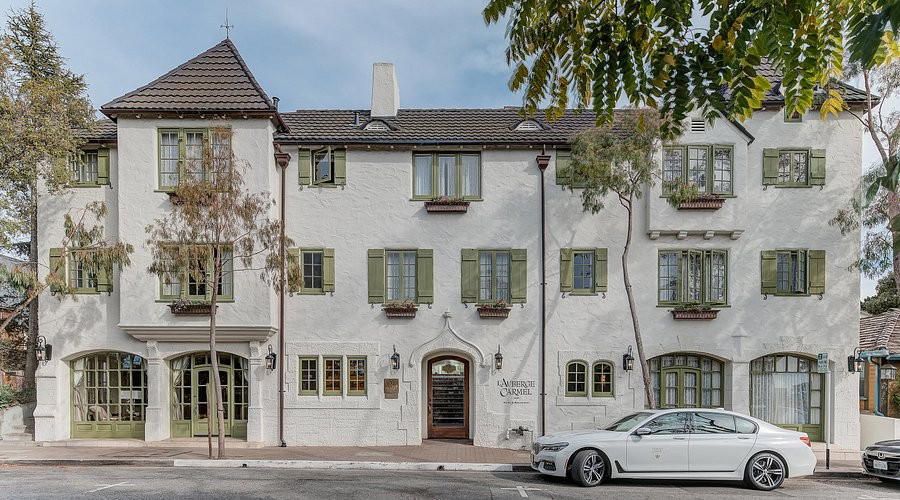
Wineries in Carmel-by-the-Sea
All wineries in Carmel-by-the-Sea →
Aubergine Carmel
The wine
- Wine program
- Deep wine list
- Extensive wine list
- Sommelier-led
Details
- Elegant
- Sophisticated
- Intimate
- Romantic
- Date Night
- Special Occasion
- Celebration
- Hotel Restaurant
- Extensive Wine List
- Sommelier Led
- Local Sourcing
- Farm To Table
- Tasting Menu
- Prix Fixe
- Wine Pairing
- Gluten Free Options
- Vegetarian Friendly
- Allergy Accommodating
Current opening hours
- Monday
- Closed
- Tuesday
- Closed
- Wednesday
- 5–8 PM
- Thursday
- 5–8 PM
- Friday
- 5–8 PM
- Saturday
- 5–8 PM
- Sunday
- 5–8 PM
Hours can change for holidays and private events. Hours as of .
Serene and refined with easygoing luxury, beautiful plating, and an intimate dining room featuring muted sea-green kelp-inspired curtains.