Carmel Beach Hotel

Fodor's Most Incredible Hotels in the World
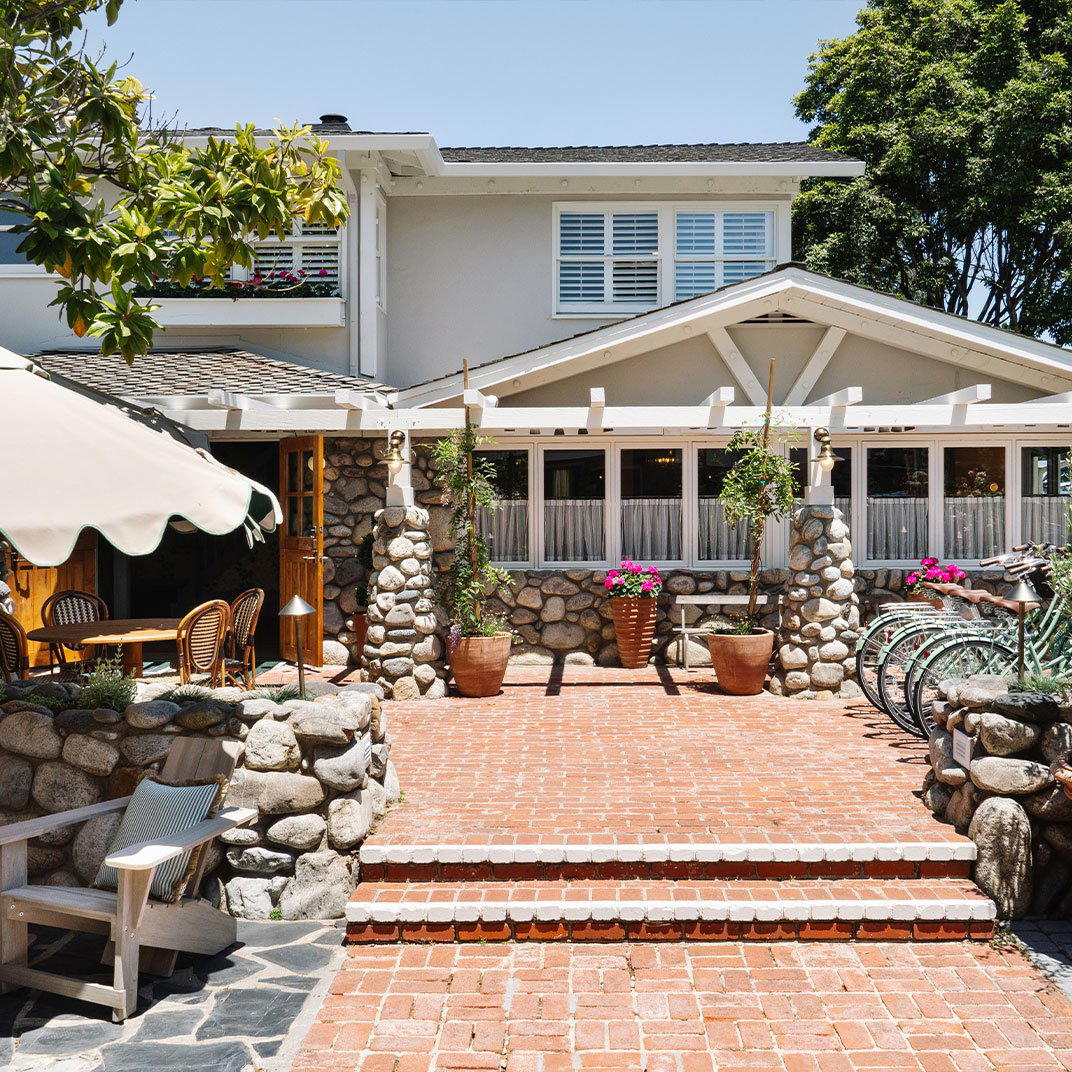
Carmel Beach Hotel occupies a deliberate gap in the village's accommodation tier: a 26-room modern-farmhouse property that trades the Spanish Mission conventions of central Carmel for seven black-and-white buildings with a quieter, more residential sensibility. It operates as the smaller, less formal counterpart to L'Auberge Carmel, pricing and pitching itself as a design-conscious boutique option for travellers who want architectural contrast with the town's prevailing aesthetic.

Pearl is the En Primeur Club membership app — saves, bookings, and concierge access live there. Same editors, same standards.
- Address
- San Antonio Ave &, 13th Ave, Carmel-By-The-Sea, CA 93921
- Phone
- (831) 293-0388
- Website
- carmelbeachhotel.com
- Directions
- Get directions
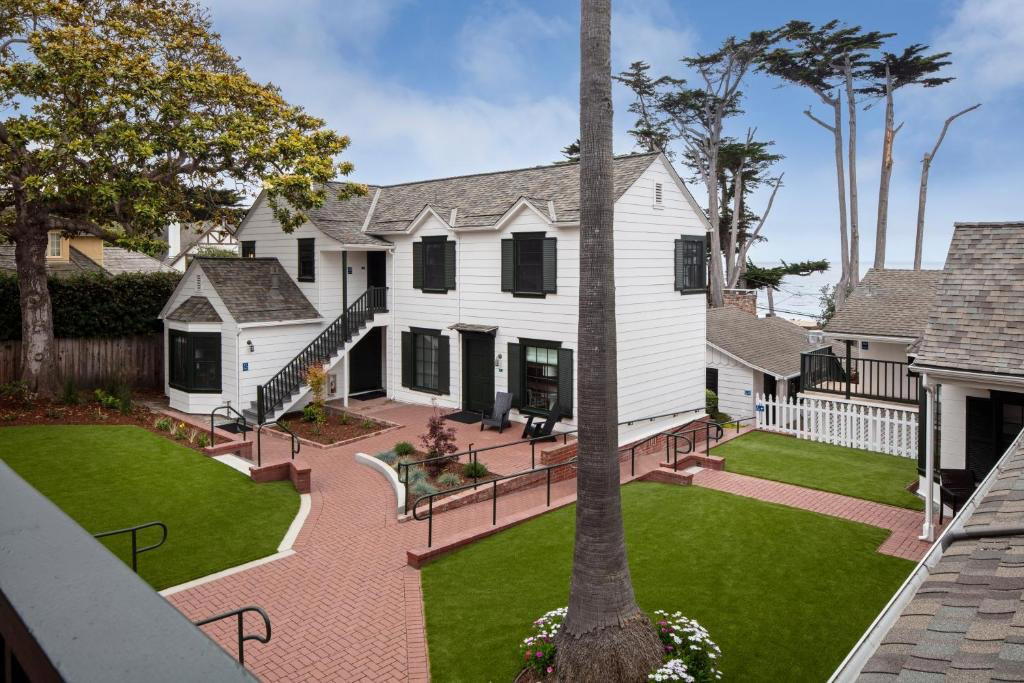
A Different Architectural Conversation
Carmel-by-the-Sea has a codified visual identity. Municipal ordinances have long protected the village's Spanish Mission and English cottage vernacular, which means that most of the town's hotels either operate within that tradition or gently defer to it. Carmel Beach Hotel does neither. Spread across seven black-and-white modern-farmhouse buildings along San Antonio Avenue at 13th, the property reads as a deliberate interruption in the streetscape, the kind of architectural decision that only makes sense when you understand the context it is pushing against. The contrast is the point.
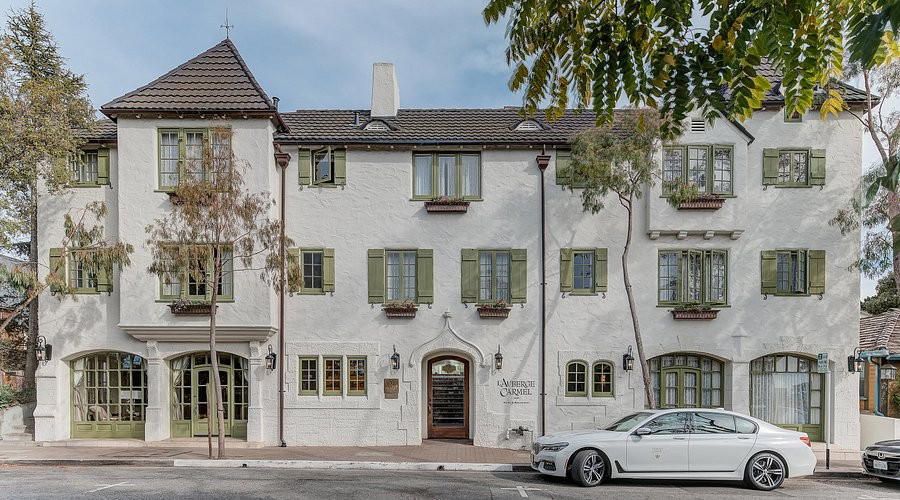
This matters because Carmel's premium accommodation tier has historically been defined by properties that lean into the village's storybook aesthetic. L'Auberge Carmel, the more established and formal address in the same ownership family, exemplifies that approach. Carmel Beach Hotel functions as its smaller, less ceremonial counterpart, sharing an affiliation without duplicating the experience. At 26 rooms across those seven structures, the property sits in a scale range where individual building character can do significant work, and the farmhouse format allows each building to feel distinct rather than uniform.
What the Farmhouse Format Actually Delivers
Modern farmhouse as a design language has become diluted through overuse in residential interiors, but at the hospitality scale, the format carries specific structural advantages. Multiple low-rise buildings with black-and-white exteriors create a campus feel rather than a hotel feel, which in a village context reads as neighbourhood integration rather than institution. Guests move between buildings rather than down corridors, and the outdoor connective tissue between structures becomes part of the experience rather than dead transit space.
For comparison, California coastal properties that have succeeded with a similar multi-structure approach, such as Post Ranch Inn in Big Sur, demonstrate that distributed footprints create a stronger sense of place-rootedness than single-building formats at equivalent room counts. The trade-off is that centralised amenities require more intentional programming. At 26 rooms, Carmel Beach Hotel sits at a scale where that trade-off can be managed without losing the intimacy that makes the format work.
The black-and-white palette deserves specific attention. In a town dominated by warm terracotta, sandy beige, and weathered timber tones, a monochrome exterior is a legible brand signal as much as an aesthetic choice. It tells prospective guests something precise about the kind of stay on offer before they have crossed the threshold. Properties like Troutbeck in Amenia and Chicago Athletic Association have shown that strong architectural identity at boutique scale can function as a meaningful differentiator in premium markets, and Carmel Beach Hotel appears to be operating on the same logic.
The Village Position and What It Implies for Guests
San Antonio Avenue at 13th places the property at the quieter residential southern edge of Carmel-by-the-Sea, closer to the beach approach paths than to the main retail strip of Ocean Avenue. This positioning shapes the character of a stay. The high-traffic village core, where galleries, wine tasting rooms, and the more formal dining options concentrate, is a short walk north. The beach is closer. For a property with a farmhouse-inflected identity, the southern position reinforces the residential register rather than undercutting it.
Carmel as a destination rewards guests who understand its rhythm. The village operates at a deliberate pace and its premium accommodation market has historically attracted travellers interested in coastal walks, the Carmel Mission, Point Lobos State Natural Reserve, and the wine corridor stretching inland toward Carmel Valley, where Bernardus Lodge and Spa anchors the valley's lodging options. Carmel Beach Hotel's 26-room scale and architectural informality suggest it draws guests who want proximity to those experiences without the formality of a full-service resort. You can consult our full Carmel-by-the-Sea restaurants guide for what to eat and drink once you're on the ground.
The property is two years old, which places it as one of the more recent additions to a village accommodation market that turns over slowly. Carmel's planning controls are restrictive enough that new hotel development is rare, which means each new property enters a relatively stable competitive set. That newness, combined with a format that explicitly references L'Auberge Carmel as its senior sibling, positions it clearly for guests who know the market and are choosing between approaches rather than discovering options.
How It Sits in the Broader California Boutique Tier
California's premium boutique hotel market has developed a coherent alternative to the large resort model. Properties like SingleThread Farm Inn in Healdsburg, Hotel Bel-Air in Los Angeles, and 1 Hotel San Francisco each occupy specific niches defined by design identity, scale, and location logic. Carmel Beach Hotel enters that conversation as a village-scale property with a clear aesthetic position and an established family connection that provides trust credentials without requiring the property to build its own reputation from scratch.
Further afield, for those building a California coastal itinerary, the properties worth understanding as context include Auberge du Soleil in Napa and, for a different register entirely, Amangiri in Canyon Point, which represents the high end of the American design-led desert category. Domestically within the California boutique tier, Carmel Beach Hotel's 26 rooms and modern-farmhouse format put it closer to the residential-retreat end of the spectrum than the destination-resort end.
Planning a Stay
The property sits at San Antonio Avenue and 13th Avenue, Carmel-by-the-Sea, CA 93921. As a 26-room hotel without a published phone or website in current listings, booking routes are worth confirming directly with the property or through the L'Auberge Carmel reservations network, given the shared ownership. At two years old, the property is still in the phase where peak-season availability, particularly across summer weekends and the shoulder months of April-May and September-October when Carmel's coastal climate is most reliable, tightens considerably. The village's popularity with San Francisco and Bay Area drive visitors means weekend availability at well-positioned boutique properties can compress quickly during those windows.
At-a-Glance Comparison
Comparable venues nearby, for context on price, style, and recognition.
| Venue | Cuisine | Price | Awards | Notes |
|---|---|---|---|---|
| Carmel Beach HotelThis venue — the venue you are viewing | Relaxed luxury boutique resort spanning seven historic buildings with coastal charm and contemporary comfort. | $750–1,000 | Fodor's Most Incredible Hotels in the World | Not listed |
| La Playa | Historic Mediterranean-style boutique hotel with modern restoration | Not listed | Michelin Selected | Carmel-by-the-Sea |
| L’Auberge Carmel | Historic full-service luxury with modern upgrades | $500–750 | Forbes Recommended · Relais Chateaux Award | Carmel-by-the-Sea |
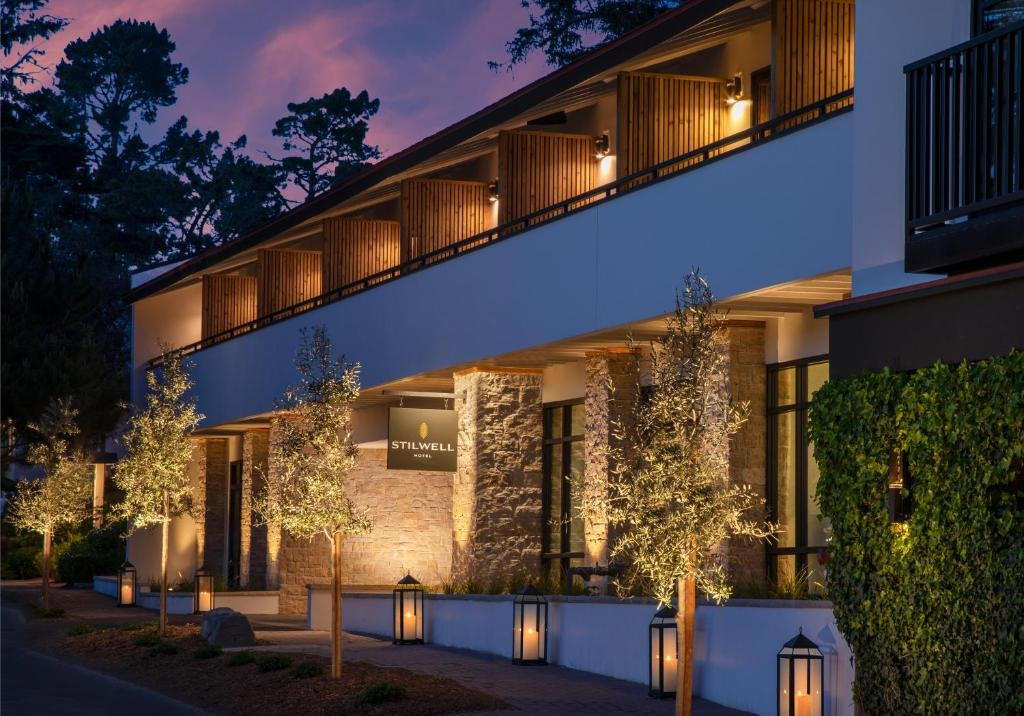
| Stilwell Hotel | Sleek modern boutique hotel capturing Carmel-by-the-Sea’s sophisticated coastal vibe. | $500–750 | Michelin Selected | Carmel-by-the-Sea |
| Le Petit Pali at 8th Ave | California craftsman-style boutique bed-and-breakfast | Not listed | Michelin Selected | Golden Rectangle |
| Le Petit Pali at Ocean Ave | evokes the delight of a traditional inn with bespoke design details | Not listed | Michelin Selected | Downtown Carmel |
Recognition history
Dated appearances from independent guides and award organizations, with the underlying list record or original source where available.
Fodor's Most Incredible Hotels in the World
Fodor's
Continue exploring
More in Carmel-by-the-Sea
Hotels in Carmel-by-the-Sea
Browse all →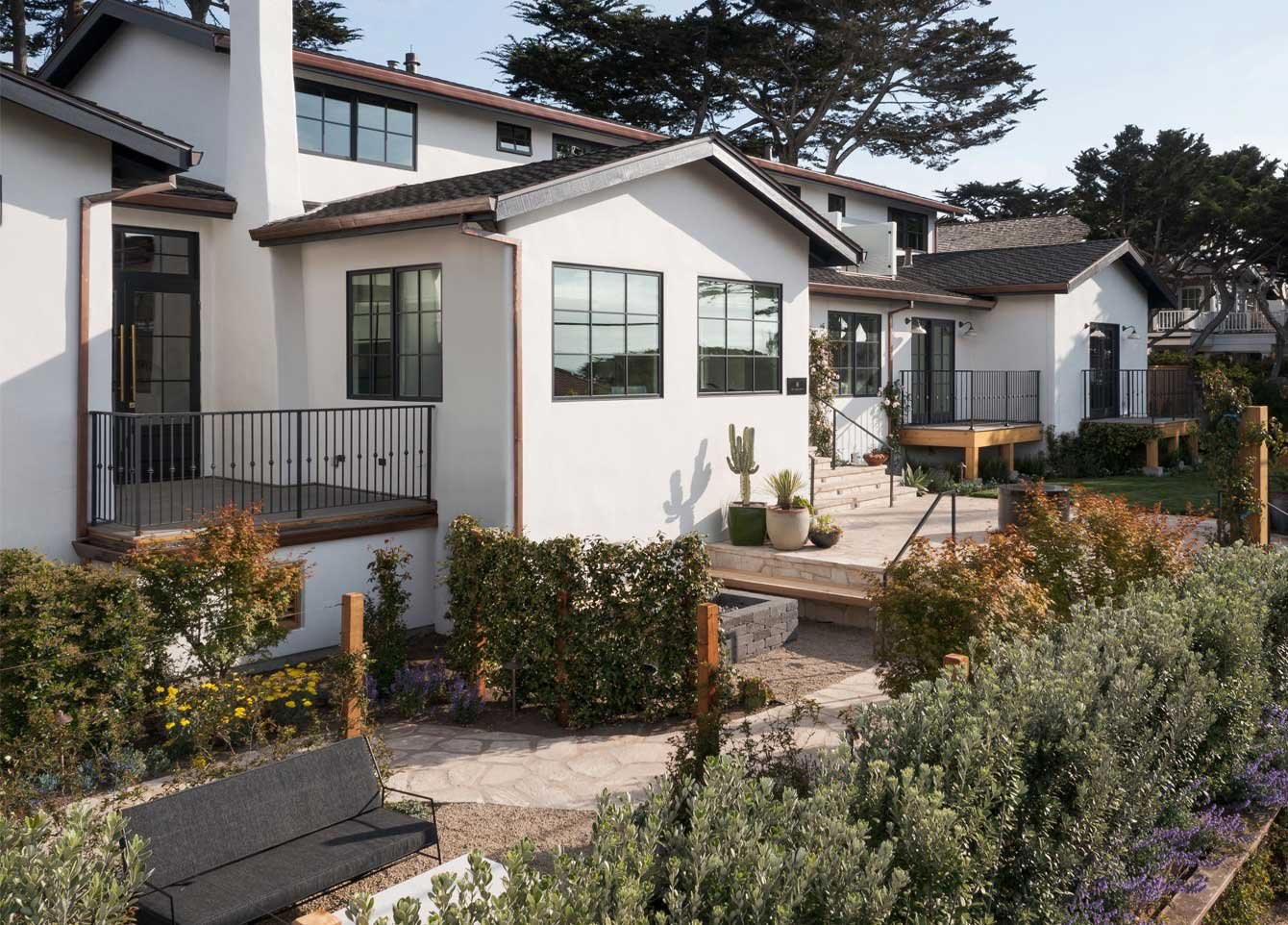
Bars in Carmel-by-the-Sea
Browse all →
Restaurants in Carmel-by-the-Sea
Browse all →
Wineries in Carmel-by-the-Sea
Browse all →
Details
- Romantic
- Scenic
- Elegant
- Intimate
- Cozy
- Romantic Getaway
- Honeymoon
- Anniversary
- Weekend Escape
- Beachfront
- Destination Spa
- Historic Building
- Panoramic View
- Terrace
- Garden
- Wi Fi
- Spa
- Fitness Center
- Restaurant
- Bar
- Room Service
- Concierge
- Valet Parking
- Beach Access
- Waterfront
Warm, serene, and intimate with fireplace in lobby, ocean views from balconies, and soft coastal lighting creating a relaxing retreat atmosphere.