Au jardin breton
Au jardin breton sits in the village of Combourtillé in Ille-et-Vilaine, placing it squarely within the agricultural heartland of Brittany where the sourcing argument for regional cooking is made by the land itself. The address at Le Pigeon Blanc grounds it in the rural auberge tradition that France's countryside has sustained for generations, a format worth understanding before you arrive.
Pearl is the En Primeur Club membership app — saves, bookings, and concierge access live there. Same editors, same standards.
- Address
- 1 Le Pigeon Blanc, 35210 Combourtillé, France
- Phone
- +33299186112
- Directions
- Get directions
 Saves & bookings on Pearl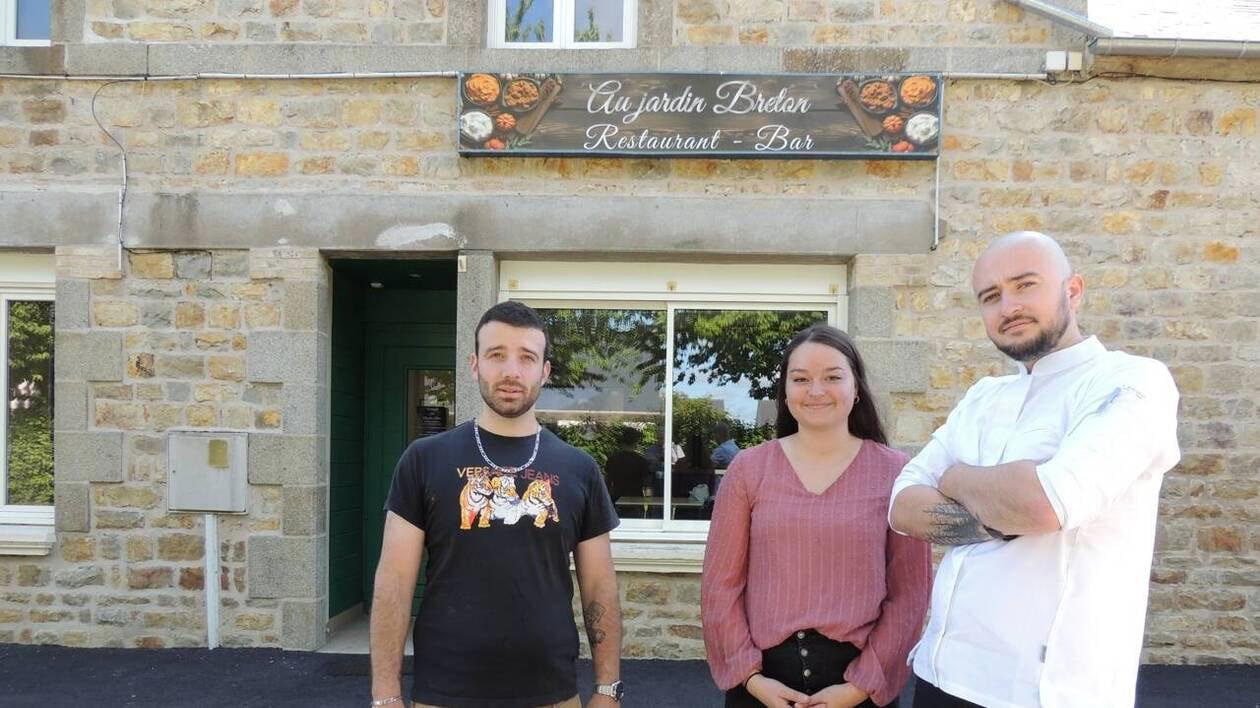
Brittany's Larder and the Rural Auberge Tradition
France's most compelling provincial cooking rarely happens in city centres. It happens in villages like Combourtillé, a commune in Ille-et-Vilaine where the farmland of eastern Brittany stretches out in a pattern that has fed the region for centuries. The department produces some of France's most serious agricultural output: dairy from Breton cows, pork from free-range Breton black pigs, vegetables grown in famously temperate Atlantic coastal conditions, and seafood arriving from the nearby Breton coastline in a supply chain that urban restaurants envy and struggle to replicate. Au jardin breton, at 1 Le Pigeon Blanc in Combourtillé, operates within this context, and that context matters more than any single dish on the menu.
The rural auberge as a format has a specific logic in France. Unlike urban bistros that must source from wholesale markets, a well-placed country house restaurant can maintain direct relationships with producers within a tight radius. In Brittany, that radius contains an unusual density of quality: the bocage farmland of Ille-et-Vilaine, the oyster beds of the Bay of Morlaix, the salted butter culture that defines Breton cooking at every price point. When a restaurant in this geography commits seriously to its sourcing, the provenance case makes itself. The question for any visit to Au jardin breton is whether the kitchen draws on that geography with genuine intention or merely proximity.
What the Setting Communicates
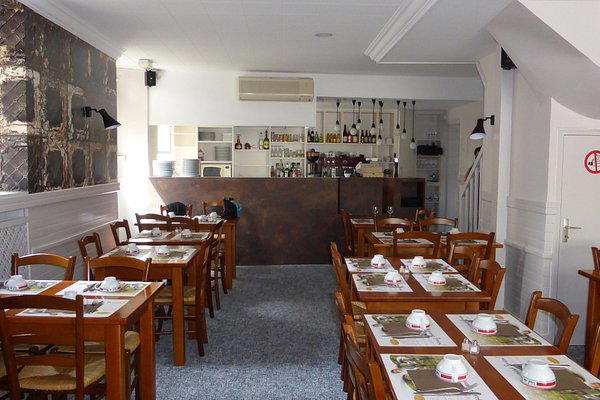
Arriving at a village address in rural Ille-et-Vilaine already tells you something about format expectations. This is not a destination engineered for spectacle. The approach through Combourtillé, a working agricultural commune rather than a manicured tourist village, signals that the draw is in the plate and the particularity of place, not in designed arrival sequences or panoramic terraces. Restaurants that sustain themselves in locations like this do so on repeat local custom and word-of-mouth from visitors who came once and returned. That pattern of loyalty implies a kitchen focused on consistency and honest value rather than on headline-grabbing innovation.
The name itself is instructive: jardin invokes the kitchen garden tradition that has defined French provincial cooking since long before farm-to-table became a marketing category. In Brittany, where smallholding culture persists and market gardens survive alongside larger agricultural operations, that reference is less nostalgic than it might sound in Paris or Lyon. It describes an actual relationship with grown produce that shapes a menu through season and availability rather than through a chef's abstract concept.
Ingredient Sourcing and the Breton Cooking Argument
Brittany's position in French gastronomy has always rested on its primary products rather than on haute cuisine pedigree. The region contributes to France's table at the ingredient level, the butter, the crêpes, the charcuterie, the shellfish, the artichokes, and its cooking tradition is one of honest transformation rather than elaborate technique. Restaurants working in this tradition are making a different argument from the three-star houses that draw on Breton products but filter them through Parisian or globally influenced kitchens. Places like Mirazur in Menton or Alléno Paris au Pavillon Ledoyen in Paris represent one end of the French fine dining spectrum, technically ambitious, internationally referenced, priced at €€€€ and booked months ahead. Au jardin breton in Combourtillé occupies a different position entirely: the provincial auberge that earns its place through fidelity to the land around it rather than through competition with destination dining institutions.
That distinction shapes how to read the menu. Rural Breton cooking at its honest leading leans on slow-cooked meats, fresh dairy-based sauces, seasonal vegetables, and the kind of structured simplicity that takes confidence to sustain across years. The sourcing geography available to a restaurant in eastern Brittany, pork, poultry, root vegetables, dairy, supports exactly that register. Compare this with a restaurant in a similarly rural French setting: Bras in Laguiole built its case on the flora of the Aubrac plateau; Auberge du Vieux Puits in Fontjoncouse drew on the garrigue and wild herbs of the Aude. In each case, place specificity was the argument. For the restaurant, that argument runs through Brittany's agricultural identity.
How It Sits in the French Provincial Dining Picture
France's provincial restaurant scene divides roughly into three tiers. At the summit sit the destination houses, Georges Blanc in Vonnas, Maison Lameloise in Chagny, Troisgros - Le Bois sans Feuilles in Ouches, and Paul Bocuse - L'Auberge du Pont de Collonges in Collonges-au-Mont-d'Or, institutions with international recognition, extensive wine cellars, and prices to match. Below them sits a layer of regionally recognised addresses with Michelin attention and growing reputations. Below that, and closest to the original French restaurant tradition, are the auberges and maisons de famille that sustain village cooking and local community without seeking broader recognition. The restaurant belongs to that third category, and it is a category worth taking seriously. Some of France's most satisfying meals happen at addresses the international press has never visited.
For context on what Brittany-adjacent cooking at higher price points looks like, Flocons de Sel in Megève and Les Prés d'Eugénie - Michel Guérard in Eugénie-les-Bains demonstrate how regional French cooking can operate at the highest level when ambition and resource align. Those are reference points, not benchmarks for a village auberge in Ille-et-Vilaine, the comparison clarifies what type of experience each format offers rather than ranking one above the other.
Planning a Visit
Combourtillé is a rural commune in the Vitré arrondissement of Ille-et-Vilaine, roughly equidistant from Rennes and Laval, both accessible by TGV from Paris Montparnasse in under two hours, with road connections covering the final stretch east of Rennes in around forty minutes. The address at Le Pigeon Blanc is not navigable by public transport from the city; a car or private transfer is the practical approach for any visitor arriving from outside the region. Given the commune's scale, reservations are advisable even outside peak summer months, when rural Brittany sees increased travel from within France as well as from visiting Europeans.
At-a-Glance Comparison
Comparable venues nearby, for context on price, style, and recognition.
| Venue | Cuisine | Price | Notes |
|---|---|---|---|
| Au jardin bretonThis venue — the venue you are viewing | French Bistronomique | $$ | Not listed |
| Le Reflet | Modern French Bistro | $$ | Decré |
| Le Bretagne | Traditional French Terroir Bistro | $$ | Centre-ville |
| Le Chef et sa Femme | Traditional French Bistronomie | $$ | >null |
| La Fenderie | Traditional French Bistro with Local Seasonal Cuisine | $$ | Deux-Evailles |
| La Marinière | French Seafood | $$ | Les Mielles |
Continue exploring
More in Combourtille
Restaurants in Combourtille
Browse all →
At a Glance
- Cozy
- Rustic
- Casual Hangout
- Local Sourcing
Current opening hours
- Monday
- Closed
- Tuesday
- 12–3 PM
- Wednesday
- 12–3 PM
- Thursday
- 12–3 PM
- Friday
- 12–3 PM, 5:30–11 PM
- Saturday
- 6–11 PM
- Sunday
- 12–4 PM
Hours can change for holidays and private events. Last verified .