Titanic Distillers

Titanic Distillers occupies the Thompson Dock and Pumphouse on Queen's Road, one of Belfast's most historically loaded industrial sites. Awarded Pearl 2 Star Prestige in 2025, it sits at the serious end of Northern Ireland's emerging spirits scene. The setting alone places it in a different register from a conventional distillery visit.
 Discover on Pearl
Pearl is the En Primeur Club membership app — saves, bookings, and concierge access live there. Same editors, same standards.
- Address
- Thompson Dock & Pumphouse, Queens Rd, Belfast BT3 9DT
- Phone
- +44 28 9099 2992
- Website
- titanicdistillers.com
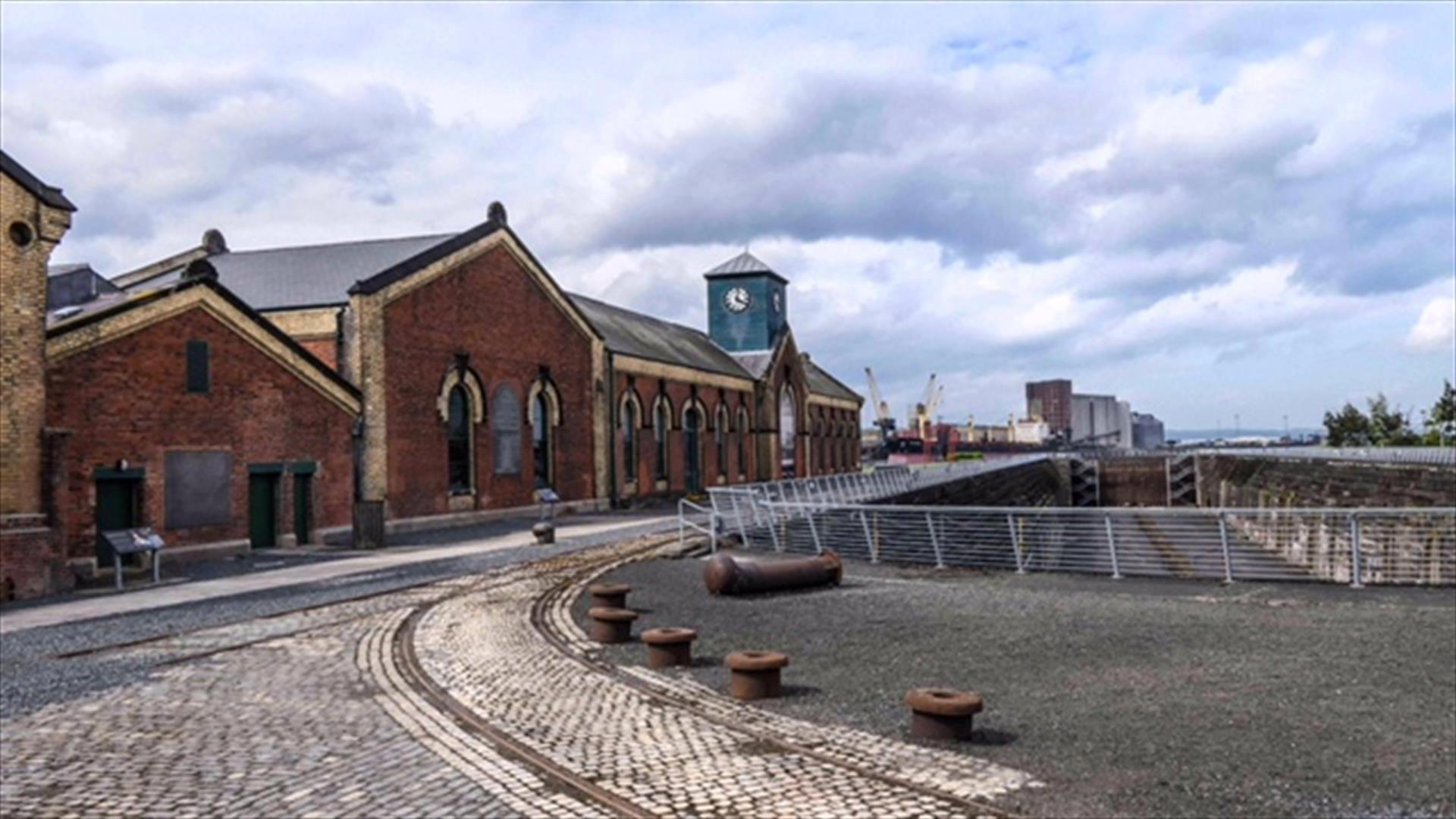
Where Industrial Belfast Meets the Still
The Thompson Dock is not a backdrop. It is the largest dry dock in the world by the time it was completed, the facility where RMS Titanic was fitted out before her 1912 departure. Standing at the Pumphouse on Queen's Road today, the weight of that engineering history is structural and literal: cast iron, brick, the geometry of Victorian infrastructure built to the tolerances of ships that weighed tens of thousands of tonnes. Titanic Distillers operates inside this fabric, which immediately frames it within a different category from purpose-built visitor centres or converted warehouse operations.
Belfast's drinks scene has developed considerably over the past decade, moving from a pub-and-stout baseline toward a more considered tier that includes craft distilling, natural wine bars, and cocktail programmes with genuine technical ambition. For the distillery format specifically, location and provenance carry disproportionate weight. The Thompson Dock and Pumphouse address on Queen's Road places Titanic Distillers firmly in the Titanic Quarter, east of the city centre across the Lagan, in the same precinct as the Titanic Belfast museum and the former Harland and Wolff drawing offices. The neighbourhood functions as a concentration of Belfast's industrial memory, and any producer operating here is in conversation with that context whether they choose it or not.
Pearl 2 Star Prestige: What the 2025 Recognition Signals
In 2025, Titanic Distillers was awarded Pearl 2 Star Prestige by EP Club, a rating that positions it at the serious end of the distillery category. Within the broader field of British and Irish whiskey and spirits production, a 2 Star Prestige designation indicates a venue operating above the baseline visitor experience, with the quality of the product, the integrity of the production environment, and the depth of the tasting or tour format all contributing to that assessment.
Context helps calibrate this. Across Scotland and Ireland, distilleries have split into two broad tiers: large-scale heritage operations with high visitor throughput and established brand recognition, and smaller, more specialist producers where format discipline and production transparency matter more than footfall. Titanic Distillers, based on its 2025 award standing, belongs to the latter cohort. Comparable distilleries in the specialist tier across the British Isles include operations like Ardnahoe in Port Askaig, Dornoch Distillery in Dornoch, and Dunphail Distillery in Dunphail, all of which operate with lower production volumes and a visitor experience oriented around the craft rather than the brand story.
The Pearl 2 Star rating in the EP Club framework is not a participation award. It reflects a demonstrated standard. For a distillery operating on the eastern edge of Belfast in a working industrial dock, achieving this level of recognition in 2025 confirms that Titanic Distillers is not trading purely on its extraordinary address.
The Terroir of the Thompson Dock
The concept of terroir is usually applied to wine, where land, climate, and water chemistry shape what ends up in the glass. In spirits production, the same logic applies differently but just as materially. Water source, local grain supply, the microclimate of the maturation environment, and the character of the production site all leave measurable traces. The Thompson Dock and Pumphouse sit at the junction of the River Lagan and Belfast Lough, a tidal estuary with a specific mineral profile and a damp, maritime air that affects any spirit ageing in the vicinity.
Northern Ireland's distilling tradition is distinct from both Scotch and the broader Irish category. The Irish whiskey revival of the past fifteen years has been concentrated largely in the Republic, with a surge of new distilleries in counties Cork, Tipperary, and Clare. Northern Ireland has seen less activity, which means producers like Titanic Distillers are operating in a category with considerable room. The regional identity of a spirit made at the Thompson Dock draws on something specific: the salt in the Lough air, the historical density of the site, the fact that Belfast's water comes from the Mourne Mountains via the Silent Valley reservoir. These are not marketing variables. They are production conditions.
For comparison, the influence of geography on spirit character is well documented across Scottish operations. Balblair Distillery in Edderton draws on Dornoch Firth water in the northern Highlands. Clynelish Distillery in Brora has a coastal waxiness that distillers attribute to its North Sea exposure. Auchentoshan Distillery in Clydebank carries the character of a Lowland site. In each case, place shapes product in ways that are traceable and consistent. The same principles apply in Belfast.
Reading the Site as a Visitor
Visitors arriving at Queen's Road approach via the Titanic Quarter, accessible by Glider rapid transit from the city centre or by taxi from around the Europa Bus Centre. The industrial scale of the dock becomes apparent before you reach the building: the Pumphouse is a Victorian structure of red brick and sandstone, sitting adjacent to the Thompson Dry Dock itself, which remains visible and unfilled. That proximity to the dock is not incidental to the experience. It is the experience.
Booking is recommended, and the price is about $25 per person. Given the industrial site setting and the 2 Star Prestige designation, advance planning is wise.
Placing Titanic Distillers in the British and Irish Spirits Map
The British and Irish distilling revival over the past two decades has produced a genuinely varied field. Scotland's output remains dominant in volume and global recognition, with houses like Aberlour, Cardhu, Glen Garioch Distillery in Oldmeldrum, and Glen Scotia in Campbeltown representing different regional expressions. Ireland's resurgence has added a new generation of producers working with pot still and grain whiskey across the Republic. Northern Ireland, with its own distinct regulatory and cultural identity, represents a third current that does not map neatly onto either tradition.
Titanic Distillers is positioned at the intersection of this regional specificity and the international credibility that a 2 Star Prestige award in 2025 confers. For spirits drinkers already familiar with the range on offer from Bladnoch Distillery in Bladnoch, Deanston, or Balblair, adding a Belfast-made spirit to that geography makes both sensory and intellectual sense. The provenance is distinct, the site is unlike anything else in the category, and the award record suggests the liquid meets the ambition of the address.
For context on how place-driven producer identity operates in wine as well as spirits, the model is visible in operations as geographically different as Accendo Cellars in St. Helena or Achaia Clauss in Patras, where the origin story is inseparable from what you taste. At Thompson Dock, the same logic applies with unusual force: the site is not dressing. It is an argument about where this spirit comes from and why that matters.
In Context: Similar Options
Comparable venues nearby, for context on price, style, and recognition.
| Venue | Cuisine | Price | Awards | Notes |
|---|---|---|---|---|
| Titanic DistillersThis venue — the venue you are viewing | Northern Ireland | $$ | 1 recognition | |
| Sonoma-Cutrer Vineyards | Winery | , | 1 recognition | Windsor |
| Abbey Lands Distillery | North Yorkshire | , | , | Abbey Lands |
| Marcassin Winery | Winery | , | 1 recognition | Windsor |
| Springbank | Campbeltown | $$ | 1 recognition | |
| Glengyle (Kilkerran) | Campbeltown | $$$ | 1 recognition |
At a Glance
- Historic
- Industrial
- Scenic
- Solo Exploration
- Wine Education
- Historic Building
- Private Tasting
- Sustainable
- Waterfront
Blend of century-old industrial history and modern distillery operations with engaging, knowledgeable guides.