Arthur Bryant's Barbeque
Our verdict
Few addresses in American barbecue carry the historical weight of Arthur Bryant's on Brooklyn Avenue. Operating from the same Kansas City block for decades, this is the counter where presidents and factory workers have queued for the same smoke-heavy ribs and pulled pork. The sauce recipe, the brick-walled room, and the no-ceremony service model place it firmly in the canon of American regional cooking.

Pearl is the En Primeur Club membership app, where members save venues, book tables and use the concierge.
The menu
What to order
- Burnt ends
- Slow-smoked ribs
- Beef brisket
- Pulled pork
The Weight of Smoke on Brooklyn Avenue
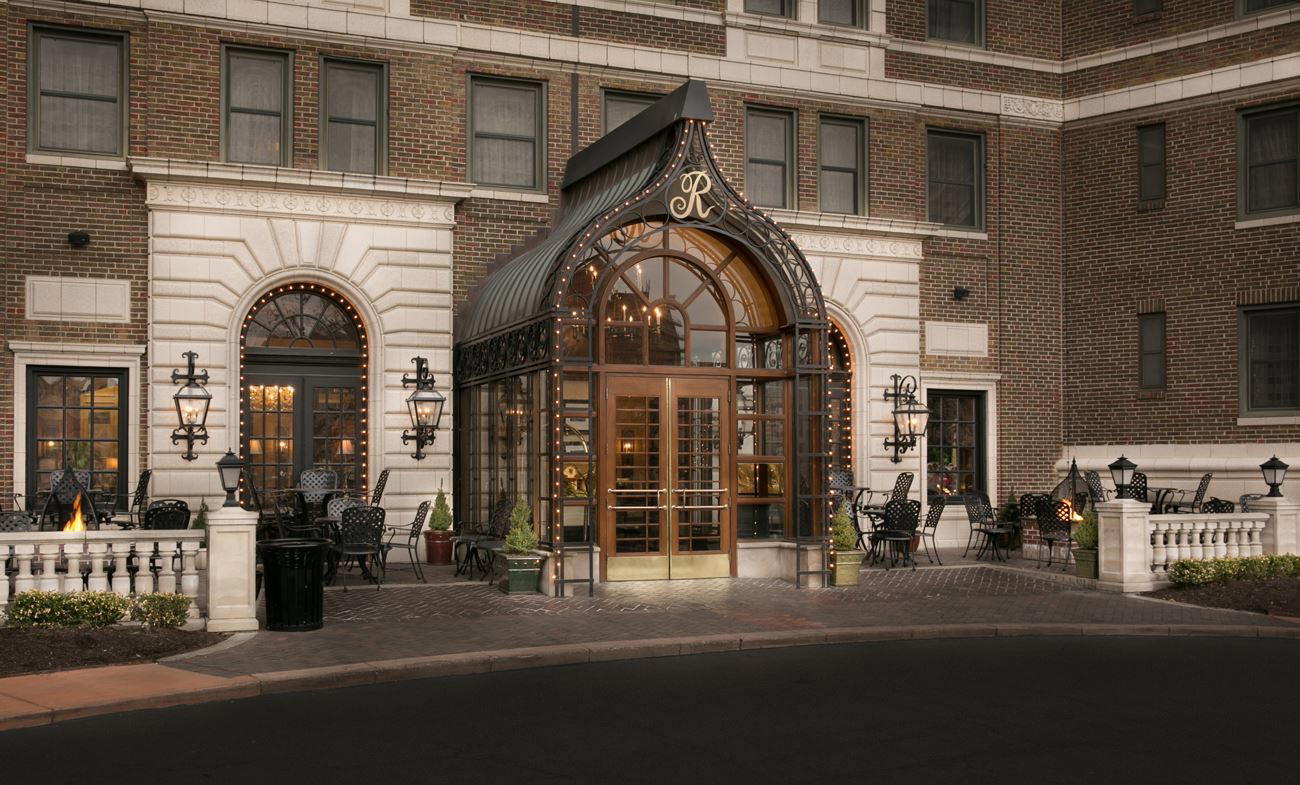
Approach 1727 Brooklyn Ave on a weekday afternoon and the cues are olfactory before they are visual. Wood smoke drifts from the back of the building across a stretch of Kansas City's 18th and Vine district that has been synonymous with blues, barbecue, and working-class civic identity for the better part of a century. The building itself offers no pretense: the exterior is functional, the signage direct. What draws the line out the door is reputation earned across decades, not design investment.
This is a room that operates outside the vocabulary of contemporary dining. There are no tasting menus, no reservation portals, no architectural statements. Kansas City's barbecue tradition is broadly a walk-in, counter-service tradition, and Arthur Bryant's represents that format at its most historically concentrated. In a city where the competition between pits is taken with genuine seriousness, this address on Brooklyn Avenue functions as something closer to a reference point than a restaurant.
Kansas City Barbecue in Context
To understand Arthur Bryant's position in Kansas City's dining order, it helps to understand what Kansas City barbecue is and is not. Unlike Texas brisket culture, which centres the beef and privileges long low-heat smoking with minimal sauce intervention, or the pulled-pork traditions of the Carolinas, Kansas City's style encompasses a wider protein range, beef, pork, chicken, and lamb all appear on serious menus, and places the sauce at the centre of the identity equation. The sauce is thick, tomato-forward, and carries a sweetness tempered by vinegar and spice. At Arthur Bryant's, the house sauce has been a point of local argument and national coverage for generations.
The city's barbecue scene has diversified considerably since the 1980s. Counter-service operations like LC's have built strong followings on the east side. Joe's Kansas City (formerly Oklahoma Joe's) has grown from a gas station location into a multi-site operation that regularly draws national food media attention. Within that broader competitive field, Arthur Bryant's occupies a distinct position: it is the address that national critics, visiting politicians, and barbecue historians tend to cite as the origin point of the modern Kansas City tradition. That status comes with both authority and a kind of frozen-in-amber quality that more recent openings do not carry.
The Progression of a Meal
The structure of eating at Arthur Bryant's follows the logic of counter-service barbecue rather than any formal tasting sequence, but there is still a progression worth thinking through before you queue. The decision architecture at the counter is deliberately narrow: choose your protein or proteins, choose your sides, choose your bread. The meat is the argument and everything else is supporting evidence.
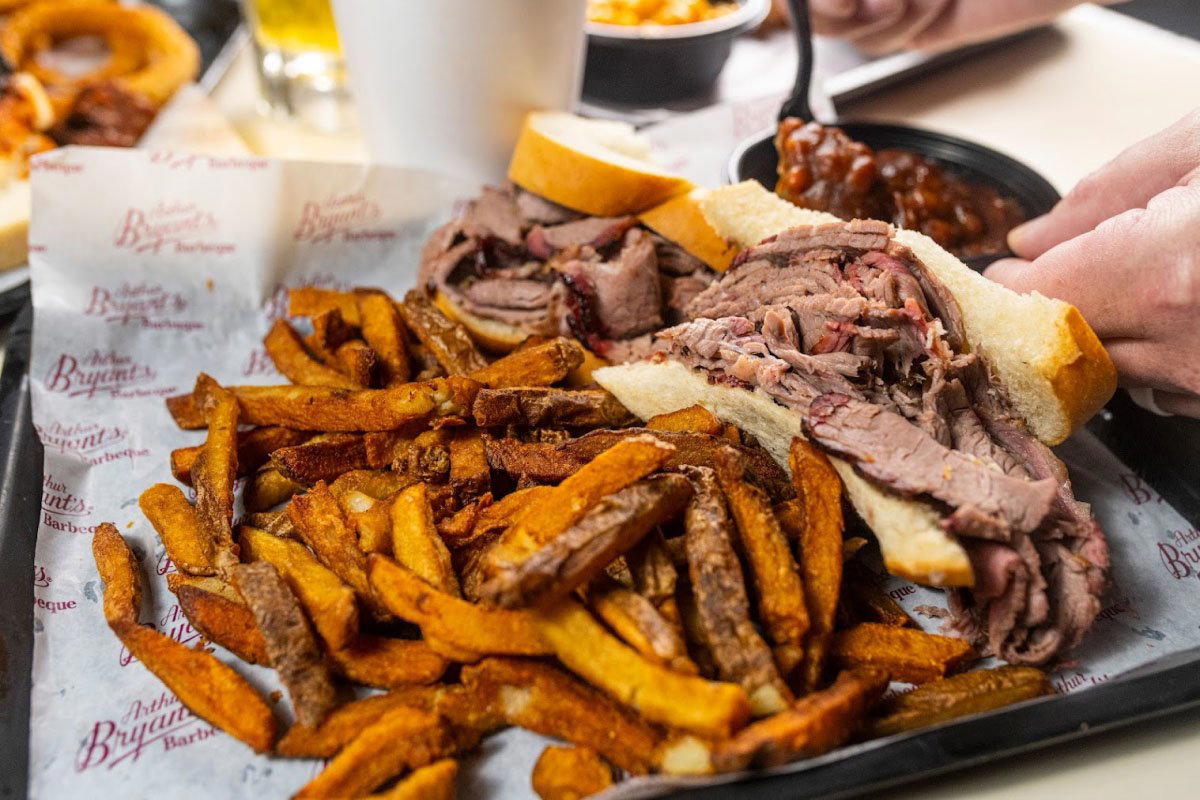
Start with the ribs if the cut is available when you arrive. Kansas City-style ribs, whether spare ribs or baby backs, are the regional format against which most visiting critics form their initial impressions of the city's tradition. The smoke ring is the visual indicator of pit time, and the pull of properly cooked rib meat from the bone is the tactile confirmation. From there, the burnt ends represent the most distinctly Kansas City item on any serious menu: the charred, fatty tip sections of the beef brisket point, which were historically given away as scraps before barbecue tourism transformed them into a sought-after item. Their texture is different from sliced brisket, more concentrated in both fat and bark, and they function as a second act in a meal rather than a replacement for the ribs.
Bread in Kansas City barbecue is not incidental. White bread, typically soft and sliced thick, serves as both the structural base for a sandwich and the vehicle for soaking up sauce and rendered fat. It is worth eating some of the meat unadorned before applying the house sauce, which allows the smoke character to read clearly before the tomato-vinegar profile takes over. The sauce at Arthur Bryant's is the specific thing that most food writers mean when they refer to the house style, and it reads differently against fatty burnt ends than against leaner sliced brisket.
Sides at Kansas City barbecue counters tend toward the functional rather than the elaborate. Baked beans, coleslaw, and fries anchor most menus. These are not the places to apply fine-dining expectations about vegetable cookery or plate composition. They exist to balance the richness of the meat and to fill out a tray that might otherwise tip toward pure protein.
Where Arthur Bryant's Sits in the Broader Dining Order
Kansas City's restaurant scene has developed considerably beyond its barbecue identity. Operations like Affäre and Antler Room represent a serious fine-dining tier with European technique and tasting-menu formats. Aixois and blue bird bistro anchor a neighborhood bistro and café culture that has grown substantially over the past decade. Beer Kitchen represents a gastropub tier that connects the city's craft beer growth to the food program.
Arthur Bryant's does not compete with any of these. It occupies a category that the tasting-menu format at Le Bernardin in New York City, Lazy Bear in San Francisco, or The French Laundry in Napa cannot replicate: a specific regional cooking tradition practiced at scale, without ceremony, at a location with documented historical significance. The same argument applies when comparing it to Smyth in Chicago, Providence in Los Angeles, or Blue Hill at Stone Barns in Tarrytown. Those venues operate inside a fine-dining framework that prizes restraint, seasonality, and progression. Arthur Bryant's operates inside a tradition where the pit, the sauce, and the queue are the entire system. The reference points are not Addison in San Diego or Atomix in New York City or Atelier Moessmer Norbert Niederkofler in Brunico, they are the other serious wood-smoke operations within driving distance of Missouri and Kansas.
For a fuller picture of where Arthur Bryant's fits within the city's dining geography, our full Kansas City restaurants guide maps the range from counter-service barbecue through the fine-dining tier. Also relevant for regional context: Emeril's in New Orleans, Single Thread Farm in Healdsburg, and The Inn at Little Washington in Washington represent the broader American fine-dining tradition against which regional specialists like Arthur Bryant's are often, somewhat unfairly, measured.
Planning Your Visit
Arthur Bryant's operates on a walk-in basis. There is no booking system for the standard dining room, which means arrival time matters more than planning lead time. Lunch hours on weekends tend to produce the longest queues. The address at 1727 Brooklyn Ave places it in the 18th and Vine Historic District, accessible by car and within range of the American Jazz Museum and the Negro Leagues Baseball Museum, which makes it a logical anchor for a half-day in that part of the city. Come early or late in the lunch window to avoid the peak queue, and bring cash as a precaution given the counter-service format.
Frequently asked questions
Where is Arthur Bryant's Barbeque in Kansas City?
Arthur Bryant's Barbeque is located at 1727 Brooklyn Ave, Kansas City, MO 64127, Kansas City.
What is Arthur Bryant's historical significance in Kansas City barbecue?
Arthur Bryant's on Brooklyn Avenue has operated as a Kansas City barbecue landmark since the mid-twentieth century, long enough that the address itself has become a reference point in American barbecue writing. The restaurant is credited with bringing the Kansas City style, thick, tomato-and-vinegar sauce, heavily smoked ribs and brisket, to national attention, including a famous endorsement from journalist Calvin Trillin, who called it one of the greatest restaurants in the world. That context places it alongside Joe's Kansas City and Gates Bar-B-Q as the three institutions that define what Kansas City barbecue means to outside visitors.
What should I order at Arthur Bryant's Barbeque?
Arthur Bryant's is a Kansas City-style counter where the focus is smoked meat rather than composed plates, so the order of operations is simple: pick your protein at the counter, add white bread and a side, and eat. Kansas City barbecue in this tradition means low-and-slow smoke over hardwood, with sauce applied at the end rather than cooked in, the sauce at Bryant's has been a reference point for the style since the mid-twentieth century. First-timers consistently gravitate toward burnt ends, the fatty brisket point pieces that Kansas City barbecue effectively made a national fixture.
Do they take walk-ins at Arthur Bryant's Barbeque?
Arthur Bryant's operates on a walk-in basis at 1727 Brooklyn Ave, Kansas City, there is no reservations system for the main dining room. Arrival time is the operative variable: weekday lunch and weekend afternoons draw the longest lines, and the kitchen sells through its smoked inventory until it runs out. Coming mid-morning on a weekday or in the early evening typically means shorter waits.
The Essentials
Comparable venues nearby, for context on price, style, and recognition.
| Venue | Cuisine | Price | Notes |
|---|---|---|---|
| Arthur Bryant's BarbequeThis venue (the venue you are viewing) | Kansas City-Style Barbecue | $20–30 | Not listed |
| Torn Label Brewing Co. | Craft Beer & Creative American Gastropub | $20–30 | Hospital Hill, Craft Beer & Creative American Gastropub |
| Char Bar Barbecue KC | Southern-Inspired Kansas City BBQ | $20–30 | Westport, Southern-Inspired Kansas City BBQ |
| Fud | Vegan Comfort Food with Raw Options | Not listed | Crossroads, Vegan Comfort Food with Raw Options |
| Room 39 | Farm-to-Table Contemporary American | $20–30 | Midtown, Farm-to-Table Contemporary American |
| Beer Kitchen | American Gastropub | $20–30 | Westport, American Gastropub |