Arroyo Vino

Michelin Plate
Our verdict
Arroyo Vino occupies a distinct position in Santa Fe County's dining scene, where the high desert setting shapes both the agricultural calendar and the way serious restaurants source and serve. Located at 218 Camino La Tierra, the property draws from a regional tradition that prizes local producers and wine-forward programming, placing it alongside a small tier of New Mexico destinations where the table and the land operate in close conversation.

Pearl is the En Primeur Club membership app — saves, bookings, and concierge access live there. Same editors, same standards.
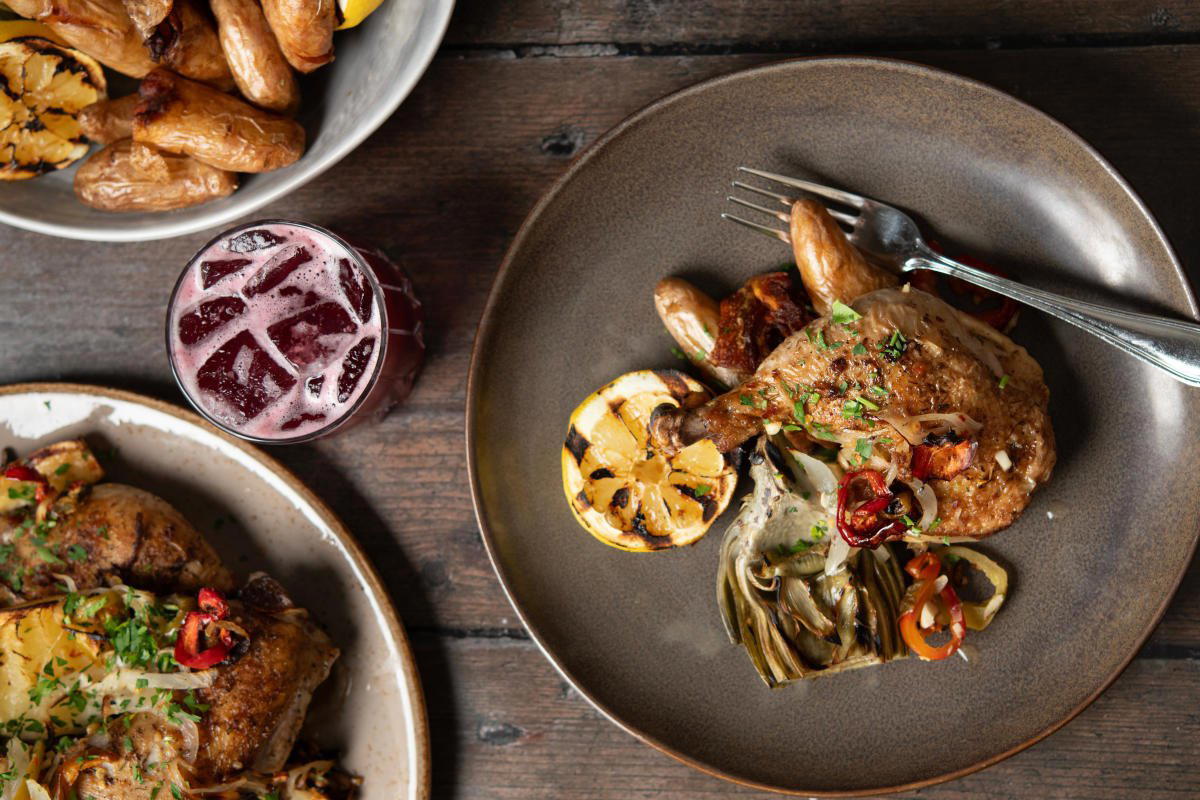
The menu
What to order
- Dry-Aged Peking Duck Duo
- Porcini Tagliatelle
Where the High Desert Sets the Table
Santa Fe's dining identity is built on a tension that few American cities manage as naturally: the pull between indigenous agricultural traditions stretching back centuries and a contemporary fine-dining ambition that arrived, flourished, and matured over the past four decades. The result is a city where serious restaurants are expected to engage with their geography, not merely occupy it. Arroyo Vino, situated at 218 Camino La Tierra on the western edge of Santa Fe County, sits within that expectation. The address alone signals something about orientation: Camino La Tierra, the Road of the Earth, runs through a terrain of juniper, piñon, and high-desert scrub that frames the property before you reach the door.
This part of Santa Fe County operates differently from the Canyon Road gallery corridor or the downtown Plaza restaurants. The setting is quieter, the approach more considered, and the implicit contract with the guest tilts toward a certain kind of evening: unhurried, wine-aware, rooted in what the surrounding region produces. In that regard, Arroyo Vino belongs to a broader category of American wine-country restaurants where the cellar and the kitchen are designed to operate as equal partners rather than the wine list functioning as an afterthought to the food, or vice versa. The comparison set here is not the packed bistros of downtown Santa Fe but rather destination properties where the journey to the table is part of the proposition — venues like Single Thread Farm in Healdsburg or Blue Hill at Stone Barns in Tarrytown, where land, season, and cellar converge into a deliberate format.
The Cultural Architecture of New Mexico Cuisine
Understanding where Arroyo Vino fits requires a brief map of New Mexico's culinary geography. The state's food culture is structured around Pueblo and Hispano agricultural traditions — blue corn, chile varieties that are geographically specific (Hatch in the south, Chimayó in the north), squash, beans, and lamb, overlaid with the Spanish colonial kitchen and, in the twentieth century, a wave of Anglo and international cooking that introduced wine culture, European technique, and a market for premium dining experiences. Santa Fe became the fulcrum of that convergence. By the 1980s, it was producing restaurants of national reach; by the 1990s, a recognizable Santa Fe cuisine had emerged, chile-forward but technique-serious, proud of its provenance.
The restaurants that matter in this context are those willing to work within that tradition rather than import a generic fine-dining template. Locally, properties like Terra and Black Mesa Rd operate within the same geography and share the challenge every serious Santa Fe restaurant faces: how to engage meaningfully with a culinary tradition that is genuinely deep and politically charged without reducing it to decoration. For a fuller picture of where these restaurants sit relative to one another, the EP Club Santa Fe County restaurants guide provides the most current comparative framework.
Wine as Structure, Not Supplement
American restaurants that make wine a structural principle rather than a supplementary revenue line tend to fall into a recognizable pattern: the cellar shapes the menu, seasonal availability informs both, and the floor staff are expected to guide with authority rather than recite a list. This format has proven durable across very different price tiers and geographies, from the formal precision of Le Bernardin in New York City to the more freewheeling wine-pairing ethos of Lazy Bear in San Francisco, or the regional specificity of Frasca Food and Wine in Boulder, which built its entire identity around a single Italian wine region. What these places share is the conviction that wine knowledge on the floor is not optional.
Arroyo Vino's positioning on Camino La Tierra, outside the urban core, reinforces this wine-destination logic. Guests do not arrive by accident; the location filters for intention. That filtering dynamic is common to the most wine-serious American properties, where physical remove from foot-traffic corridors is itself a signal about the guest the restaurant is designed for. Comparable dynamics operate at The French Laundry in Napa and, on a very different register, at Addison in San Diego, where the setting shapes the expectation before the menu arrives.
Where It Sits in the Broader American Fine-Dining Conversation
The American fine-dining tier has diversified considerably since the early 2000s. Restaurants like Smyth in Chicago, Providence in Los Angeles, and Atomix in New York City represent a shift toward tasting menus that are increasingly narrative, cultural, and produce-specific. At the same time, a parallel track of wine-forward, regionally grounded restaurants has grown in influence: properties where the season and the cellar dictate the evening's direction as much as any chef's technique. The Wolf's Tailor in Denver represents this energy in the Mountain West, as does, in a different register, ITAMAE in Miami and Emeril's in New Orleans in their respective regional contexts.
Arroyo Vino occupies a niche within that broader movement: a destination wine restaurant in a city known for its cultural richness and culinary ambition but not yet saturated at the level of a San Francisco or Chicago. That relative scarcity of direct competition at the wine-destination tier is part of what gives the property its position. For internationally curious diners looking at farm-and-cellar formats beyond American borders, Atelier Moessmer Norbert Niederkofler in Brunico and The Inn at Little Washington in Washington define the outer range of what this format can achieve at the highest tier.
Planning Your Visit
Arroyo Vino is located at 218 Camino La Tierra, Santa Fe, NM 87507, west of the city center in a rural stretch that requires a car or pre-arranged transport. The address is not walkable from downtown Santa Fe; guests arriving from the Plaza area should allow fifteen to twenty minutes by vehicle. Because specific booking windows, hours, and pricing are subject to change, the most reliable approach is to confirm directly via the property's current contact channels before planning around a specific date. Santa Fe's broader dining season peaks in summer and early fall, when the city's arts calendar and visitor numbers are both at their height; shoulder-season visits in spring or late autumn tend to offer a quieter experience at properties across the county.
Frequently asked questions
What's Arroyo Vino's location?
Arroyo Vino is located at 218 Camino La Tierra, Santa Fe, NM 87507, Santa Fe County.
Is Arroyo Vino worth the drive from central Santa Fe?
Arroyo Vino is located at 218 Camino La Tierra in Santa Fe County, west of the Plaza district in a rural stretch that requires a car or pre-arranged transport. The distance from the city center is part of the format: the property functions as a destination in itself rather than a stop within a walkable dining neighborhood. Visitors who treat the drive as the beginning of the evening rather than an inconvenience tend to get the most from the experience.
What should I order at Arroyo Vino?
Arroyo Vino's menu tracks New Mexico's agricultural seasons, so the server's lead on that evening's regional ingredients is the most reliable guide. The kitchen's orientation toward local producers means the strongest plates tend to be those built around what's in season in the high desert rather than imported centerpieces. Ask specifically what the kitchen is featuring that week and let the wine program inform the order from there.
Do they take walk-ins at Arroyo Vino?
Arroyo Vino sits at 218 Camino La Tierra, west of Santa Fe's city center, in a rural stretch that draws a deliberately paced, reservation-oriented crowd. Walk-in availability at this kind of destination property is unpredictable and seasonally driven. Contacting the restaurant ahead of arrival is the practical approach, particularly during Santa Fe's summer arts season when demand across the region tightens.
What's the defining dish or idea at Arroyo Vino?
The defining idea is the structural integration of wine into the dining experience rather than treating it as an add-on revenue line. Where most American restaurants present wine as a list, Arroyo Vino's format positions it as a framework the kitchen cooks toward.
Do they accommodate allergies at Arroyo Vino?
Allergy and dietary accommodation policies vary by kitchen format and shift capacity, and confirming specifics directly with the restaurant before your visit is the only reliable method. Seasonally driven menus built around a limited roster of regional producers can sometimes offer more flexibility than fixed tasting formats, but that depends on the night and the kitchen's current structure.
Is Arroyo Vino good value for money?
Restaurants that integrate serious wine programming with regionally sourced tasting menus typically price accordingly, and Arroyo Vino's rural Santa Fe County location, at 218 Camino La Tierra, positions it as a destination evening rather than a drop-in dinner. If the wine list is the reason you're going, the spend-per-person tends to reflect that priority.
Price and Recognition
Comparable venues nearby, for context on price, style, and recognition.
| Venue | Cuisine | Price | Awards | Notes |
|---|---|---|---|---|
| Arroyo VinoThis venue (the venue you are viewing) | Contemporary American | $30–50 | Michelin Plate | Not listed |
| Luminaria Restaurant | Modern American Southwestern Fusion | Not listed | Wine Spectator Award of Excellence | Downtown, Modern American Southwestern Fusion |
| Zia Diner | New Mexican Comfort Diner | Not listed | Not listed | Railyard, New Mexican Comfort Diner |
| Santacafé | Modern American with Southwestern Flair | $50–100 | Not listed | Downtown Santa Fe, Modern American with Southwestern Flair |
| Paloma Restaurant | Modern Mexican | $50–100 | Michelin Plate | Guadalupe Street, Modern Mexican |
| Radish & Rye | Farm-Inspired American Steakhouse with Southern Sensibilities | $50–100 | Not listed | Railyard District, Farm-Inspired American Steakhouse with Southern Sensibilities |
Recognition history
Dated appearances from independent guides and award organizations, with the underlying list record or original source where available.
Michelin Plate
Michelin
Continue exploring
More in Santa Fe
Restaurants in Santa Fe
All restaurants in Santa Fe →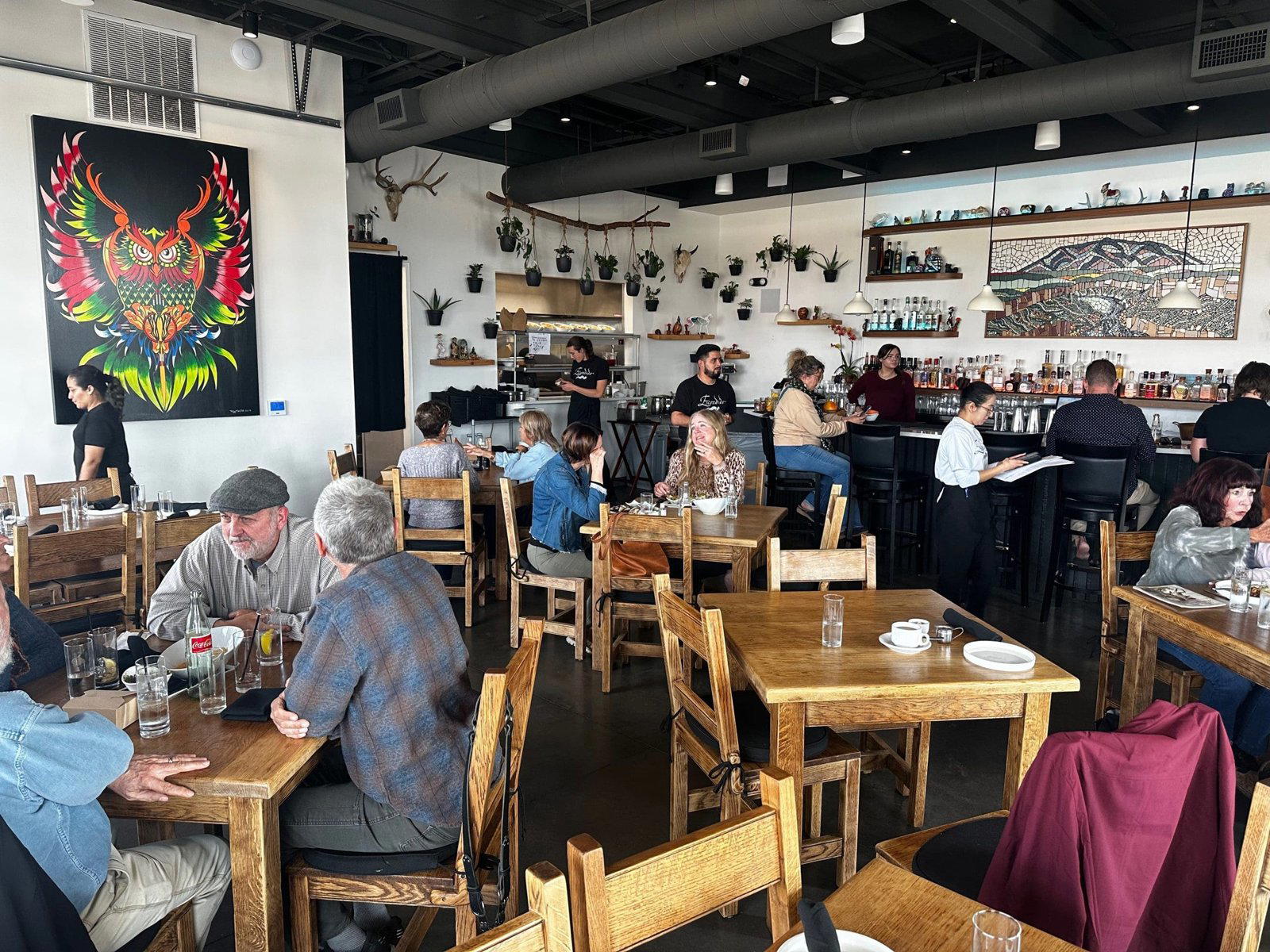

Bars in Santa Fe
All bars in Santa Fe →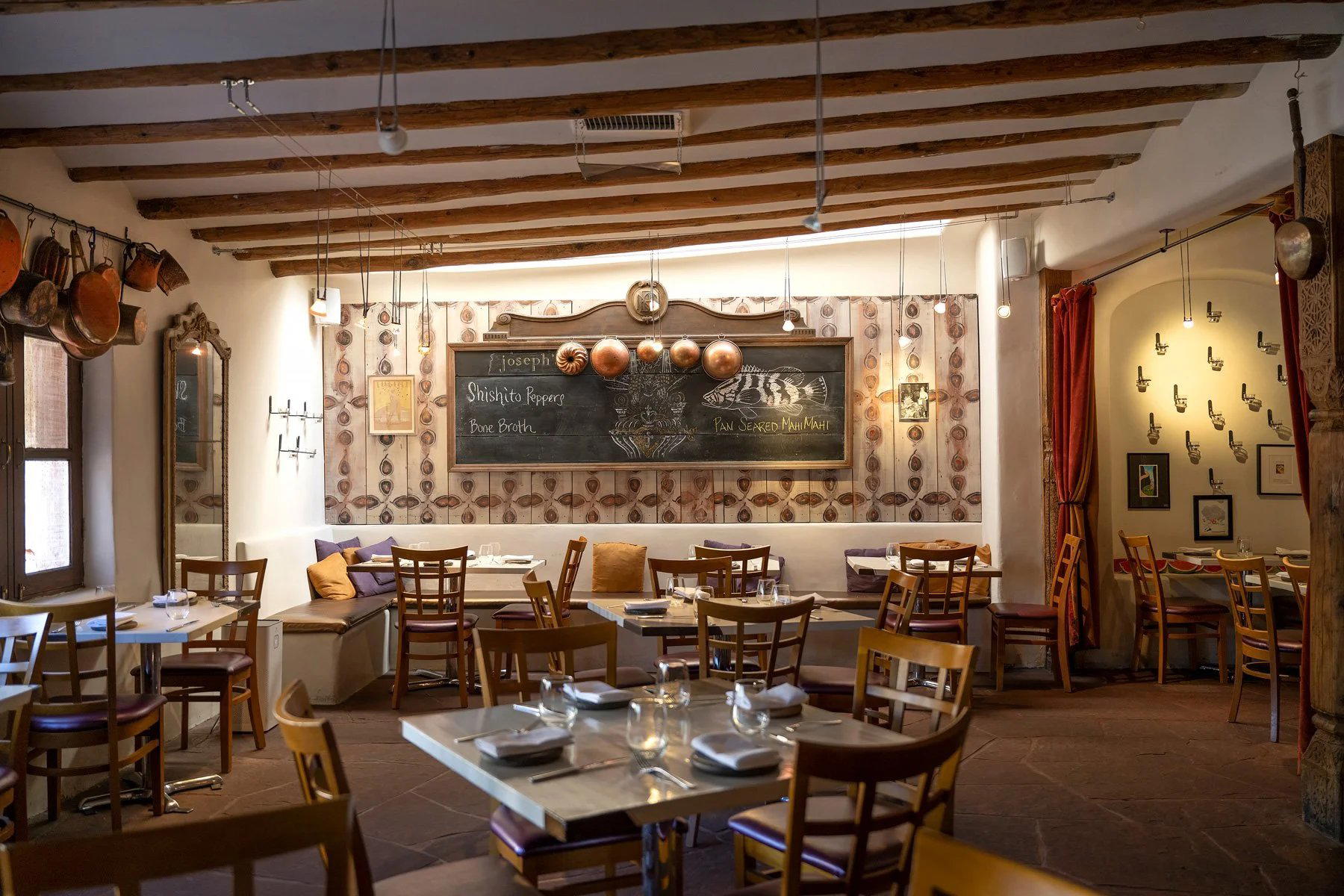
Arroyo Vino
The wine
- Wine program
- Deep wine list
- Extensive wine list
- Craft cocktails
Details
- Romantic
- Intimate
- Elegant
- Modern
- Date Night
- Special Occasion
- Wine Cellar
- Extensive Wine List
- Craft Cocktails
- Local Sourcing
- Mountain
- A La Carte
- Wine
- Vegetarian Friendly
- Gluten Free Options
Current opening hours
- Monday
- Closed
- Tuesday
- 11 AM–8 PM
- Wednesday
- 11 AM–8 PM
- Thursday
- 11 AM–8 PM
- Friday
- 11 AM–8 PM
- Saturday
- 11 AM–8 PM
- Sunday
- Closed
Hours can change for holidays and private events. Last verified .
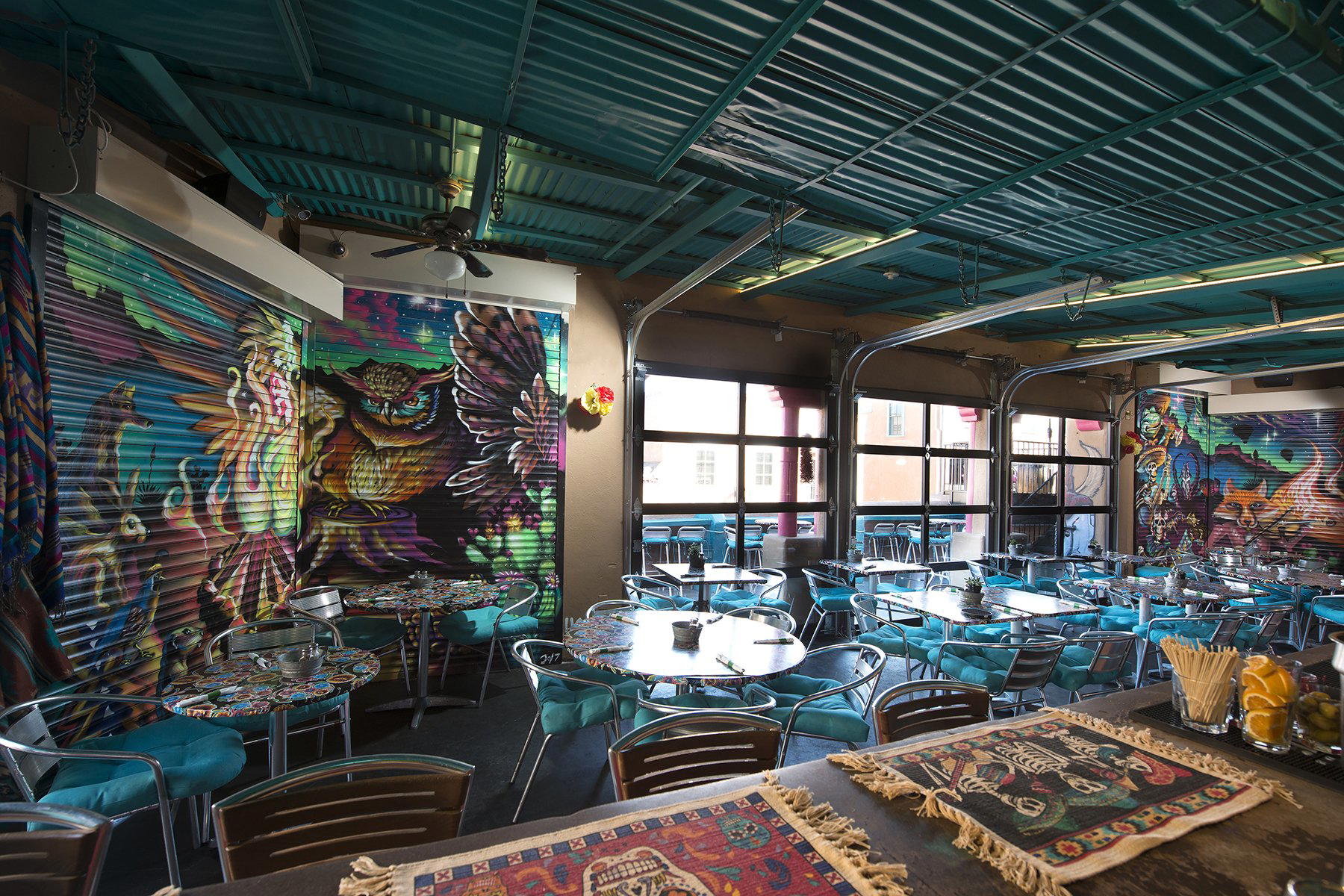
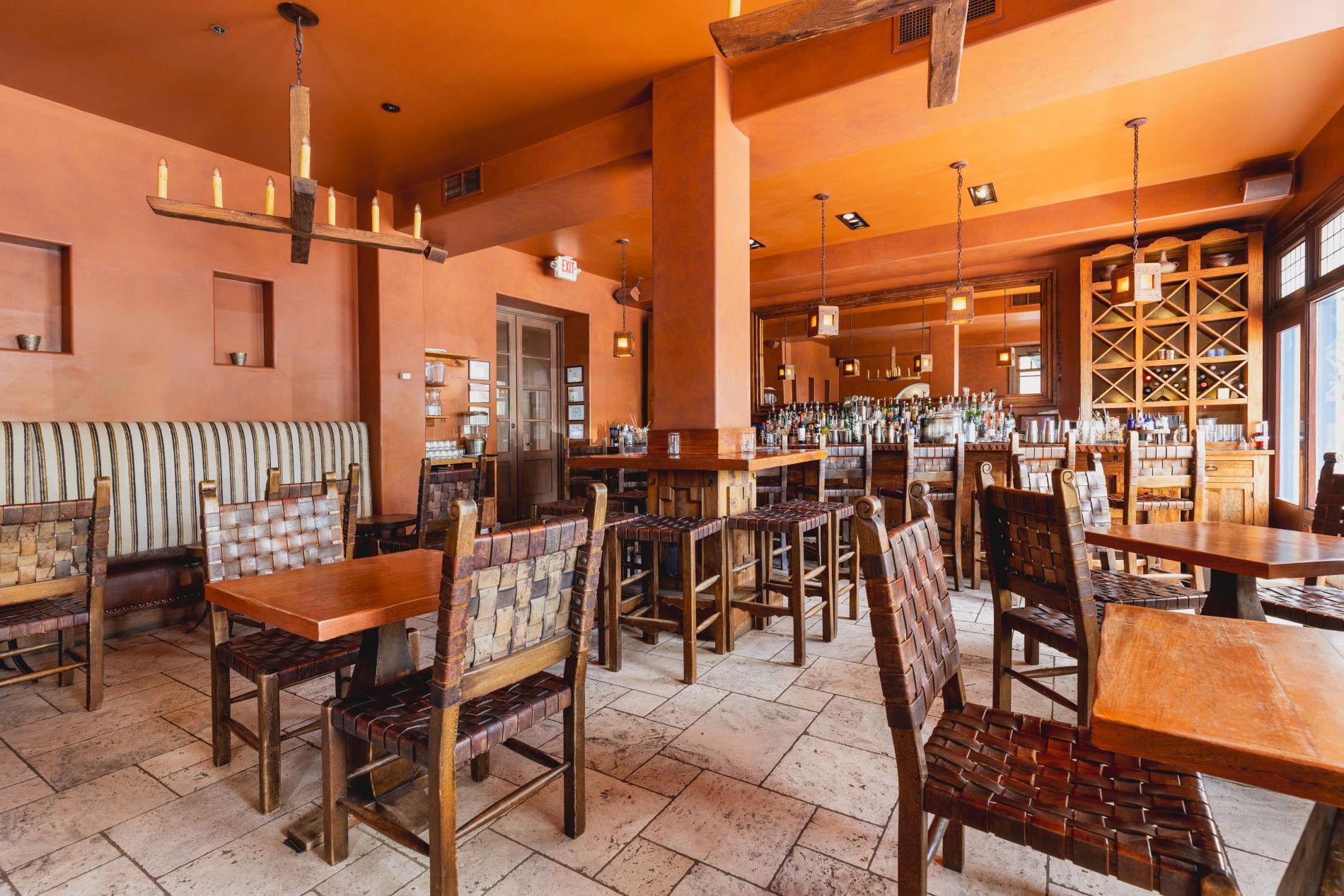
Sleek, modern bistro-style dining room with a busy yet intimate atmosphere.