
Tabelog 100 #57
Our verdict
Araki Soba places Murayama’s buckwheat culture in a plain-spoken rural setting, where soba is treated less as restaurant theater than as agricultural expression. Its Tabelog 100 Soba EAST selections in 2024 and 2025 put it in a serious regional conversation, while the low lunch price keeps the experience close to everyday Yamagata dining rather than luxury tasting-menu logic.

Pearl is the En Primeur Club membership app — saves, bookings, and concierge access live there. Same editors, same standards.
- Address
- Ko-65 Okubo, Murayama, Yamagata 995-0111, Japan
- Phone
- +81 237-54-2248
- Hours
- Mon–Tue 11 AM–2 PMWed ClosedThu–Sun 11 AM–2 PM
- Website
- arakisoba.com
- Directions
- Get directions
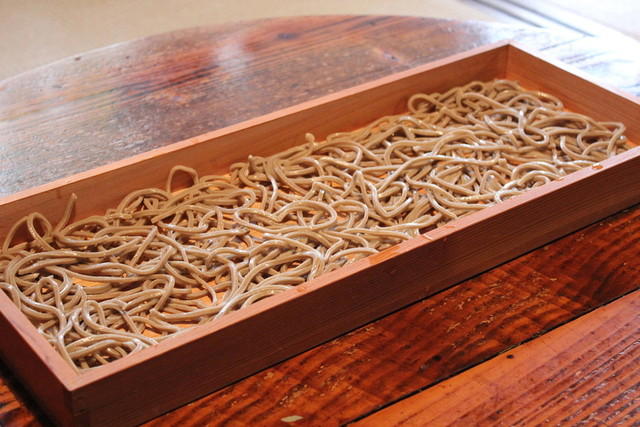
The menu
What to order
- Itasoba (板そば)
- Nishin no miso-ni (miso-simmered herring)
The approach to rural Yamagata soba is rarely theatrical. The signal is the house-restaurant setting, the tatami room, the compact service window, and the sense that buckwheat belongs to the surrounding fields before it belongs to a menu. In Murayama, that matters. Soba in this part of Japan is not an urban noodle trend dressed in craft language; it is a cold-climate grain tradition shaped by mountain agriculture, short growing seasons, and a preference for texture over embellishment.
Araki Soba sits squarely inside that tradition. Its selection for Tabelog 100 Soba EAST in both 2024 and 2025 gives it a measurable credential, but the more useful reading is contextual: this is a regional soba house operating in the same price band as everyday noodle shops, not a premium counter using rarity as the main argument. That combination explains its pull. The appeal is not luxury. It is concentration, restraint, and a format that leaves little room for distraction.
Buckwheat country, not noodle theater
Yamagata has one of Japan’s more persuasive soba cultures because the grain makes sense here. Buckwheat tolerates thinner soils and cooler conditions better than rice, and inland Tohoku developed soba as a practical food long before it became a marker of culinary seriousness. The result is a style of eating that often prizes chew, aroma, and dipping broth balance over decorative plating. In that setting, a soba house succeeds by making the grain legible.
The sourcing angle is the point. Soba is unusually exposed as a craft because the noodle has few places to hide. Wheat-heavy noodles can be flattered by fat, soup, or toppings; buckwheat announces itself through cut, texture, moisture, and timing. A small rural restaurant serving buckwheat noodles in a house-style room is therefore competing on fundamentals. When a place in Murayama appears on an EAST-wide Tabelog 100 soba list, the recognition suggests that those fundamentals are being judged beyond local loyalty.
That matters for travelers who arrive in Yamagata with ramen, fruit, beef, or mountain vegetables on the agenda. Soba offers a different reading of the prefecture: less celebratory, more agrarian. It asks the diner to pay attention to grain, water, and handwork rather than abundance. For a broader look at how the city’s dining scene balances everyday price points with specialist addresses, see our full Murayama restaurants guide.
A rural room with serious selection signals
The room format reinforces the food’s purpose. A house restaurant with tatami seating and a modest number of seats belongs to a Japanese dining category where comfort is practical rather than designed. Shared tables may be part of the experience when demand compresses into lunch service, which changes the mood from private dining to communal meal. That is not a flaw; it is how many regional specialists function when their reputation outruns their footprint.
The comparison within Murayama is instructive. Hitsujiya sits in a different register altogether, with Jingisukan grilled lamb and a higher listed spend. Araki Soba belongs to the low-cost specialist tier, closer in budget logic to out-of-metro regional stops such as Yokocho Tofu Ten Mogami Gawa Senbon Dango, Koshikake An, and Kenchan Ramen Yamagata than to destination meat dining. The decision is not about which meal is grander. It is about what part of Yamagata the day should express: grain, lamb, tofu, sweets, or ramen.
That price-to-recognition ratio is the useful editorial signal. A Tabelog score of 3.70 and repeat Tabelog 100 soba selection place the restaurant above casual anonymity, while the spend remains in the realm of a simple lunch. For travelers building a route through inland Yamagata, that makes the stop easier to justify than many award-listed restaurants that require a full evening, a formal reservation system, or a much higher budget.
How to place it in a Murayama itinerary
Murayama is not a city where dining, drinking, hotels, and cultural stops collapse into one walkable urban circuit. Planning works better by category. Restaurants carry much of the visitor’s sense of place, while hotels and bars may require a wider regional view. For adjacent planning, use our full Murayama hotels guide, our full Murayama bars guide, our full Murayama wineries guide, and our full Murayama experiences guide.
The wider Japan dining map also helps frame the choice. A rural soba stop in Yamagata has little in common with -Grilled beef Sukiyaki- KAMAKURA TANUKIAN 鎌倉 たぬき庵 in Kamakura, . 鮪と炭火焼き うお炭 秋葉原店 in Tokyo, or .cafe in Osaka, where urban demand and category breadth shape expectations. It also differs from regional specialists such as.know in Kumamoto, (Shoku) Vietnam in Kawasaki, [Curry Senmon Ten] Maruyama Kyoju. in Sapporo, [ki:] in Kyoto, #肉といえば松田 奈良本店 in Kashihara, 1/3 HAMBURGER FACTORY in Kanazawa, and 1000 in Yokohama.
International references are even less useful except as contrast. Jōdo Saké Bar in Los Angeles and Onigiri Time in Pasadena translate Japanese food categories through California dining habits. Murayama soba does the reverse: it asks the traveler to meet the dish where the grain belongs. That is the reason to go. Not spectacle, not rarity for its own sake, but a clear expression of Yamagata buckwheat culture in a setting that keeps the restaurant’s ambition close to the field.
Frequently asked questions
Is Araki Soba child-friendly?
Yes. the public record lists "Children welcome," and the lunch price sits at JPY 1,000–JPY 1,999, which keeps it accessible for a family meal in Murayama. Check the venue's official channels for the latest details.
How would you describe the vibe at Araki Soba?
It is a house restaurant with 30 seats, tatami room seating, and a relaxed format rather than a formal counter setup. The Tabelog 100 Soba EAST 2025 selection gives it clear credibility without changing that modest, rural feel.
What's the pricing like at Araki Soba?
Pricing at Araki Soba is listed as JPY 1,000 - JPY 1,999.
When can I go to Araki Soba?
Hours at Araki Soba: Mon: 11 AM–2 PM; Tue: 11 AM–2 PM; Wed: Closed; Thu: 11 AM–2 PM; Fri: 11 AM–2 PM; Sat: 11 AM–2 PM; Sun: 11 AM–2 PM.
Where do I go for Araki Soba?
Araki Soba is located in Murayama.
Quick Comparison
Comparable venues by cuisine and price in the same metro.
| Venue | Cuisine | Price | Awards | Notes |
|---|---|---|---|---|
| Araki SobaThis venue — the venue you are viewing | Traditional Murayama soba noodle shop | $10–20 | Tabelog 100 #57 | Not listed |
| Hitsujiya | Jingisukan (Grilled Lamb) | $50–100 | Tabelog Bronze #122 | Murayama |
| Yoshinoya (吉野家 178号線豊岡店) | Japanese Beef Bowl (Gyudon) | Not listed | Not listed | 下陰 |
| 京都 鶏白湯そば 純 | Kyoto Creamy Chicken Broth Soba | $10–20 | Not listed | Nakagyo-ku |
| Chuka Soba Dokoro Konpiraso | Yamagata Chuka Soba | $10–20 | Not listed | Sanze |
| つけめん 頑者 新横浜ラーメン博物館店 | Tsukemen (Dipping Ramen) | $1–10 | Not listed | Shin-Yokohama |
Recognition history
Dated appearances from independent guides and award organizations, with the underlying list record or original source where available.
Tabelog 100 #57 · No. 57
Tabelog · Tabelog 100 - Soba - EAST - 2025
Continue exploring
More in Murayama
Restaurants in Murayama
Browse all →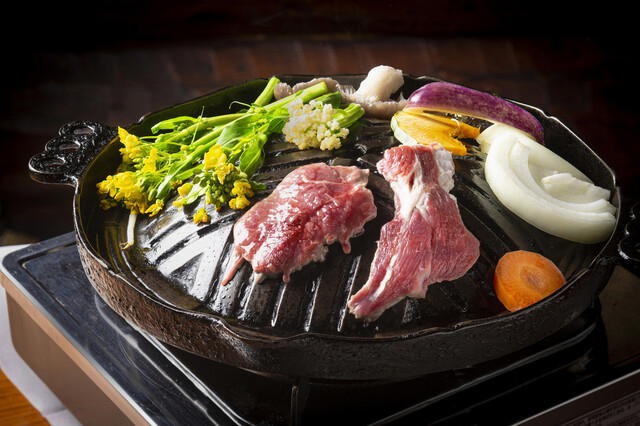
Hotels in Murayama
Browse all →
Wineries in Murayama
Browse all →
Details
- Rustic
- Classic
- Cozy
- Well Known
- Solo
- Family
- Casual Hangout
- Group Dining
- Special Occasion
- Historic Building
- Standalone
- Design Destination
- Local Sourcing
- Farm To Table
- A La Carte
Current opening hours
- Monday
- 11 AM–2 PM
- Tuesday
- 11 AM–2 PM
- Wednesday
- Closed
- Thursday
- 11 AM–2 PM
- Friday
- 11 AM–2 PM
- Saturday
- 11 AM–2 PM
- Sunday
- 11 AM–2 PM
Hours can change for holidays and private events. Last verified .
The restaurant occupies an Edo‑period thatched‑roof house with tatami rooms, creating a rustic, quietly atmospheric space that feels like visiting a countryside farmhouse; natural daylight and simple decor keep it relaxed rather than formal, though it can feel bustling at peak lunch hours.