Andrew Edmunds


Open since 1985 in a Georgian townhouse on Lexington Street, Andrew Edmunds is Soho's most quietly tenacious Franco-Mediterranean bistro. Hand-scrawled daily menus, candlelit tables, and a wine list priced far below central London norms make it the kind of room that rewards those who book ahead and arrive without an agenda. Few rooms in W1 have changed so little, and so deliberately.
Pearl is the En Primeur Club membership app — saves, bookings, and concierge access live there. Same editors, same standards.
- Address
- 46 Lexington St, London W1F 0LP, United Kingdom
- Phone
- +44 20 7437 5708
- Website
- andrewedmunds.com
- Directions
- Get directions
 Saves & bookings on Pearl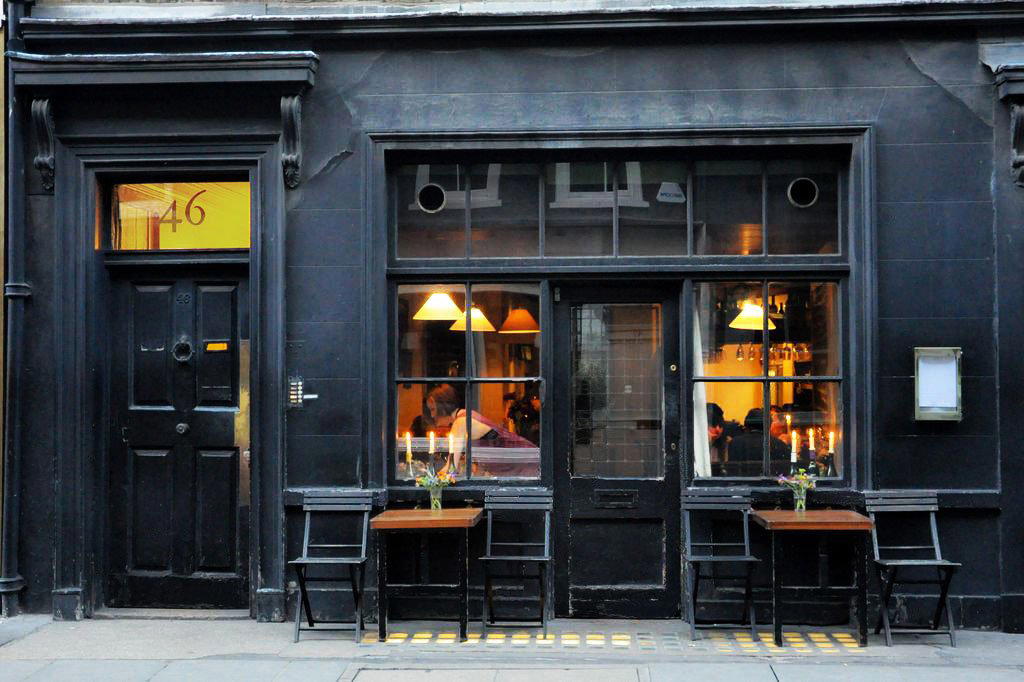
A Room That Resists the Present Tense
Andrew Edmunds is a seasonal Franco-Mediterranean bistro in Soho, London, at 46 Lexington St, London W1F 0LP, United Kingdom. Soho has been redeveloped, rebranded, and re-positioned several times over in the four decades since Andrew Edmunds opened on Lexington Street in 1985. The restaurant has not moved with it. The 18th-century townhouse on W1F still operates on the same principles it always has: small rooms, low lighting, closely set tables, and a daily menu written by hand that requires your full attention and, on candlelit evenings, something close to reading glasses. This is not nostalgia as aesthetic strategy. It is simply how the place has always run, and that consistency is itself a statement about what a neighbourhood bistro can be when it refuses to optimise for anything other than the meal in front of you.
The broader Soho dining scene has moved in two directions simultaneously: upward into destination-restaurant territory, where tasting menus and sommelier-led programmes dominate, and sideways into the casual-all-day format that now lines most of its streets. Andrew Edmunds occupies neither position. It sits in a shrinking third category, the serious bistro that takes its cooking and its wine with equal gravity but delivers both without ceremony. For a city that also hosts CORE by Clare Smyth, Sketch, The Lecture Room and Library, and The Ledbury at the formal end, and a proliferating set of mid-market openings at the other, a room like this is harder to place commercially than it used to be, and more valuable for exactly that reason.
How the Menu Is Organised, and What That Tells You
The hand-scrawled format of the menu at Andrew Edmunds is not just atmospheric detail. It signals something structural: the kitchen writes to whatever is available that day, which means the menu's architecture changes with supply rather than with seasons in the abstract sense that many restaurants now invoke as marketing shorthand. The result is a menu with a specific internal logic. Starters tend toward the preserved, the cured, or the assembled, a pork and venison terrine with pickled red cabbage and toast sits alongside seasonal asparagus in sauce gribiche, or a more Italianate burrata with blood orange and toasted almonds. These are not complex dishes. They are dishes with clear Franco-Mediterranean lineage, executed with the competence of a kitchen that has been making them, in some form, for decades.
Main courses follow a similar pattern of legibility. Fish is a particular strength, a chunk of hake with spinach, fennel, and salsa verde is the kind of dish that demonstrates how much work a well-made sauce can carry. Meat runs to the fortifying and the slow-cooked: roast rabbit leg on lentils with carrots and pickled walnuts is the sort of thing that used to define serious bistro cooking across London and Paris before the small-plates format fragmented the category. The fact that restaurant still builds its menu around composed main courses rather than a sequence of shareable plates puts it in a different structural tradition from most of its W1 contemporaries.
Desserts follow through on the register set by the savouries. Chocolate pavé with boozy raisins and a meringue with poached loquats and Chantilly are precisely calibrated to the room: generous, classically framed, without the architectural presentation that signals technique rather than appetite. This is cooking that treats dessert as the conclusion of a meal rather than a separate performance.
The Wine List as the Room's Defining Feature
If a single element explains the restaurant' continued reputation among people who pay close attention to these things, it is the wine list. The list has long operated on mark-ups that are anomalous for central London, a city where wine pricing at even mid-market restaurants now reflects real estate costs as much as cellar investment. Here, the selection is serious, drawn from producers that would appear on lists at restaurants charging considerably more, and the pricing reflects something closer to retail ambition than hospitality convention. For a room where the cooking is resolutely mid-century European in register, the wine list represents the sharpest editorial point of difference. It is the reason habitual visitors often find themselves spending more on wine than they planned, not because the list is aggressive but because the value calculus keeps presenting compelling arguments.
A brief aperitif programme exists, and there are a few old-school cocktails on offer, though the kitchen's strongest suit remains the table-to-cellar relationship rather than the bar programme.
Context and Comparisons
The restaurant' comparable set across the United Kingdom is not the Michelin-tracked destination restaurant circuit. It is a looser category of serious, long-running restaurants that have built their authority through consistency rather than reinvention. Places like Hand and Flowers in Marlow or Gidleigh Park in Chagford occupy different registers but share the same commitment to not pivoting with trends. At the destination end of the British restaurant spectrum, L'Enclume in Cartmel and Moor Hall in Aughton represent a different ambition entirely, as do international reference points like Le Bernardin in New York City or Atomix in New York City. The restaurant is not in competition with any of these. It operates in a category defined less by culinary ambition than by a particular kind of institutional integrity.
The restaurant is named for its guiding figure, the restaurant, who passed away in 2022. That continuity of name and character, the same address, the same format, the same resistance to polish, is a record that few London restaurants can match. Dinner by Heston Blumenthal and Restaurant Gordon Ramsay represent London dining at a different register of investment and spectacle. The Fat Duck in Bray or Le Manoir aux Quat' Saisons in Great Milton represent a different tradition of weekend-destination formality. The restaurant is what you go to when you want none of that apparatus, and you still want the meal to be genuinely good.
Planning a Visit
The restaurant is at 46 Lexington Street in Soho, W1F 0LP, a short walk from Oxford Circus and Piccadilly Circus tube stations. Tables in the small dining rooms book up reliably, particularly on evenings and weekends, so advance reservations are advisable, walk-ins are possible but carry risk at peak hours. The format rewards those who leave time for wine: the list repays attention and the low mark-ups make the table a more comfortable place to linger over a second bottle than most of its W1 neighbours. Dress is casual; the room does not impose formality, but it is not a drop-in canteen either.
Recognition Snapshot
Comparable venues nearby, for context on price, style, and recognition.
| Venue | Cuisine | Price | Notes |
|---|---|---|---|
| Andrew EdmundsThis venue — the venue you are viewing | Seasonal Franco-Mediterranean Bistro | $$ | Not listed |
| St. John's Bakery - Neals Yard | British Artisan Bakery | $$ | St Giles |
| Camberwell Arms | Seasonal British Gastropub | $$ | Camberwell |
| Home SW15 | Modern British Gastropub | $$ | East Putney |
| E5 Bakehouse | Artisanal Bakery Cafe | $$ | Hackney Central |
| Bollo House | British Gastropub | $$ | Acton Green |
Recognition history
Dated appearances from independent guides and award organizations, with the underlying list record or original source where available.
Star Wine List
Star Wine List
The Good Food Guide GFG Good
The Good Food Guide
Continue exploring
More in London
Restaurants in London
Browse all →
Hotels in London
Browse all →
Wineries in London
Browse all →
At a Glance
- Romantic
- Cozy
- Intimate
- Classic
- Sophisticated
- Date Night
- Special Occasion
- Historic Building
- Extensive Wine List
- Organic
- Sustainable Seafood
Current opening hours
- Monday
- 12–10:30 PM
- Tuesday
- 12–10:30 PM
- Wednesday
- 12–10:30 PM
- Thursday
- 12–10:30 PM
- Friday
- 12–10:30 PM
- Saturday
- 12:30–10:30 PM
- Sunday
- 1–10:30 PM
Hours can change for holidays and private events. Last verified .
Candlelit dining room with real candles dripping on old wine bottles, wooden floors, cream walls, green upholstery, and a warm, relaxed, nostalgic 'Old Soho' atmosphere.