Ali Barbour's Cave Restaurant
Our verdict
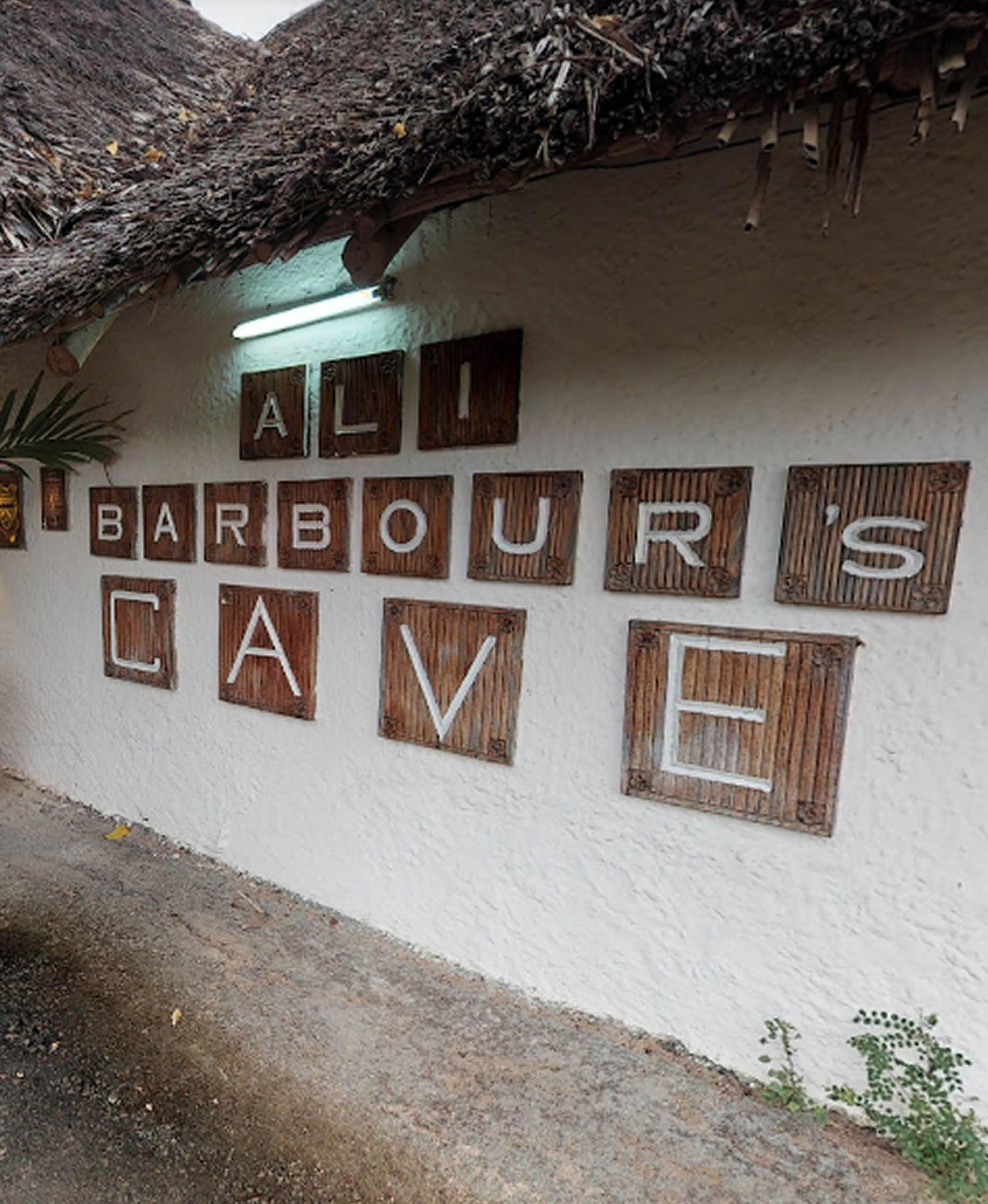
Carved into a natural coral cave on Kenya's Diani Beach coastline, Ali Barbour's Cave Restaurant offers open-air dining beneath a canopy of stars in a setting that the Kenyan coast's dining scene has few parallels for. The kitchen draws on the Indian Ocean's coastal larder, placing seafood and regional produce at the centre of the menu. Booking ahead is strongly advised, particularly during peak season.

Pearl is the En Primeur Club membership app, where members save venues, book tables and use the concierge.
The menu
What to order
- Vasco da Gama plate
- Crab bisque
- Oysters
- Prawns
- Carrot cake
Dining Inside the Earth: Kenya's Coral Cave Setting
On Kenya's south coast, where the coral rag geology of Diani Beach meets the Indian Ocean, a small number of dining experiences occupy settings that the broader region cannot easily replicate. Ali Barbour's Cave Restaurant is the most geologically literal of them: a natural coral cave, open to the sky, which frames dinner under a ceiling of stars rather than a constructed roof. This is not theatrical staging borrowed from an interior designer. The cave itself is the room, formed over millennia, and the dining format is built around it rather than imposed upon it.
The Kenyan south coast's restaurant scene has evolved considerably around this kind of site-specific premise. Where Nairobi's dining identity, leading represented by long-running institutions like Carnivore in Nairobi, leans into theatrical volume and land-based proteins, the coast operates on a different register entirely. Smaller, seafood-led, and shaped by the monsoon calendar, coastal Kenyan dining is a product of its Indian Ocean geography as much as any culinary tradition. Ali Barbour's sits at the premium end of that coastal category, where the setting itself is a primary part of the offer and where the sourcing of ingredients from the immediate marine environment is the logical extension of the location.
The Indian Ocean Larder: Where the Ingredients Come From
Coastal Kenya's kitchen has always been shaped by what the Indian Ocean delivers. The dhow fishing tradition along the Swahili coast produces a daily catch that varies by season, depth, and the direction of the kaskazi and kusi trade winds. Reef fish, prawns, lobster, and crab form the core of what reaches any serious kitchen on this stretch of coastline, and the proximity of the catch to the plate is a structural advantage that landlocked restaurants at any price point cannot replicate.
This is the sourcing logic that makes cave dining at Ali Barbour's more than a scenic proposition. When the setting is a natural coral formation metres from the Indian Ocean, and the menu is built around what that ocean produces, the relationship between place and plate becomes genuinely coherent rather than decorative. The Swahili coast's culinary heritage brings its own layering to this: Arab, Indian, and Portuguese trading influences have left a spice vocabulary in coastal Kenyan cooking that makes even simply prepared seafood carry considerable depth. Coconut, cardamom, tamarind, and chilli inflect dishes across the region, distinguishing the coast's cuisine from the plainer, protein-focused cooking further inland.
For context on how seriously sourcing-led cooking at dramatic natural sites can be taken, the comparison reaches far beyond Kenya. Restaurants like Uliassi in Senigallia and Quattro Passi in Marina del Cantone have built their reputations on exactly this premise: coastal location, immediate marine sourcing, and a kitchen that understands how to respect rather than obscure what the sea delivers. Ali Barbour's operates in the same philosophical territory, at a different price point and in a very different culinary tradition.
The Cave as Context: What the Setting Actually Means
Across the premium end of East African dining, the tension between architectural grandeur and natural setting has produced two distinct approaches. Properties like ol Donyo Lodge in Chyulu Hills and Great Plains Mara in Maasai Mara channel dramatic landscapes through lodge architecture, framing the wilderness for a guest seated at a table. The cave restaurant inverts this entirely. There is no framing structure. You are inside the landscape, not looking at it.
That distinction matters to a specific kind of traveller: one for whom the physical encounter with place is the point, rather than the comfort of observing it at a remove. The open ceiling means the experience is weather-dependent in a way that a conventional restaurant is not. A clear night on Diani Beach, away from significant light pollution, delivers a genuinely dark sky. The cave's acoustics soften ambient noise. The temperature drops relative to the beach above. These are not manufactured effects; they are consequences of geography.
On the south coast, where the dining scene also includes casual beach operators and mid-market spots like Funky Monkey in Ukunda, Ali Barbour's occupies a clearly different tier in terms of deliberateness of format and seriousness of setting. See our full Kwale restaurants guide for how the broader area's dining options map against each other.
Planning a Visit: Practical Considerations
Diani Beach sits roughly 30 kilometres south of Mombasa, accessible via the Likoni Ferry from the city or by road through the southern bypass. Most guests staying along the Diani strip reach Ali Barbour's by tuk-tuk or taxi from their accommodation, a journey that takes under 15 minutes from most beach hotels. The cave setting makes it an evening-only proposition by design; there is no practical daytime configuration for a space whose primary atmospheric quality depends on darkness and stars.
Kenya's coast operates on a two-season tourist calendar shaped by the monsoons. The long rains run from April through June, and the short rains through November. The dry seasons, particularly July through October and January through March, align with peak visitor numbers and the clearest skies. For the cave experience specifically, timing a visit to the dry season significantly increases the likelihood of the open-ceiling format working at its most atmospheric. Booking in advance is advisable during peak season, when occupancy along the Diani strip is at its highest and the restaurant's limited cave capacity makes last-minute access difficult.
For travellers building a broader Kenya itinerary that includes Nairobi dining, the contrast between the cave's coastal seafood focus and the inland capital's meat-centred tradition at places like Talisman in Karen is worth planning around deliberately. The two dining cultures are distinct enough that treating them as separate chapters rather than interchangeable options produces a more coherent trip.
Frequently asked questions
Is Ali Barbour's Cave Restaurant suitable for children?
The cave setting is a natural geological formation on the Diani Beach coastline, which means uneven surfaces, open-sky sections, and limited ambient lighting after dark. Families with young children should factor in those physical realities before booking. The atmosphere skews toward adult dining occasions, particularly evening meals, given the nature of the setting on Beach Road, Kwale.
What's the overall feel of Ali Barbour's Cave Restaurant?
The restaurant occupies a natural coral cave on Kenya's south coast, open to the sky in parts, so the mood shifts with the weather and the phase of the moon. Candlelight against ancient coral walls sets a register closer to theatrical than casual. It reads as a destination in itself, not simply a stop on a Diani Beach evening.
Does Ali Barbour's Cave Restaurant operate year-round, and does the long rains season affect the open-sky cave setting?
Diani Beach sits in a region that experiences two rainy seasons, with the long rains running roughly April through June. Because the cave has open-sky sections that let in starlight on clear nights, those same apertures expose the dining space to rainfall during heavy showers. Guests planning visits between November and March or July through October generally encounter the most settled conditions at this Beach Road, Kwale address.
What do people recommend at Ali Barbour's Cave Restaurant?
The kitchen draws on the Swahili coast's dhow-fishing tradition, so seafood sourced from the Indian Ocean is the consistent reference point among guests. Coastal Kenyan cuisine built around daily catch is the reason most visitors make the drive down Beach Road from Mombasa. Specific dishes vary by season and availability, so consulting the current menu on arrival is the practical approach.
What's the address for Ali Barbour's Cave Restaurant?
Ali Barbour's Cave Restaurant is located at Ali Barbour's Cave Restaurant Ground N/A Beach Road, Mombasa, Kenya, Kwale.
How hard is it to get a table at Ali Barbour's Cave Restaurant?
The cave's physical footprint limits covers more than most restaurants of comparable profile on the Kenyan south coast, and demand from both international visitors and Mombasa residents keeps pressure on availability. Peak periods around the European winter holiday season and Kenyan school holidays are the tightest windows. Booking ahead rather than arriving speculatively is the standard approach for Diani Beach's busier months.
Fast Comparison
Comparable venues nearby, for context on price, style, and recognition.
| Venue | Cuisine | Price | Awards | Notes |
|---|---|---|---|---|
| Ali Barbour's Cave RestaurantThis venue (the venue you are viewing) | International Seafood Fine Dining | $50–100 | Not listed | Not listed |
| Giraffe Manor Lunch | Giraffe Manor Set Meals | Not listed | Not listed | Langata |
| ol Donyo Lodge | Modern African Fine Dining | Not listed | Relais Chateaux Award | Chyulu Hills |
| Gogol Pizza | Traditional Italian Pizzeria & Pasta | $10–20 | Gambero Rosso 1 Spicchio | Loresho |
| Teriyaki Japan | Fusion Western-Japanese Fast Food | $1–10 | Not listed | Nairobi CBD / Two Rivers |
| Funky Monkey | Seafood & Mediterranean with Kenyan Fusion | Not listed | Not listed | Diani Beach |
Continue exploring
More in Diani Beach
Restaurants in Diani Beach
All restaurants in Diani Beach →
Ali Barbour's Cave Restaurant
The wine
- Extensive wine list
- Sommelier-led
Details
- Romantic
- Elegant
- Intimate
- Well Known
- Scenic
- Date Night
- Special Occasion
- Celebration
- Waterfront
- Private Dining
- Historic Building
- Standalone
- Panoramic View
- Extensive Wine List
- Sommelier Led
- Local Sourcing
- Sustainable Seafood
- A La Carte
- Wine
- Cocktails
- Vegetarian Friendly
- Vegan Options
Current opening hours
- Monday
- 5:30–11 PM
- Tuesday
- 5:30–11 PM
- Wednesday
- 5:30–11 PM
- Thursday
- 5:30–11 PM
- Friday
- 5:30–11 PM
- Saturday
- 5:30–11 PM
- Sunday
- 5:30–11 PM
Hours can change for holidays and private events. Hours as of .
Softly lit by candlelight in the evenings with natural starlight filtering through open cave ceilings; intimate chambers with threaded palm leaves and lanterns create a magical, romantic atmosphere.