Alessandro Maino


Michelin Plate · Macarfi 8.2 Food Rating
Our verdict
Alessandro Maino brings a distinctly European cross-border sensibility to Castelló de la Plana, drawing on training across Italy, France, Switzerland, and Spain to build a menu that reads as genuinely international rather than eclectic for its own sake. Rei En Jaume.

Pearl is the En Primeur Club membership app, where members save venues, book tables and use the concierge.
The menu
What to order
- Gambas en texturas
- Arroz al horno
- Tartar de atún
Where Castelló's Dining Scene Meets a Four-Country Kitchen
Castelló de la Plana sits at an interesting moment in its restaurant history. The city has long lived in the shadow of Valencia's gastronomy to the south, but a cluster of independent kitchens along its central avenues are building a case for the city on its own terms. The restaurants in this tier Anhelo (Farm to table), Arre (Contemporary), and Le Bistrot Gastronómico (Fusion) among them, each occupy the mid-price bracket with distinct identities, and Alessandro Maino is perhaps the most internationally oriented of the group.
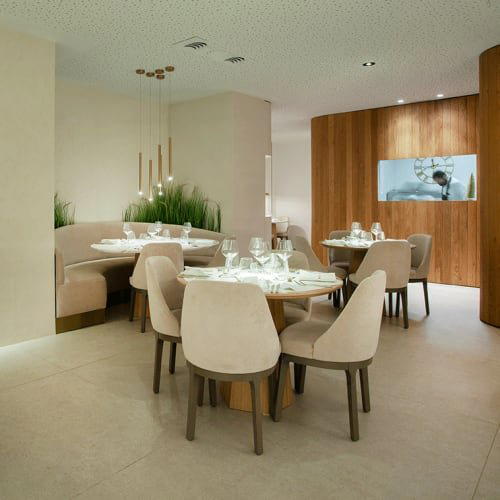
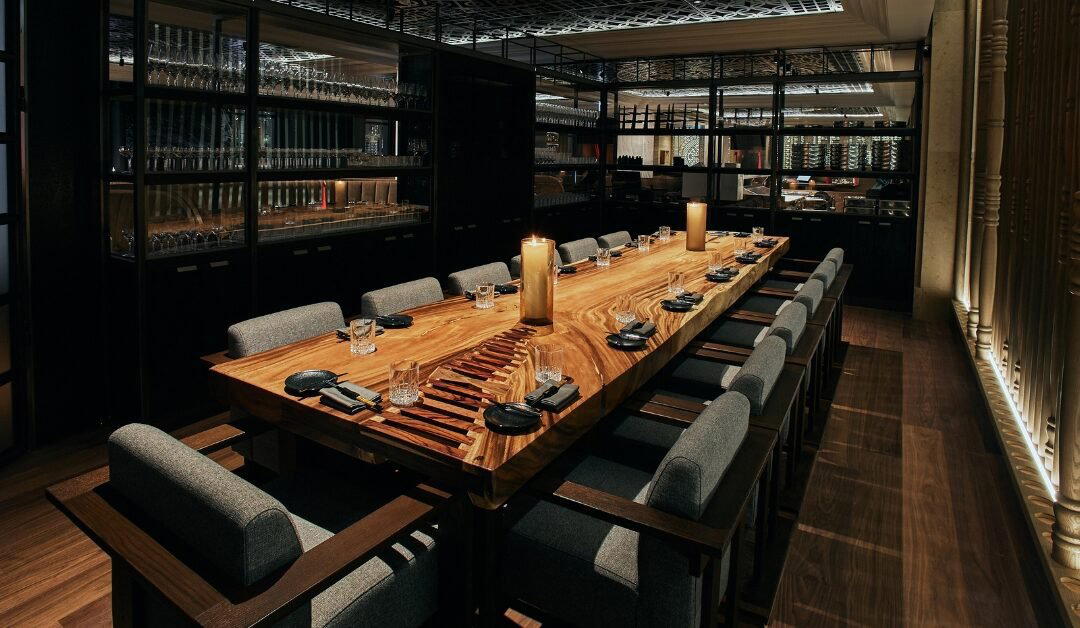
The dining room on Av. Rei En Jaume 5 is contemporary in its fit-out: clean lines, controlled lighting, the kind of considered minimalism that signals the kitchen takes itself seriously without the stiffness of formal fine dining. This is a space where the cooking is meant to do the talking, and the room is calibrated to let it.
A Four-Country Training, Legible on Every Plate
The editorial angle that matters most here is not where the chef was born, but where the ingredients and techniques come from, and crucially, how those sources are held together with discipline rather than novelty. European cooking that draws on multiple national traditions often falls into incoherence, a tasting menu that feels like a greatest-hits tour rather than a coherent meal. What distinguishes the better examples of this format, including what Michelin's inspectors have twice recognised here with their Plate award in 2024 and 2025, is a kitchen that has genuinely absorbed rather than merely borrowed.
Italian precision with pasta and protein cookery, French classical saucing, Swiss technical cleanliness, and Spanish product-led thinking, these are not interchangeable influences. When a kitchen has been trained inside all four traditions rather than reading about them, it tends to produce food where the technique is invisible and the ingredient is the point.
For context on what Michelin recognition means in Spain's broader culinary geography, it helps to understand where the country's starred and plated restaurants cluster. The headlines go to kitchens like El Celler de Can Roca in Girona, DiverXO in Madrid, or Arzak in San Sebastián. The Michelin Plate, which sits below star level but is included in the guide as a mark of good cooking, places Alessandro Maino in the broader conversation without overstating its position, a useful, honest signal.
The Menu Architecture: Flexibility Built In
The format is worth understanding before you book. Alessandro Maino runs two distinct modes simultaneously. The à la carte menu is the more accessible entry point, and the prawn preparation cited in the Michelin notes, described as prawns in different textures, gives a clear indication of the kitchen's interest in working a single ingredient through multiple technical expressions. This is not a gimmick; the ability to extract contrast from one product without relying on novelty ingredients is a legitimate measure of kitchen depth.
The lunch menu operates with built-in flexibility, varying its structure according to how many starters a diner selects. This model, common in Spanish working-lunch culture, here receives a more thoughtful execution than the standard three-course formula. The tasting menu is a separate proposition entirely and must be booked in advance, which means walk-in visitors and last-minute lunchers will not have access to the kitchen's most ambitious output. If the tasting menu is the reason you're coming, the reservation is not optional.
Pricing sits at the €€ level, consistent with peers like Anhelo, Tasca del Puerto (Seafood), and Arre in the city, while IZAKAYA Tasca Japonesa (Japanese) operates a tier below at €. The international tasting-menu format, if anything, underprices what comparable kitchens charge in larger Spanish cities. That gap is partly a function of Castelló's market, and partly an opportunity for visitors who would pay considerably more for a similar standard at restaurants like Cocina Hermanos Torres in Barcelona or Azurmendi in Larrabetzu.
Sourcing Logic: Why Cross-Border Training Changes What Arrives on the Plate
Ingredient-sourcing argument for a kitchen trained across multiple European countries is less obvious than it sounds. It is not simply that the chef imports Italian products or French produce, that would be straightforwardly expensive and miss the point. The real effect of multi-national culinary training is a different evaluative framework: knowing what a good tomato looks and tastes like in Campania recalibrates how you select tomatoes in Valencia. Understanding Swiss dairy standards changes how you approach cream-based preparations with Spanish product. The cross-contamination of expectations produces a kitchen that may source entirely locally but applies a more demanding selection filter than a chef trained in a single tradition.
This is the lens through which Castelló's position as a Mediterranean city becomes relevant. The province of Castellón has strong agricultural production, citrus, artichokes, seafood from the Mediterranean coast, and a kitchen shaped by four European culinary traditions has more tools for working that product than one trained in a single school. The result is an international menu that does not feel imported so much as rigorously re-examined through local material.
For visitors wanting to explore this dynamic from a different starting point, Aponiente in El Puerto de Santa María represents the furthest Spanish iteration of single-source coastal ingredient obsession. Alessandro Maino takes the opposite approach: multiple traditions, Mediterranean product, structured into a coherent menu format.
Planning Your Visit
Alessandro Maino is centrally located at Av. Rei En Jaume 5 in Castelló de la Plana, which places it within direct reach of the city's main commercial area. For additional options in the city, see our full Castelló de la Plana restaurants guide, and pair your visit with resources from our full Castelló de la Plana hotels guide, our full Castelló de la Plana bars guide, our full Castelló de la Plana wineries guide, and our full Castelló de la Plana experiences guide.
Frequently asked questions
What should I budget for a meal at Alessandro Maino?
Pricing at Alessandro Maino is listed as €€.
Is Alessandro Maino Michelin-listed?
Alessandro Maino has received recognition including: In this centrally located restaurant, with its contemporary ambience, you'll find an interesting international approach, with nods to the countries where the chef trained (his native Italy, France, Switzerland and Spain) before settling, fo….
What dish is Alessandro Maino famous for?
Michelin inspectors singled out a prawn preparation served in different textures as a standout from the à la carte menu. It is one of the more concrete dish-level endorsements in the 2024 and 2025 Michelin Plate citations for the restaurant.
What's Alessandro Maino's location?
Alessandro Maino is located at Av. Rei En Jaume, 5, 12001 Castelló de la Plana, Castelló, Spain, Castelló de la Plana.
Do I need a reservation for Alessandro Maino?
The tasting menu requires advance booking and cannot be ordered on arrival. The à la carte format is more accessible, but given the restaurant's Michelin Plate recognition in both 2024 and 2025, securing a table ahead of time is advisable regardless of which format you plan to order.
At-a-Glance Comparison
| Venue | Cuisine | Price | Awards | Notes |
|---|---|---|---|---|
| Alessandro MainoThis venue (the venue you are viewing) | Modern Italian Fine Dining with French Influences | $50–100 | Michelin Plate · Macarfi 8.2 Food Rating | Not listed |
| IZAKAYA Tasca Japonesa | Authentic Izakaya Japanese Tavern | $30–50 | Michelin Bib Gourmand · Macarfi 7.8 Food Rating | Japanese |
| Le Bistrot Gastronómico | European-Japanese Fusion | $50–100 | Michelin Bib Gourmand · Macarfi 7.5 Food Rating | Fusion |
| Anhelo | Contemporary Mediterranean Fine Dining | $50–100 | Michelin Plate · Macarfi 8 Food Rating | Farm to table |
| Arre | Modern Valencian with Grill | $30–50 | Michelin Bib Gourmand · Macarfi 7.6 Food Rating | Contemporary |
| Tasca del Puerto | Traditional Spanish Seafood & Paella | $30–50 | Michelin Plate · Macarfi 7.2 Food Rating | Seafood |
Recognition history
Dated appearances from independent guides and award organizations, with the underlying list record or original source where available.
Michelin Plate
Michelin
Macarfi 8.2 Food Rating
Macarfi
Full recognition history (4 entries)
Michelin Plate
Michelin
Michelin Plate
Michelin
Continue exploring
More in Castelló de la Plana
Restaurants in Castelló de la Plana
All restaurants in Castelló de la Plana →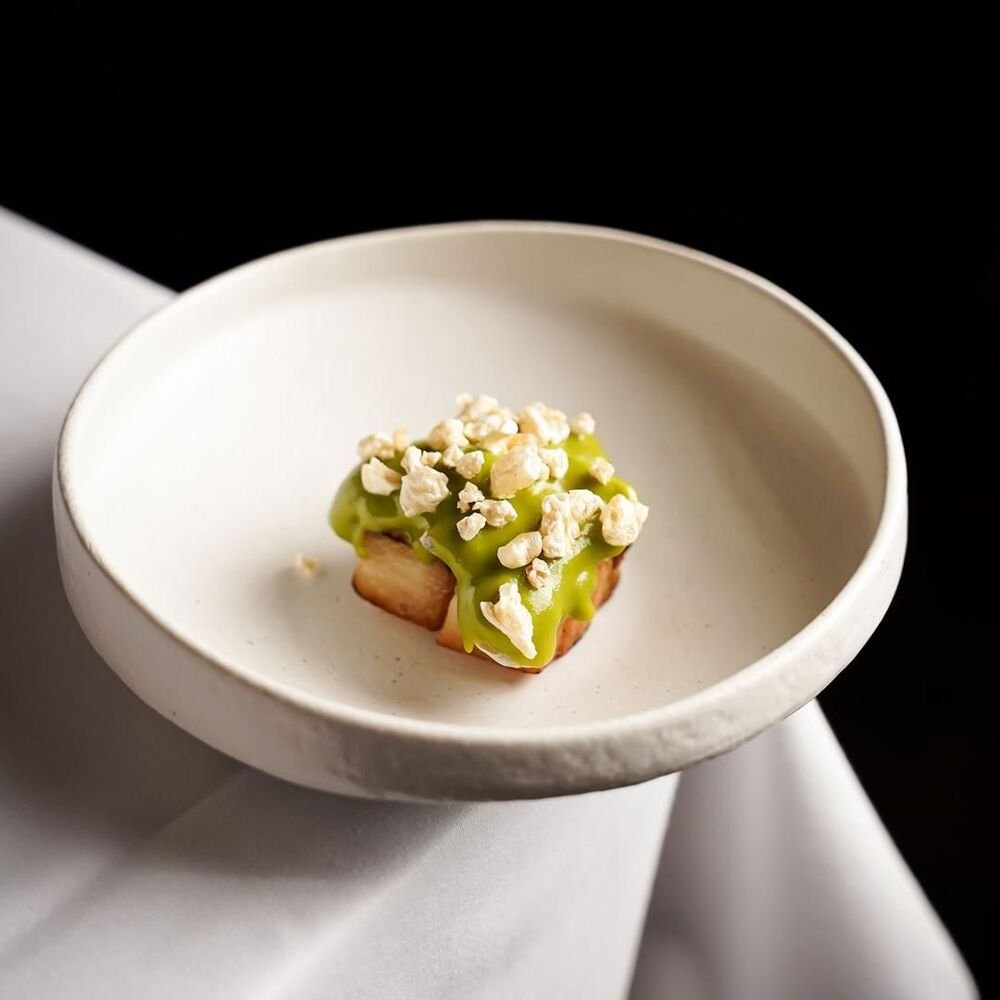
Wineries in Castelló de la Plana
Browse all →
Alessandro Maino
The wine
- Wine program
- Deep wine list
- Extensive wine list
Details
- Elegant
- Romantic
- Sophisticated
- Cozy
- Date Night
- Business Dinner
- Special Occasion
- Private Dining
- Terrace
- Extensive Wine List
- Local Sourcing
- A La Carte
- Tasting Menu
- Wine
- Vegetarian Friendly
Current opening hours
- Monday
- 12:30–5 PM, 7–10:30 PM
- Tuesday
- 11 AM–5 PM
- Wednesday
- 11 AM–5 PM
- Thursday
- 11 AM–5 PM, 7 PM–12 AM
- Friday
- 11 AM–12 AM
- Saturday
- 12 PM–12 AM
- Sunday
- 12–5 PM
Hours can change for holidays and private events. Hours as of .
Contemporary and carefully designed environment with warm Mediterranean warmth, cozy atmosphere, and excellent lighting despite no natural light.