Anhelo




Michelin Plate · Macarfi 8 Food Rating · Guía Repsol 1 Sol
Our verdict
A five-table restaurant in central Castelló de la Plana, Anhelo holds a Michelin Plate (2024 and 2025) and builds its menus around farm-to-table sourcing under chef-owner Cristian Granero, who came to the stoves through baking and pastry. Three named menus structure the experience, the kitchen is visible from the dining room, and the restricted capacity means advance booking is essential.

Pearl is the En Primeur Club membership app, where members save venues, book tables and use the concierge.
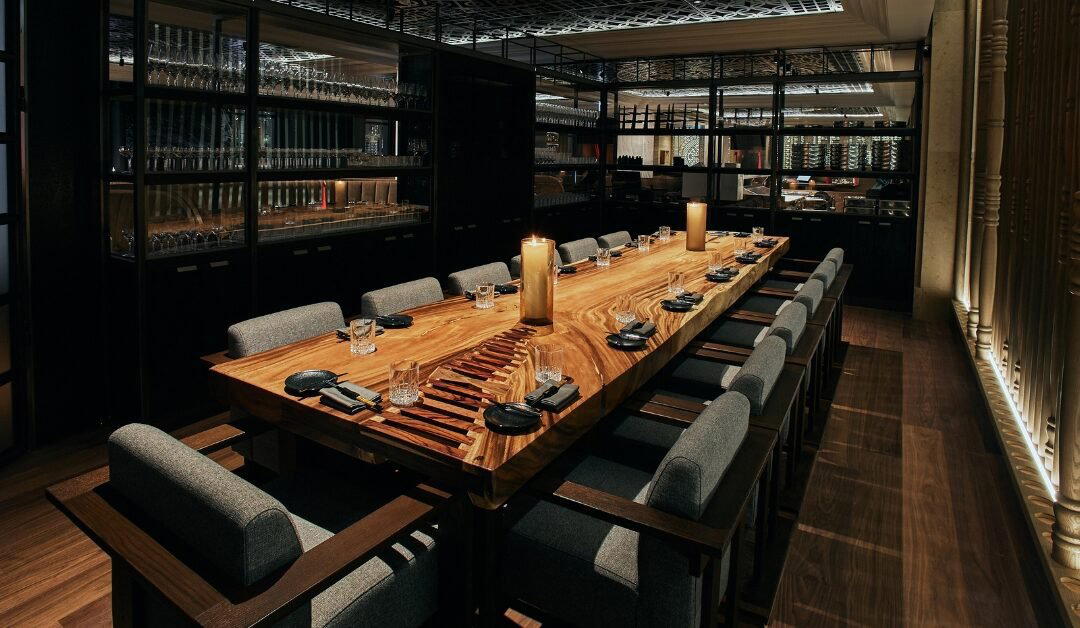
Five Tables in the Centre of Castelló
The most telling detail about dining in a city like Castelló de la Plana is not the quality of any single kitchen but the scale at which serious cooking operates here. This is a provincial capital on Spain's Mediterranean coast, an hour south of Valencia by train, with a restaurant scene that punches quietly above its population weight. The city has no grand dining boulevard and no concentration of starred rooms competing for the same clientele. What it has, increasingly, is a cluster of chef-driven projects occupying modest spaces with focused formats: Arre, working contemporary lines; Le Bistrot Gastronómico in fusion territory; Alessandro Maino with its international register.
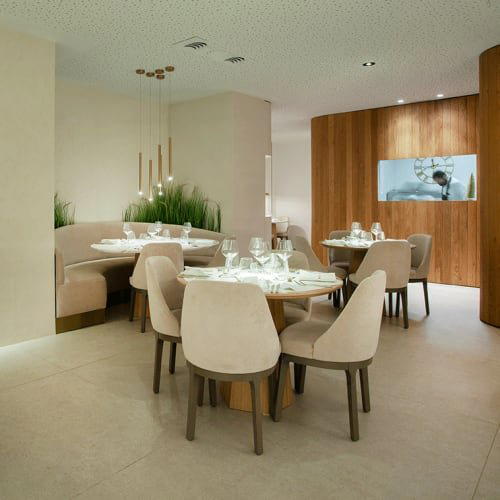
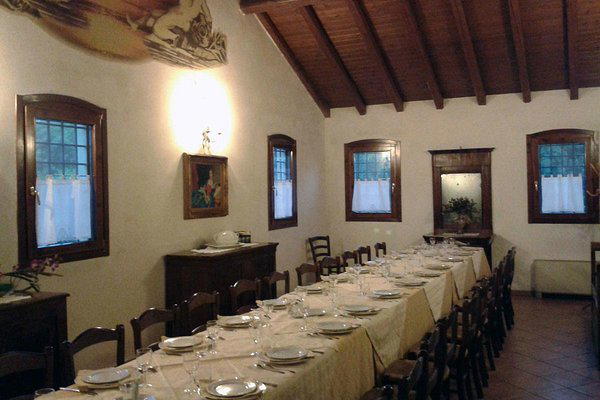
The room is deliberately spare. Five tables means a maximum of perhaps twenty or so covers, and the open kitchen means that the person writing the menus is also visible from every seat in the house. That transparency is a deliberate structural choice, common in smaller chef-driven European restaurants over the past decade, where the gap between the cooking process and the dining experience has been progressively closed. The effect in a room this size is less theatrical than at larger open-counter formats: it reads simply as honesty about what is happening and where.
Farm-to-Table in the Valencian Context
Farm-to-table as a framing device has been stretched to near-meaninglessness in many markets, deployed as branding for restaurants with only a passing relationship to local sourcing. In the Valencian Community, the concept has more structural credibility than in most places. The huerta, the fertile coastal plain stretching between Valencia and Castelló, has supplied urban kitchens with vegetables, citrus, and rice for centuries. Sourcing seasonally and locally here is not a philosophy grafted onto a menu but a continuation of how this region has always cooked: around what the land produces, adjusted for what month it is.
Anhelo's farm-to-table positioning places it inside that tradition rather than at a remove from it. Cristian Granero, who runs the kitchen and owns the restaurant, began his career in baking and pastry before moving to savoury cooking, a trajectory that tends to produce a particular kind of precision with fermentation, dough, and the handling of ingredients at their natural limits. That technical foundation is relevant context for understanding why a small Valencian restaurant with this profile has received Michelin Plate recognition in both 2024 and 2025: the guide uses the Plate to indicate kitchens with solid technical standards and clear culinary identity, even where the full star criteria have not yet been met.
Across Spain, the farm-to-table tier operates as a meaningful counterpoint to the highly theatrical end of the market. Restaurants like DiverXO in Madrid or El Celler de Can Roca in Girona define one pole of Spanish fine dining, technique-intensive and conceptually ambitious. At Arzak in San Sebastián, Azurmendi in Larrabetzu, or Aponiente in El Puerto de Santa María, the kitchen's relationship to a specific landscape or ecosystem is what structures the entire project. Anhelo belongs to a quieter, more provincial version of that same orientation: product-led cooking in a city without a major culinary profile, validated by Michelin but operating at a scale that keeps the experience personal. Comparable farm-to-table formats in northern Europe, such as Au Gré du Vent in Seneffe or BOK Restaurant in Münster, reflect how this format has spread across the continent while retaining its emphasis on sourcing discipline and tight format control.
Three Menus, One Kitchen
The restaurant structures its offer around three named menus: D'Uixó, Sentidos, and Anhelo. The naming suggests different registers or price points within the same kitchen logic rather than wholly separate concepts, with the eponymous menu presumably representing the fullest expression of what the restaurant is doing at any given moment. This menu architecture is increasingly standard at chef-driven European restaurants operating at this level: it allows a kitchen to serve different depths of engagement within a single service, without fragmenting the kitchen's identity or requiring a separate à la carte operation alongside.
What this means practically is that the choice of menu happens at booking rather than at the table, and that the kitchen is cooking to a known format each evening rather than assembling dishes from a broad card. For a kitchen of this size, that discipline matters: five tables and one chef-owner producing an à la carte would be unsustainable at any serious technical level.
Where Anhelo Sits in Castelló's Dining Scene
Among the central Castelló options at the €€ price tier, Anhelo occupies a specific position: it is the room where the cooking itself is the main event, without the Japanese-influenced register of IZAKAYA Tasca Japonesa or the seafood focus of Tasca del Puerto. Its Michelin Plate recognition, sustained across two consecutive years, separates it from the broader casual dining tier, placing it in the same bracket as other small, chef-owner rooms in secondary Spanish cities where technique has outgrown the local reputation of the address.
Planning a Visit
Anhelo is at Carrer del Mestre Ripollés, 6, in the centre of Castelló de la Plana, a walkable distance from the city's main transport connections. The five-table format means capacity is tight by design, and the Michelin recognition has sharpened demand relative to what a room this size would normally absorb. Booking ahead is not precautionary but necessary, particularly for weekend services. The menu pricing sits at the €€ tier, positioning it as a considered occasion rather than a casual drop-in, without reaching the higher price bands that the starred end of the Spanish market commands. For visitors exploring the broader city, the full Castelló de la Plana restaurants guide maps the wider scene, with the hotels guide, bars guide, wineries guide, and experiences guide covering adjacent planning needs.
What to Order at Anhelo
The short answer is to commit to the Anhelo menu, the namesake option that presumably represents the kitchen's fullest statement at the time of your visit. The D'Uixó and Sentidos menus offer entry points at different depth levels, but in a kitchen where the chef-owner's entire professional trajectory feeds into the cooking, the case for the complete format is strong. The tasting menu structure at a restaurant of this scale is not about spectacle: it is about letting a kitchen with a clear point of view express it fully. Given the Michelin Plate held in 2024 and 2025, the technical baseline is documented. The question is how much of the kitchen's range you want to cover in a single sitting. The answer, at five tables with a chef visible from every seat, is generally: as much as it offers.
Frequently asked questions
What distinctions does Anhelo have?
Anhelo has received recognition including: The heart and soul of this small eatery in the centre of town is owner-chef Cristian Granero, who began his career in the restaurant business as a baker and pastry chef, both of which served as a good apprenticeship before he headed to the ….
What should I order at Anhelo?
Commit to the namesake Anhelo menu, the option that represents the kitchen's fullest statement. Chef Cristian Granero structures the offer across three menus, D'Uixó, Sentidos, and Anhelo, at the €€ price tier, with Anhelo sitting at the top of that range. With only five tables and an open kitchen, the room is designed around the cooking itself, so the longest menu is the most coherent way to experience what Granero, who trained first as a baker and pastry chef, is doing here.
How much does it cost to eat at Anhelo?
Pricing at Anhelo is listed as €€.
Price and Recognition
| Venue | Cuisine | Price | Awards |
|---|---|---|---|
| AnheloThis venue (the venue you are viewing) | Contemporary Mediterranean Fine Dining | $50–100 | Michelin Plate · Macarfi 8 Food Rating |
| IZAKAYA Tasca Japonesa | Authentic Izakaya Japanese Tavern | $30–50 | Michelin Bib Gourmand · Macarfi 7.8 Food Rating |
| Le Bistrot Gastronómico | European-Japanese Fusion | $50–100 | Michelin Bib Gourmand · Macarfi 7.5 Food Rating |
| Alessandro Maino | Modern Italian Fine Dining with French Influences | $50–100 | Michelin Plate · Macarfi 8.2 Food Rating |
| Arre | Modern Valencian with Grill | $30–50 | Michelin Bib Gourmand · Macarfi 7.6 Food Rating |
| Tasca del Puerto | Traditional Spanish Seafood & Paella | $30–50 | Michelin Plate · Macarfi 7.2 Food Rating |
Recognition history
Dated appearances from independent guides and award organizations, with the underlying list record or original source where available.
Michelin Plate
Michelin
Guía Repsol 1 Sol
Guía Repsol
Macarfi 8 Food Rating
Macarfi
Wine Spectator Best of Award of Excellence
Wine Spectator
Full recognition history (6 entries)
Michelin Plate
Michelin
Michelin Plate
Michelin
Continue exploring
More in Castelló de la Plana
Restaurants in Castelló de la Plana
All restaurants in Castelló de la Plana →
Wineries in Castelló de la Plana
Browse all →
Anhelo
The wine
Anhelo holds the Wine Spectator Best of Award of Excellence, which Wine Spectator gives to lists of usually 350 or more selections.
- Wine Spectator
- Wine Spectator Best of Award of Excellence
- Selections
- 565
- Bottles in cellar
- 4,870
- List strengths
- France, Italy, California
- Wine director
- Ryan Ansell
- Extensive wine list
Details
- Intimate
- Elegant
- Sophisticated
- Cozy
- Date Night
- Special Occasion
- Celebration
- Open Kitchen
- Standalone
- Extensive Wine List
- Local Sourcing
Current opening hours
- Monday
- Closed
- Tuesday
- 1–3:30 PM
- Wednesday
- 1:30–3:30 PM
- Thursday
- 1:30–3:30 PM
- Friday
- 1:30–3:30 PM, 8:30–10:30 PM
- Saturday
- 1:30–3:45 PM, 8:30–10:30 PM
- Sunday
- Closed
Hours can change for holidays and private events. Hours as of .
Simple, beautiful, and welcoming aesthetic with an open kitchen visible to diners; soft ambient music complements the refined yet unpretentious atmosphere; warm lighting creates an intimate setting.