Akwaaba Tea Salon
Our verdict
On Lancaster Avenue in West Philadelphia, Akwaaba Tea Salon occupies a stretch of the corridor where community-rooted hospitality and African diaspora culture intersect. The salon format positions tea as a social ritual rather than a transactional beverage stop, placing it within a small but growing national tier of culturally grounded tea experiences. For Philadelphia's dining scene, it represents an alternative register to the city's dominant New American and European fine-dining conversation.

Pearl is the En Primeur Club membership app — saves, bookings, and concierge access live there. Same editors, same standards.
- Address
- 3811 Lancaster Ave, Philadelphia, PA 19104
- Phone
- (866) 466-3855
- Hours
- Mon–Thu ClosedFri–Sun 11 AM–5 PM
- Website
- opentable.com
- Directions
- Get directions
- Booking
- Book on OpenTable
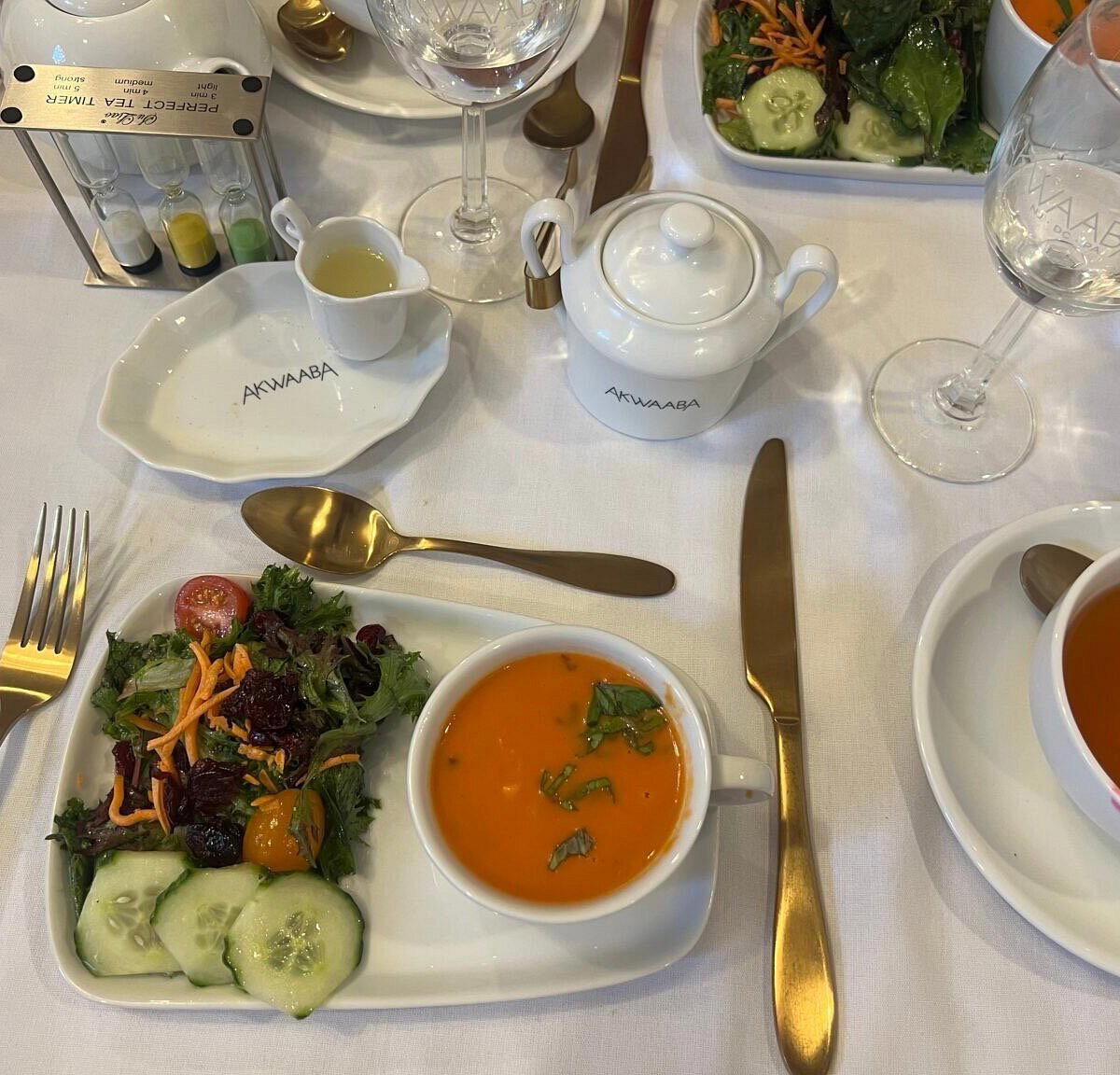
The menu
What to order
- Deviled eggs with fried chicken
- Peach cobbler
- Banana pudding
- Tea-infused sandwiches
West Philadelphia's Tea Salon Tradition and Where Akwaaba Fits
Lancaster Avenue has long functioned as one of Philadelphia's most culturally layered commercial corridors, running through a stretch of West Philadelphia where independent operators have historically anchored neighborhood identity more reliably than restaurant groups or hospitality chains. The tea salon format, as it has evolved across American cities with significant African and African diaspora communities, operates differently from the European afternoon tea model. It draws on a tradition of communal gathering, herbal knowledge, and hospitality as cultural expression rather than ceremony for its own sake. Akwaaba Tea Salon, at 3811 Lancaster Ave, sits within that framework.
The name Akwaaba is a Ghanaian Twi word meaning welcome, a greeting that carries specific social weight across West African cultures where hospitality is an active, structured practice rather than a passive backdrop. Positioning a tea salon under that name in West Philadelphia is a deliberate editorial choice about audience, identity, and purpose. It signals that the space is organized around a particular community relationship, not merely around a beverage menu.
The Salon Format and What It Signals in Philadelphia's Dining Scene
Philadelphia's dining conversation in recent years has concentrated heavily on New American tasting formats, with venues like Friday Saturday Sunday and Fork representing the city's more recognized fine-dining tier. Further out, culturally specific venues such as Mawn and South Philly Barbacoa have demonstrated that Philadelphia's most interesting food stories often live outside the tasting menu circuit. Akwaaba occupies a different register still: it is a daytime salon format rather than a restaurant, which changes the economics, the pacing, and the social function entirely.
The salon model, when executed with genuine programmatic depth, tends to foreground sourcing and preparation knowledge over plating theatrics. Teas, tisanes, and botanicals carry provenance stories that parallel wine or single-origin coffee, and a well-run salon communicates those stories through the service interaction. At the national level, venues operating in this space have increasingly linked their sourcing to ethical trade relationships with producing communities, small farms, and cooperatives. That orientation toward traceable supply chains places the better tea salons in a conversation adjacent to the farm-to-table movement, even if the media attention directed at them has been considerably smaller.
Sustainability and Sourcing as the Organizing Principle
Among the most coherent arguments for the tea salon as a format is its natural alignment with low-waste, high-traceability sourcing. Tea itself is a low-carbon beverage relative to animal protein-centered menus. Loose-leaf formats reduce packaging waste compared with commercial bagged product. Herbal and botanical sourcing, when done responsibly, supports biodiversity and smallholder agriculture in a way that few mainstream beverage categories can claim. Venues that take these relationships seriously tend to operate at the intersection of community economics and environmental consciousness, a pairing that has become more legible to urban diners as awareness of supply chain ethics has grown.
This framing matters for Akwaaba because the Lancaster Avenue address places it in a neighborhood where economic investment and community ownership are live political questions, not abstract values. Independent operators on corridors like Lancaster Ave often function as anchors for local purchasing, local employment, and neighborhood visibility in ways that national chains structurally cannot replicate. That is a form of sustainability argument, even when it does not use the language of environmentalism. The most thoughtful operations in this tier are those that connect the ethics of sourcing to the ethics of place, treating them as the same question.
For comparison, look at how sustainability-driven dining at the fine-dining level has evolved. Blue Hill at Stone Barns in Tarrytown built its entire identity around farm integration and waste reduction at a price point that makes it inaccessible to most diners. Single Thread Farm in Healdsburg operates with similar sourcing discipline at a comparable price tier. The tea salon format offers a version of those values at a fundamentally different accessibility level, which is itself an argument for its importance in a complete dining ecosystem. Cities like Philadelphia benefit from having that full spectrum, from My Loup's French-inspired precision to community-scale formats that reach different audiences entirely.
How the Broader Tea Revival Shapes Expectations
Across American cities, tea has moved from an afterthought on restaurant beverage lists toward a category with its own dedicated venues, trained practitioners, and sourcing standards. The movement parallels the specialty coffee arc by roughly a decade: early adopters built consumer literacy, which created demand for higher-quality, more transparent products, which in turn created space for dedicated venues. The tea salon format is where that arc reaches its most socially embedded form, since tea drinking in most of the world's major tea cultures has always been communal rather than solitary.
That context matters when placing Akwaaba alongside Philadelphia's wider hospitality picture. The city's dining infrastructure spans significant range, from the Michelin-recognized end of the spectrum to neighborhood-scale operations that receive less coverage but often carry more cultural weight. Nationally, venues with strong sustainability and ethical sourcing credentials have earned recognition across formats: Smyth in Chicago, Providence in Los Angeles, and Addison in San Diego each demonstrate that sourcing rigor can anchor a critical reputation. The tea salon operates at a different scale, but the underlying commitment to traceability and community relationship is structurally the same.
Internationally, the most compelling frame is perhaps Atelier Moessmer Norbert Niederkofler in Brunico, which has built a three-Michelin-star identity almost entirely around alpine sourcing ethics and zero-kilometer ingredients. That level of institutional recognition for sourcing-driven hospitality remains rare, but it demonstrates that the values underlying a venue like Akwaaba have reached the highest levels of critical acknowledgment. The format differs enormously; the underlying argument does not. See our full Philadelphia restaurants guide for more context on the city's wider dining range.
Know Before You Go
- Address: 3811 Lancaster Ave, Philadelphia, PA 19104
- Neighborhood: West Philadelphia (Lancaster Avenue corridor)
- Format: Tea salon
- Booking: Contact details not currently listed; walk-in availability likely given the salon format, but confirmation recommended before visiting
- Pricing: Not publicly listed; tea salon formats in comparable U.S. cities typically run lower per-head than full-service restaurants
- Hours: Not currently listed; verify before visiting
- Seasonal note: Herbal and botanical tea menus in this format often shift with seasonal ingredient availability, making autumn and winter visits particularly suited to warming, root-forward preparations
Frequently asked questions
Is Akwaaba Tea Salon good for families?
The salon format on Lancaster Avenue, a corridor historically anchored by community-facing businesses, tends to attract a cross-generational crowd. A dedicated tea salon operates at a slower pace than a standard cafe, which suits families looking for a sit-down experience rather than a quick counter stop. Younger children may have fewer beverage options than adults, so it is worth checking the current menu before visiting with very young kids.
Is Akwaaba Tea Salon formal or casual?
Akwaaba sits on Lancaster Avenue in West Philadelphia, a neighborhood that skews community-oriented rather than white-tablecloth formal. The tea salon format signals deliberate service and some ceremony around brewing and presentation, but that is distinct from a dress-code establishment. Expect a considered, unhurried atmosphere rather than a strictly formal one.
What makes Akwaaba Tea Salon different from a standard Philadelphia cafe?
Akwaaba is structured as a dedicated tea salon rather than a coffee-forward cafe with tea as a secondary option, placing it in a still-small category of Philadelphia venues where tea receives the sourcing, preparation, and menu-building attention that specialty coffee has enjoyed for over a decade. Located at 3811 Lancaster Ave in West Philadelphia, it occupies a corridor with deep cultural significance, which shapes the salon's identity beyond beverage format alone. That combination of format specificity and neighborhood context distinguishes it from the city's broader cafe scene.
What should I eat at Akwaaba Tea Salon?
Akwaaba operates as a tea salon, meaning the beverage program is the organizing principle of the menu rather than a supporting element. Tea salons in this format typically pair their teas with light accompaniments: pastries, small savory bites, or service-style plates designed to complement specific infusions.
How do I find Akwaaba Tea Salon?
Akwaaba Tea Salon is located at 3811 Lancaster Ave, Philadelphia, PA 19104, Philadelphia.
City Peers
Comparable venues nearby, for context on price, style, and recognition.
| Venue | Cuisine | Price | Notes |
|---|---|---|---|
| Akwaaba Tea SalonThis venue — the venue you are viewing | Southern-Inspired Afternoon Tea | $50–100 | Not listed |
| Mary Cassatt Tea Room & Garden | British Afternoon Tea | $50–100 | Rittenhouse Square |
| Zama | Modern Japanese Sushi & Omakase | $30–50 | Rittenhouse Square |
| Aleksandar | Modern Eastern European | $50–100 | Rittenhouse Square |
| CinCin | Upscale Chinese-Pan Asian with French Flair | $20–30 | Chestnut Hill |
| Tuna Bar | Modern Japanese Raw Bar | $30–50 | Old City |