
Tabelog 100 #95
Our verdict
A standing sake bar inside Akita Station’s Topico complex, Akita Kurasu makes the regional drinking culture legible without turning it into ceremony. Its Tabelog 100 Tachinomi 2025 selection, counter-only format, and sake-led identity place it in a practical, high-value lane: short stay, solo-friendly, and built around Akita’s brewing culture rather than a full restaurant script.

Pearl is the En Primeur Club membership app — saves, bookings, and concierge access live there. Same editors, same standards.
- Address
- Japan, 〒010-0001 Akita, Nakadori, 7 Chome−1−2 秋田駅ビル トピコ2F
- Phone
- +81 18-827-6362
- Hours
- Daily 8 AM–8 PM
- Website
- akita-kurasu.jp
- Directions
- Get directions
The menu
What to order
- Sake tasting flight (drink comparison set)
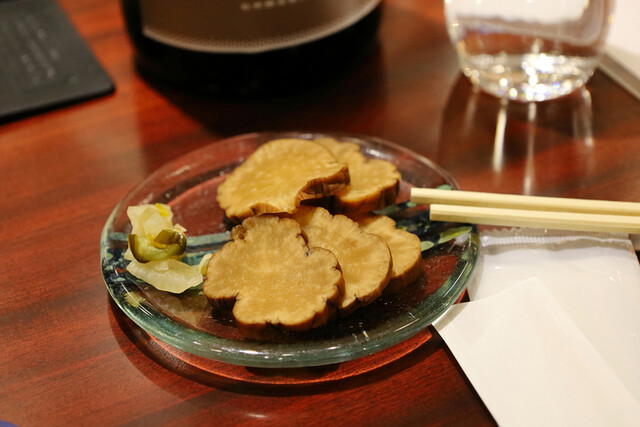
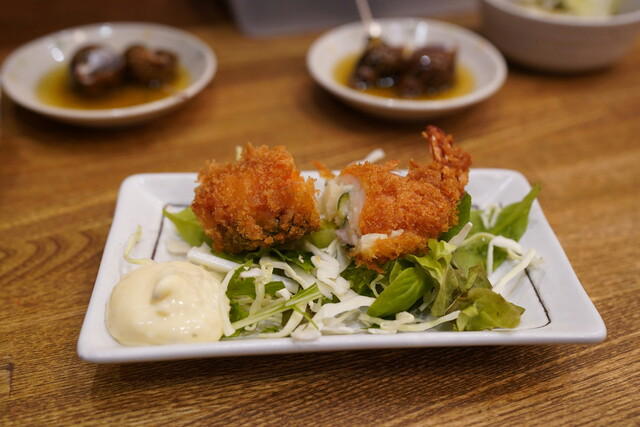
- Local Akita otsumami (snacks)
- Yukinobousha Baumkuchen
Akita Station’s food-and-drink floor has the efficient rhythm of a transit hub: luggage wheels, gift boxes, commuters moving with purpose, and counters designed for short decisions rather than long speeches. In that setting, the standing sake bar becomes a useful local institution. It gives the traveller a way into Akita’s drinking culture without requiring a formal dinner, a taxi ride across town, or a group reservation. Akita Kurasu sits in that lane, with a counter-only tachinomi format and a sake-first identity that make it less about lingering luxury than about access, pace, and regional specificity.
That matters in Akita, where the conversation around food often splits between hearty local cooking, prized beef, Hinai-jidori chicken, and serious sake. A full meal at Akita Gyugentei Ekimae honten or the more destination-minded Akita Gyugentei Sannou bekkan answers a different brief: beef, table service, and a longer spend. Akita Hinaiya Oodate honten points toward the prefecture’s chicken tradition, while affetto akita and BAR Le Vert show how the city also supports more composed restaurant and bar formats. The standing bar occupies a sharper use case: a quick, low-commitment read on local sake culture.
Standing sake as Akita's shortest route to regional context
Tachinomi is often misunderstood by visitors as simply a cheap drinking format. In Japan, its better examples are closer to compressed editorial: small footprint, high turnover, a focused drinks list, and enough food or snacks to frame the glass without turning the visit into a full meal. Akita Kurasu was selected for Tabelog 100 Tachinomi 2025, a useful signal because the category rewards exactly this kind of narrow-format competence rather than broad restaurant ambition. The listing also identifies it as a stand-up bar, Japanese sake bar, and beer bar, with sake given clear priority.
The value proposition is therefore not abundance. It is concentration. In a city where a visitor could spend several times more on sushi, yakitori, or beef, this counter offers a different return: regional alcohol culture in a format that works before a train, after hotel check-in, or between larger meals. Compared with Akita peers such as Toppin Parari no Pu, Sushi Cho, Torikou, or Akita Gyugentei Ekimae honten, the standing-bar model asks for less time and less ceremony. That does not make it a substitute for those meals. It makes it a useful hinge between them.
The solo-dining signal is also worth reading carefully. Japan’s station bars and counters are among the country’s easiest formats for a single traveller, partly because the room does not require the theatre of a two-person table. The counter is the social architecture. It lets the drink take priority, while the guest controls the length of stay. For Akita, where the sake identity is not decorative but part of the prefecture’s broader agricultural and brewing culture, that economy of format is a strength.
Why the counter format beats a larger meal here
Akita’s restaurant scene rewards planning if the goal is a full regional itinerary. Beef specialists, sushi counters, chicken houses, and izakaya all have their place, and Our full Akita restaurants guide is the better starting point for building that sequence. But a station tachinomi solves a more specific problem: how to taste the city’s drinking culture without giving an entire evening to it. In editorial terms, this is the difference between a chapter and a footnote. Akita Kurasu is short-form, but not minor.
The setting inside the station complex also changes the stakes. Station dining in Japan can be perfunctory, but it can also act as a prefectural showcase, especially in regional cities where local producers need a high-traffic stage. A sake-focused counter in this environment has a clear job: reduce friction. No private room, no extended service arc, no elaborate chef narrative. The appeal lies in the way the format makes Akita’s sake culture available to travellers who may not have the language, time, or appetite for a deeper izakaya session.
For travellers comparing categories across Japan, the same logic applies beyond Akita. A compact food stop such as Onigiri Time in Pasadena, a specialist sake address such as Jōdo Saké Bar in Los Angeles, or tightly defined casual venues like.cafe in Osaka.know in Kumamoto, (Shoku) Vietnam in Kawasaki, [Curry Senmon Ten] Maruyama Kyoju. in Sapporo. 鮪と炭火焼き うお炭 秋葉原店 in Tokyo, and -Grilled beef Sukiyaki- KAMAKURA TANUKIAN 鎌倉 たぬき庵 in Kamakura all show how narrow formats can outperform broader ones when the traveller’s need is precise. The lesson is not that small is automatically better. It is that a narrow promise, delivered cleanly, can be more useful than a diffuse menu.
Where it fits in an Akita itinerary
The cleanest way to use this address is as a calibration stop. Start with sake and the standing-counter rhythm, then decide whether the evening needs beef, chicken, sushi, or a quieter cocktail bar. That sequencing keeps expectations accurate. This is not the place to look for a chef-driven tasting menu or a long-form dining room. It is the place to understand why Akita’s sake culture travels so easily through counters, station retail, and casual drinking rooms.
For a broader trip, pair it with category-specific planning rather than treating it as the whole story. Our full Akita bars guide helps map the city’s drinking options, while Our full Akita hotels guide, Our full Akita wineries guide, and Our full Akita experiences guide widen the frame beyond the counter. The editorial read is simple: Akita Kurasu is strongest when judged by tachinomi standards, not restaurant ones. Its recognition, sake focus, and station-counter practicality make it a high-utility stop for travellers who value context per minute.
Frequently asked questions
Is Akita Kurasu more mid-range or high-end?
Pricing at Akita Kurasu is listed as JPY 1,000 - JPY 1,999 JPY 1,000 - JPY 1,999.
What days is Akita Kurasu closed?
Hours at Akita Kurasu: Mon: 8 AM–8 PM; Tue: 8 AM–8 PM; Wed: 8 AM–8 PM; Thu: 8 AM–8 PM; Fri: 8 AM–8 PM; Sat: 8 AM–8 PM; Sun: 8 AM–8 PM.
Where is Akita Kurasu located?
Akita Kurasu is located in Akita.
What's the defining dish or idea at Akita Kurasu?
The defining idea is tachinomi, the standing-bar format, paired with Japanese sake. Akita Kurasu is a Tabelog 100 Tachinomi 2025 selection in Akita Station’s Topico 2F, with counter seating and no reservations.
Recognition Snapshot
Comparable venues to calibrate price, style, and recognition.
| Venue | Cuisine | Price | Awards | Notes |
|---|---|---|---|---|
| Akita KurasuThis venue — the venue you are viewing | Akita local sake standing bar & specialty shop | $10–20 | Tabelog 100 #95 | Not listed |
| Teuchi Soba Katou | Japanese Soba & Udon | Not listed | Tabelog 100 #59 | Akita |
| Sumibi Yakiniku Nama Horumon Dokoro Shouchan | Yakiniku & Horumon (Japanese BBQ) | $20–30 | Tabelog 100 #11 | Akita |
| Takaraya | Local sake-focused Japanese izakaya | Not listed | Tabelog 100 #28 | Akita |
| Takarazushibunten | Omakase Sushi | $50–100 | Tabelog Bronze #448 | Akita |
| Shinsui Chubo Sie | Japanese Izakaya | $50–100 | Tabelog 100 #18 | Akita |
Recognition history
Dated appearances from independent guides and award organizations, with the underlying list record or original source where available.
Tabelog 100 #95 · No. 95
Tabelog · Tabelog 100 - Tachinomi - 2025
Details
- Lively
- Cozy
- Modern
- Solo
- Casual Hangout
- After Work
- Late Night
- Design Destination
- Standalone
- Sake Program
- Beer Program
- Local Sourcing
- Small Plates
- Counter Dining
- Sake
- Beer
Current opening hours
- Monday
- 8 AM–8 PM
- Tuesday
- 8 AM–8 PM
- Wednesday
- 8 AM–8 PM
- Thursday
- 8 AM–8 PM
- Friday
- 8 AM–8 PM
- Saturday
- 8 AM–8 PM
- Sunday
- 8 AM–8 PM
Hours can change for holidays and private events. Last verified .
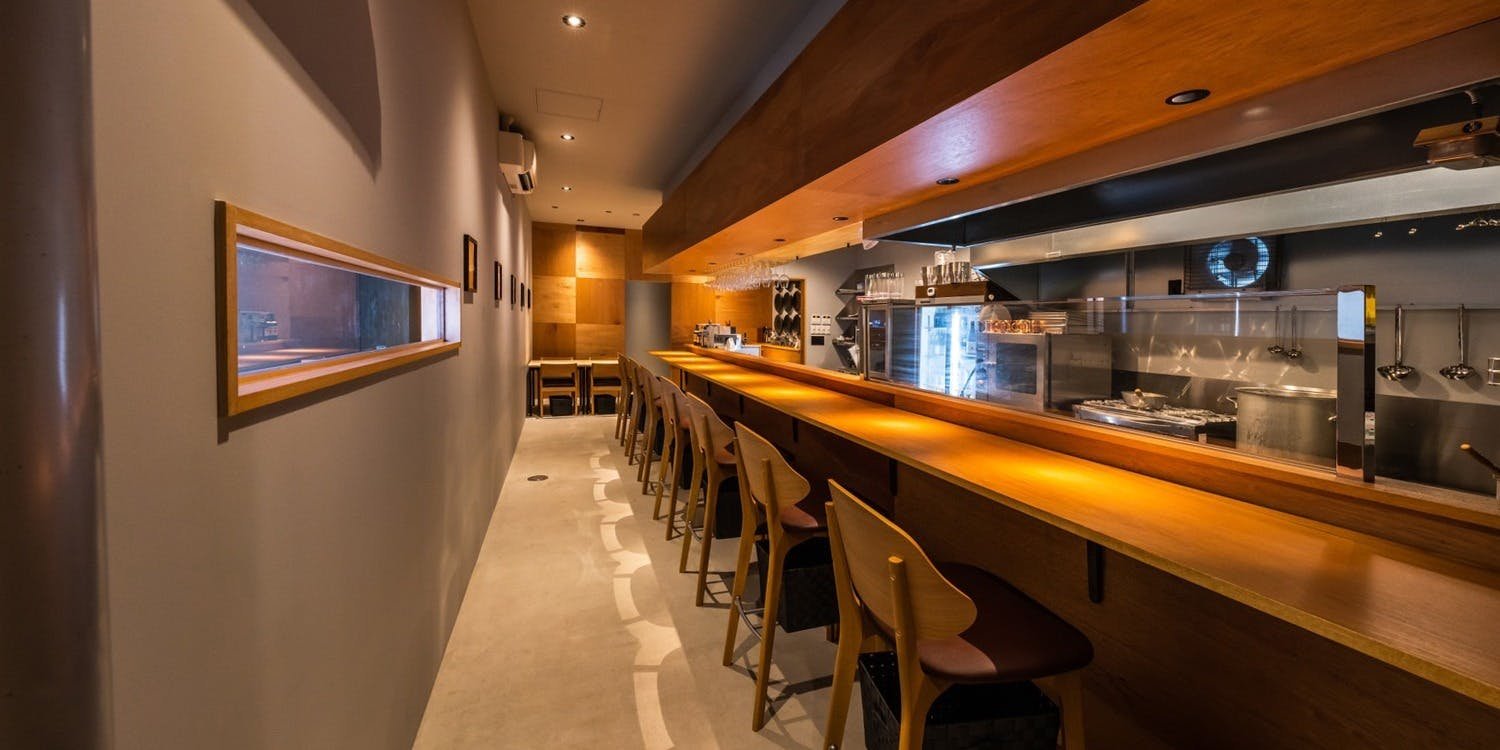
Bright, clean station-building bar with a casual, standing-only counter, focused on tasting well-kept Akita sake alongside local snacks and souvenirs.