
Tabelog 100 #18
Our verdict
Shinsui Chubo Sie places Akita’s izakaya culture in a more serious register: fish-led cooking, sake and shochu, a compact room with counter and tatami seating, and recognition in Tabelog’s Izakaya EAST 100 for 2024 and 2025. It suits travellers who want the region’s drinking-food tradition treated with care rather than dressed up as a formal kaiseki substitute.

Pearl is the En Primeur Club membership app, where members save venues, book tables and use the concierge.
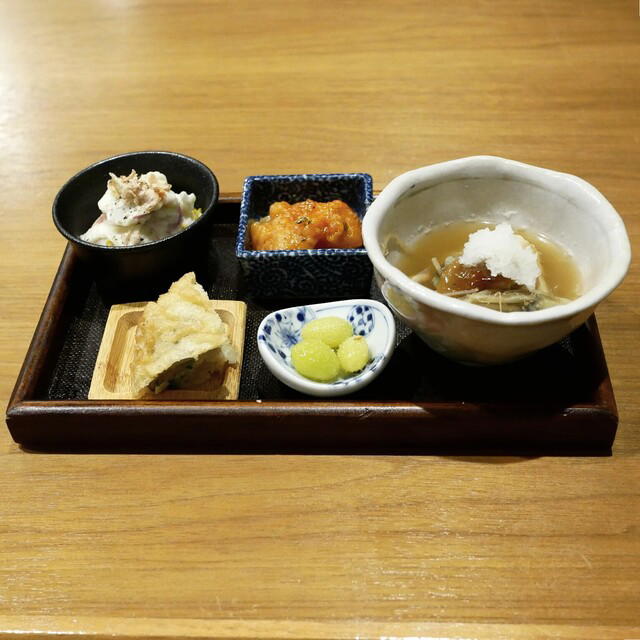
The menu
What to order
- Taichi Salad (over 30 kinds of vegetables)
Approach this kind of Akita dining with expectations scaled below Tokyo’s high-production restaurant theatre. The room language is close-range and informal, with the quiet choreography of an izakaya built around drinking as much as eating. Shinsui Chubo Sie belongs to the northern Japanese category where the table is not a luxury stage, but a place to read the region through local appetite, conversation, and the pace of an evening.
Akita’s food culture rewards attention to climate: long winters, important rice, important fermentation, and sake as part of dinner’s grammar, not an accessory. In that context, an izakaya carries more weight than a casual tavern in a larger city. The format is familiar across Japan, but here it is less about volume than regional fluency: rice-country drinking, shared plates, and a room small enough for the meal to feel anchored rather than anonymous.
Sake, shared plates and the serious end of Akita izakaya culture
Understand Shinsui Chubo Sie not as a fine-dining substitute, but as proof that izakaya has its own hierarchy. Tabelog recognition in 2025 is a meaningful signal in a field where neighbourhood affection alone rarely travels far. Its listed score of 3.81 also places it in a serious Japanese-review context, where incremental differences can matter more than on international platforms.
The stated category is izakaya, a Japanese-style tavern, which gives the address a clear place in Akita’s evening dining map. Akita can support varied itineraries, and travellers comparing categories might look to other dining rooms in the city for another read on the region. The point here is narrower: an izakaya asks the drinks and the food to carry shared responsibility. The cultural center of gravity is the meal as a whole, not a single signature order or a separate bar program.
That distinction matters because Japan’s izakaya tradition is often flattened for visitors into snacks and beer. At the careful end, the format becomes a flexible dining structure: small plates, seasonal context where available, and drinks chosen to extend the meal rather than punctuate it. Nothing in the available public detail supports naming specific dishes, and that restraint is useful. The appeal is not a famous order, but the category done with enough discipline to be noticed beyond its neighbourhood.
A compact house-restaurant format, not a big-city spectacle
Scale changes expectations. The experience reads as small-format izakaya rather than big-room spectacle: less formal than a tasting-menu counter, more intentional than a drop-in drinking room. For visitors, the implication is simple. Do not arrive with a large, loosely planned group and expect the room to absorb the disruption.
The appeal also signals tone. Akita need not imitate Ginza or Kyoto to be compelling; its stronger dining experiences work through locality, modest scale, and specific ingredients rather than spectacle. Shinsui Chubo Sie belongs in a wider Akita itinerary alongside addresses showing other parts of the prefecture’s appetite, from regional specialties to sake-led evenings and contemporary dining rooms. They do not compete on the same terms; together they show why Akita rewards category-hopping more than checklist dining.
Among local comparisons, SOUPHOLIC, Hinai Jidori Kushi Sot l'y laisse, Sake Tomi, and Tonkatsu Ishikawa point to how varied Akita dining can feel even within a relatively focused city scene. These comparisons matter because Akita’s dining scene is not large enough for anonymous abundance. Choosing well means deciding what kind of evening you want: regional chicken, sake, a specialist counter, a tavern-style meal, or another focused local experience. This room is for the izakaya version.
How to place it in an Akita trip
For travellers building a serious Akita table map, resist treating izakaya as the fallback after reservations fail elsewhere. In northern Japan, izakaya can carry local identity with more agility than formal restaurants because the format can absorb regional context, rice-country alcohol, seasonal cooking, and everyday hospitality without forcing them into a fixed menu narrative. Shinsui Chubo Sie’s 2025 Tabelog recognition makes that legible to outsiders, but the appeal is cultural rather than trophy-driven.
City planning should be equally specific. Use Our full Akita restaurants guide to balance izakaya, regional specialties, and contemporary rooms; Our full Akita hotels guide for where to stay; Our full Akita bars guide for late-evening drinking context; Our full Akita wineries guide for the prefecture’s smaller wine conversation; and Our full Akita experiences guide for non-restaurant time. Travellers extending the Japan dining thread beyond Akita can compare the city’s restaurant culture with other dining elsewhere in Japan, from casual counters and café culture to regional cooking, specialist kitchens, and seafood-focused rooms. For sake culture outside Japan, overseas bars and casual Japanese-inspired venues can offer diaspora contrast, though Akita’s version remains rooted in rice-country proximity rather than export-era interpretation.
The editorial read is clear: choose this address when the goal is not novelty, chef mythology, or a dressed-up regional tasting menu. Choose it when Akita’s drinking-food culture is the subject, and when a compact izakaya with national-category recognition says more about the city than a louder room would.
Frequently asked questions
How do I find Shinsui Chubo Sie?
Shinsui Chubo Sie is located in Akita.
What price level is Shinsui Chubo Sie?
Pricing at Shinsui Chubo Sie is listed as JPY 8,000 - JPY 9,999.
When can I go to Shinsui Chubo Sie?
Check current opening details directly before visiting Shinsui Chubo Sie.
What is Shinsui Chubo Sie known for?
Shinsui Chubo Sie is listed as an izakaya, a Japanese-style tavern, in Akita.
Booking and Cost Snapshot
Nearby venues at a similar price tier for orientation.
| Venue | Cuisine | Price | Awards | Notes |
|---|---|---|---|---|
| Shinsui Chubo SieThis venue (the venue you are viewing) | Japanese Izakaya | $50–100 | Tabelog 100 #18 | Not listed |
| Washoku Sugawara | Seasonal Japanese Kaiseki | Not listed | Tabelog 100 #82 | Akita, Seasonal Japanese Kaiseki |
| Akita Gyugentei Sannou bekkan | Yakiniku (Japanese BBQ) | $50–100 | Tabelog 100 #33 | Akita, Yakiniku (Japanese BBQ) |
| é ç | Japanese | Not listed | Not listed | Akita, Japanese |
| Sake Tomi | Japanese Izakaya | $30–50 | Tabelog 100 #63 | Akita, Japanese Izakaya |
| Torikou | Yakitori Izakaya | $50–100 | Tabelog 100 #49 | Akita, Yakitori Izakaya |
Recognition history
Dated appearances from independent guides and award organizations, with the underlying list record or original source where available.
Tabelog 100 #18 · No. 18
Tabelog · Tabelog 100 - Izakaya - EAST - 2025
Continue exploring
More in Akita
Restaurants in Akita
All restaurants in Akita →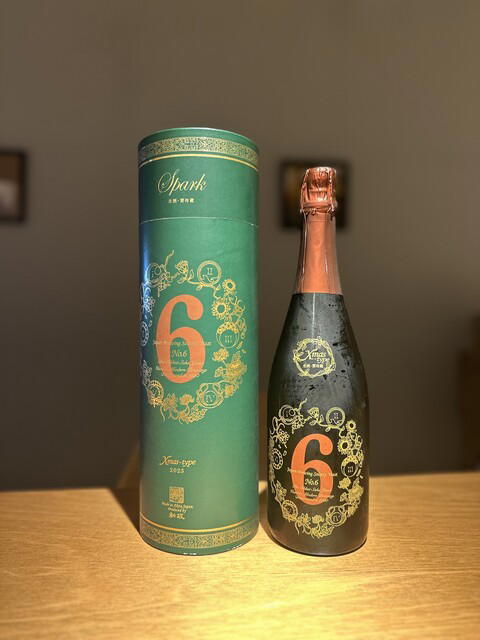
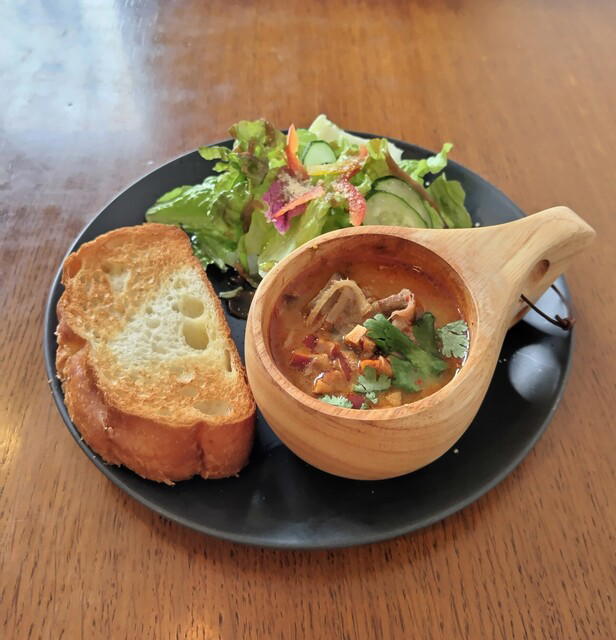
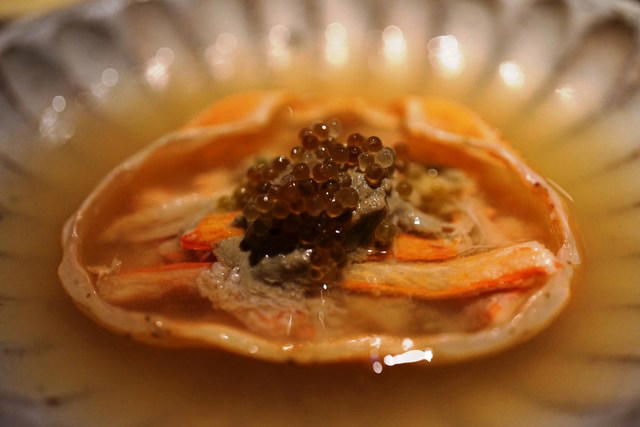
Hotels in Akita
Browse all →
Details
- Cozy
- Intimate
- Date Night
- After Work
- Casual Hangout
- Group Dining
- Late Night
- Standalone
- Sake Program
- Beer Program
- A La Carte
- Small Plates
- Sake
- Beer
Current opening hours
- Monday
- 6–10 PM
- Tuesday
- 6–10 PM
- Wednesday
- 6–10 PM
- Thursday
- 6–10 PM
- Friday
- 6–10 PM
- Saturday
- 6–10 PM
- Sunday
- Closed
Hours can change for holidays and private events. Hours as of .
An intimate, non-smoking izakaya with just a few counter and table seats, creating a cozy, relaxed atmosphere suited to slow, conversational drinking and dining.