Google: 4.7 · 2,213 reviews
.png)
Situated above the village of Moena, Agritur El Mas is an agriturismo that raises its own cows, pigs and horses and produces the charcuterie, cheeses and meat it serves. Ladin-inflected cooking, an open brazier, and views of the stalls through a glass screen place it in a distinct tier among the valley's dining options. A Michelin Bib Gourmand for 2024 and 2025 confirms its standing.
 Discover on Pearl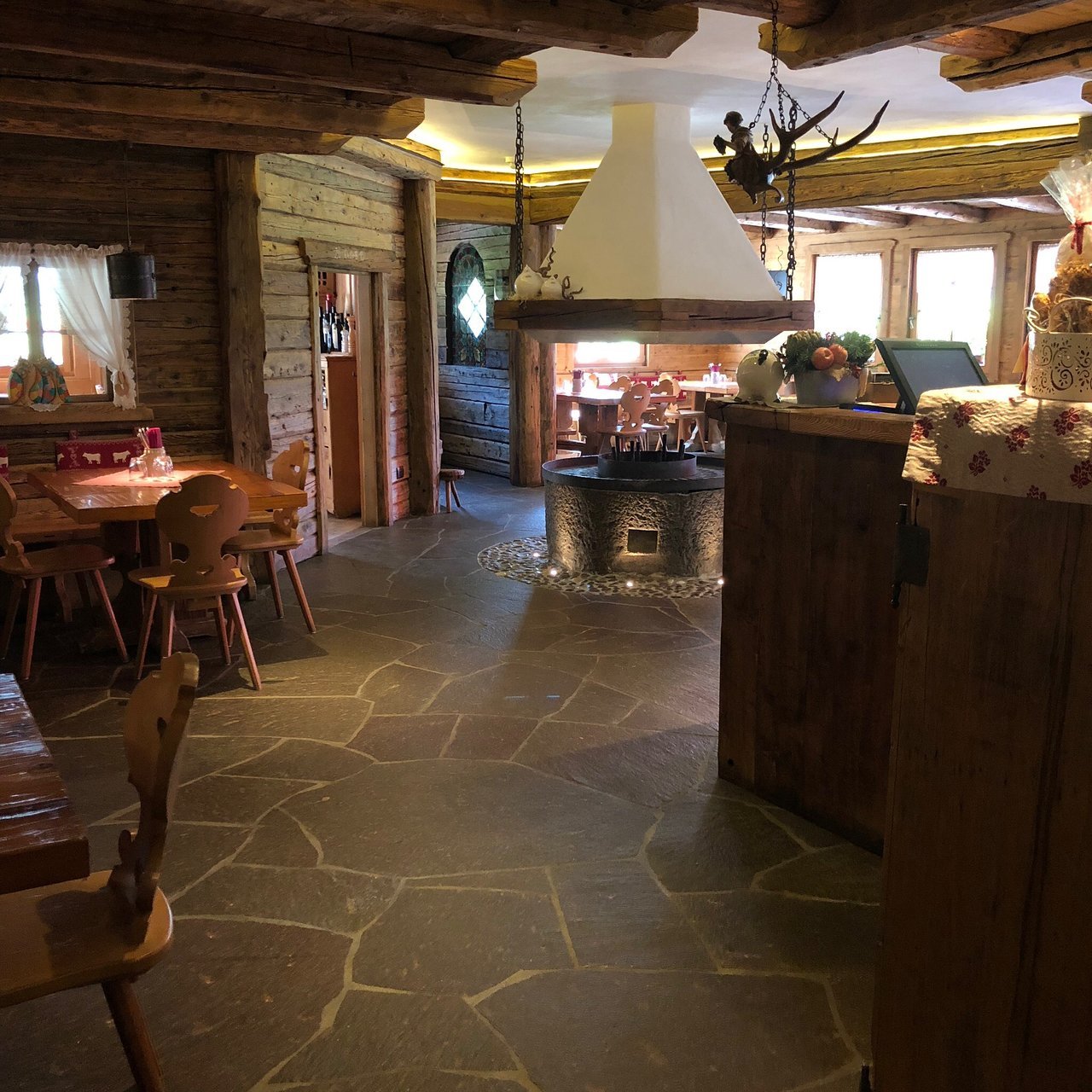
Above the Village, Grounded in the Valley
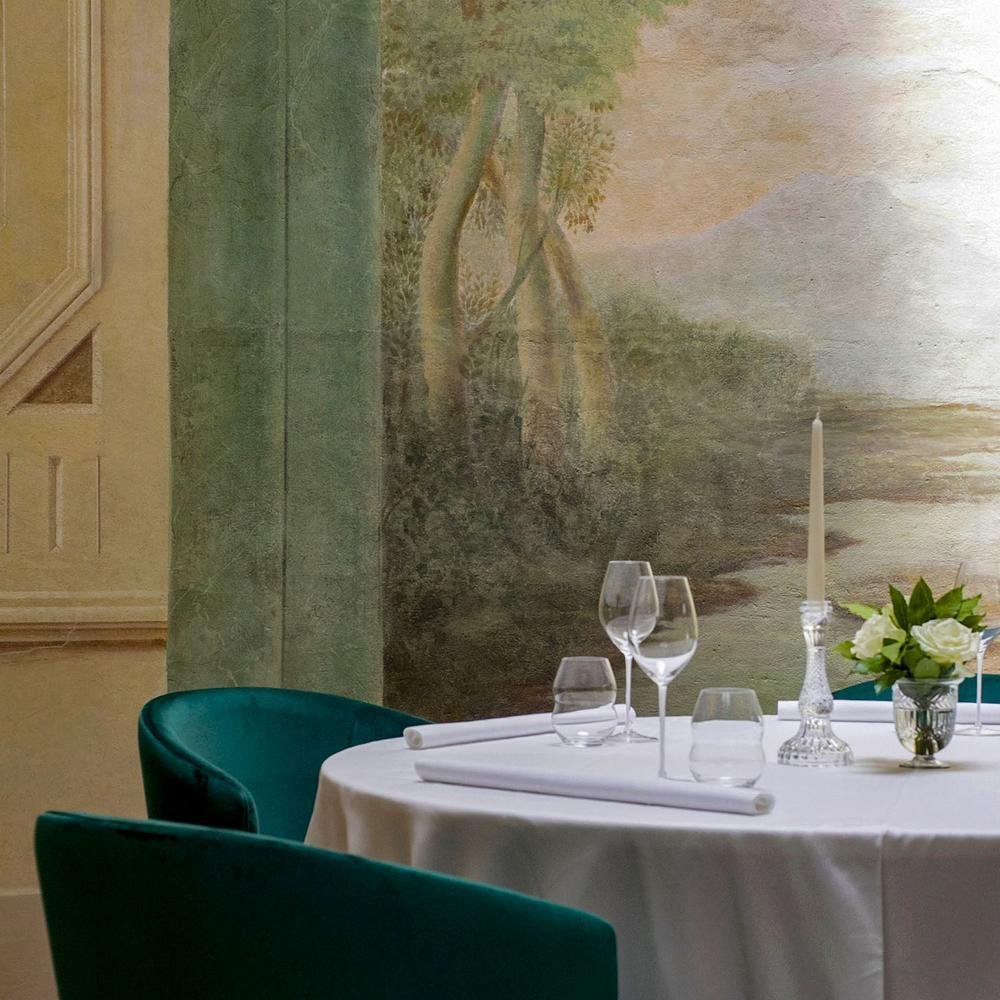
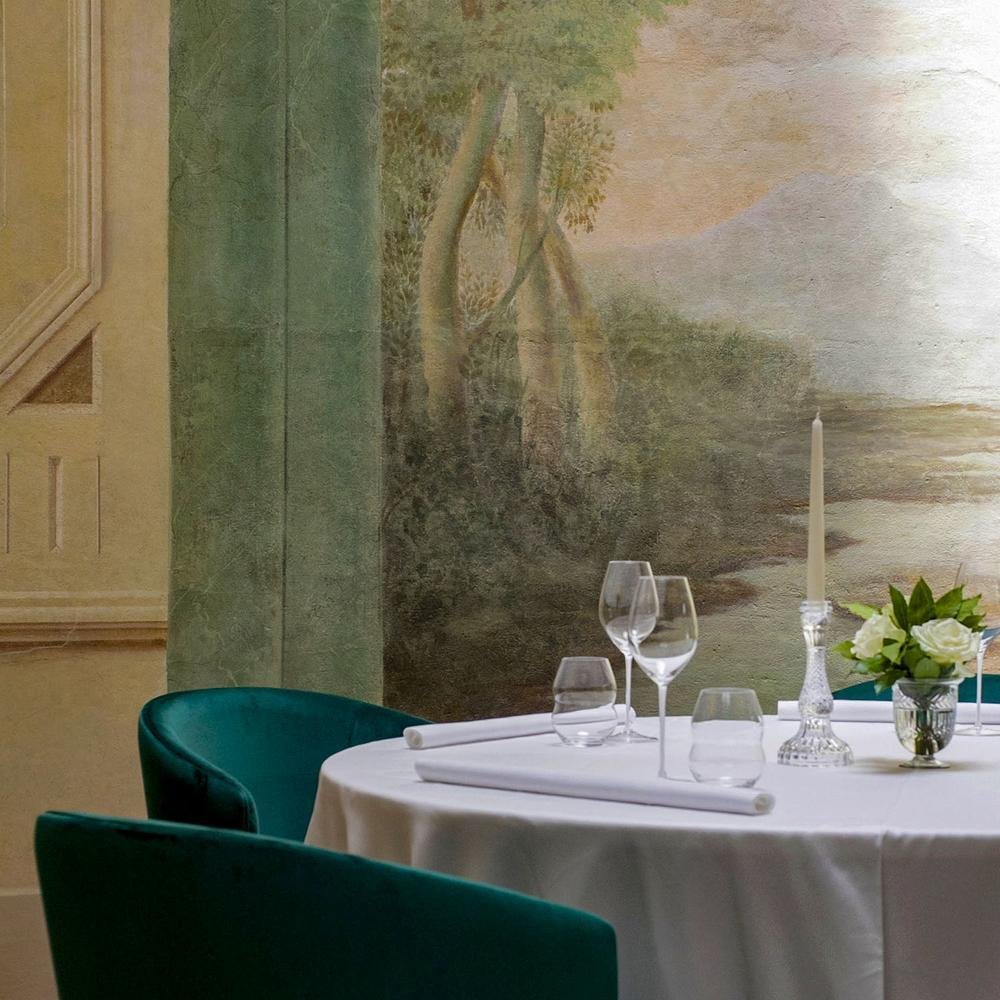
Approaching Agritur El Mas from Moena, the road rises above the village roofline into a quieter register of the Fassa Valley. The building sits in working farmland, and the smell of livestock and cut timber is present before you reach the door. Inside, the dining room is panelled in old wood that has absorbed decades of smoke and resin, and an open brazier occupies the centre of the space rather than the wall. This is not decorative ruralism. The farm that supplies the kitchen is operating behind a glass screen at the far end of the room, where the cows in their stalls are visible to anyone seated at a table. The architecture is not making a statement; it is simply describing a fact about how this place works.
That directness is worth noting because it places Agritur El Mas in a different register from much of the Dolomites dining scene. Moena's most cited address, Malga Panna, holds a Michelin star and operates at the €€€ tier with a more composed and considered style of service. El Mas prices at €€ and makes no effort to perform refinement. What it performs instead is continuity: between the land outside, the animals in the building, and the food on the table. That continuity has earned it consecutive Michelin Bib Gourmand recognitions in 2024 and 2025, a designation that marks quality cooking at prices that do not demand a special occasion.
Chef Stefano and the Logic of the Kitchen
In the agriturismo tradition, the kitchen does not exist independently of the farm. The chef, Stefano, works with ingredients that begin a short distance from the stove: meat from the farm's own herd and pigs, salamis and cheeses produced on the same property. That supply chain shapes what is possible on the menu and, more importantly, what is not possible. Dishes that require sourcing from outside the valley's production system are less prominent here than they might be at a restaurant that treats ingredient provenance as a marketing choice rather than a structural one.
Across northern Italy's Alpine arc, the most coherent agriturismi operate on this same logic. Gannerhof in Innervillgraten, on the Austrian side of the cultural border, represents a related tradition of closed-loop Alpine farming-kitchen operations. What distinguishes the Trentino-Alto Adige version, and specifically the Ladin variant found in the Fassa Valley, is the presence of a culinary identity that sits between the Tyrolean German-speaking north and the Italian south. Ladin is a Rhaeto-Romance language spoken by roughly 20,000 people across five valleys in the Dolomites, and its food culture reflects that compression of influences: cured meats with Germanic weight, pasta preparations with more southern ancestry, dairy traditions shaped entirely by altitude and seasonal Alpine pasture.
What Lands on the Table
The menu at Agritur El Mas draws from this Ladin-inflected tradition without theatricalising it. Specialities from the valley appear alongside products made on the farm itself, and the kitchen's role is largely one of honest preparation rather than transformation. The salamis and cheeses produced here are available to buy in the farm's own shop and through an online channel, which suggests a confidence in the product at ambient temperature, before any heat is applied to it. That is a reasonable indicator of quality: producers who retail their cured meats and aged cheeses directly are subject to a more sustained scrutiny than those who serve them only in a controlled dining context.
This approach puts El Mas in a distinct peer position relative to other €€ addresses in Moena. Foresta and Malga Roncac both operate at the same price tier with regional cuisine, while Ostaria Tyrol occupies the adjacent country cooking category. None of them, based on available data, operates an integrated farming operation of the kind that defines El Mas's proposition. InAlto Alfio Ghezzi Dolomites moves in a different direction entirely, with Ghezzi's modern Alpine cooking philosophy placing it closer to the kind of creative regional work seen at Atelier Moessmer Norbert Niederkofler in Brunico than to the farmhouse tradition El Mas represents.
The Bib Gourmand in Context
Michelin's Bib Gourmand category rewards cooking that the guide judges to offer good quality at a price ceiling that, in Italy, sits roughly under €35 for a two-course meal with dessert or wine. Consecutive recognition in 2024 and 2025 signals consistency rather than a single strong year, which matters in a category where the guide's inspectors revisit regularly. For comparison, Italy's starred tier in this region includes addresses such as Dal Pescatore in Runate, Le Calandre in Rubano, and Osteria Francescana in Modena, all operating at substantially higher price points and with a fundamentally different ambition. The Bib Gourmand sits below that ceiling by design, and El Mas's placement there does not represent a consolation; it represents a different category of achievement, one that is arguably harder to sustain because the margin between ingredient cost and menu price is narrower.
A Google rating of 4.7 across 2,132 reviews is a large and stable signal. At that sample size, a score of 4.7 is resistant to short-term variation and reflects a sustained pattern of guest satisfaction rather than a flush of recent attention. Among the smaller-scale agriturismi in the Trentino Dolomites, that combination of Michelin recognition and high-volume positive review data is not common.
Staying and Planning
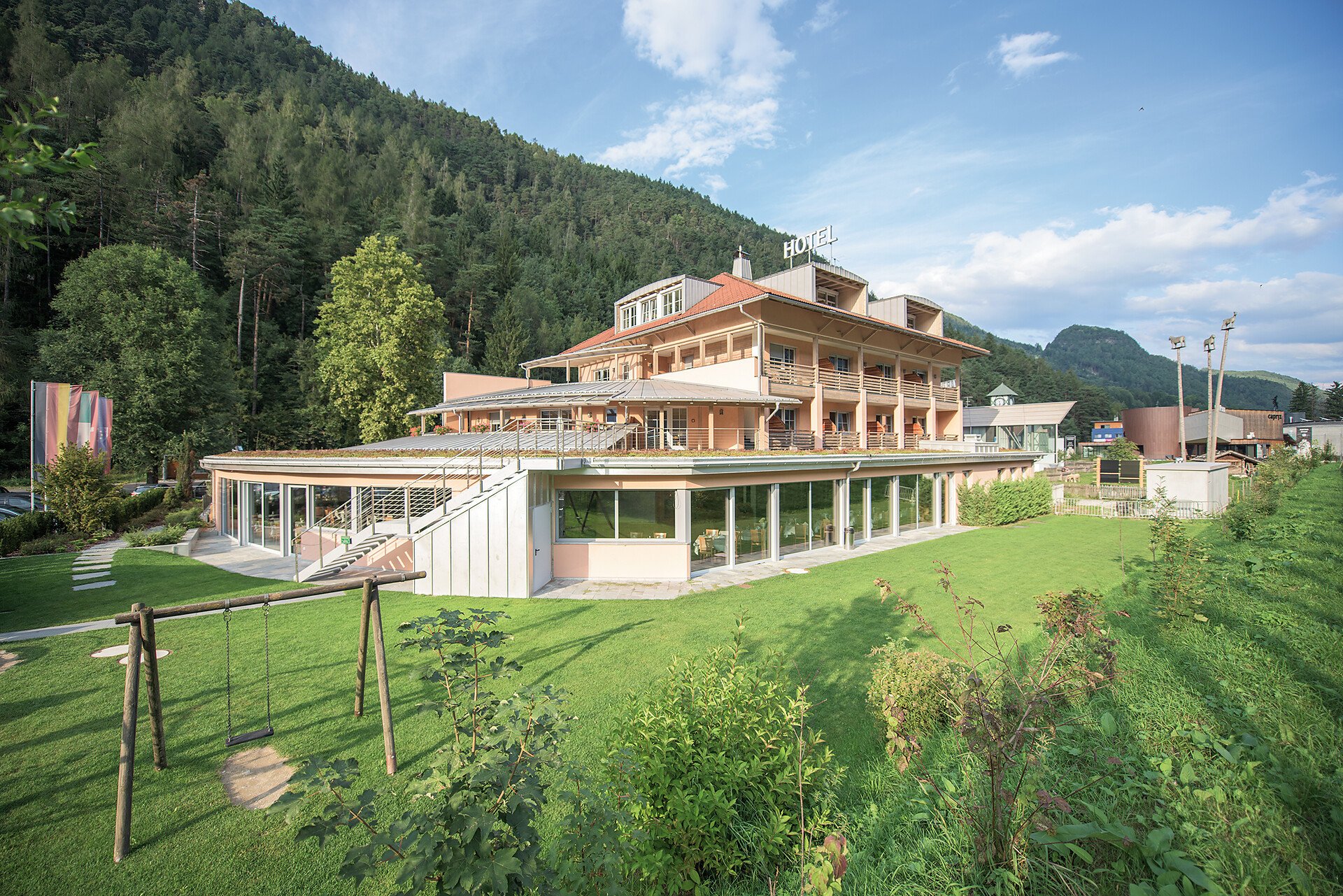
Guestrooms are available in the same building, constructed with a focus on green building methods that align with the farm's general orientation toward closed-loop production and reduced external dependency. For visitors to the Fassa Valley, this makes El Mas a plausible base rather than solely a dining stop. The combination of accommodation, a working farm shop, and a kitchen that has held Bib Gourmand status for at least two consecutive years positions it as a self-contained proposition for travellers whose interest in the region extends beyond skiing or hiking logistics.
The farm shop and online retail channel mean that the cheese and charcuterie produced here are accessible beyond a single meal, which is worth factoring into any visit. Reservations for the restaurant are advisable, particularly in the winter ski season and during summer when the valley sees sustained visitor numbers. For broader orientation in the area, see our full Moena restaurants guide, as well as our full Moena hotels guide, our full Moena bars guide, our full Moena wineries guide, and our full Moena experiences guide. For a sense of where farm-rooted Alpine cooking sits in a wider Italian context, the contrast with city-facing fine dining at Enoteca Pinchiorri in Florence or Enrico Bartolini in Milan is instructive. A related sensibility to El Mas, applied in a Swiss Alpine context, appears at Fahr in Künten-Sulz.
Quick Comparison
A compact peer snapshot based on similar venues we track.
| Venue | Cuisine | Price | Awards | Notes |
|---|---|---|---|---|
| Agritur El Mas | Regional Cuisine | €€ | Bib Gourmand | This venue |
| Malga Panna | Regional Cuisine | €€€ | Michelin 1 Star | Regional Cuisine, €€€ |
| Foresta | Regional Cuisine | €€ | Regional Cuisine, €€ | |
| Ostaria Tyrol | Country cooking | €€ | Country cooking, €€ | |
| InAlto Alfio Ghezzi Dolomites | Regional Cuisine | €€ | Regional Cuisine, €€ | |
| Malga Roncac | Regional Cuisine | €€ | Regional Cuisine, €€ |
At a Glance
- Rustic
- Scenic
- Cozy
- Romantic
- Quiet
- Family
- Date Night
- Group Dining
- Celebration
- Wine Cellar
- Garden
- Panoramic View
- Private Dining
- Beer Program
- Farm To Table
- Local Sourcing
- Organic
- Mountain
- Garden
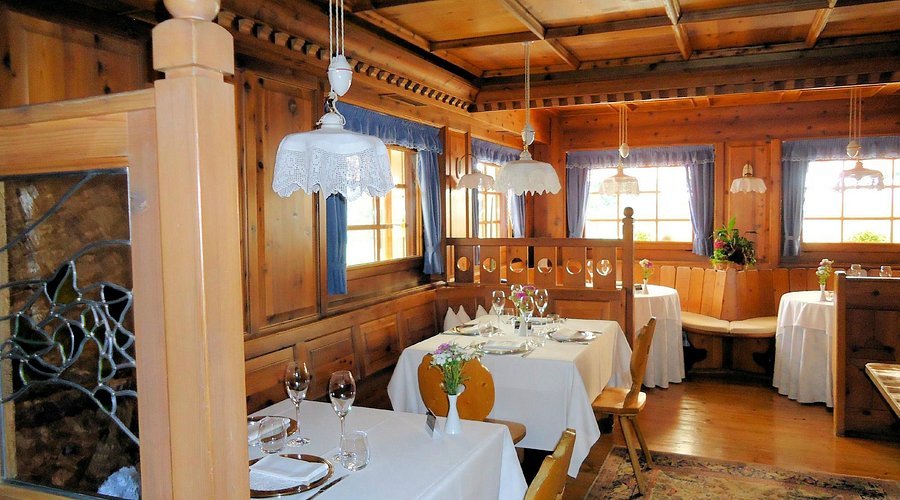
Warm and welcoming with a large central open fireplace, rustic wooden interiors, and panoramic mountain views; guests can observe grazing cows and farm animals through large windows, creating a peaceful, authentic Alpine farmhouse atmosphere.