Addis Nola


Michelin Plate · Resy Best of the Hit List
Our verdict
A 2025 Michelin Plate holder on Mid-City's Bayou Road, Addis Nola brings Ethiopian communal dining to New Orleans at the $$ tier. Shared injera platters, fasting-tradition vegetable preparations, and a Resy Hit List nod for 2025 make it the city's reference point for the cuisine, occupying a lane no other recognized New Orleans restaurant fills.

Pearl is the En Primeur Club membership app, where members save venues, book tables and use the concierge.
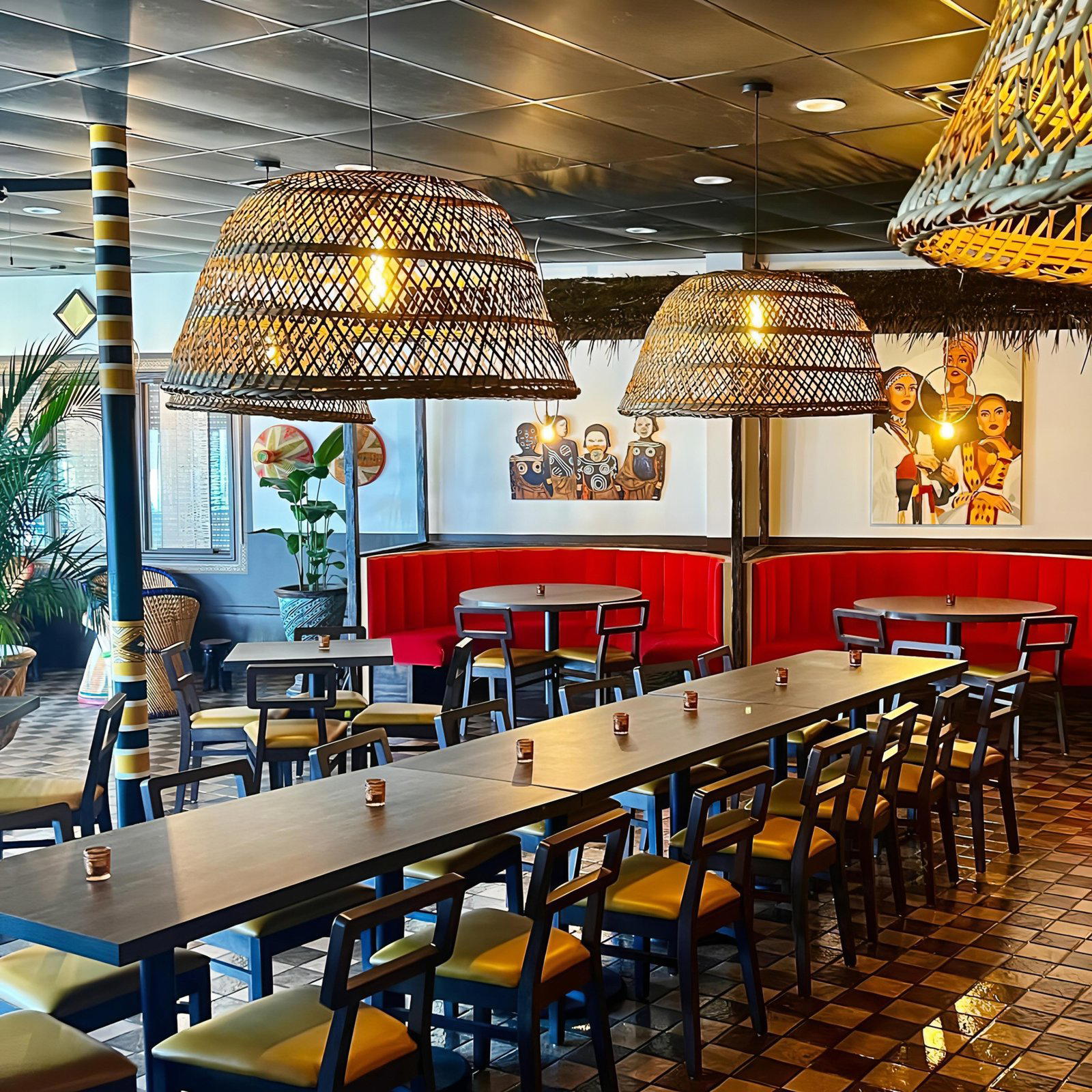
Where Injera Meets the Bayou
Bayou Road sits at an oblique angle to the French Quarter's tourist grid, running northeast through Mid-City in a way that feels deliberately unhurried. The neighborhood is older New Orleans: shotgun houses, century oak canopies, corner stores that have not been converted into anything. Addis Nola occupies this stretch at 2514 Bayou Rd, and the address alone signals something about the restaurant's relationship to the city. It is not positioned to catch foot traffic from Bourbon Street; it is positioned to be found by people who are looking for it.
Ethiopian dining in the American South is a study in productive contrast. The cuisine's communal logic, its resistance to individual plating, its insistence that the meal is a shared act rather than a series of personal courses, runs counter to the table-service conventions that anchor most New Orleans dining rooms. At Addis Nola, that contrast is the point. New Orleans already has its own traditions of collective eating: the crawfish boil, the Sunday jazz brunch, the second-line after a long meal. Ethiopian service, with its central platter and shared injera, maps onto those communal instincts more naturally here than it might in cities with more transactional dining cultures.
The Ritual of the Shared Platter
Ethiopian dining's defining structural feature is the absence of individual plates as the meal's primary vessel. A single large tray arrives carrying multiple stews, salads, and legume preparations arranged around or on top of injera, the slightly sour fermented teff flatbread that functions simultaneously as plate, utensil, and carbohydrate component. Diners tear pieces of injera and use them to scoop portions from the shared arrangement. The pace is set collectively, not by a server announcing that your entree will be right out.
This format changes the dining experience in specific ways. Conversation at an Ethiopian table tends to be continuous rather than interrupted by course transitions. The meal does not have a hard midpoint the way a three-course structure does. Eating slows naturally as the injera at the center of the tray soaks up the stews and becomes richer with each passing minute. The final bites of a well-timed Ethiopian meal are often the most complex, as the bread has absorbed layers of berbere, niter kibbeh, and vegetable cooking liquid over the course of an hour.
For diners new to the format, the practical note is to resist the instinct to eat quickly. The meal is designed for duration. Order a range of preparations across meat and vegetable options, and let the platter build flavor as it sits. The vegetarian selections in Ethiopian cooking are not an afterthought; Wednesday and Friday fasting traditions in Ethiopian Orthodox practice have produced a sophisticated canon of plant-based dishes that hold their own against any protein preparation.
What the Awards Signal
Addis Nola earned a Michelin Plate in 2025, a designation that sits below Michelin's star tiers but represents an explicit acknowledgment from the Guide's inspectors that the kitchen is cooking well. In the context of New Orleans's restaurant scene, where Michelin's Louisiana coverage is still relatively recent, a Plate designation carries meaningful weight for a restaurant in the $$ price tier. It places Addis Nola in a category of recognition that most restaurants in the city, including well-regarded Creole and Cajun institutions, do not hold.
The 2025 Resy Hit List recognition adds a second, editorially distinct signal. Where Michelin assessments emphasize kitchen consistency and technical precision, Resy's Hit List tends to track cultural momentum and dining relevance, the restaurants that people with serious food interests are actively seeking out. Holding both simultaneously in 2025 suggests a restaurant that performs on multiple registers: technically credible and culturally current.
For comparison, the broader New Orleans Michelin tier includes restaurants working in very different registers. Emeril's operates in the Cajun tradition with two Michelin Stars. Saint-Germain holds recognition at the $$$$ Contemporary tier. Bayona represents the New American category. Addis Nola's Plate at the $$ level, for a cuisine category with no direct local competition, occupies a lane of its own within that range of recognized restaurants.
Ethiopian Food in the Context of New Orleans Dining
New Orleans has one of the most codified regional food identities in the United States. The city's restaurant culture is organized around a set of traditions, Creole, Cajun, Po-Boy, Gulf seafood, that have deep institutional roots and serious community investment. Restaurants that operate outside those traditions occupy a smaller, less-mapped part of the conversation.
That positioning cuts both ways. On one hand, an Ethiopian restaurant in New Orleans cannot trade on the cultural familiarity that a Creole kitchen receives automatically. On the other hand, the absence of direct competition at the same quality tier is clarifying. Addis Nola is not one of several Ethiopian options; it is the reference point for the cuisine in the city. That status, in a food city with the seriousness of New Orleans, is not a small thing.
Diners who have explored African restaurant scenes in Washington D.C. Atlanta, or Minneapolis will recognize the cuisine's broader context. Those cities have denser Ethiopian communities and correspondingly larger restaurant ecosystems for the cuisine. New Orleans's version is singular by comparison, which makes Addis Nola's awards more notable, not less. The Michelin inspectors were not comparing it within a crowded local category; they were assessing it on absolute kitchen terms.
Planning Your Visit
Addis Nola is located at 2514 Bayou Rd in Mid-City, outside the immediate radius of the French Quarter and the main hotel corridor. The $$ price designation makes it one of the more accessible Michelin-recognized restaurants in the city on a per-person basis, which also means tables can fill ahead of what visitors might expect for a neighborhood spot. Checking reservation availability before arrival rather than walking in is the practical approach, particularly on weekend evenings when the combination of local regulars and visiting diners creates real demand.
The communal format means the restaurant is suited to groups of two or more. Solo diners can manage the format, but the shared platter dynamic is better served by three or four people, which allows a wider range of preparations to appear on the same tray. Budget time accordingly: Ethiopian meals are not fast by design, and attempting to compress the experience into a tight dining window before another commitment misreads what the format is asking of you.
For a fuller picture of where Addis Nola sits within the city's broader dining options, see our full New Orleans restaurants guide. If you are building an itinerary beyond dinner, our New Orleans hotels guide, our bars guide, and our experiences guide cover the broader city in the same editorial register.
For context on how Michelin-recognized restaurants at the $$ tier compare nationally, it is worth noting that most of the country's most-discussed Michelin properties operate at significantly higher price points: Le Bernardin in New York City, Alinea in Chicago, The French Laundry in Napa, and Atomix in New York City occupy the leading price tiers of their respective cities. A Michelin Plate at the $$ level, in a cuisine category with genuine complexity, represents a specific kind of value that is harder to find in the Guide's pages than a starred tasting menu.
Frequently asked questions
Can I walk in to Addis Nola?
Calling ahead or checking the venue's current booking platform before visiting is the practical approach, particularly on weekends.
What makes Addis Nola worth seeking out?
Ethiopian cuisine has no deep roots in New Orleans, a city whose restaurant culture runs on a tightly codified set of local traditions. Addis Nola introduces a communal, fermentation-forward dining format that sits outside that canon entirely, and it earned a Michelin Plate and a spot on Resy's 2025 Hit List for doing so on its own terms. The Bayou Road address at 2514 places it in Mid-City, which means the visit requires intent, and that self-selection tends to filter for the right crowd.
Cuisine-First Comparison
| Venue | Cuisine | Price | Awards | Notes |
|---|---|---|---|---|
| Addis NolaThis venue (the venue you are viewing) | Authentic Ethiopian | $30–50 | Michelin Plate · Resy Best of the Hit List | Not listed |
| Emeril’s | Modern Creole-Cajun Fine Dining | $150–200 | 2 Michelin Stars · World's 50 Best #20 | Cajun |
| Re Santi e Leoni | Modern Italian Fine Dining | $100–150 | 1 Michelin Star | Contemporary |
| Bayona | Modern Creole Fine Dining | $100–150 | World's 50 Best #45 · James Beard Award Best Chefs | New American |
| Commander’s Palace | Modern Creole | $50–100 | La Liste Top Restaurants · Star Wine List | Creole |
| Pêche Seafood Grill | Modern Seafood Grill | $50–100 | Michelin Plate · James Beard Award Semi Finalist | American Regional - Cajun Seafood |
Recognition history
Dated appearances from independent guides and award organizations, with the underlying list record or original source where available.
Michelin Plate
Michelin
Resy Best of the Hit List
Resy
Continue exploring
More in New Orleans
Restaurants in New Orleans
All restaurants in New Orleans →
Bars in New Orleans
All bars in New Orleans →





Details
- Cozy
- Intimate
- Family
- Group Dining
- Date Night
- Celebration
- Open Kitchen
- Historic Building
- Craft Cocktails
- Family Style
- Small Plates
- Tej
- Ethiopian Coffee
- Vegetarian Friendly
Current opening hours
- Monday
- 5–9:30 PM
- Tuesday
- Closed
- Wednesday
- 5–9:30 PM
- Thursday
- 5–9:30 PM
- Friday
- 5–10 PM
- Saturday
- 11 AM–3 PM, 5–10 PM
- Sunday
- 11 AM–3 PM, 5–10 PM
Hours can change for holidays and private events. Hours as of .
Warm and inviting with beautiful African art, eclectic decor, and traditional mesob dining tables creating an immersive cultural atmosphere.