Our verdict
At Yading Tianjie in Garze, 稻城印象老砂锅 represents the kind of altitude-driven cooking that western Sichuan does better than anywhere else in the province. The clay-pot format draws on highland ingredients and slow-heat traditions that urban Chengdu restaurants rarely replicate with this degree of proximity to source. For travellers passing through one of China's most remote plateau corridors, it sits at the practical centre of the local eating scene.

Pearl is the En Primeur Club membership app, where members save venues, book tables and use the concierge.
The menu
What to order
- 牦牛砂锅
- 松茸炖鸡砂锅
Where the Plateau Meets the Clay Pot
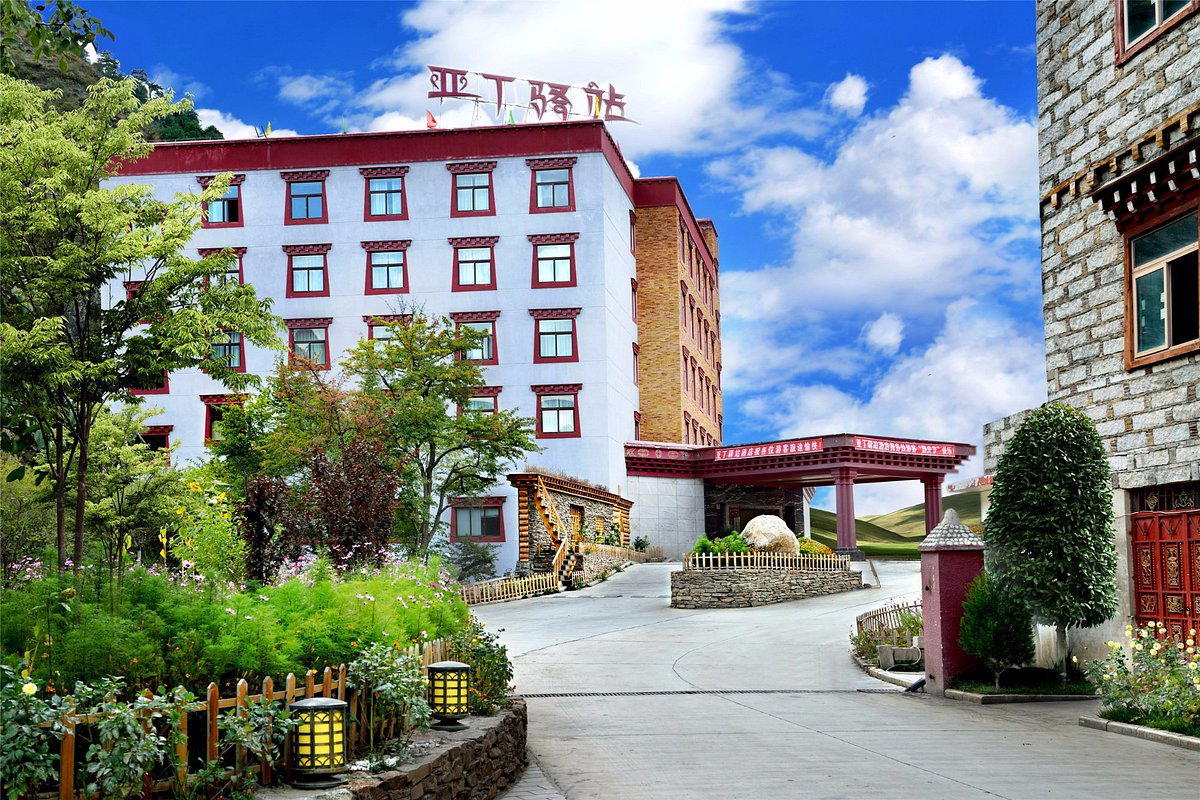
Arrive at Yading Tianjie in Garze Prefecture and the elevation announces itself before the food does. At roughly 3,700 metres above sea level, Daocheng sits in the heart of the Hengduan Mountains, a geographic corridor where Tibetan, Yi, and Han cooking traditions have been layering over one another for centuries. The commercial strip of Yading Tianjie serves the trekkers and overland travellers who use Daocheng as a staging point for Yading Nature Reserve, and 稻城印象老砂锅 occupies that context directly: a clay-pot restaurant positioned at the intersection of convenience and regional specificity, serving food that reflects where it is rather than approximating something from further down the mountain.
The 砂锅 format, a slow-simmered clay pot found across southwestern China, functions differently at altitude than it does in lowland Sichuan. Boiling points drop significantly above 3,000 metres, which means the long, patient cooking logic of a clay pot becomes less a stylistic choice and more a practical necessity. Dishes that might cook in forty minutes at sea level need considerably longer here, and that extended contact between liquid, heat, and ingredient produces a depth of flavour that faster cooking cannot replicate. Understanding this is the first thing to grasp about highland clay-pot cooking as a tradition: the environment shapes the technique, not the other way around.
The Sourcing Logic of Western Sichuan
The ingredient story in Garze Prefecture begins with geography. The Hengduan Mountains produce some of China's most prized highland produce: matsutake mushrooms harvested from pine forests above the treeline, yak meat from herds that graze on high-altitude grassland, wild herbs found nowhere in the lowland Sichuan basin. These are not niche or specialty items in this region, they are the default larder, available at local markets and used in home kitchens throughout the growing and harvest seasons.
For a restaurant like 稻城印象老砂锅, the proximity to source is structural. The supply chain between highland producer and kitchen table is measured in kilometres rather than the hundreds of miles that separate a Chengdu restaurant from the same ingredients. That compression matters: matsutake, in particular, degrades rapidly after harvest and arrives in lowland city kitchens at a fraction of the aromatic intensity it carries when cooked the same day. Highland restaurants that use local matsutake operate in a different tier of ingredient quality than their urban counterparts, regardless of price or format.
Yak meat brings its own sourcing argument. Yak raised on Tibetan plateau grassland produces beef with a lower fat content and a more concentrated mineral character than standard cattle, a result of the lean, high-altitude forage diet. It is a regional protein with genuine specificity to the ecosystem, and clay-pot preparation suits it well: the slow, moist heat softens the naturally tighter muscle fibre without stripping the flavour that makes it worth using in the first place. Restaurants closer to China's eastern seaboard that claim to serve authentic highland Sichuan cooking are, at minimum, working with ingredients that have travelled far from their origin point. Here, that problem does not exist.
This sourcing immediacy is what separates western Sichuan plateau cooking from the Sichuan cuisine most international visitors know. The Chengdu canon, the mala hotpot, the twice-cooked pork, the fish-fragrant aubergine, is a lowland urban cuisine built on chilli, doubanjiang, and Sichuan pepper cultivated in the Red Basin. The highland tradition is quieter, less confrontationally spiced, and structured around whatever the altitude and the season make available. These are two distinct regional cuisines that happen to share a provincial boundary. For comparison, the sophisticated urban end of Sichuan cooking is represented at venues like Xin Rong Ji in Chengdu, where precision and formality set the terms. The register at a Garze clay-pot restaurant is fundamentally different in character and intent.
The Broader Context: Eating at Altitude in Western China
Garze is not a dining destination in the way that Chengdu or Chongqing is. Travellers who arrive here have made a significant logistical commitment, Daocheng Yading Airport, one of the highest commercial airports in the world, connects to a limited number of Chinese cities, and overland approaches from Kangding or Litang are multi-day journeys through dramatic, demanding terrain. The people who eat at Yading Tianjie are, almost by definition, serious travellers who have prioritised landscape and remoteness over the culinary infrastructure of a major city.
That framing shapes how to think about a restaurant like 稻城印象老砂锅. The relevant comparison is not with the technically refined regional cooking found at venues like Xin Rong Ji in Beijing or the high-concept format of 102 House in Shanghai. The relevant comparison is with the actual eating options available to a traveller in Daocheng: what serves the local population, what uses genuinely local ingredients, and what prepares food in a format that makes sense for the climate and altitude. Within that frame, a clay-pot specialist on the main commercial strip of Yading Tianjie is well-positioned. For the full picture of what Garze's eating scene looks like across formats, our full Garze restaurants guide covers the range, including 金轮林卡, another address worth noting in the area.
The clay-pot tradition also connects to a wider southwestern China context. Slow-cooked formats that prioritise time over technique appear in the cooking of Yunnan, Guizhou, and the Tibetan plateau regions, all areas where fuel was historically scarce and long, low heat made practical sense. The 砂锅, with its thick clay walls and even heat distribution, is an efficient vessel for that kind of cooking. It is a format with deep regional logic, not a restaurant concept.
Planning Your Visit
Garze Prefecture, and Daocheng specifically, is most accessible between June and October, when the roads from Kangding are open and the valley passes are clear of snow. The Yading Nature Reserve draws its highest visitor numbers in September and October, when the highland foliage turns and trekking conditions are good, meaning the commercial strip around Yading Tianjie operates at full capacity during those months. Arriving earlier in the day gives more choice and a less pressured experience. No booking platform or contact details are publicly listed for 稻城印象老砂锅, which is consistent with how most small restaurants in Garze operate: walk-in is the default, reservations the exception.
Altitude acclimatisation is a real consideration that affects appetite and digestion. Many travellers find their first day in Daocheng unsuitable for heavy meals, and the clay-pot format, with its warm broths and slow-cooked proteins, is better suited to the second or third day when the body has started to adjust. For those researching other parts of China's restaurant scene before or after a Sichuan plateau trip, addresses like Ru Yuan in Hangzhou, Imperial Treasure Fine Chinese Cuisine in Guangzhou, Dai Yuet Heen in Nanjing, Fleurs Et Festin in Xiamen, Jiangnan Wok‧Rong in Fuzhou, Shang Palace in Yangzhou, Dingshan·Jiangyan in Suzhou, Ensue in Shenzhen, and Chef Tam's Seasons in Macau represent the broader range of Chinese fine dining worth knowing. Further afield, Local Old Town Home in Kashgar offers a comparable sense of place-specific eating at the western edge of China's interior, and global reference points like Le Bernardin and Atomix in New York anchor the international end of the spectrum for context.
Frequently asked questions
Where exactly is 稻城印象老砂锅?
稻城印象老砂锅 is located at Yading Tianjie, Garze, 四川, Garze.
What kind of dining experience does 稻城印象老砂锅 offer for travellers visiting Yading Nature Reserve?
稻城印象老砂锅 sits at Yading Tianjie in Garze Prefecture, placing it within reach of visitors using Daocheng as a base for Yading Nature Reserve. The clay pot format, referenced directly in the restaurant's name, suits the plateau setting, where warming, slow-cooked food aligns with the demands of high-altitude trekking days. It represents one of the few fixed-address dining options in an area where food infrastructure is thin.
What's the must-try dish at 稻城印象老砂锅?
The venue's name, 老砂锅, meaning 'old clay pot', signals where to focus. Clay pot preparations are the structural centre of the menu at this Yading Tianjie address in Garze, almost certainly featuring highland ingredients sourced from the surrounding Hengduan Mountains. Without a published menu on record, the clay pot format itself is the ordering anchor.
Do they take walk-ins at 稻城印象老砂锅?
No booking policy is documented for this Yading Tianjie address in Garze. Given the limited dining options in Daocheng and the concentrated visitor window between June and October, arriving early in the day is a practical precaution rather than a formality.
What's the signature at 稻城印象老砂锅?
The clay pot format is the defining throughline, the Chinese name 老砂锅 translates directly as 'old clay pot,' positioning the cooking vessel as the culinary identity of the restaurant. Located at Yading Tianjie in Garze, the kitchen operates at an altitude where slow, retained heat from clay pot cooking suits both the ingredients and the climate.
What if I have allergies at 稻城印象老砂锅?
No menu, contact number, or website is publicly listed for 稻城印象老砂锅 at Yading Tianjie, Garze, which makes advance allergy communication difficult from abroad. Visitors with serious dietary restrictions should plan to communicate in Mandarin on arrival, as English-language service cannot be assumed at this altitude in western Sichuan.
Is a meal at 稻城印象老砂锅 worth the investment?
The more relevant investment is the journey itself, Daocheng sits at roughly 3,700 metres and requires a serious logistical commitment from most travellers. In that context, 稻城印象老砂锅 functions as one of very few sit-down dining options at the Yading Tianjie commercial strip, which gives it practical weight regardless of price point.
At-a-Glance Comparison
| Venue | Cuisine | Price | Awards | Notes |
|---|---|---|---|---|
| 稻城印象老砂锅This venue (the venue you are viewing) | Traditional Chinese Clay Pot Stews | Not listed | Not listed | Not listed |
| Fu He Hui | Modern Seasonal Vegetarian Fine Dining | $200–300 | 2 Michelin Stars · World's 50 Best #11 | Vegetarian |
| Aji | Asian Bistronomy (Nikkei Fusion) | $50–100 | 1 Michelin Star · Wine Spectator Best of Award of Excellence | Nikkei, Innovative |
| Five Foot Road | Modern Sichuan Fine Dining | Not listed | 1 Michelin Star · La Liste Top Restaurants | Sichuan |
| Jing | Modern French with Asian Influences | $300–500 | 1 Michelin Star · Black Pearl 1 Diamond | French Contemporary |
| Lai Heen | Michelin-Starred Cantonese | $50–100 | 1 Michelin Star · Forbes 5-Star | Cantonese |
Continue exploring
More in Garze
Restaurants in Garze
All restaurants in Garze →
Details
- Casual Hangout
- Local Sourcing
- A La Carte
Cozy with heated floors suitable for cold highland weather.