曾式福建炒麵 is a Kaohsiung institution built around Fujian-style stir-fried noodles, a dish that occupies a distinct lane from the Cantonese and Taiwanese formats more commonly found across the city. The kitchen operates in a tradition of coastal Fujianese technique carried across the Taiwan Strait, making it a reference point for a style that receives far less attention than it deserves in the city's broader conversation about noodle culture.

Pearl is the En Primeur Club membership app — saves, bookings, and concierge access live there. Same editors, same standards.
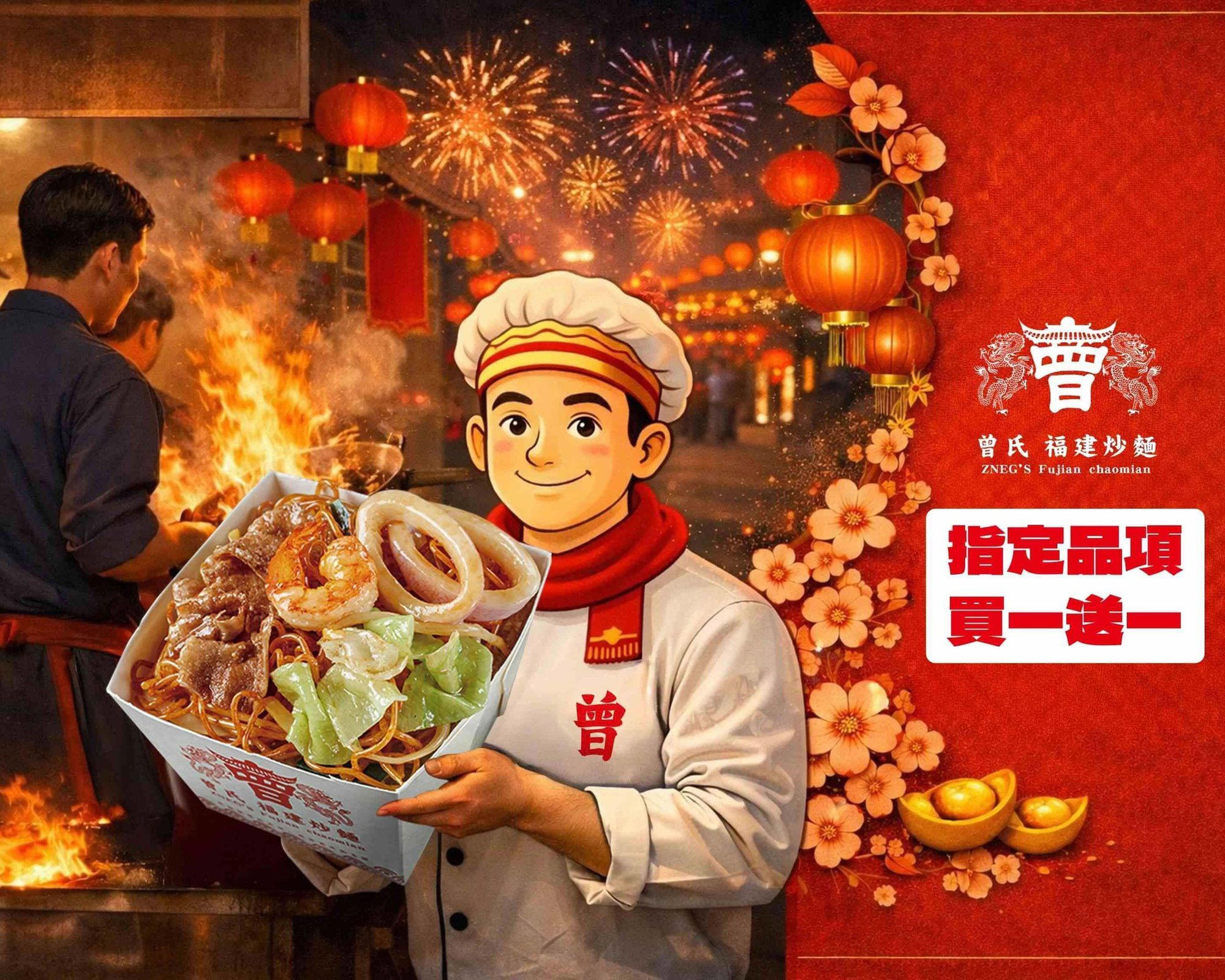
A Fujian Noodle Tradition in a City That Runs on Street Food
Kaohsiung's street food conversation tends to orbit a familiar set of formats: beef noodle soups, Taiwanese-style braised pork rice, and the oyster vermicelli that appears on nearly every night market menu. 曾式福建炒麵 is a Kaohsiung restaurant serving Fujian Stir-Fried Noodles, with a price tier around US$8 per person. Fujian-style stir-fried noodles occupy a quieter register within that conversation, but for the cooks and regulars who know this tradition, the distinction matters considerably. The technique originates from coastal Fujian province, where stir-frying noodles in high-heat woks with a specific ratio of soy, lard, and aromatics produced a texture and flavour profile that Taiwanese cooks brought across the strait and adapted over generations. 曾式福建炒麵 sits within that lineage, representing a style that predates many of the more visible formats now associated with Taiwanese street food.
For context, Kaohsiung's dining scene has expanded significantly in recent years toward formal restaurant formats. GEN operates at the Cantonese fine-dining tier, while Haili represents the city's growing modern cuisine segment. Sho draws from Japanese tradition at the premium price point. 曾式福建炒麵 sits nowhere near that tier in terms of format or price, and that's precisely the editorial point: the city's most instructive eating often happens at the level where craft is measured by consistency across thousands of identical orders, not by seasonal menu changes or chef biography.
What the Daytime Service Tells You
Across Taiwan's street food culture, lunch service at a specialist noodle stall operates under a different logic than evening eating. At midday, the crowd is largely local: workers from nearby businesses, regulars who have established a fixed weekly rhythm around a particular stall, and a smaller number of visitors who have done enough research to find their way there outside of night-market hours. The kitchen works at full speed during a compressed window, and the cooking reflects that pressure. High-heat wok technique is not a performance at lunch; it is a necessity. The wok hei, that slightly charred, aerated quality that comes from sustained high-temperature cooking, is most reliably achieved when the kitchen is moving at pace through order after order.
Fujian-style stir-fried noodles, in their most direct form, use a thicker wheat noodle that absorbs the soy-based sauce differently than the thin rice noodles common in other Taiwanese preparations. The daytime version of this dish at a traditional stall tends to be leaner in composition: fewer garnishes, faster plating, and a focus on the noodle-to-sauce ratio that the cook has calibrated over years of repetition. For visitors who want to understand the dish at its most functional, the lunch window is a useful entry point. This mirrors a pattern visible at similar specialist operators across Taiwan, from A Xia in Tainan to comparable street-level operators in Taichung, where the midday service often reflects a less mediated version of the kitchen's core output.
How Evening Service Shifts the Register
The evening context changes the surrounding conditions more than it changes the dish itself. Night-market crowds in Kaohsiung bring a different energy: more tourists, more casual groups, and a higher proportion of first-time visitors encountering the style for the first time. At a stall operating within that context, the cook's task includes a degree of throughput management that the lunch service doesn't require in quite the same way. The noodles remain the same product, but the serving environment, the pace of seating turnover, and the secondary items ordered alongside the main dish all shift.
Evening is also when comparisons across the night market's range become more instructive. A visitor eating Fujian stir-fried noodles alongside oyster omelette and braised pork rice is assembling a cross-section of the southern Taiwanese street food tradition in a single sitting. That context benefits the dish, because Fujian noodle technique becomes more legible when placed next to formats with different structural logic. The stir-fry's reliance on dry heat and wok contact reads differently than a braised preparation, and that contrast is easier to perceive in an evening eating session that moves across multiple dishes and stalls.
Across Taiwan more broadly, this pattern of daytime specialist eating versus evening comparative eating defines how informed visitors approach street food. A Fung's Harmony Cuisine and Anchovy operate in entirely different registers within Kaohsiung, but even at the formal end of the city's dining spectrum, the same morning-versus-evening logic applies to how menus and crowds shift across the day.
Where This Fits in Taiwan's Noodle Geography
Taiwan's noodle culture is more geographically differentiated than its international reputation suggests. Tainan specialises in preparations with shrimp-based stocks and thin rice noodles. Taipei's Shandong noodle tradition draws from northern Chinese immigration patterns. Taichung has its own braised noodle conventions. Kaohsiung's position as a port city brought Fujianese culinary influence in concentrated form, and Fujian stir-fried noodles remain one of the clearest expressions of that coastal mainland heritage within the Taiwanese street food canon.
For visitors building a broader picture of Taiwanese cooking across cities, that context matters. A meal at 曾式福建炒麵 in Kaohsiung reads differently after eating at JL Studio in Taichung or logy in Taipei, where the formal restaurant tier has absorbed and reinterpreted Taiwanese culinary heritage into tasting-menu formats. The street-level version of that heritage, preserved at specialists like this one, offers the unmediated source material. Similar dynamics play out at operators like Chenggong Douhua in Chenggong and Volcanic Rock in Zhubei City, where regional specificity is the entire point.
For a full orientation to Kaohsiung's dining options across price tiers and formats, the EP Club Kaohsiung restaurants guide maps the scene from street stalls to fine dining.
Planning a Visit
Specific hours, address, and contact details for 曾式福建炒麵 are best confirmed through local search at the time of travel, as street stall operations in Taiwan frequently update their schedules seasonally and around public holidays. Arriving at the lunch hour on a weekday gives the clearest read on the kitchen's baseline output and avoids the longer queues that form during weekend evening service. No reservations are taken. The stall is walk-in friendly. Prices sit at about US$8 per person.
Cuisine Lens
Comparable venues nearby, for context on price, style, and recognition.
| Venue | Cuisine | Price | Awards | Notes |
|---|---|---|---|---|
| 曾式福建炒麵This venue — the venue you are viewing | Fujian Stir-Fried Noodles | $ | Not listed | Not listed |
| è²³å¥é£å | Taiwanese Street Food | $$ | Not listed | Cianjhen District |
| 台南旺海鮮料理餐廳 | Seafood Hot Pot | Not listed | Not listed | Kaohsiung |
| Gang Yuan Beef Noodle Restaurant | Taiwanese Beef Noodle Soup | $ | Not listed | Yancheng District |
| 賣塩é å°è-æ£å®å°è | 正宗台菜 (Authentic Taiwanese Cuisine) | Not listed | Not listed | Kaohsiung |
| Cheng's Noodles | Traditional Taiwanese Noodles | $ | Michelin Plate | Yancheng District |
Continue exploring
More in Kaohsiung
Restaurants in Kaohsiung
Browse all →

Bars in Kaohsiung
Browse all →



At a Glance
- Lively
- Energetic
- Casual Hangout
- Late Night
- Open Kitchen
Bustling night market atmosphere with dramatic open-fire wok cooking and aromatic stir-fry smells.