
Ranked #2 on Condé Nast's Best Resorts list for 2025, Wilderness DumaTau occupies one of the most wildlife-dense corridors in Botswana's Linyanti region. The camp's architecture works with the floodplain terrain rather than against it, placing guests at close range with elephant, wild dog, and lion in a concession that few operators access. For the Linyanti, this is the reference property.
 Discover on Pearl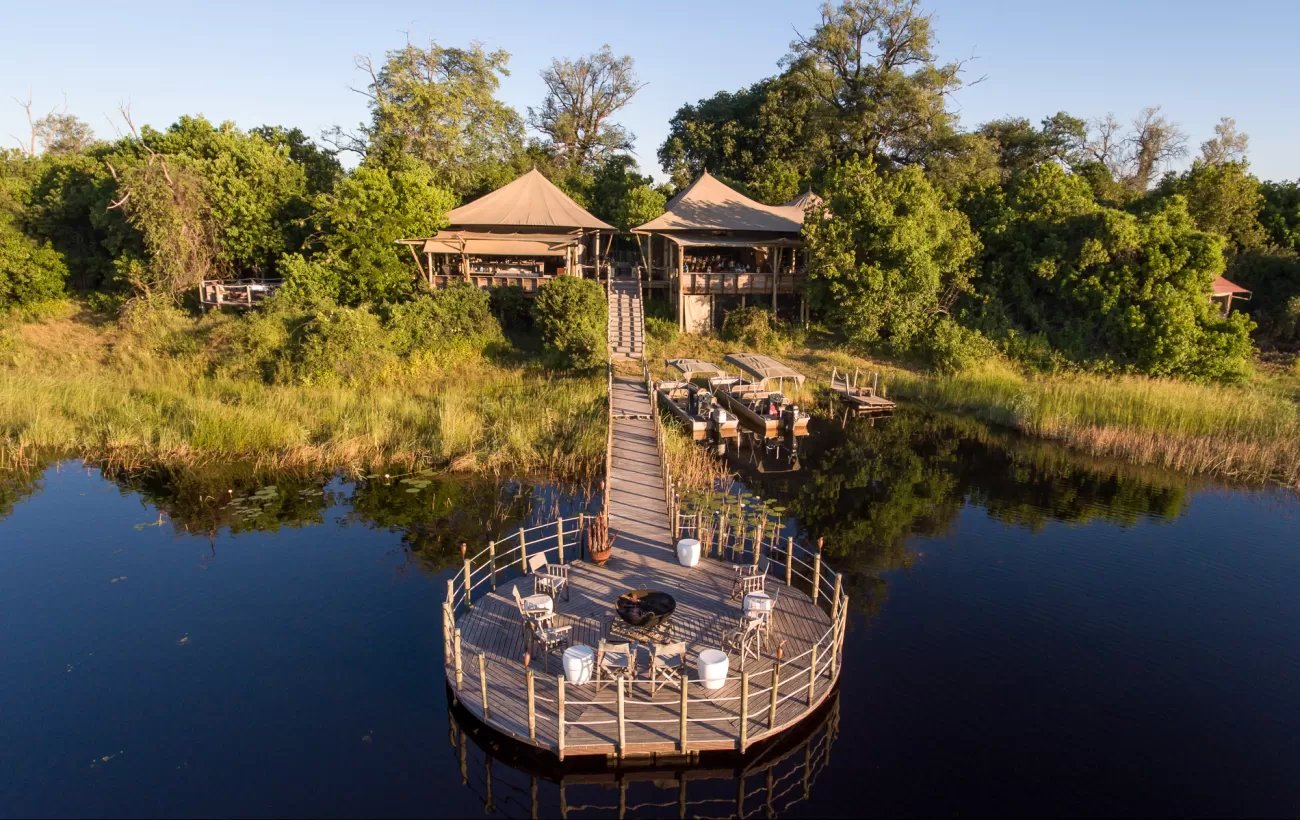
Where the Floodplain Sets the Terms
The Linyanti river system in northern Botswana operates on its own logic. During the dry season, when the surrounding bush turns to dust and water sources contract, the Linyanti's permanent waterway draws wildlife in concentrations that most safari destinations can only approximate. Elephant herds move through in the hundreds. Wild dog packs use the concession as home range. Lion sightings are measured in frequency rather than luck. The camp that sits within this system doesn't need to manufacture drama; the terrain provides it.
Wilderness DumaTau is positioned on a private concession within this corridor, where the combination of permanent water, dense riverine woodland, and limited operator access creates conditions that distinguish the Linyanti from better-known circuits like the Okavango Delta. Properties such as andBeyond Sandibe Okavango Safari Lodge operate in spectacular terrain, but the Delta's network of channels and mokoro routes draws a broader range of operators. The Linyanti's exclusivity is partly geographic, partly a function of the concession structure that keeps vehicle numbers low and sightings less shared.
The shortlist, unlocked.
Hard-to-book tables, cellar releases, and concierge-planned trips.
Get Exclusive Access →Architecture That Reads the River
The design approach at premium Linyanti camps has consistently favored elevation and openness over enclosure. In flood-prone, wildlife-active environments, the logic is practical as much as aesthetic: raised platforms and extended decks place guests above ground level where sightlines extend across water and floodplain, and where the boundary between interior and exterior becomes, in the right light, almost theoretical.
DumaTau's physical structure follows this regional grammar. The camp is built along the Linyanti's edge, with guest accommodation and communal spaces oriented toward the water. This isn't a design choice made in isolation; it reflects how serious safari camps in southern Africa have evolved over the past two decades, moving away from the heavy thatch-and-canvas aesthetic of earlier lodges toward lighter, more site-specific structures that prioritize view corridors and passive ventilation. The result is architecture that earns its place in the ecosystem rather than imposing on it.
Across the broader Botswana premium tier, the design split runs between properties that interpret African materials through a contemporary lens and those that pursue a more literal safari vernacular. Xigera Safari Lodge in the Moremi Game Reserve sits toward the contemporary-art-integrated end of that spectrum. DumaTau occupies a position where the architecture supports the wildlife experience rather than competing with it for attention.
The Linyanti Concession System and Why It Matters
Understanding what DumaTau offers requires understanding how Botswana's concession structure works. The country's model — high-cost, low-volume, community-benefitting leases on private wildlife areas — means that a camp operating on a dedicated concession can limit daily vehicle movements, set its own activity schedule, and avoid the shared-sighting congestion that affects parks with open access. The Linyanti concession operated by Wilderness is large enough to absorb multiple vehicles across different sectors, and the camp's programming reflects that spatial advantage.
The comparison set here is narrow. Wilderness King's Pool Camp operates within the same Linyanti system and draws on the same concession dynamics, making it the closest direct peer. Beyond the Linyanti, camps like andBeyond Chobe Under Canvas in the Chobe National Park offer a different configuration: national park access without the exclusivity of a private concession, which means more wildlife variety during peak seasons but less control over sighting conditions. For travelers structuring a multi-camp Botswana itinerary, the distinction matters. Properties like Jack's Camp in the Makgadikgadi Salt Pans or Belmond Safaris in Maun complete different ecological chapters of such a trip.
Recognition and What It Signals
A #2 ranking on Condé Nast's Leading Resorts list for 2025 positions DumaTau within a global peer set that includes coastal resorts, city hotels, and established trophy properties across Asia, Europe, and the Americas. The Condé Nast list draws on reader votes weighted toward a readership that moves regularly between properties like Amangiri in Canyon Point, Aman Venice, and Cheval Blanc Paris. For a Botswana bush camp to rank at that level against properties like Hotel Du Cap-Eden-Roc, Badrutt's Palace Hotel, and Bvlgari Hotel Tokyo signals something specific: the experience delivers on expectations calibrated by repeated exposure to the highest tier of global hospitality.
That calibration matters because the Linyanti is not an easy sell on paper. It lacks the name recognition of the Masai Mara, the photographic infrastructure of the Serengeti, and the luxury property density of the Okavango Delta. What it offers is concentrated, relatively unshared access to a river system that functions as one of southern Africa's most productive wildlife corridors. The Condé Nast placement suggests that experienced travelers who have made that comparison return from DumaTau with their expectations exceeded rather than managed.
Planning a Stay in the Linyanti
Access to the Linyanti typically involves a light aircraft transfer, most commonly connecting through Maun or Kasane. The Botswana high season runs from May through October, when dry conditions concentrate wildlife around permanent water and game viewing reaches its most consistent. This is also when demand peaks, and camps operating at the premium end of the market fill well in advance; for the Linyanti specifically, booking three to six months ahead is standard practice for preferred dates during the dry season peak.
For a multi-destination Botswana itinerary, DumaTau pairs logically with contrasting ecosystems: the salt pans of Makgadikgadi for open-plain predator behavior and rare species encounters, or the water-based activities of the Delta. A river-focused alternative that offers a different physical format is the Zambezi Queen on the Chobe River, a houseboat operation that places the water experience front and center in a way no fixed camp can replicate.
For the broader context on what the Linyanti region offers across all property types and price tiers, our full Linyanti guide maps the concession system, compares seasonal timing, and outlines how different camps position within the same wildlife corridor.
The shortlist, unlocked.
Hard-to-book tables, cellar releases, and concierge-planned trips.
Get Exclusive Access →Frequently Asked Questions
Peer Set Snapshot
These are the closest comparables we have in our database for quick context.
| Venue | Cuisine | Price | Awards | Notes |
|---|---|---|---|---|
| Wilderness DumaTau | This venue | |||
| Duba Concession | ||||
| Jack's Camp | ||||
| Sitatunga Private Island | ||||
| Wilderness King's Pool Camp | ||||
| andBeyond Chobe Under Canvas |
Preferential Rates?
Our members enjoy concierge-led booking support and priority upgrades at the world's finest hotels.
Get Exclusive AccessThe shortlist, unlocked.
Hard-to-book tables, cellar releases, and concierge-planned trips.
Get Exclusive Access →