

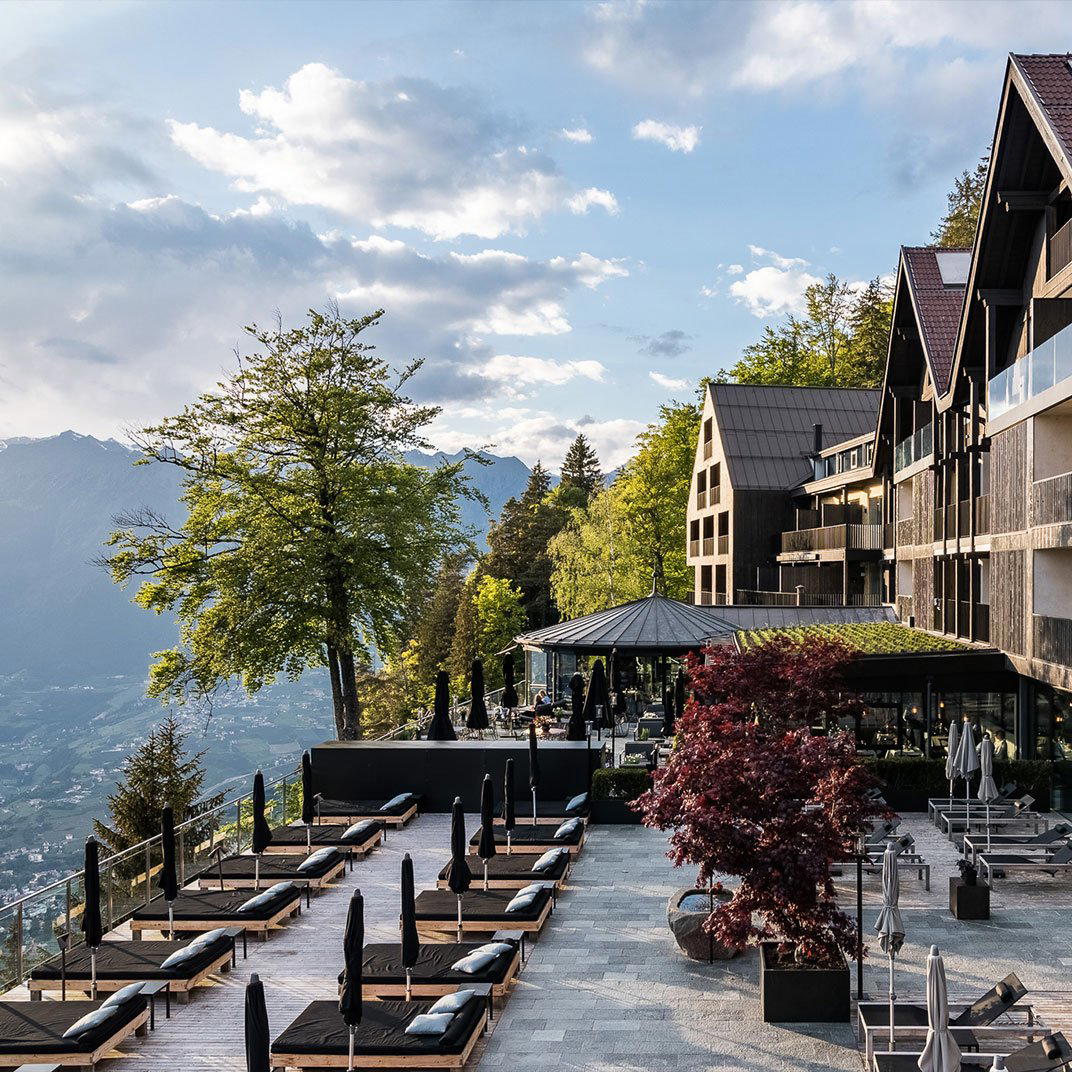
Reached only by a seven-minute cable car from Lana, Vigilius Mountain Resort sits 1,500 metres above South Tyrol on a car-free mountain plateau, with 41 rooms oriented toward the Dolomites or Val d'Ultimo. The resort earned a Michelin Key in 2024 and holds. Rooms from approximately $423 per night. Two dining venues serve Northern Italian-Alpine cuisine, and a full spa offers local hay baths.
Pearl is the En Primeur Club membership app — saves, bookings, and concierge access live there. Same editors, same standards.
- Address
- Via Villa, 3, 39011 Lana BZ
- Phone
- +39 0473 556600
- Website
- vigilius.it
- Directions
- Get directions
 Saves & bookings on Pearl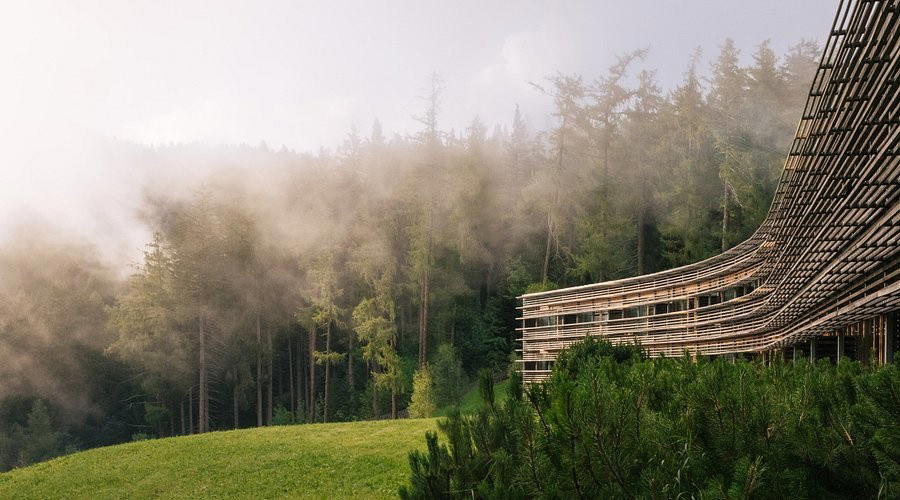
A Mountain Stay Defined by Deliberate Separation
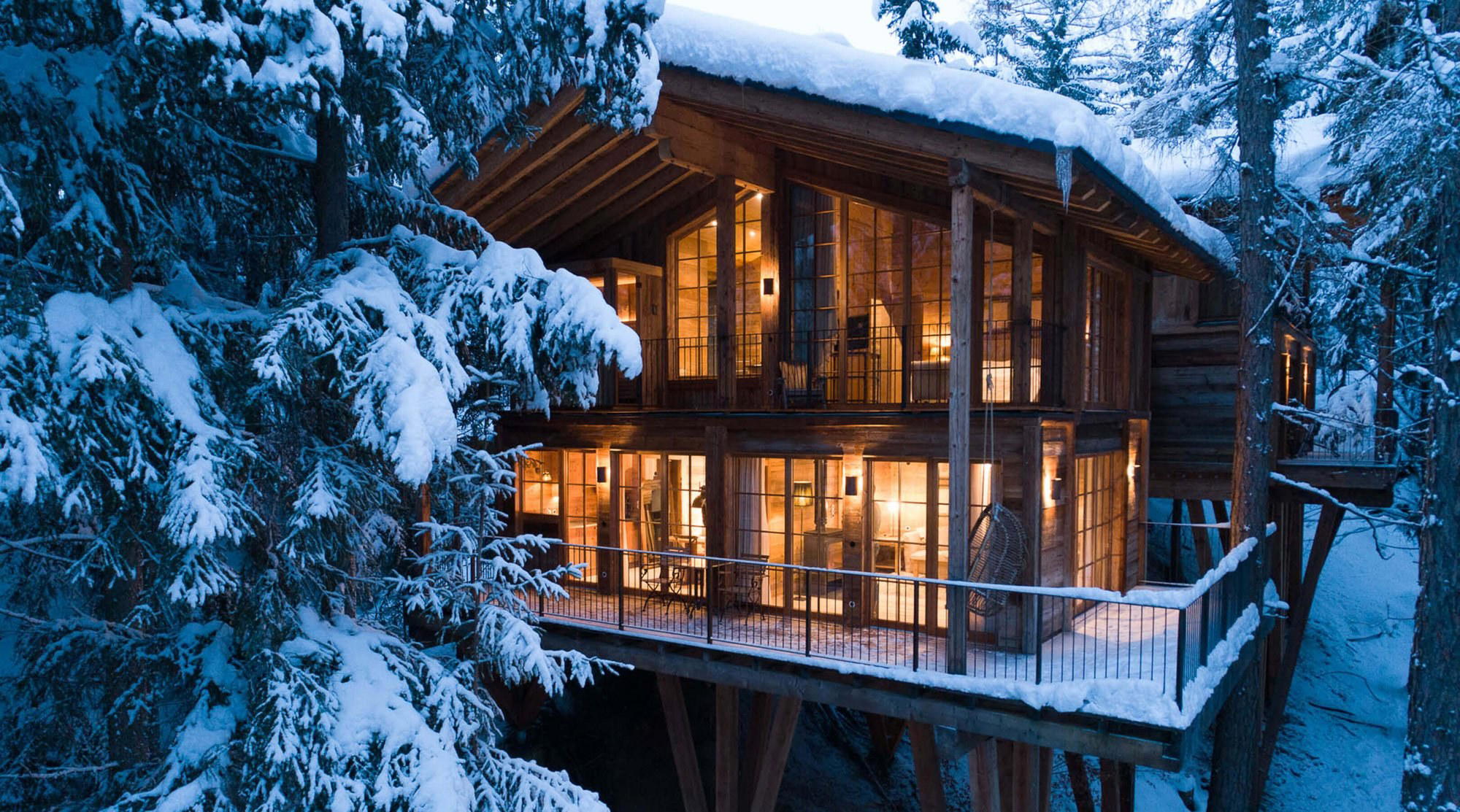
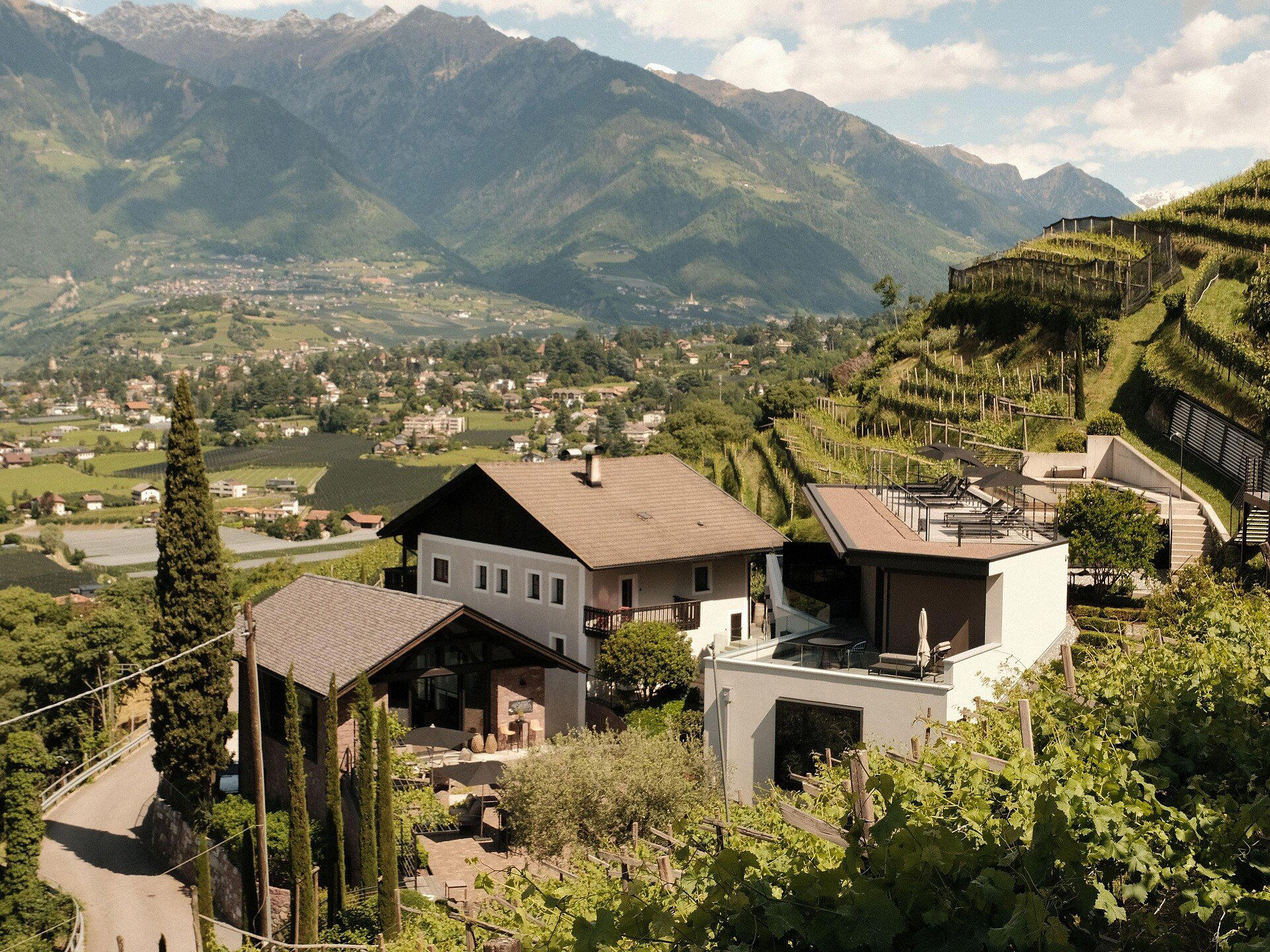
The cable car from Lana takes seven minutes. That interval matters more than it sounds. By the time the gondola reaches the plateau at 1,500 metres, the motorway noise, the market town bustle, and the ambient pressure of a connected itinerary have all been left behind. Vigilius Mountain Resort occupies a car-free nature reserve in South Tyrol, and what greets arriving guests is not a curated welcome lobby so much as a kind of enforced stillness. The forests are close, the peaks are closer, and the dominant sound on most mornings is wind through conifers or, if the wind drops, the distant clank of a cowbell from slopes below. The architecture holds the same register: blonde timber, exposed beams, raw stone, and concrete in proportions that suppress any instinct toward alpine kitsch. This is a hotel that has made its isolation its primary offering, and every design decision reinforces that premise.
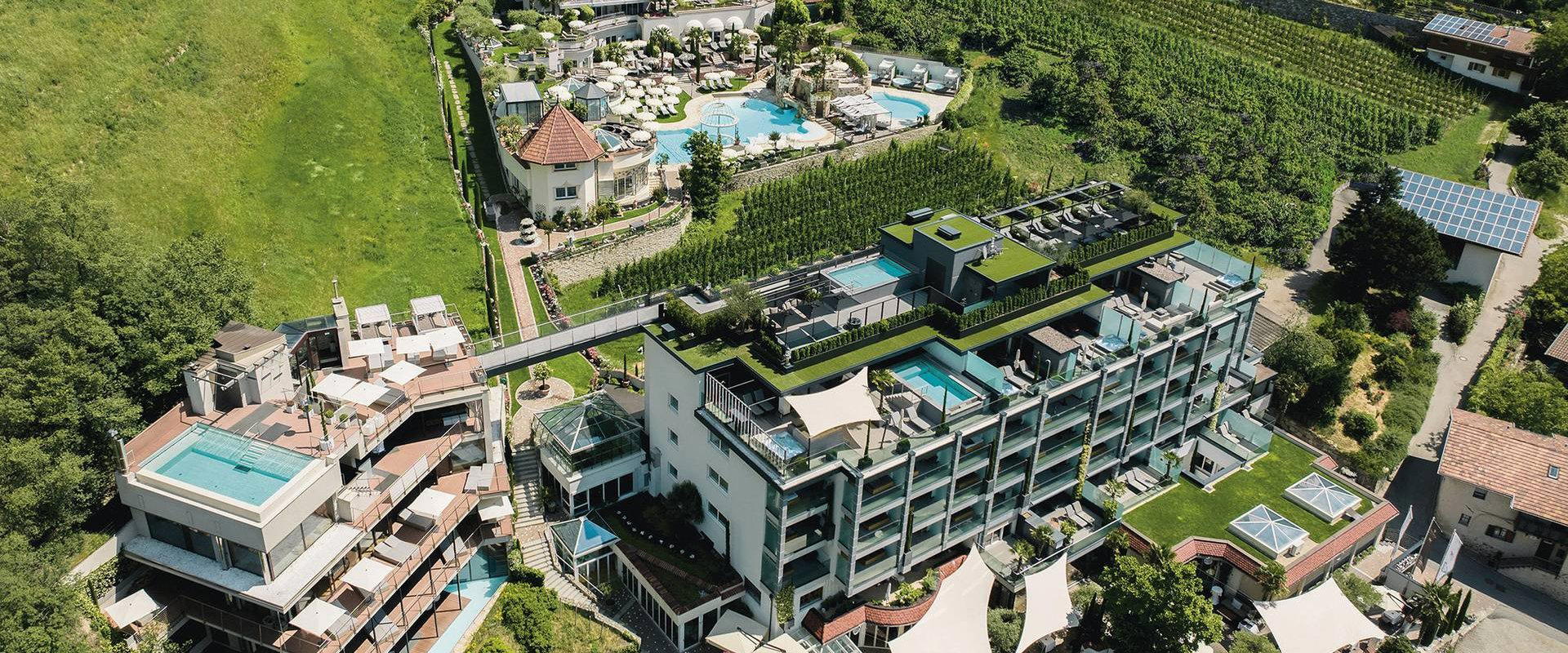
Within South Tyrol, a region already fluent in the language of mountain hospitality, Vigilius occupies a specific niche. Properties like Castel Fragsburg in Merano offer a different register of alpine retreat, with historic architecture and valley views, while Lana itself draws comparisons with Hotel Schwarzschmied and Villa Arnica for guests who prefer proximity to town. What Vigilius does differently is remove the town entirely from the equation. The 41-room property operates more like a mountain sanctuary than a conventional hotel, and the guest experience flows from that premise rather than supplementing it.
The Architecture of Quiet
The interior design at Vigilius follows the same logic as the site itself: reduction, not decoration. The rooms work in timber and stone, with a minimal palette that reads modern rather than rustic, avoiding the heavy drapery and dark-wood stuffiness that can burden alpine interiors. A clay wall bisects the bedroom and bathroom zones in the guest rooms, and that wall is not purely aesthetic. It is heated internally, functioning as a radiant panel that warms the room without visible radiators or intrusive vents. It is the kind of detail that guests might not consciously register but would notice its absence.
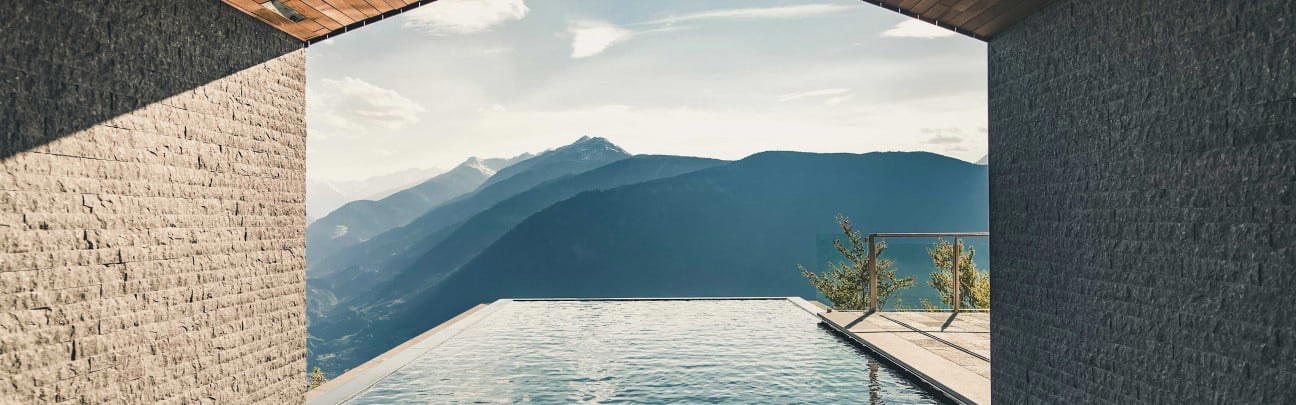
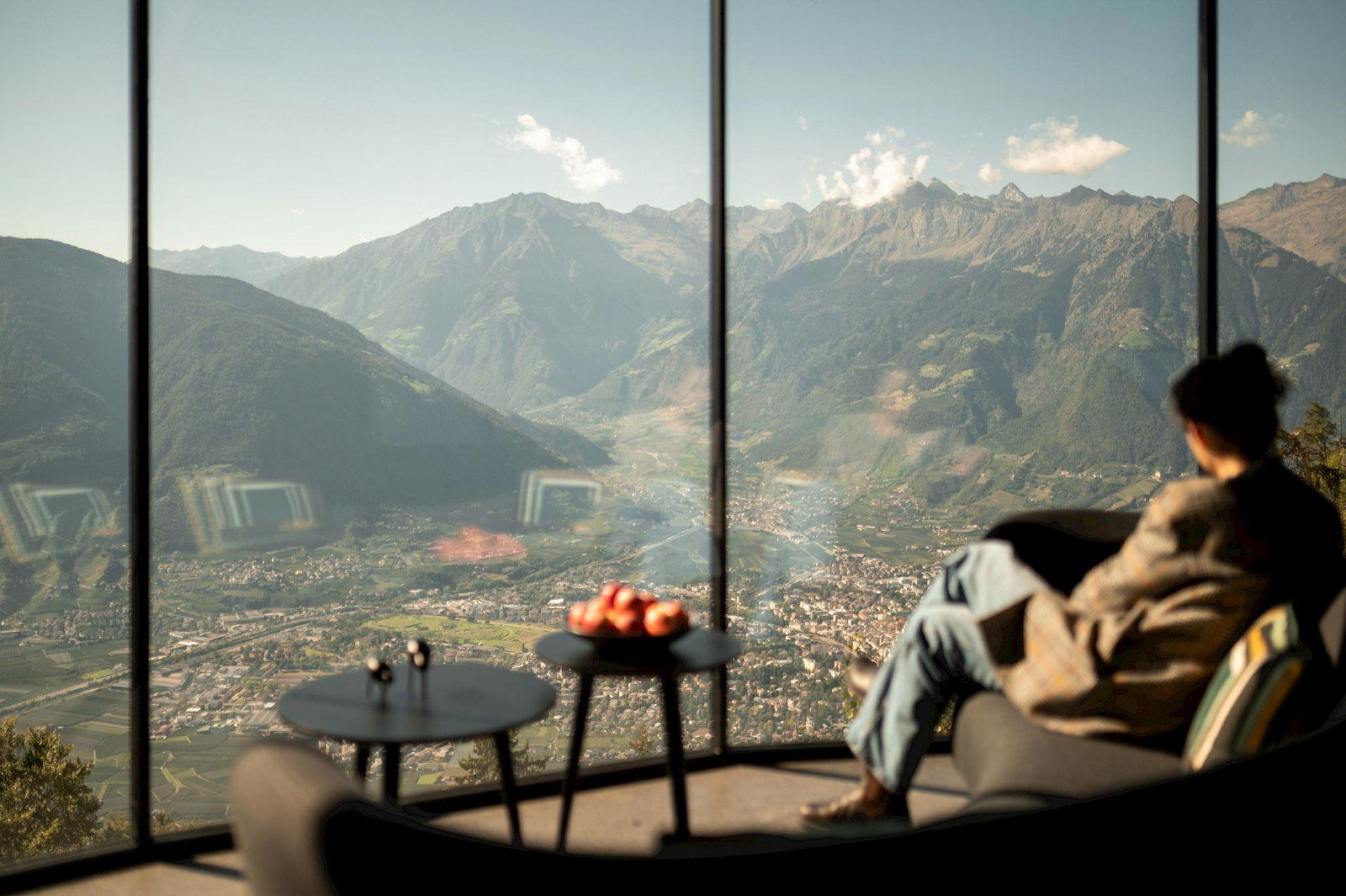
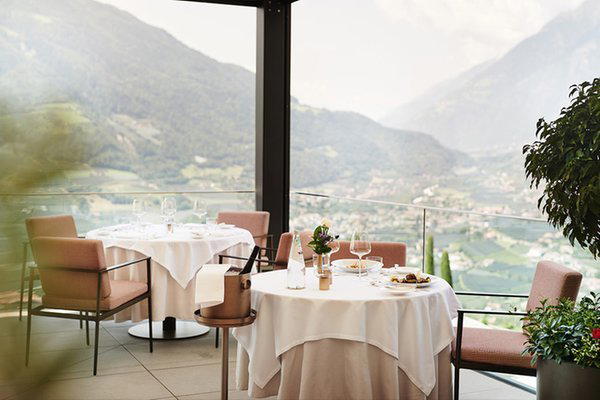
All 41 rooms include a private terrace, and the views divide between two orientations: the Dolomite peaks to the east, or Val d'Ultimo, the so-called Last Valley, to the west. Neither is a consolation. Guests choosing a Val d'Ultimo room trade dramatic rock faces for a longer, softer valley perspective that changes character across the day as light moves through it. The choice is genuinely one of preference rather than hierarchy, and it is the kind of decision that Vigilius's format encourages, slow, considered, without pressure from a packed schedule. Room service is available, and given the absence of any café district on a car-free mountain plateau, it functions less as a luxury add-on than as a practical element of how the stay works.
Dining at Altitude: Two Formats, One Kitchen Region
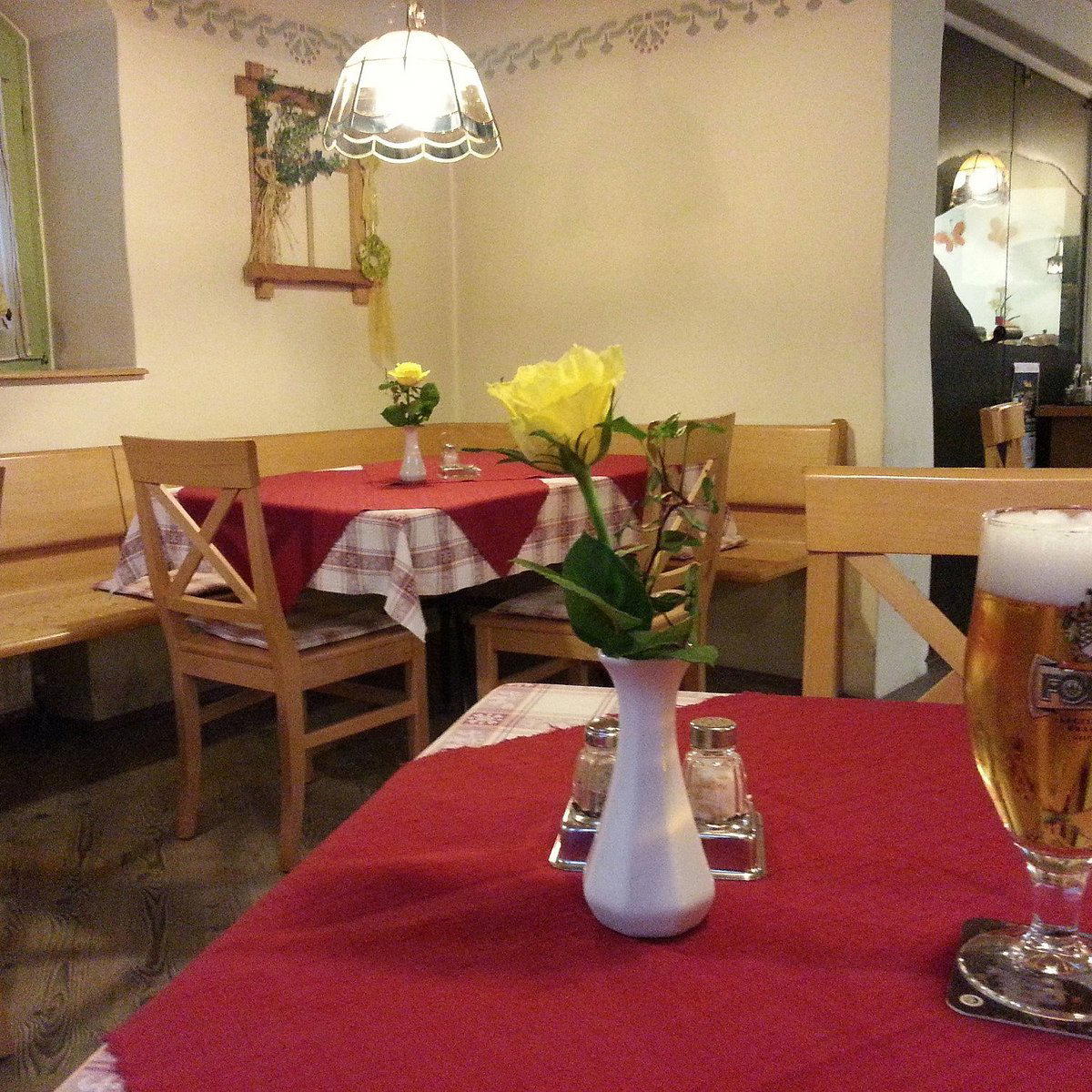
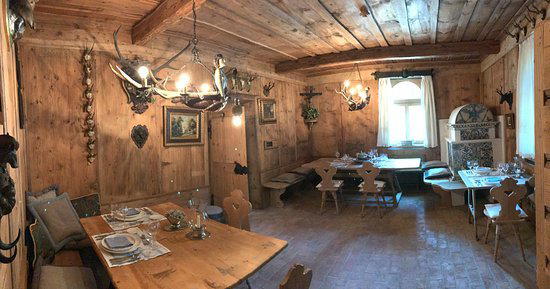
South Tyrol sits precisely on the boundary where Northern Italian and Austrian Alpine culinary traditions converge. That dual inheritance produces a kitchen vocabulary unlike anywhere else in Italy: speck alongside bresaola, dumplings alongside pasta, barley soups alongside risotto. Vigilius operates two dining venues calibrated to different audiences. The Private Dining Room serves hotel guests exclusively, functioning as an extension of the guest experience rather than a public restaurant. The Vigiljocher Stube opens to day visitors who make the cable car ascent, giving the mountain's casual visitors access to the same kitchen tradition. The two-venue format is sensible and, in the context of a car-free resort, practically necessary: without it, there would be limited reason for anyone not staying overnight to ascend at all.
Across Italy's premium mountain hotel segment, the combination of serious food programming with isolation has become a reliable differentiator. Properties like Borgo Santandrea on the Amalfi Coast or Rosewood Castiglion Del Bosco in Montalcino use their geography to define the dining experience as much as the kitchen does. Vigilius operates on the same logic, with the cable car ascent and the absence of external dining options concentrating the guest's attention on what the property serves. The Michelin Key awarded in 2024 positions the resort inside a European framework of hospitality recognition that covers the complete guest experience rather than the kitchen alone, a signal that the dining and the broader stay are being assessed as a coherent whole.
The Spa and the Hay Bath
Vigilius offers a full spa, and the local specialty is the hay bath. In South Tyrol, this is not an eccentric novelty but a regional tradition with documented use over centuries: freshly cut mountain hay is warmed and packed around the body, the essential oils and plant compounds from the dried grasses understood locally to have restorative properties. Whether or not the science fully supports the tradition, the experience is specific to the region in a way that a standard hydrotherapy circuit is not. For a property that has built its identity on the particularity of its location, the hay bath is a coherent extension of the same premise: this is what you can do here, in this valley, on this mountain, and nowhere else with quite the same combination of altitude, flora, and setting.
Guests comparing Vigilius to other Italian mountain or countryside retreats will find a different sensibility at work. Properties like Castello di Reschio in Lisciano Niccone or Casa Maria Luigia in Modena offer pastoral isolation by way of Umbrian farmland or Emilian countryside. The mountain register at Vigilius produces a categorically different atmosphere, one shaped by elevation, forest density, and the defining fact of the cable car. There is no walking down the hill for an aperitivo. That constraint is not a drawback; it is the point of the stay.
Planning Your Stay
Vigilius sits above the town of Lana in the South Tyrol region of northern Italy, accessible only by cable car from the base station. Bozen/Bolzano airport is approximately a twenty-minute drive from the cable car station at Lana, and the resort arranges airport transfers. For guests arriving from further afield, transfers run from Milan at 355 euros each way, from Verona at 200 euros, and from Innsbruck at 180 euros. The cable car transfer itself costs 38 euros each way. The resort received a Michelin Key in 2024, placing it within a small European framework of hotel recognition that covers the complete guest experience. Lana's broader accommodation options include 1477 Reichhalter for those who prefer a town-level base, and Hotel Schwarzschmied for a wellness-focused alternative. Guests looking to extend their Italian itinerary might consider the contrasting register of Aman Venice, Four Seasons Hotel Firenze, or Bulgari Hotel Roma, each of which operates in a decidedly urban key. For those drawn to other forms of landscape-anchored stays, Amangiri in Canyon Point offers a comparable logic of terrain-as-experience in a radically different geography.
Cuisine-First Comparison
Comparable venues nearby, for context on price, style, and recognition.
| Venue | Cuisine | Price | Awards | Notes |
|---|---|---|---|---|
| Vigilius Mountain ResortThis venue — the venue you are viewing | Hotel | Not listed | Michelin 1 Key | Not listed |
| Villa Arnica | Contemporary luxury within a restored 1920s Alpine villa, blending period architecture with refined modern interiors and antique furnishings. | $$$$ | 4-Star | Lana |
| Hotel Schwarzschmied | holistic well-being oasis amid vineyards using regional larch, spruce, and marble | $$$ | 4-Star | Lana |
| DolceVita Hotel Alpiana Resort | Green luxury modern design blending contemporary aesthetics with natural elements and Mediterranean influences in an Alpine setting. | $$$$ | 4-Star | Foiana/Völlan |
| 1477 Reichhalter | Historic gasthaus with minimalist restoration preserving original stone and wood. | $$$$ | 4-Star | Lana |
| Hotel Paradies | alpine-style resort in orchards | $$$ | 5-Star | Laces |
Recognition history
Dated appearances from independent guides and award organizations, with the underlying list record or original source where available.
Design Hotels Member
Design Hotels
Michelin 1 Key
Michelin
Michelin 1 Key
Michelin
Continue exploring
More in Lana
Hotels in Lana
Browse all →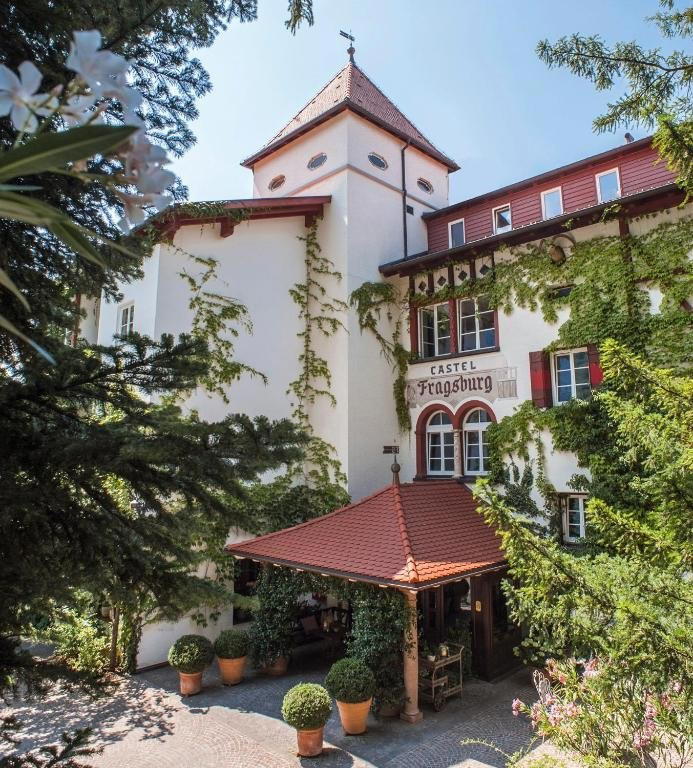
Bars in Lana
Browse all →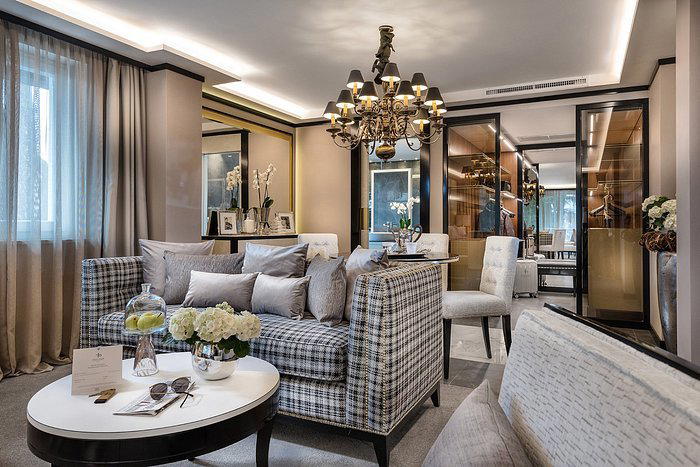
Restaurants in Lana
Browse all →
At a Glance
- Quiet
- Scenic
- Minimalist
- Sophisticated
- Romantic
- Wellness Retreat
- Romantic Getaway
- Weekend Escape
- Anniversary
- Honeymoon
- Destination Spa
- Design Destination
- Panoramic View
- Garden
- Terrace
- Spa
- Pool
- Fitness Center
- Room Service
- Concierge
- Restaurant
- Wi Fi
- Parking
- Mountain
- Spa
- Pool
- Fitness Center
- Room Service
- Concierge
- Restaurant
- Wi Fi
- Parking
Quiet, minimalist, and contemplative, with a serene alpine atmosphere shaped by large glass façades, natural materials, and expansive mountain views.