Tswalu Kalahari Reserve
Tswalu Kalahari Reserve occupies a vast private concession in South Africa's Northern Cape, where the Kalahari's red dunes and open thornveld create a setting few private reserves on the continent can match for scale and solitude. The accommodation architecture works with the terrain rather than against it, placing guests in direct, unhurried contact with one of Africa's least-visited ecosystems. For travellers who have done the Kruger circuit, Tswalu represents a deliberate step into quieter, more rarified ground.
Pearl is the En Primeur Club membership app — saves, bookings, and concierge access live there. Same editors, same standards.
- Address
- Farm Korannaberg 296, Kuruman, 8460, South Africa
- Phone
- +27 11 274 2100
- Website
- tswalu.com
- Directions
- Get directions
 Saves & bookings on Pearl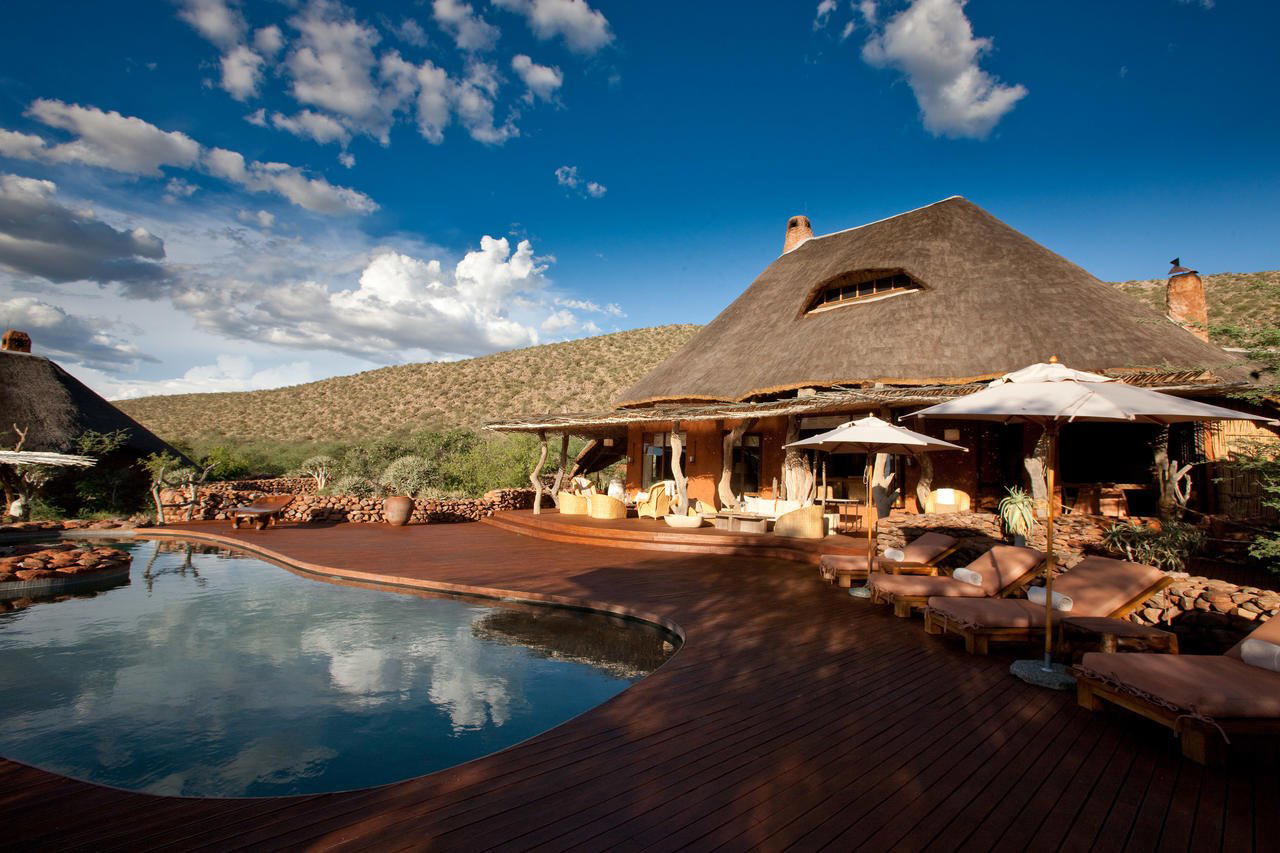
Where the Kalahari Sets the Design Brief
South Africa's private reserve market has, over the past two decades, sorted itself into two broad tiers: the high-traffic, high-infrastructure lodges positioned around the Kruger and Sabi Sand ecosystems, and a smaller cohort of low-density properties that treat remoteness as a structural feature rather than a drawback. Tswalu Kalahari Reserve is a five-star hotel in Kuruman, South Africa, with 31 rooms and rates from about US$3,500 a night. Tswalu Kalahari Reserve, on Farm Korannaberg in the Northern Cape, belongs emphatically to the second group. The Kalahari is not bushveld in the conventional Lowveld sense. It is semi-arid, open, and tonally distinct, pale grasses, dark camel thorn silhouettes, and the red-orange hue of ferruginous dunes that shift colour with the angle of light. Architecture here does not compete with that palette; it absorbs it.
This is a region that draws differently from Singita in the Kruger National Park, where the drama is dense bush and river frontage, or from the manicured comfort of Mount Nelson in Cape Town. At Tswalu, the sheer scale of the private concession, one of the largest in South Africa, means that guests are genuinely removed from the visual and acoustic noise that even premium reserves can carry when occupancy is high. That spatial generosity is the starting point for understanding how the property is designed and experienced.
Architecture That Reads the Terrain
The design approach at Tswalu is most legible through what it refuses to impose. In regions where luxury lodges elsewhere reach for imported stone, bold structural gestures, or panoramic infinity pools that prioritise the photograph over the place, Tswalu's built environment opts for a different grammar. Low horizontal forms, natural material palettes, and a visual language that keeps the horizon dominant are the defining characteristics. Structures sit low against the dunes rather than punctuating the skyline, which has the practical effect of letting the landscape read as continuous rather than interrupted.
This is consistent with a broader movement in southern African lodge architecture, one visible also at properties like Bushmans Kloof in Clanwilliam and Bosjes Manor House in Witzenberg, where design draws its authority from site-specific restraint. At Tswalu, that restraint is more pronounced because the site demands it. The Kalahari's visual character is one of expansive emptiness punctuated by precise detail: a raptor overhead, a gemsbok at distance, the shadow pattern of a shepherd's tree. Architecture that competes with that risks breaking the spell entirely.
The reserve operates two separate camps rather than a single consolidated lodge, a configuration that keeps guest numbers low across the property and reinforces the sense of private access to the land. This format has become a hallmark of the reserve's operational model, and it aligns Tswalu with a comparable set that includes andBeyond Phinda Private Game Reserve and Makanyane Safari Lodge in Thabazimbi, where low-capacity, high-exclusivity configurations define the product tier.
The Kalahari Ecosystem as Context
Understanding Tswalu's positioning requires understanding what the Kalahari offers that the Lowveld does not. The Northern Cape's semi-arid ecosystem carries species that are genuinely difficult to encounter elsewhere: aardvark, pangolin, brown hyena, and the Kalahari lion, a geographically distinct population with a behavioural profile shaped by terrain rather than prey density. For guests who have covered the standard South African safari circuit, including properties like andBeyond Ngala Safari Lodge in Hoedspruit or andBeyond Kirkman's Kamp in Skukuza, the Kalahari represents a meaningful ecological contrast rather than a lateral move.
The reserve's size means that game drives cover ground in a way that is simply not possible at more constrained properties. That physical scale also has an architectural corollary: the camps are positioned within the reserve to take advantage of long views and open exposure rather than riparian density. Where a Lowveld camp frames its architecture against the river, Tswalu frames it against the dune line and the open thornveld, a compositional choice that shapes everything from room orientation to where guests gather at dusk.
Placing Tswalu in the Broader South African Private Reserve Market
South Africa's premium private reserve market is mature and competitive. Properties like Aquila Private Game Reserve in Ceres and Abelana River Lodge in Phalaborwa serve a different segment of the market, while the upper tier is defined by concession size, species access, and architectural investment. Tswalu competes directly in that upper bracket. Its distance from major airports, the reserve is most practically reached by light aircraft from Johannesburg or Cape Town, functions as a natural filter. Guests who make the logistical effort are self-selected for a certain kind of engagement with the place.
This is a pattern recognisable across the continent's most serious private reserves. Difficulty of access is not a bug; it is part of the product's integrity. The same logic applies at the remote end of the ! Xaus Lodge in Dawid Kruiper, where the Kgalagadi's inaccessibility is woven into the experience. For travellers who are accustomed to the polish of urban properties like African Pride Melrose Arch in Johannesburg or the managed comfort of Hyatt Regency Cape Town, Tswalu asks for a different kind of commitment, one that the design, the ecosystem, and the operational format are built to reward.
Planning a Stay
Reaching Tswalu from Johannesburg or Cape Town involves a chartered or scheduled light aircraft connection to the reserve's private airstrip, a journey that, for most guests, forms the first signal that the experience operates outside the standard lodge infrastructure. The reserve's two camps keep total guest numbers well below what a single consolidated lodge of comparable reputation would accommodate, which means forward planning and early contact with the property are practical requirements, not optional. The Northern Cape's climate runs hot in the austral summer months and markedly cooler at night in winter (June to August), with the latter season offering the clearest wildlife viewing conditions across the open terrain.
In Context: Similar Options
Comparable venues nearby, for context on price, style, and recognition.
| Venue | Cuisine | Price | Awards | Notes |
|---|---|---|---|---|
| Tswalu Kalahari ReserveThis venue — the venue you are viewing | Contemporary luxury safari camps blending natural materials with modern design, ranging from thatched-roof suites to glass-and-canvas tented pavilions. | $$$$ | 5-Star | Not listed |
| Hyatt Regency Cape Town | Modern urban hotel in historic district | $$$$ | 5-Star | Bo-Kaap |
| Aquila Private Game Reserve & Spa | Luxurious safari lodge with rustic cottages blending into the Karoo landscape. | $$$$ | 4-Star | Ceres |
| Sky Villa Boutique Hotel | Architecturally designed hilltop boutique with modern concrete forms and lush indigenous gardens. | $$$$ | 5-Star | Baron Estate |
| Radisson Collection Hotel, Waterfront Cape Town | Coastal luxury resort-style hotel at the water’s edge, combining resort relaxation with proximity to Cape Town’s urban attractions. | $$$$ | 5-Star | Granger Bay / V&A Waterfront |
| Nedile Lodge | luxury safari lodge | $$$$ | 5-Star | Welgevonden Game Reserve |
Continue exploring
More in Joe Morolong
Hotels in Joe Morolong
Browse all →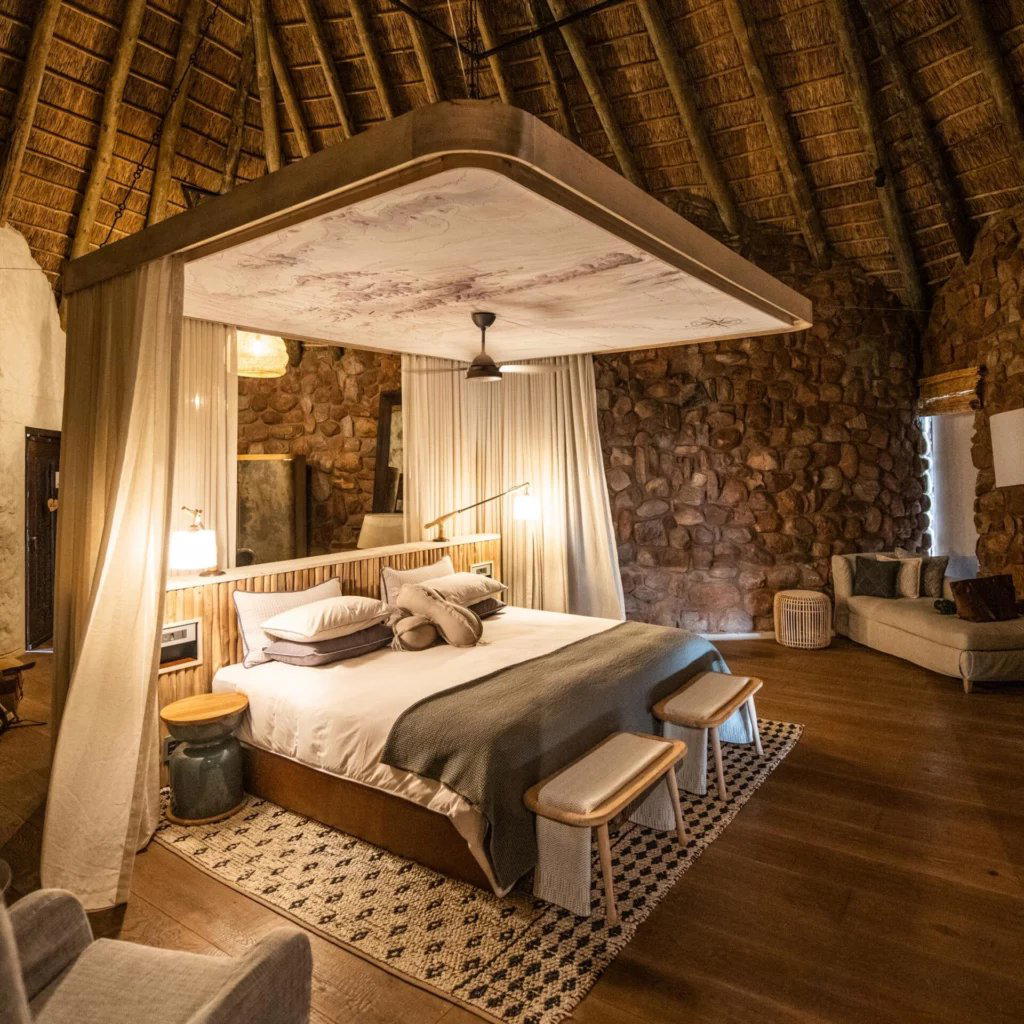
At a Glance
- Scenic
- Elegant
- Sophisticated
- Intimate
- Quiet
- Family Vacation
- Romantic Getaway
- Wellness Retreat
- Group Retreat
- Private Villa
- Butler Service
- Destination Spa
- Panoramic View
- Private Dining
- Garden
- Spa
- Pool
- Fitness Center
- Mountain
- Spa
- Pool
- Fitness Center
Natural light-filled spaces with neutral earth tones, organic design elements, and seamless indoor-outdoor flow that celebrates the surrounding landscape without competing with it.