Three Camel Lodge


Fodor's Most Incredible Hotels in the World · Preferred Hotels Member
Three Camel Lodge sits on a mountainside in Mongolia's Gobi Desert, 40km from Dalanzadgad, and belongs to Beyond Green's sustainable hotel collection. Its 40 rooms occupy traditional ger structures, placing guests inside one of Central Asia's most remote ecosystems. The dining programme draws on Mongolian pastoral tradition, and access requires advance coordination given the region's infrastructure.

Pearl is the En Primeur Club membership app, where members save venues, book tables and use the concierge.
Where the Gobi Begins: Setting and Scale
Remote desert lodges exist on a spectrum from glorified camping to genuinely considered hospitality. Three Camel Lodge, positioned in Mongolia's South Gobi on a mountainside above Dalanzadgad, occupies the latter end of that range. The surrounding terrain, part of the broader Ömnögovi province, is among the least densely inhabited land masses in the world: flat-bottomed valleys bordered by reddish escarpments, saxaul forests, and the silence that comes with genuine geographic isolation. Reaching the lodge involves flying into Dalanzadgad from Ulaanbaatar, then a transfer across open steppe. That logistical friction is, in practice, a form of curation: the guests who arrive here have chosen to arrive, and the property is designed around the assumption that they understand where they are.
In the Gobi specifically, that commitment takes on a different weight: the desert ecosystem is fragile, water is scarce, and the nomadic herding culture that defines the region is under pressure from mining and climate-driven land change. A property operating here without serious sustainability infrastructure would be difficult to justify. Three Camel Lodge's membership in Beyond Green signals that it has met the programme's criteria for responsible operations, which include criteria around biodiversity, local employment, and resource management.
The Dining Programme and Its Mongolian Frame
The editorial angle most worth applying to Three Camel Lodge is the one least often applied to remote eco-lodges: the quality and character of the food programme. In this part of Mongolia, the culinary tradition is pastoral and protein-heavy, built around mutton, goat, dairy, and preserved foods that reflect a nomadic lifestyle designed for mobility. Tsuivan (noodles with meat), buuz (steamed dumplings), and airag (fermented mare's milk) are not just menu items; they are the outputs of a centuries-old food system shaped by the absence of refrigeration, the availability of livestock, and the demands of life at altitude across dramatic seasonal swings.
A lodge operating with integrity in this context has two options: import the food programme entirely from outside, or anchor it in local tradition. The latter is more difficult and more interesting. At Three Camel Lodge, the dining approach reflects the region rather than departing from it, which places it in a different category than international resort dining at properties like Aman New York or Cheval Blanc Paris, where kitchen programmes import global fine-dining frameworks onto a local address. Here, the culinary reference point is the steppe itself.
That distinction matters for the reader deciding between Mongolian lodges. Our full Dalanzadgad restaurants guide maps the broader dining context in the region. Within the lodge tier, the comparison set for Three Camel Lodge includes properties across the Mongolian interior such as the Genghis Khan Retreat in Orkhon Valley and the Secret of Ongi Tourist Ger Camp in Saikhan-Ovoo, each of which offers a different calibration of comfort against immersion. Three Camel Lodge positions itself toward the higher-comfort end of that spectrum without abandoning the ger structure that defines authentic engagement with the region.
Accommodation: The Ger as Architecture
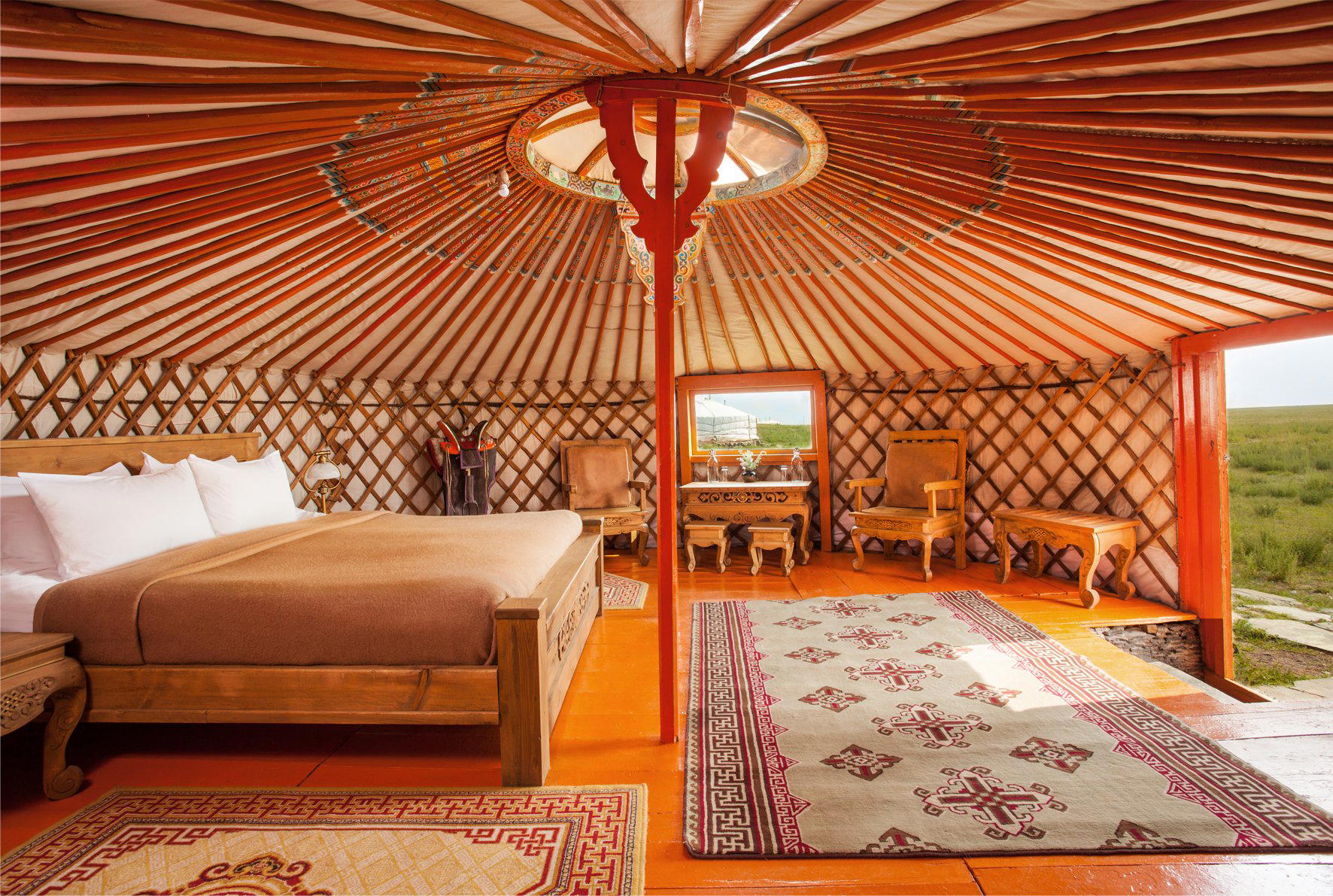
Across the lodge industry, the debate between adaptation and authenticity plays out most visibly in the choice of structure. Three Camel Lodge's 40 rooms are housed in ger, the circular felt-insulated dwellings that have been the primary residential form for Mongolian nomads for over a millennium. Adapting the ger for hospitality guests, particularly those arriving from urban environments in Europe, North America, or East Asia, requires careful calibration: enough thermal insulation to handle the Gobi's severe temperature swings (summers above 40°C, winters below -30°C), enough interior finish to meet comfort expectations, but not so much modification that the structure loses its meaning.
The choice of ger over permanent structure also carries an environmental argument. The footprint is smaller, the land disturbance is lower, and the visual impact on the landscape is minimal compared with the permanent stone-and-concrete constructions that increasingly mark less considered desert resorts in other markets. In that sense, the accommodation format and the sustainability programme are aligned rather than in tension. Properties like Amangiri in Canyon Point or Hotel Esencia in Tulum navigate comparable terrain-sensitive design challenges in very different climatic and cultural contexts, but the underlying question is the same: how much does the built environment acknowledge the land it occupies?
Activities and the Surrounding Ecosystem
The Gobi Desert is not a single environment. It spans multiple ecozones, from gravel plains and sand dunes to mountain ranges and semi-arid grasslands. Ömnögovi province contains some of its most varied terrain: the Khongoryn Els dunes, the Yolyn Am ice canyon, and the fossil-rich Flaming Cliffs at Bayanzag, where Roy Chapman Andrews's 1920s American Museum of Natural History expeditions recovered the first identified dinosaur eggs. That paleontological significance gives the region a scientific gravity absent from most luxury desert destinations.
For guests staying at Three Camel Lodge, access to these sites is the primary experiential proposition. The lodge's position in this ecosystem, combined with its Beyond Green framework, suggests guided programming oriented toward natural and cultural interpretation rather than purely recreational adventure. That positions it differently from properties where activities are ancillary to spa and dining offerings, and more in line with lodges where the landscape itself is the programme. Readers interested in how Ulaanbaatar-based properties compare as a base for Mongolian travel should consider Ayan Zalaat Hotel and Spa in Ulaanbaatar as part of a staged itinerary.
Planning Logistics
Getting to Three Camel Lodge requires advance planning at every stage. Flights from Ulaanbaatar to Dalanzadgad operate seasonally and with limited frequency; the lodge itself is then a further drive across unpaved or minimally paved terrain. Guests should confirm transfer arrangements directly with the property at the time of booking, and should treat the lodge as a full-board destination rather than a base for independent exploration without coordination. Given the remote setting and limited room count of 40, advance reservations are advised, particularly for the peak summer season between June and August when the steppe weather is most accessible. The Beyond Green membership also implies a degree of community-integrated programming that may require prior arrangement.
For readers building a broader Mongolia itinerary, Three Camel Lodge works well as a dedicated Gobi chapter rather than a stopover. The journey time and logistical investment justify at minimum a three-night stay to allow meaningful engagement with the surrounding terrain. Comparable commitments are required at other remote-destination lodges internationally, whether in Utah's canyon country or the Italian interior at Castello di Reschio in Lisciano Niccone, where travel friction is itself a structural part of the experience.
Price and Recognition
| Venue | Price | Awards |
|---|---|---|
| Three Camel LodgeThis venue (the venue you are viewing) | $500–750 | Fodor's Most Incredible Hotels in the World · Preferred Hotels Member |
| Ayan Zalaat Hotel & Spa | $750–1,000 | 1 Michelin Key · Leading Hotels of World Member |
| Genghis Khan Retreat | $500–750 | Tatler Listed in Best Hotels Asia-Pacific |
| Shangri-La Ulaanbaatar, Mongolia | Not listed | Michelin Selected · Virtuoso Luxury Hotel Partner |
| Terelj Hotel | $300–500 | Small Luxury Hotels of the World Member |
| The Blue Sky Hotel & Tower | Not listed | Preferred Hotels Member |
Recognition history
Dated appearances from independent guides and award organizations, with the underlying list record or original source where available.
Fodor's Most Incredible Hotels in the World
Fodor's
Preferred Hotels Member
Preferred Hotels
Continue exploring
More in Dalanzadgad
Restaurants in Dalanzadgad
All restaurants in Dalanzadgad →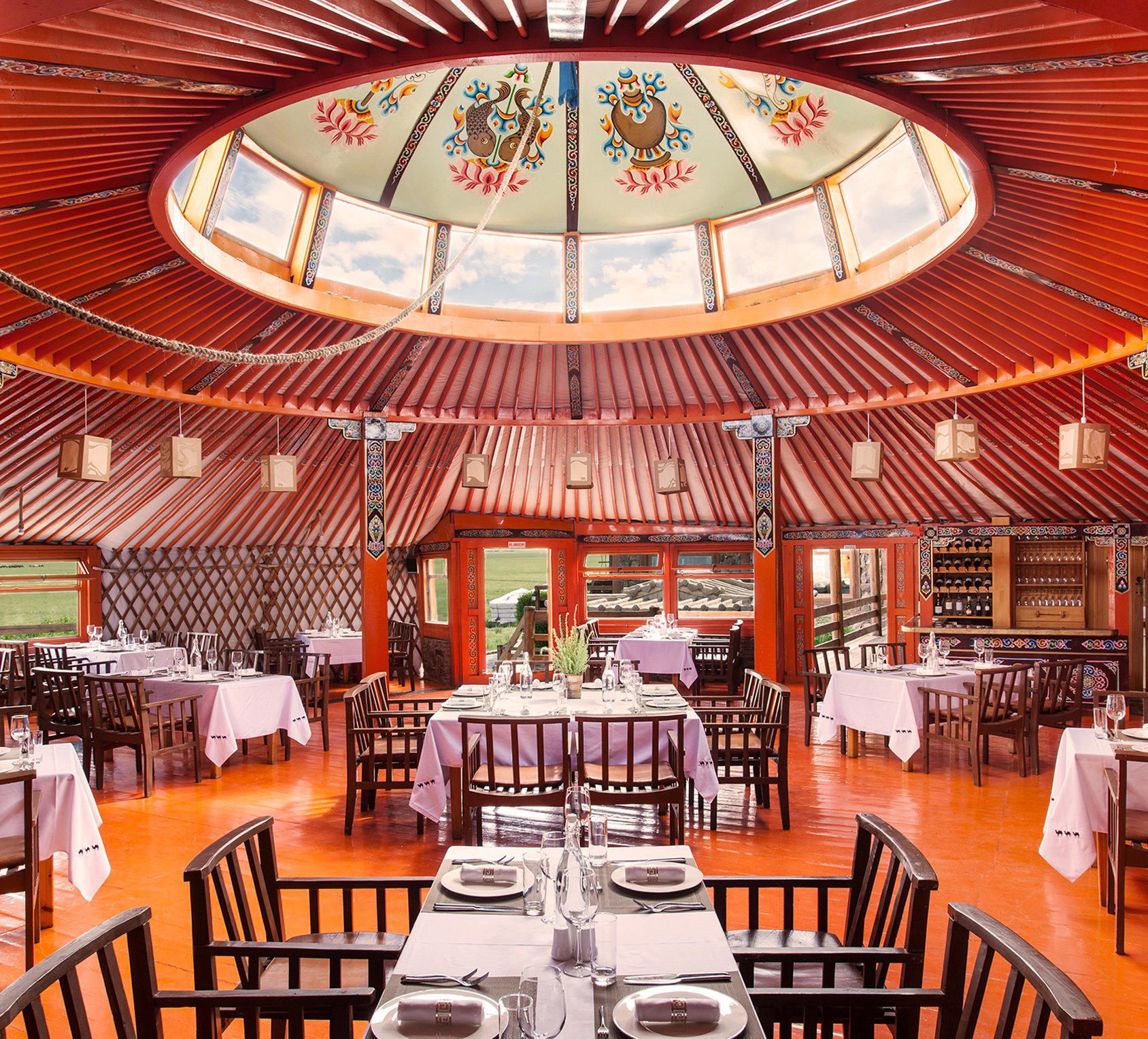
Details
- Romantic
- Quiet
- Scenic
- Cozy
- Elegant
- Romantic Getaway
- Family Vacation
- Wellness Retreat
- Destination Wedding
- Panoramic View
- Private Dining
- Garden
- Destination Spa
- Historic Building
- Spa
- Restaurant
- Bar
- Laundry Service
- Mountain
Serene and contemplative with warm, intimate lighting from wood stoves and solar-powered LED fixtures; guests describe it as a peaceful oasis with cinematic desert vistas, particularly dramatic at sunset with golden and red hues across sculpted dunes.