Secret of Ongi Tourist Ger Camp (여행자캠프)
In the Central Gobi aimag, ger camp hospitality occupies a different register than the urban lodges of Ulaanbaatar. Secret of Ongi Tourist Ger Camp sits in Saikhan-Ovoo, where the steppe opens fully and the built environment recedes to almost nothing. For travellers moving through the Gobi on their own terms, this is the kind of stop that reorients your sense of what shelter means.
Pearl is the En Primeur Club membership app — saves, bookings, and concierge access live there. Same editors, same standards.
- Address
- 중앙고비주
- Directions
- Get directions
 Saves & bookings on Pearl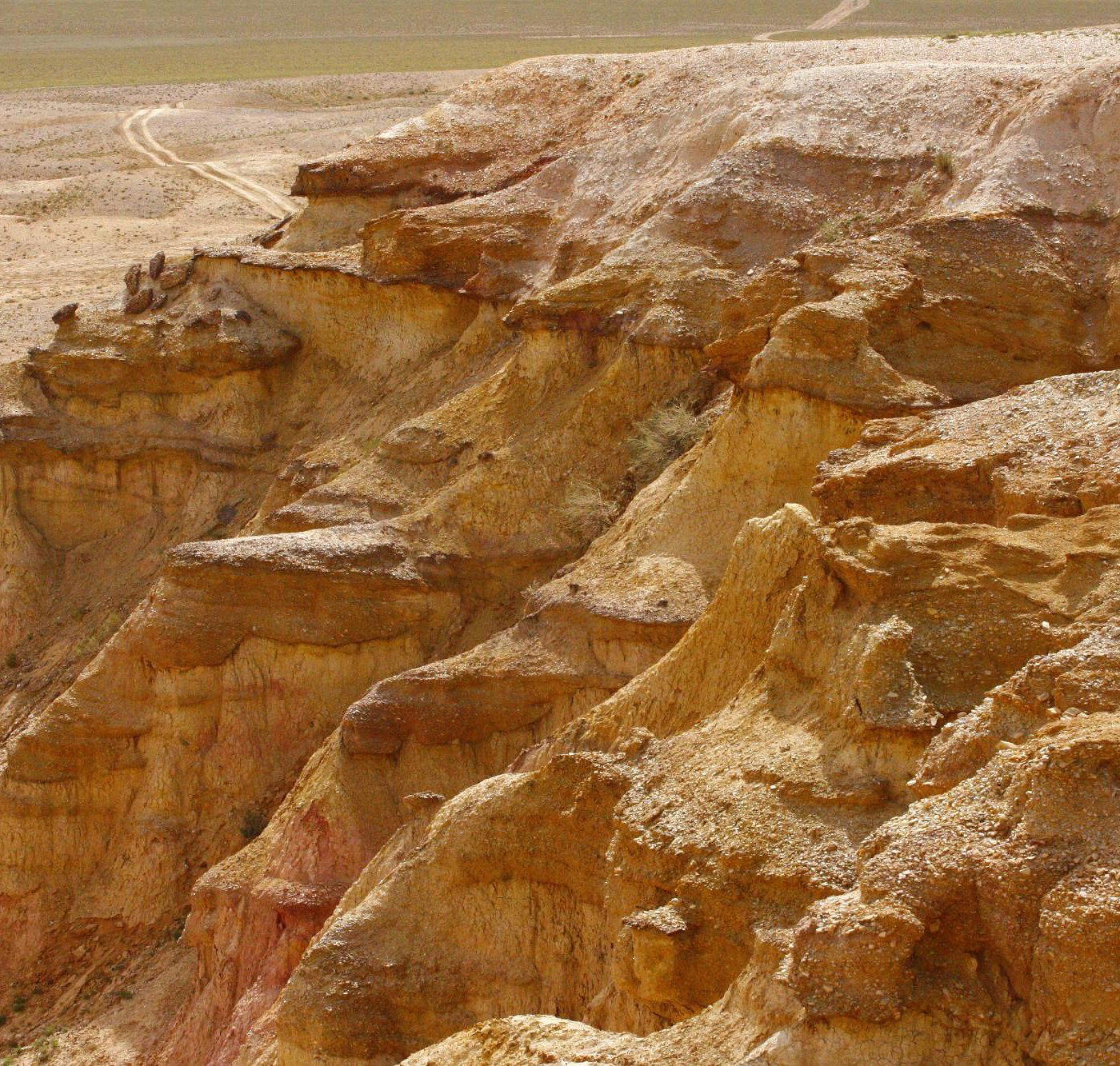
Where the Steppe Becomes the Architecture
There is a particular quality of light in the Central Gobi that arrives before anything else: flat, unfiltered, and vast in a way that makes conventional notions of indoor and outdoor feel like a category error. Approaching a ger camp in this terrain, you are not arriving at a building in a landscape so much as arriving at a small human arrangement inside something much larger. The ger itself, the traditional Mongolian circular dwelling used across the steppe for centuries, does not fight that scale. It submits to it, and that submission is the design philosophy.
Secret of Ongi Tourist Ger Camp, located in Saikhan-Ovoo within the Central Gobi province (Dundgovi aimag), operates in this tradition. The ger as a built form is one of the most functionally refined structures in nomadic architecture: a latticed wooden frame (the khana), a central compression ring (the toono) that serves as both skylight and smoke vent, felt insulation layers calibrated to seasonal temperature swings that can exceed 50 degrees Celsius between summer and winter, and a single south-facing door oriented toward the sun. Every element has a load-bearing reason for existing. There is no decorative excess, because none is needed when the structure itself is the ornament.
The Ger Camp Format in the Gobi Context
Mongolia's tourist ger camp sector has grown considerably since the early 2000s, when most international visitors concentrated on the Orkhon Valley and Terelj National Park areas closer to Ulaanbaatar. Properties like Genghis Khan Retreat in Orkhon Valley represent the more accessible end of that spectrum, positioned within easier reach of the capital. The Central Gobi camps occupy a more remote tier, drawing travellers who are specifically routing south through the desert rather than looping out from Ulaanbaatar for a night or two.
That geographic positioning matters. The Gobi is not a single terrain but a sequence of them: saxaul scrubland, rocky outcrops, sand dunes, dry riverbeds, and open steppe plateaus. Saikhan-Ovoo sits within this varied corridor, and camps in this region function less as destination resorts and more as waypoints in a longer itinerary that might include the Ongi River ruins, the Khongoryn Els sand dunes further southwest, or the dinosaur fossil sites at Bayanzag. Compared to the urban hotel options available in Ulaanbaatar, including the Ayan Zalaat Hotel and Spa, a Gobi camp represents a fundamentally different accommodation logic: proximity to the terrain is the offering, not insulation from it.
The Interior Logic of the Ger
Inside a traditional ger, spatial organisation follows established convention. Entering through the south-facing door, the left side (east) is historically the women's area and the right side (west) the men's. The altar or place of honour sits at the north, directly opposite the entrance. Tourist gers adapt these conventions while preserving the circular layout, the central stove, and the toono overhead. The effect is a room that reads as both minimal and complete: nothing is superfluous, and the central stove becomes the focal point of the space in a way that no fireplace in a conventional hotel room manages to replicate.
In the Gobi specifically, the stove is not atmosphere. Overnight temperatures at altitude, even in late spring and early autumn, drop sharply enough that heating is functional rather than decorative. The felt layers wrapped around the khana lattice are adjusted seasonally, thicker configurations for autumn and spring travel, which represents the kind of climate-responsive architecture that contemporary sustainable design has spent decades trying to theorise its way back toward.
Placing Ongi in the Broader Mongolia Travel Circuit
The Central Gobi region sits at a different remove from international luxury infrastructure than properties like Gobi Caravanserai Lodge in Dalanzadgad, which serves as a more established base for Gobi itineraries anchored around the provincial capital. Saikhan-Ovoo, by contrast, is a smaller waypoint, and the camps here are oriented toward independent travellers and organised tour groups moving through the desert on multi-day routes.
This positions Secret of Ongi Tourist Ger Camp within a different competitive set than the lodge-format properties that have attracted international press attention in Mongolia. The peer comparison is less to luxury tented camps in the Masai Mara or Rajasthan, where high price points and design investment are explicit selling points, and more to the functional nomadic hospitality infrastructure that has always existed on the steppe, adapted for visitors who want proximity without requiring a full expedition setup.
For travellers whose reference points are properties like Amangiri in Canyon Point, where the desert environment is framed through considered architecture and controlled guest experience, a Gobi ger camp asks for a different kind of engagement. The landscape is not curated or framed; it is simply present, and the accommodation exists to keep you warm and fed while you spend time in it.
Planning Your Stay
The Central Gobi is most reliably visited between late May and early September, when road conditions across the steppe are manageable and daytime temperatures are within a comfortable range, though even in peak summer the desert can be cold after dark. Travel to Saikhan-Ovoo from Ulaanbaatar typically involves either a domestic flight to Mandalgovi (the aimag capital) followed by road transfer, or a full-day overland drive of roughly 400 to 500 kilometres depending on the route and road conditions chosen. Neither option is quick, which is the point: the distance is part of what defines the experience and separates this region from the more accessible northern camp circuits.
Travellers combining Gobi itineraries with time in Ulaanbaatar should note that the city's hotel offer ranges considerably in format and price, from international business hotels to smaller local properties. For the wider Mongolia travel context, our full Saikhan-Ovoo restaurants and travel guide covers the regional infrastructure in more detail. Those building extended Central Asian itineraries may also find comparative reference useful from destination profiles on properties such as Castello di Reschio in Lisciano Niccone or Hotel Esencia in Tulum, both of which represent the design-led rural retreat format in different geographic registers. Other points of comparison from the EP Club portfolio include One&Only Mandarina in Riviera Nayarit, Casa Maria Luigia in Modena, and Hotel Du Cap-Eden-Roc in Cap d'Antibes for those contextualising what different price tiers of countryside hospitality look like across global markets. For urban luxury reference points, the EP Club also profiles properties including Le Bristol Paris, Cheval Blanc Paris, La Réserve Paris, Hotel Plaza Athénée, Aman New York, The Fifth Avenue Hotel, Aman Venice, Bvlgari Hotel Tokyo, HOTEL THE MITSUI KYOTO, Mandarin Oriental Bangkok, Mandarin Oriental Ritz, Madrid, Badrutt's Palace Hotel in St. Moritz, Hôtel de Paris Monte-Carlo, and Hotel Bel-Air in Los Angeles.
Side-by-Side Snapshot
| Venue | Cuisine |
|---|---|
| Secret of Ongi Tourist Ger Camp (여행자캠프)This venue — the venue you are viewing | This venue |
At a Glance
- Romantic
- Scenic
- Rustic
- Cozy
- Intimate
- Romantic Getaway
- Family Vacation
- Wellness Retreat
- Weekend Escape
- Waterfront
- Garden
- Terrace
- Historic Building
- Panoramic View
- Restaurant
- Bar
- Spa
- Massage
- Laundry Service
- Concierge
- Wi Fi
- Waterfront
- Mountain
- Restaurant
- Bar
- Spa
- Massage
- Laundry Service
- Concierge
- Wi Fi
Warm and welcoming atmosphere with traditional Mongolian architecture reflecting ancient temple design; guests enjoy sunset views from the terrace bar and relaxed desert setting.
Know Before You Go
- Getting there
- 중앙고비주