Genghis Khan Retreat

Named 2025 Best Destination Hotel by Tatler Asia-Pacific, Genghis Khan Retreat sits in Mongolia's Orkhon Valley, where the steppe meets centuries of imperial history. The property occupies a specialist tier of destination camps: low-capacity, design-led, and positioned against the landscape rather than against it. For travellers whose itinerary is built around remoteness and historical weight, it functions as the logical base.
Pearl is the En Primeur Club membership app — saves, bookings, and concierge access live there. Same editors, same standards.
- Address
- Orkhon valley, Gangan Orkhon bag, Kharkhorin, Ovorkhangai, Mongolia
- Phone
- +976 9905 0706
- Website
- asaland.mn
- Directions
- Get directions
 Saves & bookings on Pearl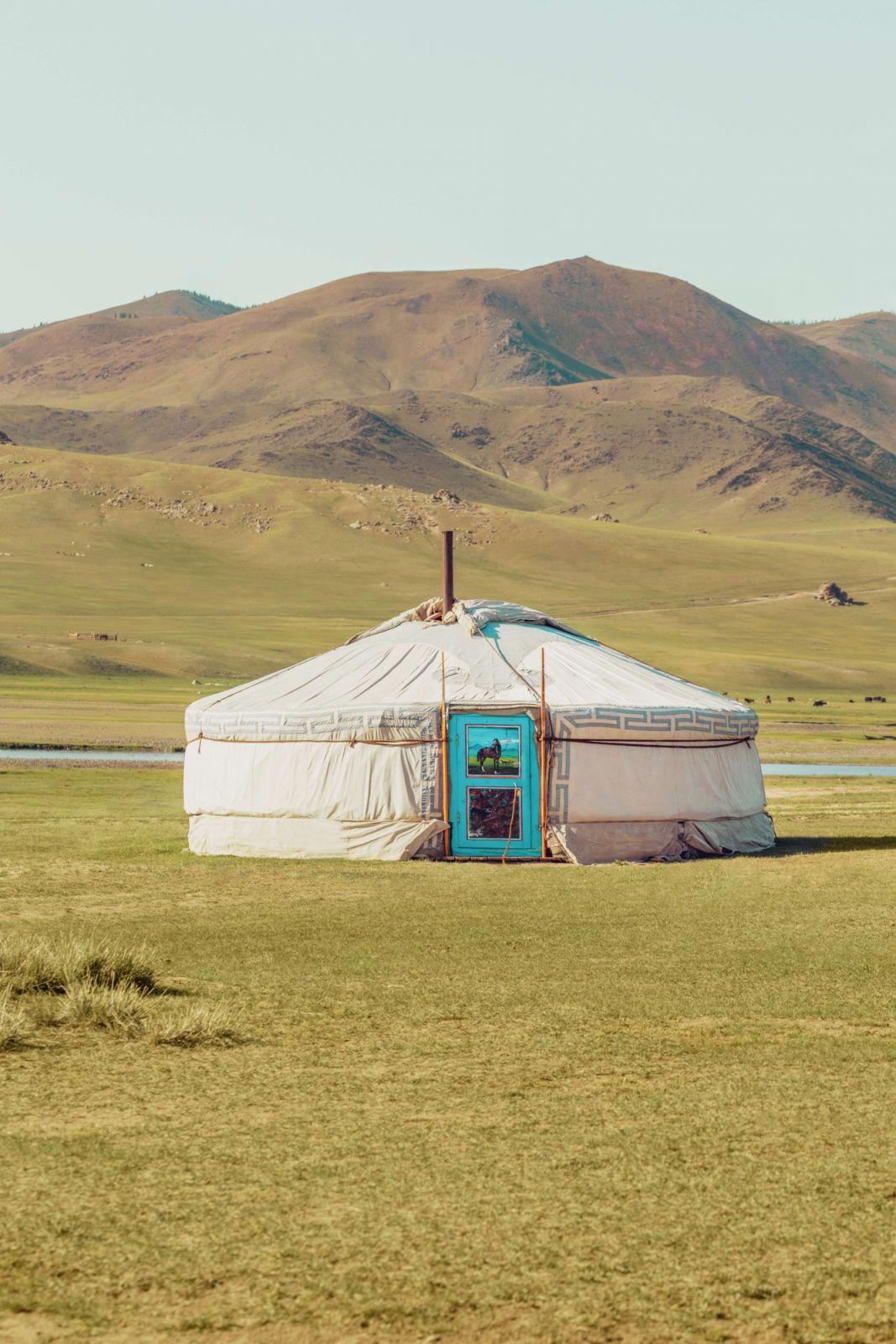
Where the Steppe Shapes the Structure
The design logic of premium wilderness camps has split decisively in the last decade. One camp leans toward safari-lodge conventions transplanted to new geographies: heavy canvas, brass fixtures, bar carts that could belong to the Serengeti. The other takes its cues directly from the land it occupies. Genghis Khan Retreat belongs to the second school. Sitting in the Orkhon Valley of central Mongolia, the property draws its spatial and material vocabulary from the same grassland that surrounds it, where the architecture is less about imposing a built environment and more about framing what is already there.
The Orkhon Valley is not incidental context. It is a UNESCO World Heritage Site carrying more than three thousand years of nomadic pastoral culture and the remnants of Kharkhorin, the thirteenth-century capital of the Mongol Empire. That historical density is what separates this part of Mongolia from other steppe destinations and gives a property here a different weight than remote wilderness camps operating purely on scenery. When Tatler named Genghis Khan Retreat its 2025 Best Destination Hotel in the Asia-Pacific list, the citation framed the property precisely around that layering: history met with hope for the valley's future. That framing tells you something about how the property positions itself within its geography, not as a spectator of the landscape but as part of its ongoing story.
Design as a Response to Place
Premium hospitality in Central Asia has historically defaulted to the ger as its primary architectural unit, a form that carries genuine cultural logic: the circular felt tent is portable, thermally efficient in continental extremes, and deeply tied to Mongolian identity. The more considered properties in the region, including Genghis Khan Retreat, treat the ger not as a costume but as a starting point, working out how to bring thermal comfort, spatial quality, and aesthetic coherence into a form that is already aerodynamically and structurally resolved by centuries of use.
Properties like Three Camel Lodge, operating in the Gobi, built their reputation on a similar logic of culturally grounded structure. But the Orkhon Valley context introduces a different variable: elevation, river access, and the specific microclimate of a valley that funnels both wind and light differently than open desert. A camp designed to sit in that environment has to account for morning mist off the Orkhon River, temperature swings that can span forty degrees Celsius between seasons, and views that are horizontal and immense in a way that a walled room handles poorly. Structure that opens toward the valley floor, that orients sleeping quarters to catch specific light, that uses material density to anchor tents against wind without closing them off, is a different design problem from what the Gobi requires. For comparable destination-hotel approaches in radically different geographies, Amangiri in Canyon Point and Castello di Reschio in Lisciano Niccone demonstrate how seriously landscape-responsive design can be taken at the upper end of the sector.
The Destination Hotel Category and What It Demands
The Tatler Asia-Pacific list classifies Genghis Khan Retreat specifically under Destination Hotels, a taxonomy that carries expectations different from resort or city hotel categories. Destination hotels are defined by the proposition that the journey to them is part of the product, that the property's location is non-substitutable, and that the experience could not be replicated by placing the same building in a different geography. That is a demanding standard. A property in Paris or Tokyo competes on urban access, gastronomy, and service finesse; a destination hotel in the Orkhon Valley competes on landscape, silence, historical context, and the quality of the solitude it manufactures.
Within that category, the competitive set globally includes properties where the physical isolation is the primary offering: One&Only; Mandarina in Riviera Nayarit, Hotel Esencia in Tulum, or Casa Maria Luigia in Modena, each of which anchors its identity in a specific place rather than a brand network. Genghis Khan Retreat operates in similar logic but with a geography that is considerably harder to reach, which raises the threshold for what the property must deliver once guests arrive. The effort of getting to the Orkhon Valley, roughly five hours by road from Ulaanbaatar or accessible by domestic flight to Arvaikheer followed by a further transfer, functions as a self-selecting filter. Travellers who make that journey have already committed; the property's task is to justify the commitment through spatial and experiential quality, not through amenity lists.
For those planning a broader Mongolia itinerary, Ayan Zalaat Hotel & Spa in Ulaanbaatar provides a practical city anchor before or after the valley leg, and Secret of Ongi Tourist Ger Camp in Saikhan-Ovoo offers a different steppe register for those extending south toward the Gobi. The Gobi Caravanserai Lodge in Dalanzadgad represents the southern desert variant of destination-camp hospitality at comparable positioning. Our full Orkhon Valley restaurants guide covers dining context in the broader valley area.
Timing and Access
Mongolia's continental climate makes timing consequential. The Orkhon Valley's primary season runs from late May through September, when temperatures are stable enough for comfortable tent accommodation and the grassland is at its richest. July brings the Naadam festival season, which concentrates domestic travel and can affect access logistics around the valley. Spring and autumn offer sharper light and emptier camps at the cost of colder nights. Winter travel is possible for the cold-tolerant, but most destination camps in the region operate on a seasonal basis and confirm specific opening windows annually. Confirming dates directly with the property, reached through its website at genghiskhanretreat.com, is the practical first step before building any itinerary around the valley.
Where It Sits in the Wider Field
The premium hospitality sector in Mongolia remains thin compared to destinations like the Maldives or Patagonia, where design-led small-scale lodges have multiplied over two decades. That relative scarcity works in both directions: less competition, but also less of the infrastructure ecosystem, flight connectivity, and international press attention that mature luxury destinations generate automatically.
For those whose reference points are the design hotels that have defined destination-led hospitality elsewhere, Amangiri in Utah's canyon country offers the closest parallel in terms of landscape scale and design restraint at the upper end of the market. The Orkhon Valley is neither canyon nor coast, but the underlying proposition, that the physical environment is irreplaceable and the accommodation serves it rather than competing with it, belongs to the same category of thinking. That is, ultimately, the most useful frame for deciding whether Genghis Khan Retreat belongs in a given itinerary.
How It Stacks Up
| Venue | Cuisine |
|---|---|
| Genghis Khan RetreatThis venue — the venue you are viewing | This venue |
Recognition history
Dated appearances from independent guides and award organizations, with the underlying list record or original source where available.
Tatler Listed in Best Hotels Asia-Pacific
Tatler
Tatler Best Destination Hotel
Tatler
At a Glance
- Scenic
- Rustic
- Quiet
- Wellness Retreat
- Group Retreat
- Weekend Escape
- Panoramic View
- Private Dining
- Design Destination
- Garden
- Room Service
- Concierge
- Spa
- Wi Fi
- Mountain
- Room Service
- Concierge
- Spa
- Wi Fi
A remote, seasonal luxury camp atmosphere with spacious gers, wood-burning stoves, cashmere bedding, and a strong nomadic feel set against wide-steppe scenery.
Know Before You Go
- Getting there
- Orkhon valley, Gangan Orkhon bag, Kharkhorin, Ovorkhangai, Mongolia