The Royal Livingstone Anantara

Virtuoso Luxury Hotel Partner
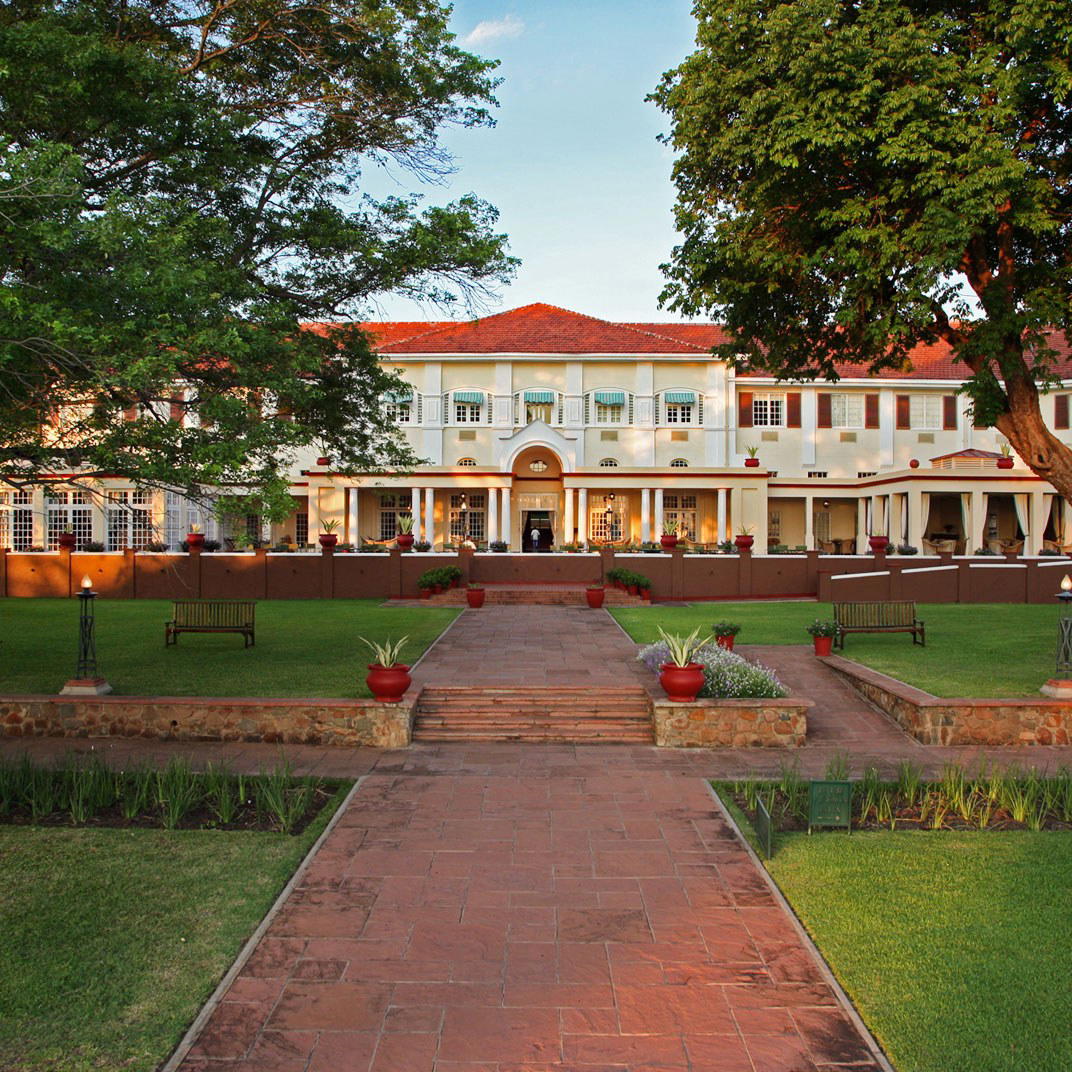
Set on the banks of the Zambezi River within walking distance of Victoria Falls, The Royal Livingstone Anantara occupies 17 colonial-style buildings arranged through indigenous forest, with deep verandas, a Zambezi-edged timber deck, and interiors hung with original artwork referencing the region's exploration history. It sits at the upper end of Livingstone's hotel market, where position and access to the Falls define the competitive set.

Pearl is the En Primeur Club membership app, where members save venues, book tables and use the concierge.
Where the Zambezi Sets the Terms
At a certain proximity to Victoria Falls, the hotel becomes secondary to the river. The spray reaches you before you see the water, and the low roar of the Falls carries across the Zambezi at most hours of the day. The Royal Livingstone Anantara is positioned exactly at that threshold: close enough that the mist from the Falls drifts across the property on heavy-flow days, far enough upstream that the Zambezi still runs smooth and wide past the timber deck. That physical fact shapes everything about staying here, from the sightlines off the veranda to the way mornings feel when the river catches early light.
Livingstone's hotel market is structured around one primary variable: distance from the Falls. The Royal Livingstone Anantara holds one of the closest positions among full-service properties on the Zambian side, which places it in direct comparison with a small peer group rather than the broader mid-market. Properties like Toka Leya, Tongabezi Lodge, and Mukwa River Lodge each offer their own relationship with the river, but few combine riverfront access of this proximity with the full-service infrastructure of a large colonial-style hotel. The Radisson Blu Mosi-Oa-Tunya Livingstone Resort occupies a comparable footprint on Mosi-oa-Tunya Road but reads differently in register, leaning toward business-amenity conventions where the Royal Livingstone commits more fully to the safari-colonial aesthetic.
Architecture as Orientation
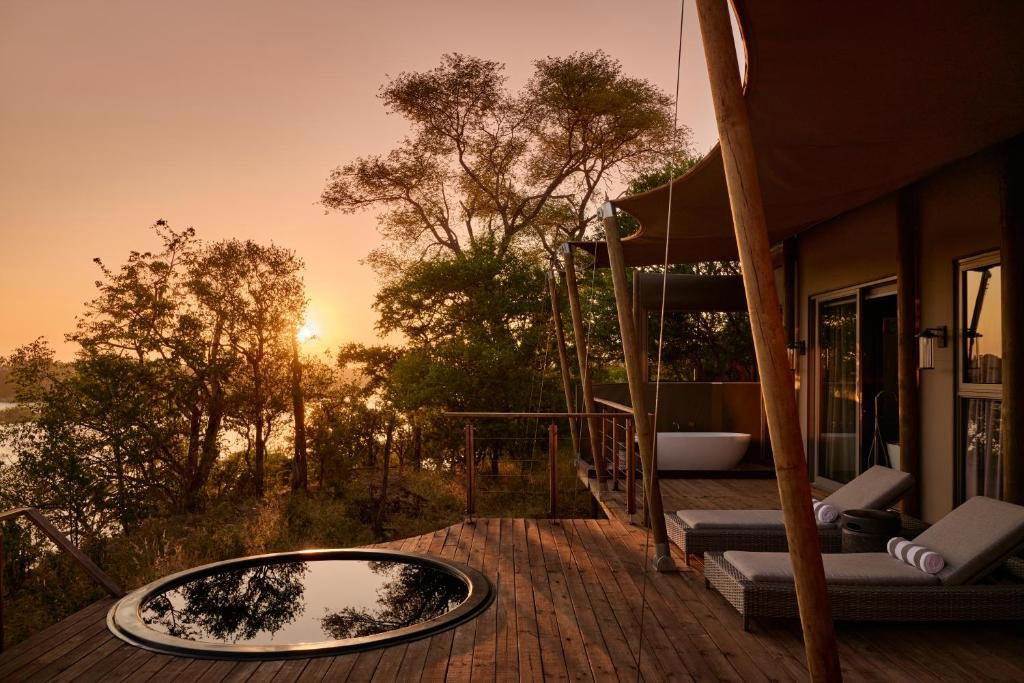
The hotel spreads across 17 colonial-style buildings, each with deep shaded verandas and thatch roofing that anchors the design in an African idiom rather than generic luxury. This is not the kind of property where every surface has been stripped back to express restraint. The architectural approach here is layered and referential: wooden ceiling fans overhead, a courtyard reception framed around a fountain, interior gardens releasing scent into the arrival sequence. Original artwork depicting scenes from David Livingstone's expeditions lines the lounge walls, turning the interior into a kind of visual archive of the region's exploration history. For guests arriving from large international properties, the density of reference can feel more like a country house than a hotel, which is largely the point.
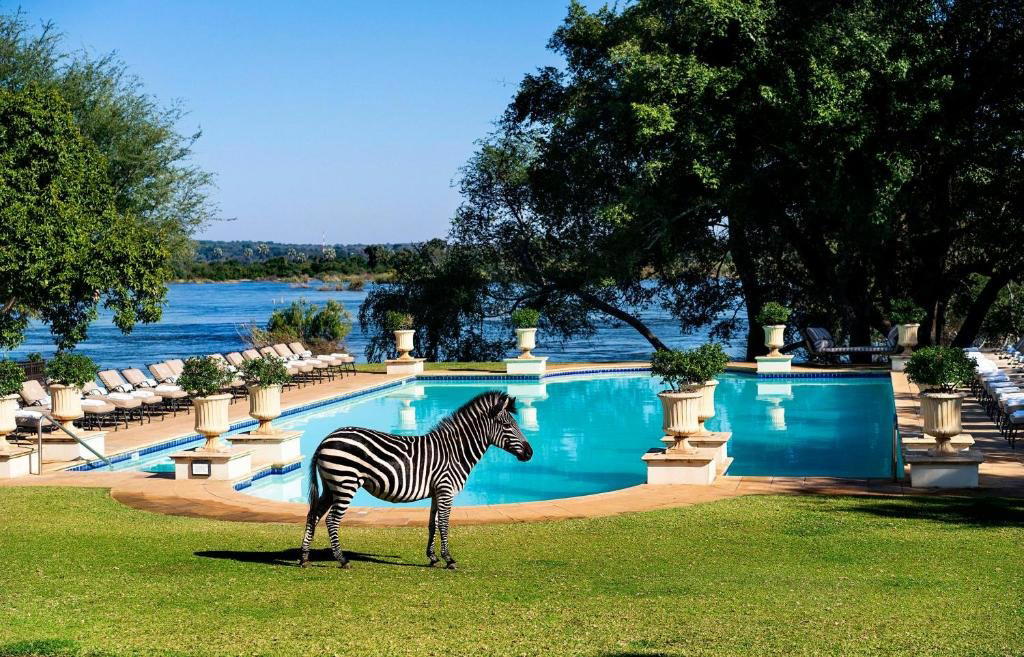
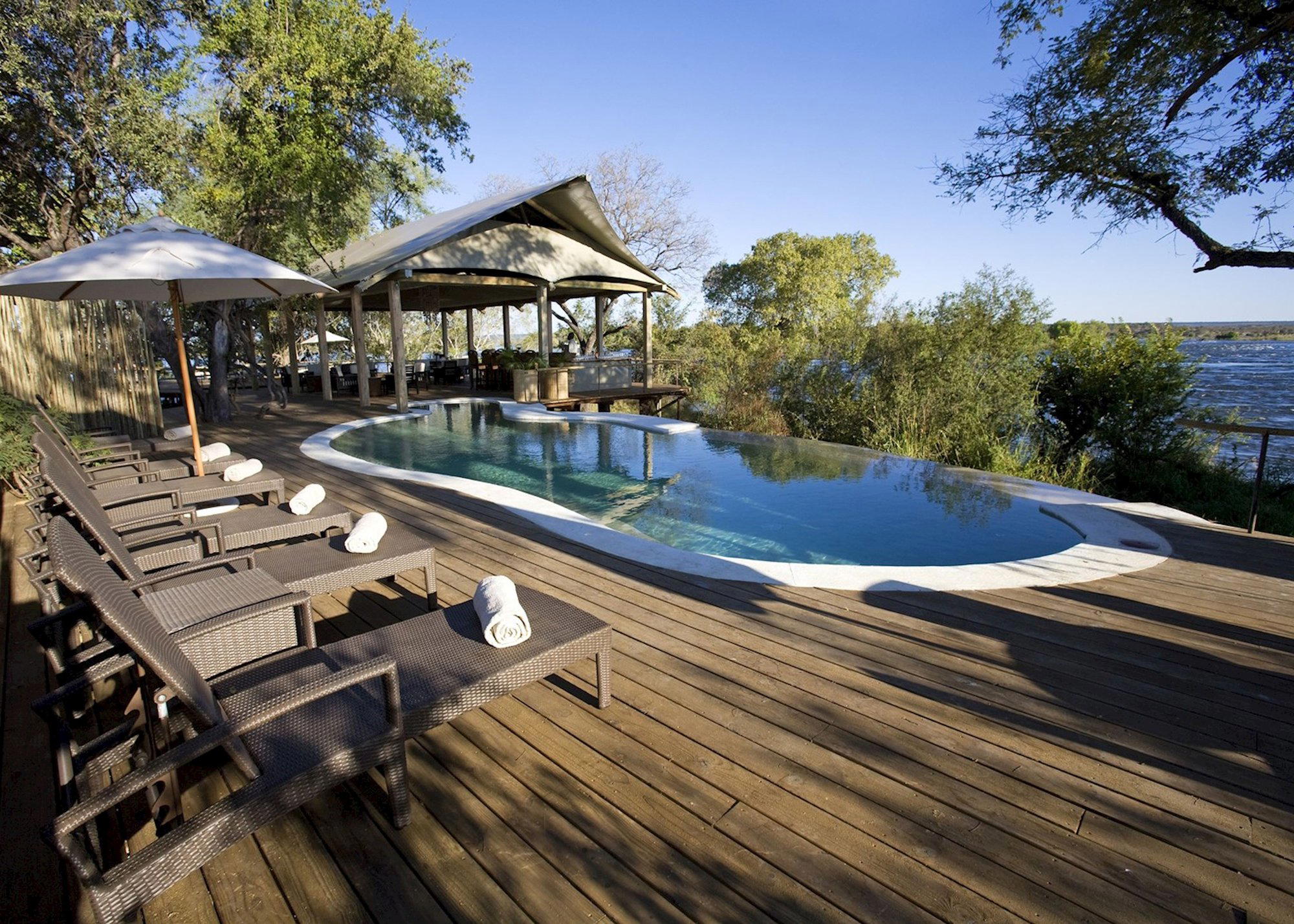
The swimming pool is positioned to create a visual axis between the Zambezi and the terrace. The timber deck extends into the water itself, giving the impression of sitting directly on the river. These are design decisions that shape how guests spend unstructured time, pulling them toward the water rather than inward toward the hotel's own amenities. At properties like Amangiri or Aman Venice, the same logic applies: the strongest properties design for their setting first and their brand identity second. The Royal Livingstone's architecture follows that instinct, even if it arrives at it through a different vocabulary.
The Service Frame at This Level
In the tier of African lodges where the Falls is the central experience, service functions differently than in purely retreat-oriented properties. Guests are often splitting their time between the hotel and active excursions: guided Falls walks, Zambezi sunset cruises, white-water rafting in the gorge below, wildlife drives into the Mosi-oa-Tunya National Park that borders the property. Service at this level is therefore as much about logistics management as it is about in-room attention. The ability to coordinate departures, arrange permits for the Falls, and sequence activity timing without friction is what separates a hotel that handles guests well from one that merely accommodates them.
The colonial-register properties in Africa that do this at high level tend to share certain characteristics: a well-stocked library for genuine downtime, well-maintained common spaces where guests can decompress between excursions, and staff who understand the rhythm of Falls-adjacent travel without needing it explained. The Royal Livingstone's lounge, veranda, and library are all oriented around that recovery function. The deep veranda in particular operates as a transition zone, the kind of space where you sit with something cold after a Falls walk and let the Zambezi do its work. This is a detail that separates the property from more urban-format luxury hotels, where common spaces often serve presentation rather than use. For comparison, the most considered examples of this approach in other formats include Castello di Reschio in Umbria and Hotel Bel-Air in Los Angeles, where the grounds and outdoor common areas are understood to be as much a part of the offer as the rooms themselves.
Livingstone as a Base
Livingstone functions as the primary Zambian gateway for Victoria Falls access, and the town's hotel infrastructure has developed to serve that demand. The Zambian side of the Falls is generally less trafficked than the Zimbabwean side centered on Victoria Falls town, which gives the experience a different texture: more considered, quieter at the viewpoints, and with slightly easier logistics for certain activities. The white-water rafting operations launch from below the Falls on the Zambian side, and the Mosi-oa-Tunya National Park, one of the few Zambian parks with white rhino, sits immediately adjacent to the Royal Livingstone's grounds.
For guests considering the wider Zambia circuit, Livingstone pairs well with remote bush camps in the country's interior. Anabezi Camp in Lower Zambezi National Park, Lion Camp in Mfuwe, Puku Ridge in South Luangwa National Park, Lolebezi in Jeki, and Sungani Lodge in Luangwa represent the kind of remote camp format that handles the wildlife intensity of a Zambia itinerary, while the Royal Livingstone provides a different register of comfort as a bookend to the trip. The Anantara Kafue River Tented Camp in Kafue extends the Anantara footprint within Zambia and could logically be combined for guests who want to stay within one operator's network. Flights into Harry Mwanga Nkumbula International Airport serve Livingstone directly from Lusaka and Johannesburg, making it direct to position the Royal Livingstone as either an opening or closing property on a longer southern African circuit.
For a broader sense of where the Royal Livingstone sits within the city's dining and hospitality options, see our full Livingstone restaurants guide. Guests who travel widely between African and international luxury formats may also find useful reference points in properties like Badrutt's Palace Hotel in St. Moritz, Hotel Du Cap-Eden-Roc, or Cheval Blanc Paris, each of which operates in the same upper tier of the market where setting and architectural identity carry as much weight as service metrics. The Royal Livingstone belongs to a different geographic and experiential category from those properties, but its logic, building a full-service hotel around an irreplaceable natural position, is the same.
Planning Notes
The Royal Livingstone Anantara sits on Mosi-oa-Tunya Road, the main artery connecting Livingstone town to the Falls and the national park. The property's position on this corridor means the Falls entry point is accessible on foot or by the hotel's own transfers, a logistical convenience that reduces the coordination overhead that plagues some more remote river properties. Guests should factor the seasonal flow of the Zambezi into their timing: the Falls are most voluminous between February and May, when spray can be so heavy that viewpoints become difficult to photograph from, and most visible in their full breadth during the drier months of August through November, when flow drops and the gorge geology becomes clearer. Neither window is wrong; they are simply different experiences, and the hotel sits at the centre of both.
Style and Standing
Comparable venues nearby, for context on price, style, and recognition.
| Venue | Cuisine | Price | Awards | Notes |
|---|---|---|---|---|
| The Royal Livingstone AnantaraThis venue (the venue you are viewing) | Victorian colonial manor on Zambezi riverbanks | $500–750 | Virtuoso Luxury Hotel Partner | Not listed |
| Radisson Blu Mosi-Oa-Tunya Livingstone Resort | Eco-friendly luxury resort blending modern comfort with natural surroundings | $200–300 | World Luxury Hotel Awards WLHA Regional Winner | Mosi-oa-Tunya National Park |
| Toka Leya | safari-style luxury tented camp | $500–750 | La Liste Top Hotels | Mosi-oa-Tunya National Park |
| Royal Chundu – Luxury Zambezi Lodges | Intimate luxury safari lodge on a private stretch of the Zambezi, combining riverfront suites and a private island lodge in a low-footprint, nature-immersed setting. | $1,500–2,500 | Relais Chateaux Award | Katambora / Upper Zambezi River |
| Mukwa River Lodge | Bush chic with understated luxury blending natural materials and modern comforts in an intimate riverside setting. | Not listed | Virtuoso Luxury Hotel Partner | Livingstone |
| Tongabezi Lodge | Individually designed luxury houses and cottages blending into the wild African bush | $750–1,000 | Not listed | Livingstone |
Recognition history
Dated appearances from independent guides and award organizations, with the underlying list record or original source where available.
Virtuoso Luxury Hotel Partner
Virtuoso
Continue exploring
More in Livingstone
Hotels in Livingstone
All hotels in Livingstone →
Restaurants in Livingstone
All restaurants in Livingstone →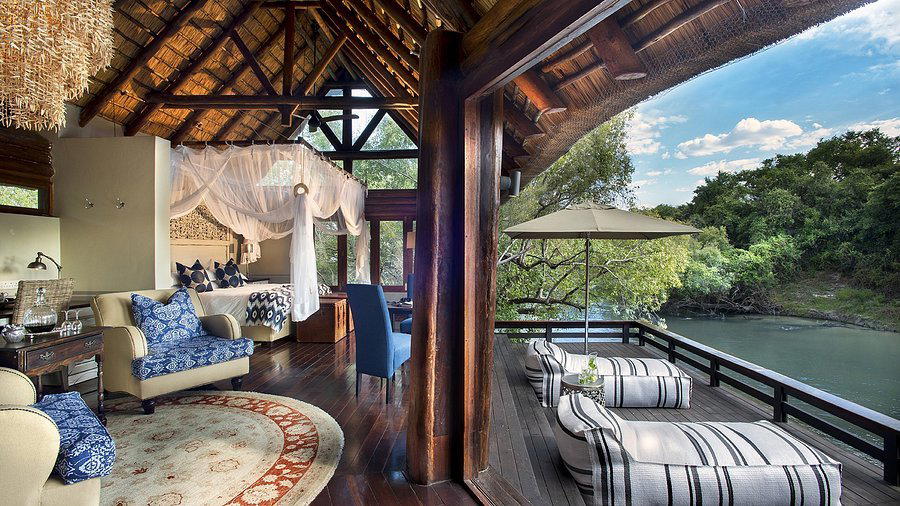
Details
- Elegant
- Scenic
- Classic
- Sophisticated
- Ornate
- Honeymoon
- Romantic Getaway
- Family Vacation
- Anniversary
- Waterfront
- Panoramic View
- Butler Service
- Pool
- Spa
- Wi Fi
- Room Service
- Concierge
- Fitness Center
- Garden
- Waterfront
- Garden
- Wheelchair Accessible
Victorian elegance with sweeping river views, graceful safari style, and refined colonial atmosphere featuring deep verandas and indigenous surroundings.