
Virtuoso Luxury Hotel Partner
Sungani Lodge sits in the remote southern reaches of South Luangwa National Park, where a family-built, design-led camp overlooks a hippo-frequented lagoon. Suites combine locally sourced craftsmanship with contemporary comfort, and each stay is tied directly to a conservation programme protecting one of Zambia's least-visited wilderness corridors. For travellers who want both considered design and ecological purpose, this is a compelling Luangwa option.

Pearl is the En Primeur Club membership app, where members save venues, book tables and use the concierge.
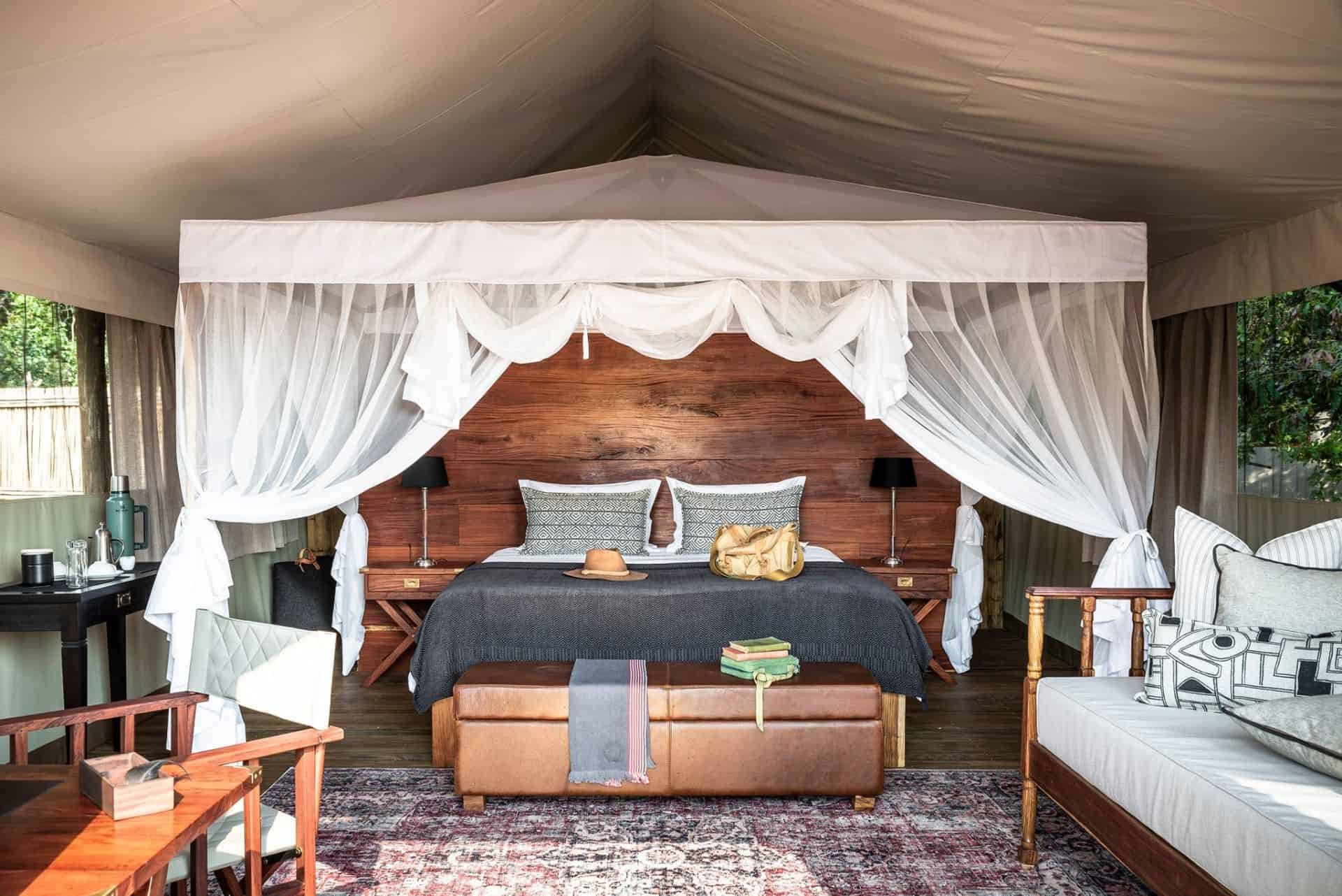
Where the Valley Thins Out: Sungani's Southern Position
South Luangwa National Park concentrates most of its lodge infrastructure around Mfuwe, the gateway hub where the airstrip lands and the majority of the valley's visitor traffic moves. Travel south along the Luangwa River, however, and the crowd thins rapidly. The southern reaches of the park carry a different character: fewer vehicles on game drives, longer stretches between lodges, and a wilderness corridor that sees a fraction of the foot traffic compared to the central zone. It is here that Sungani Lodge was established by the Davy family, beginning construction in early 2019 with a local crew and a mandate to work with the land rather than impose on it. For context on how this property sits within the broader Zambia safari market, our full Luangwa restaurants and lodges guide maps the valley's accommodation spectrum from budget bush camps to full-service luxury operations.
Design as Intent: How Sungani Was Built
The design logic at Africa's smaller, owner-operated lodges tends to fall into two camps: the aesthetic-first property that imports materials and furniture, and the community-rooted build that uses local craftsmanship as both a practical and philosophical choice. Sungani belongs firmly in the second category. Construction drew on local artisans, and the interiors reflect a deliberate alignment between visual language and place. The suites overlook a lagoon that functions as a natural wildlife corridor, with hippos and elephants moving through the water in front of the accommodation. Birdlife in the Luangwa Valley is among the densest in southern Africa, and the lagoon setting amplifies that access considerably.
The design ambition here is not to replicate the dramatic, architect-signature approach seen at properties like Amangiri in Canyon Point or the palazzo grandeur of Aman Venice. Instead, Sungani operates in a smaller, more intimate register where the architecture earns its authority through restraint and material honesty. Spacious suites are appointed with what the lodge describes as luxury interiors, though the emphasis is placed on the view and the ecological context rather than on interior spectacle for its own sake.
The Family-Run Tier: What It Means in Practice
Premium safari market in Zambia has divided into two broad peer sets over the past decade. One group comprises the properties affiliated with large conservation brands and international operators, where standardisation of service and consistent brand identity take priority. The other is a smaller cohort of genuinely family-owned, single-site lodges where the owners are present, the guiding is personal, and the experience is shaped by relationships rather than operational manuals. Sungani sits clearly in the latter group, comparable in model to Lion Camp in Mfuwe or Puku Ridge in South Luangwa National Park, both of which operate with similarly intimate footprints.
Service model at lodges of this type depends heavily on guiding quality. The Davy family has built a team that the lodge describes as delivering exceptional guiding, and in South Luangwa that is a meaningful credential: the park's guides hold some of the most demanding walking safari certifications in Africa, and the valley has a long-standing reputation for producing naturalists of considerable depth. The locally inspired cuisine functions in the same spirit, prioritising produce and preparation methods that reflect the region rather than importing a generic luxury-hotel food programme.
Conservation as Structure, Not Marketing
Among the signals that distinguish serious conservation lodges from those using ecology as a brand theme, one of the clearest is whether the lodge has formalised its commitments into a named programme with ongoing accountability. Sungani operates what it calls the Sungani Promise, a stated long-term commitment covering conservation, community development, and wilderness protection. Each guest stay contributes directly to this programme. This positions Sungani within the same structural approach taken by lodges like Lolebezi in Jeki and Anabezi Camp in the Lower Zambezi, where conservation financing is tied to occupancy rather than treated as a separate charitable function.
Community empowerment is named alongside conservation as a core pillar. In the context of South Luangwa's southern sector, this matters beyond the ethical dimension: lodges that employ locally and invest in surrounding communities tend to operate with greater stability and generate stronger goodwill with the villages whose land borders the park boundary. That relationship has practical consequences for wildlife movement and anti-poaching cooperation that affect the quality of the experience itself.
Planning a Stay: Logistics and Timing
South Luangwa operates a clear seasonal rhythm that should anchor any planning decision for Sungani. The dry season, running roughly from May through October, is when the Luangwa River and its associated lagoons recede and wildlife concentrates around remaining water sources. This is when game viewing in the valley reaches its peak density, and when the lodge's lagoon setting becomes particularly productive. The wet season, from November through April, transforms the landscape and brings exceptional birdlife including significant migrant populations, though road access to the southern sector requires a higher-clearance approach and some itineraries become fly-in only.
Access to South Luangwa's remote southern reaches typically involves flying into Mfuwe Airport and then transferring by road or light aircraft to the lodge, depending on season and road conditions. Sungani is a small, intimate property, which means availability is limited and the lodge rewards early planning. Travellers accustomed to booking six to twelve months in advance at comparable intimate lodges should apply the same lead time here. The lodge does not list public booking channels or a dedicated website in current directories, so contact through a specialist Africa safari operator is the practical route. For comparison on how other Zambia lodges structure their bookings, the Anantara Kafue River Tented Camp and Mukwa River Lodge in Livingstone both use operator networks with similar advance-booking norms.
For readers comparing Sungani against the broader spectrum of design-led lodges with conservation credentials internationally, the analogy is less to large-format properties like Mandarin Oriental Bangkok or Cheval Blanc Paris and more to owner-operated estates where access is deliberately constrained, such as Castello di Reschio in Lisciano Niccone, where limited keys and a family vision produce a materially different experience from a branded hotel operation.
Comparable Venues
Comparable venues nearby, for context on price, style, and recognition.
| Venue | Cuisine | Price | Awards | Notes |
|---|---|---|---|---|
| Sungani LodgeThis venue (the venue you are viewing) | Understated luxury safari camp blending natural textures with elegant, sustainable design on polished decking. | $1,000–1,500 | Virtuoso Luxury Hotel Partner | Not listed |
| Anabezi Camp | luxury tented safari camp | $1,000–1,500 | World Travel Awards | Lower Zambezi National Park |
| Chichele Presidential | Contemporary luxury safari lodge honoring mid-century presidential heritage with tall arches and expansive decks. | $1,500–2,500 | Travel + Leisure It List Hotels | South Luangwa National Park |
| Puku Ridge | Wilderness refined: contemporary luxury safari lodge blending canvas, thatch, and natural materials with local artworks and sustainable design principles. | Not listed | World Travel Awards | South Luangwa National Park |
| Anantara Kafue River Tented Camp - Virtuoso Preview | Contemporary African luxury safari camp blending modern architecture with natural materials and locally-sourced design elements inspired by the river landscape. | $2,500+ | Virtuoso Luxury Hotel Partner | Kafue National Park |
| Lolebezi | contemporary luxury safari lodge | Not listed | Conde Nast Best Resorts #31 | Lower Zambezi National Park |
Recognition history
Dated appearances from independent guides and award organizations, with the underlying list record or original source where available.
Virtuoso Luxury Hotel Partner
Virtuoso
Details
- Romantic
- Quiet
- Scenic
- Rustic
- Elegant
- Intimate
- Honeymoon
- Romantic Getaway
- Anniversary
- Panoramic View
- Waterfront
- Wi Fi
- Pool
- Fitness Center
- Room Service
- Concierge
- Laundry Service
- Restaurant
- Waterfront
- Garden
- Wheelchair Accessible
Relaxed, tranquil atmosphere with al fresco dining, cozy lounging areas blending into wildlife views from the lagoon, evoking deep calm and serenity under African stars.