
World Luxury Hotel Awards WLHA Global Winner
Lion Camp sits inside South Luangwa National Park and holds the Global Winner award for Luxury Safari Lodge, placing it at the top tier of African bush accommodation. The camp's open-sided tented architecture dissolves the boundary between interior space and the floodplain beyond, where elephant and lion move through at close range. For travellers routing through Mfuwe, it represents the benchmark against which other Luangwa camps are measured.
Where the Architecture Yields to the Bush
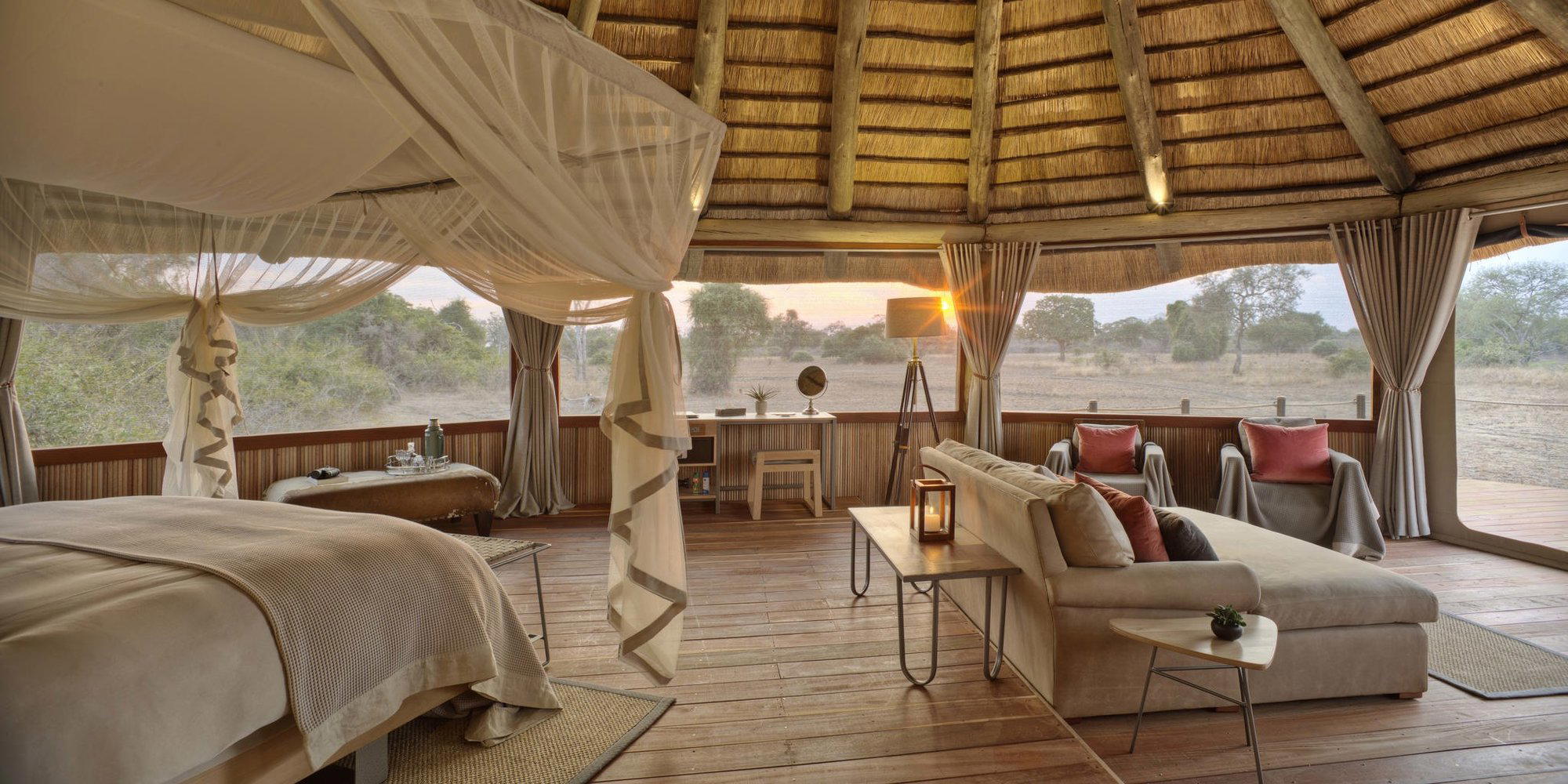
South Luangwa is one of the few national parks in Africa where the distinction between a camp and its surrounding wilderness is genuinely negotiable. The Luangwa River's seasonal flooding shapes the terrain into open floodplains and oxbow lagoons, and the camps that work leading here are the ones that treat those conditions as a design brief rather than an obstacle. Lion Camp belongs firmly to that school of thinking. Its open-fronted tented structures face directly onto the floodplain, removing the usual mediation of glass and walls between the guest and the animals that move through at night.
That physical openness is the defining design decision, and it carries a consequence: the camp operates at a level of immersion that more enclosed properties cannot replicate. Mesh and canvas replace solid partitions. The sounds of the bush are not ambient background noise piped in for atmosphere; they are the actual sounds of the actual bush, unfiltered. In a category where so many properties manufacture the sensation of wildness from a position of careful distance, Lion Camp's structure makes a different argument entirely.
The Luangwa Context: A Park That Rewards Specialist Properties
South Luangwa has one of the highest concentrations of leopard of any park in Africa, and it pioneered the walking safari as a formal guiding discipline. The park's reputation among serious safari travellers is built on depth of wildlife experience rather than the five-species checkbox approach that drives itineraries in more frequently visited East African circuits. That context matters when assessing what a camp here is actually selling.
The top tier of Luangwa accommodation has consolidated around a relatively small number of properties that prioritise guiding quality, low guest numbers, and physical proximity to wildlife corridors. Each property makes a distinct spatial argument; Lion Camp's case rests on the directness of its relationship with the floodplain.
For context on the wider Zambian safari circuit, Anabezi Camp in Lower Zambezi National Park and Anantara Kafue River Tented Camp in Kafue represent comparable premium tiers in different ecosystems, while Lolebezi in Jeki and Mukwa River Lodge in Livingstone cover the southern Zambia arc for travellers building multi-camp itineraries. Sungani Lodge in Luangwa rounds out the valley options for those wanting to compare properties across the same river system.
Design Philosophy: Earned Comfort, Not Performed Luxury
The luxury safari category has split in recent years between properties that layer amenities onto a bush setting and those that treat environmental integration as the primary luxury. The former approach produces camps that feel like resort hotels that happen to be located near wildlife; the latter produces spaces where the design itself delivers the experience. Lion Camp falls into the second category.
This distinction matters because it shapes every spatial decision. Tent footprints, deck orientation, the placement of common areas relative to animal paths, the use of local materials and natural tones that read as continuity with the terrain rather than contrast to it: these are the architectural choices that determine whether a guest feels inside the ecosystem or adjacent to it. At the premium end of the Luangwa market, that integration is the differentiator, more so than thread counts or cellar depth.
The Global Winner award for Luxury Safari Lodge is a verifiable credential that places Lion Camp within the uppermost tier of the category globally, comparable in validation weight to properties across the world that hold equivalent recognition. Travellers who use awards as a navigation tool for safari selection will find Lion Camp consistently referenced in that context, alongside properties in peer markets where design-led integration defines the proposition.
Practical Planning
Lion Camp is located inside South Luangwa National Park, accessed via Mfuwe Airport (MFU), which receives scheduled light aircraft services from Lusaka. The park's main season runs from June through October, when the dry conditions concentrate wildlife around remaining water sources and game viewing reaches its highest density. The wet season, from November through April, brings different conditions: lush vegetation, migratory birds in volume, and significantly fewer guests. Some camps in the valley close during the deepest wet months; confirming Lion Camp's specific operational calendar before booking is advisable.
Given the award profile and the positioning of the property within the top tier of the Luangwa market, allocation is limited and forward planning of several months is standard practice for peak-season travel. The Mfuwe area has a structured set of options at various price points and styles; our full Mfuwe restaurants guide covers the broader destination context for travellers planning time in the valley.
For travellers comparing Lion Camp against the global luxury accommodation spectrum, properties like Amangiri in Canyon Point and Castello di Reschio in Lisciano Niccone offer useful reference points for design-led properties that treat their physical environment as the primary material. The argument Lion Camp makes with open canvas and floodplain sightlines is structurally similar to the argument those properties make with desert rock formations and Umbrian hillsides: that the architecture should not compete with the setting, but dissolve into it. Other properties across the EP Club portfolio that operate in this mode include Hotel Esencia in Tulum and Aman Venice in Venice, each of which subordinates the built environment to a more powerful natural or historical context. At the urban end of the spectrum, Cheval Blanc Paris, La Réserve Paris, and Le Bristol Paris represent the opposite design logic: architecture as the experience itself, rather than architecture in service of landscape.
In Context: Similar Options
| Venue | Price | Awards |
|---|---|---|
| Lion CampThis venue (the venue you are viewing) | Not listed | World Luxury Hotel Awards WLHA Global Winner |
| Mfuwe Lodge, the Bushcamp Company | $500–750 | Not listed |
| Anantara Kafue River Tented Camp - Virtuoso Preview | $2,500+ | Virtuoso Luxury Hotel Partner |
| Lolebezi | Not listed | Conde Nast Best Resorts #31 |
| Mukwa River Lodge | Not listed | Virtuoso Luxury Hotel Partner |
| Puku Ridge | Not listed | World Travel Awards |
Recognition history
Dated appearances from independent guides and award organizations, with the underlying list record or original source where available.
World Luxury Hotel Awards WLHA Global Winner
World Luxury Hotel Awards
Details
- Scenic
- Elegant
- Rustic
- Intimate
- Romantic
- Honeymoon
- Romantic Getaway
- Celebration
- Panoramic View
- Private Villa
- Pool
- Wi Fi
- Bar
- Laundry Service
- Fitness Center
- Waterfront
Safari-chic with cozy private nooks, warm firepit gatherings, stylish thatched interiors, and magical stargazing from private decks.