
1 Michelin Key
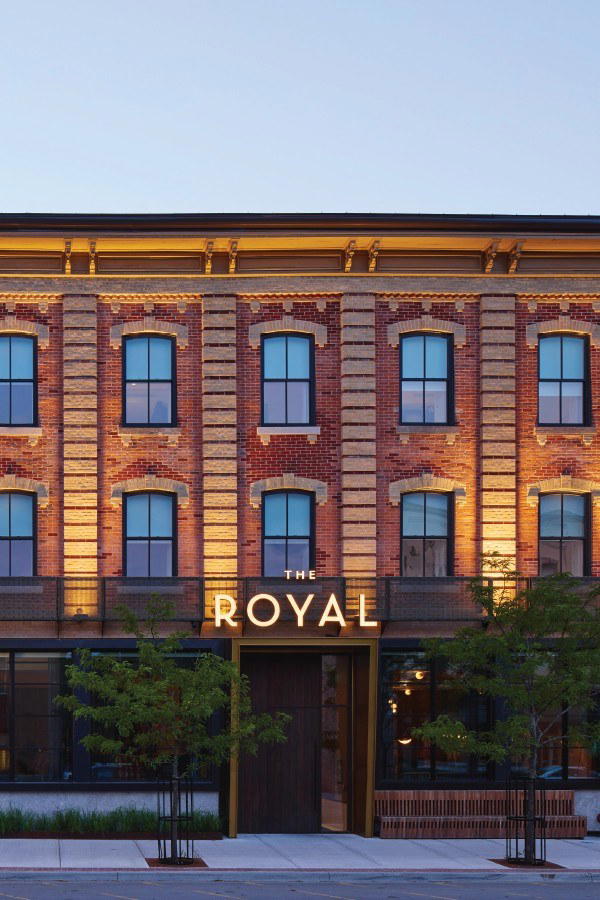
A Michelin Key-awarded heritage hotel in Picton's Prince Edward County wine country, The Royal Hotel occupies a restored 150-year-old red-brick railroad building with 33 rooms priced from $296 per night. Farm-to-table dining anchored to local County wines, a spa, sauna, and seasonal outdoor pool round out a property that signals the region's arrival as a serious short-haul destination for Toronto-area travellers.

Pearl is the En Primeur Club membership app — saves, bookings, and concierge access live there. Same editors, same standards.
- Address
- 247 Picton Main St, Picton, ON K0K 2T0
- Phone
- (613) 961-2600
- Website
- theroyalhotel.ca
- Directions
- Get directions
A Railroad Hotel Reborn in Canada's Wine Country
Picton's main street has the quietly prosperous feel of a town that knows something good is happening to it. The red-brick Royal Hotel sits on that street as the most visible evidence of Prince Edward County's transformation from agricultural backwater to one of Ontario's most compelling short-haul destinations. The building dates to the 1870s, constructed when Picton warranted the kind of grand railroad hotel that signalled civic importance. It nearly didn't survive into the present century. The redevelopment that rescued it belongs to a broader wave of heritage-property revivals in Canadian wine regions, where the arrival of serious tourism infrastructure has required lodging that matches the ambition of the surrounding food and wine scene.
That wave has produced a specific type of property across the country: restored historic buildings given contemporary interiors, positioned to serve guests who arrive primarily to eat and drink well. The Royal sits comfortably in that category.
The Dining Programme: Farm-to-Table in a County That Earns the Label
Farm-to-table cooking is a phrase so overused in contemporary hospitality that it has nearly lost meaning. In Prince Edward County, it retains more substance than in most places. The County's geography, a limestone peninsula jutting into Lake Ontario, produces a growing season short enough to concentrate flavour and a community of small producers who have oriented themselves toward quality rather than volume. The Royal's dining programme draws on that producer network as a point of genuine emphasis rather than menu decoration.
The editorial case for the County's food scene rests on the same conditions that make its wine credible: a terroir with real character and a generation of growers and chefs who arrived specifically because those conditions existed. The Royal's kitchen sits inside that ecosystem. Guests eating here are, in effect, eating the argument for why Prince Edward County matters as a destination, not merely as a weekend escape from Toronto. For a fuller picture of where to eat beyond the hotel, our full Picton restaurants guide maps the County's dining scene with the same rigour.
The wine programme carries equal weight. Prince Edward County's Chardonnay and Pinot Noir have earned serious attention in the past decade, with producers operating in a Burgundian vein that distinguishes the region from Niagara's broader commercial output. A hotel dining room that anchors its list to local producers is making a curatorial argument: that the County's wines are worth choosing on merit. At the Royal, that argument is built into the property's identity rather than appended as an afterthought.
Heritage Structure, Contemporary Comfort
Victorian railroad hotels were built to impress arriving passengers, which means the Royal's red-brick exterior is genuinely architectural rather than merely old. The redevelopment preserved that character while fitting the interior with high-end modern comforts, a combination that the better heritage hotel revivals manage without erasing what made the building worth saving in the first place. The 33 rooms sit at a scale that keeps the property from feeling institutional: large enough to run a proper spa and a seasonal outdoor pool, small enough that repeat guests expect to be recognised.
The spa and sauna provision matters in this context. Prince Edward County operates as a multi-night destination for visitors who come to cycle between wineries, eat at a succession of farm kitchens, and decompress from urban schedules. A hotel that can offer proper recovery infrastructure alongside its dining programme holds a practical advantage over properties that treat amenities as secondary. The seasonal outdoor pool is an asset in a region where summer weekends book out well in advance, and where guests arriving in July or August are as likely to be spending the afternoon on hotel grounds as they are exploring the County's back roads.
Where the Royal Sits in the Picton Lodging Picture
Picton's lodging options have expanded considerably alongside the County's wine tourism growth, but the Royal occupies a specific tier. At $296 per night and with Michelin Key recognition, it pitches directly at guests who are choosing a destination hotel rather than a base camp. The comparison is not with budget County accommodation but with properties elsewhere in Ontario that offer similarly integrated food, design, and heritage credentials. Merrill House offers the closest local comparison, operating with a similarly curated approach on a comparable scale. The Drake Motor Inn in Prince Edward serves a younger, more casual segment of the same visitor base.
For guests coming from Toronto, the Royal competes not just with other County properties but with the decision of whether to stay in the city at a property like the Four Seasons Hotel Toronto or make the roughly two-and-a-half-hour drive to a destination experience. The Michelin Key signals that the Royal has passed the threshold where that trade-off makes sense on hospitality grounds alone, not just on the basis of countryside scenery.
Further afield, the Canadian heritage-hotel revival that the Royal belongs to includes properties as varied as Fogo Island Inn in Joe Batt's Arm, Manoir Hovey in North Hatley, and Le Germain Charlevoix Hotel & Spa in Baie-St-Paul, each operating on the logic that a building with genuine history, embedded in a place with genuine character, can earn its own category. The Royal makes that argument in Ontario's most convincing wine-country setting.
Planning Your Stay
The Royal Hotel is located at 247 Picton Main St, Picton, ON, placing it in walking distance of the town's main commercial strip. Rooms start at $296 per night across 33 rooms, and given the County's increasingly compressed summer booking window, advance reservation is advisable for July and August visits. The spa and seasonal outdoor pool are on-site. Prince Edward County's harvest season, running roughly late September through October, brings a separate wave of visitors and is worth considering for guests whose interest centres on wine rather than summer recreation.
Frequently Asked Questions
What is The Royal Hotel known for?
The Royal Hotel holds a 2024 Michelin Key, which positions it among Ontario's recognised small luxury properties. It is known primarily for its farm-to-table dining programme anchored to Prince Edward County producers, its wine list built around local County labels, and its heritage red-brick building dating to the 1870s. At $296 per night across 33 rooms, it functions as the County's reference point for destination-standard lodging. For broader context on the area's food and drink scene, see our full Picton restaurants guide.
Is The Royal Hotel more low-key or high-energy?
Royal operates at a considered pace that reflects Prince Edward County's character rather than a resort or urban-hotel energy. The 33-room scale, Michelin Key recognition, and emphasis on local food and wine signal a property oriented toward guests who come to eat, drink, and decompress rather than to be entertained. Expect a dining room with genuine culinary ambition and a social atmosphere that runs quiet on weeknights and livelier on summer weekends, when County tourism peaks. Priced from $296, it attracts a guest profile that prioritises quality over spectacle.
Which room category should I book at The Royal Hotel?
With 33 rooms and Michelin Key-level positioning, the Royal's inventory is limited enough that early booking matters more than category selection in peak season. The heritage structure means rooms will vary in configuration, and the property's design approach, contemporary comfort within a Victorian shell, applies across the board. Guests prioritising outdoor access should note the seasonal pool. Those visiting for the dining programme have it built into the property regardless of room type. At the $296 starting rate, the entry point already reflects the hotel's overall standard.
Do I need a reservation for The Royal Hotel?
For rooms, advance booking is advisable, particularly for summer weekends and the October harvest season when Prince Edward County visitor numbers peak and the Royal's 33-room inventory fills quickly. The Michelin Key recognition has raised the property's profile beyond the regional visitor base, which has tightened availability relative to a few years ago. The hotel sits at 247 Picton Main St; the most reliable booking route is through the hotel's direct channels.
Pricing, Compared
Comparable venues nearby, for context on price, style, and recognition.
| Venue | Price | Awards | Notes |
|---|---|---|---|
| The Royal HotelThis venue — the venue you are viewing | $300–500 | 1 Michelin Key | Not listed |
| The June Motel Picton | Not listed | Michelin Selected | Picton, Hip boutique motel renovated from old roadside property |
| Merrill House | $100–200 | 1 Michelin Key · Mr & Mrs Smith Seal of Approval | Picton historic neighbourhood, Restored historic mansion with individually designed suites blending antiques, global artifacts, and modern luxury. |
| Ace Hotel Toronto | $100–200 | 1 Michelin Key · Mr & Mrs Smith Seal of Approval | Fashion District, Boutique design hotel blending local Canadian artistry with modern minimalism in Toronto's creative core. |
| Hotel Le Germain Montreal | $300–500 | 1 Michelin Key | Golden Square Mile, Upscale boutique hotel in a renovated historic bank building |
| Fairmont Chateau Laurier Gold Experience | Not listed | 1 Michelin Key | ByWard market, Castle-like heritage luxury hotel with modern revitalization |
Recognition history
Dated appearances from independent guides and award organizations, with the underlying list record or original source where available.
Michelin 1 Key
Michelin
Full recognition history (3 entries)
Michelin 1 Key
Michelin
Michelin 1 Key
Michelin
Continue exploring
More in Picton
Hotels in Picton
Browse all →
Restaurants in Picton
Browse all →
Wineries in Picton
Browse all →
Details
- Elegant
- Modern
- Romantic
- Sophisticated
- Romantic Getaway
- Wellness Retreat
- Anniversary
- Weekend Escape
- Celebration
- Destination Spa
- Garden
- Terrace
- Historic Building
- Design Destination
- Wi Fi
- Spa
- Fitness Center
- Pool
- Restaurant
- Bar
- Concierge
- Room Service
- Parking
- Sauna
- Garden
- Street Scene
- Wheelchair Accessible
- Accessible Parking
- Step Free Entrance
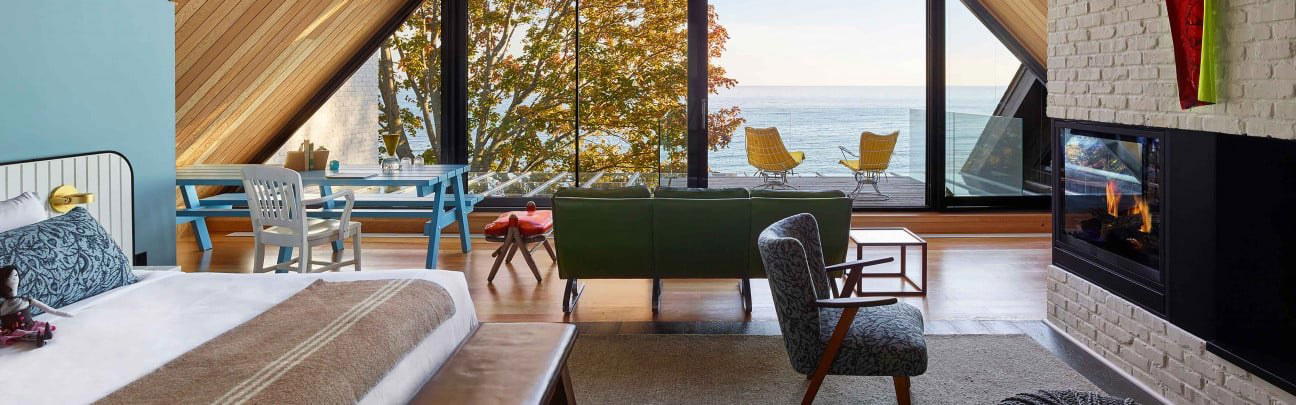
Modern, calm, and impeccably designed interiors with warm, inviting dining spaces; light-filled rooms with contemporary elegance blended with heritage charm.