The Namkhan

Positioned along the Nam Khan River on the edge of Luang Prabang, The Namkhan sits within jungle-covered terrain where the Nam Khan meets the Mekong. The property brings together river setting, local heritage, and a pace calibrated to the rhythms of northern Laos, placing it firmly in the slower, nature-oriented tier of the city's accommodation options.
 Discover on Pearl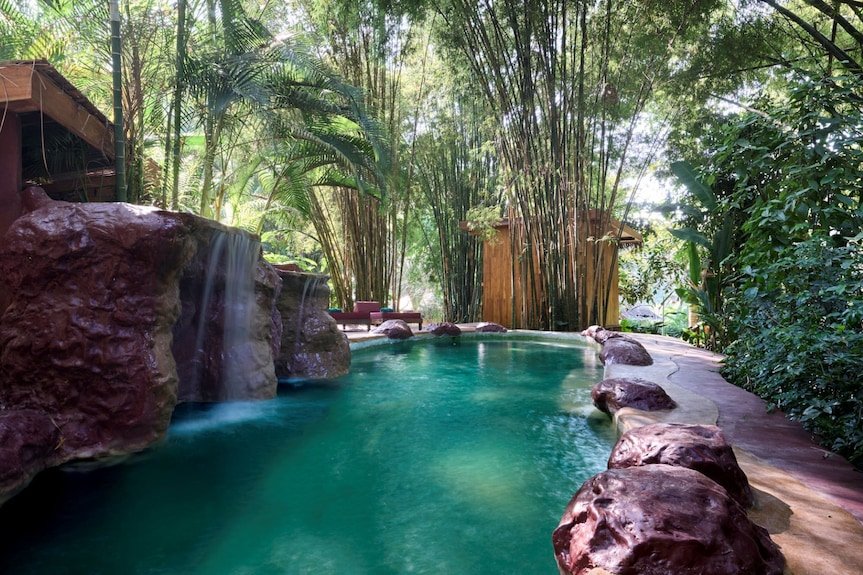
Where Two Rivers Shape the Experience
Luang Prabang's hotel scene has separated into two distinct registers over the past decade. On one side sit the urban colonial-quarter properties, close to the night market and the main temple circuit, trading on walkability and heritage architecture. On the other sits a smaller group of river-oriented retreats that position distance from the centre as a feature rather than a drawback. The Namkhan belongs to the second category, occupying a stretch of land in Ban Don Keo Village where the Nam Khan River bends through jungle-covered hills before meeting the Mekong a few kilometres downstream. That confluence, one of the most historically significant in mainland Southeast Asia, frames the entire logic of staying here.
The Mekong-Nam Khan confluence is not incidental scenery. Luang Prabang was built around it. The point where the two rivers meet has anchored trade routes, religious processions, and the city's founding mythology for centuries. Guests at The Namkhan are lodging closer to that geography than most of the city's central properties allow, and that proximity shapes the texture of a stay in ways that arrive gradually rather than immediately.
The Luang Prabang Context
For travellers comparing options across the city's premium tier, the reference points matter. Amantaka, which holds a Michelin Key designation, occupies a restored colonial hospital in the historic quarter and operates as the city's most recognised address in terms of international awards recognition. Rosewood Luang Prabang positions itself at the edge of town with a heavy emphasis on design and a higher-price-bracket experience. La Résidence Phou Vao sits on an refined hilltop site and draws on a longer tenure in the city's luxury hospitality story. The Namkhan operates in a quieter register than all three, drawing its identity from the river environment rather than from architectural statement or international brand association.
That positioning is consistent with a broader pattern seen across Southeast Asian boutique properties. Smaller-footprint, nature-oriented retreats have built a durable niche by offering proximity to landscape over proximity to amenity clusters. Where properties like Hotel Esencia in Tulum or Castello di Reschio in Lisciano Niccone use landscape isolation as a selling argument, The Namkhan applies the same logic to a river-valley context in northern Laos, where the surrounding hills carry dense canopy and the pace of daily life on the water sets the baseline rhythm for a stay.
The Dining Programme
Laotian cuisine occupies an under-recognised position in the broader Southeast Asian culinary conversation. While Thai and Vietnamese traditions have been extensively documented and exported, Lao cooking, with its emphasis on fermented fish paste, sticky rice as a daily staple, fresh herb assemblies, and river fish prepared with minimal intervention, remains largely experienced in situ. Properties in the Luang Prabang area that take their food programming seriously have an opportunity to give guests access to this tradition in a way that the city's independent restaurant scene, catalogued separately in our full Luang Prabang restaurants guide, only partially delivers.
The physical environment of a riverside retreat inflects the food experience in specific ways. Meals taken on or near water in this part of Laos follow patterns established by the river communities themselves: fresh catches prepared the same day, produce arriving from village markets upstream, and a kitchen logic oriented around what the season and the river produce rather than what a static menu dictates. This is the dining tradition that properties with direct river access can draw on most authentically, and it represents a meaningful departure from the hotel dining programmes found at urban-quarter properties in the city.
For the broader reference, hotel dining programmes in comparable nature-oriented retreats across Asia have moved firmly away from hybrid international menus toward deeper engagement with local culinary tradition. Properties like HOTEL THE MITSUI KYOTO or Casa Maria Luigia in Modena demonstrate how a strong regional culinary identity embedded in the food programme becomes a primary differentiator rather than a secondary amenity. At The Namkhan, the geographic specificity of the setting, river, jungle, confluence, gives a well-executed food programme a natural anchor that more generic properties have to work harder to manufacture.
Getting There and Planning Your Stay
The property sits in Ban Don Keo Village, a few kilometres from central Luang Prabang along the Nam Khan. The nearest international air access is Luang Prabang International Airport, which receives regional flights from Bangkok, Chiang Mai, Hanoi, and Vientiane, making the city direct to reach from most Southeast Asian hub airports. Ground transfer from the airport to the Ban Don Keo area is manageable by tuk-tuk or private vehicle, with journey times dependent on river road conditions, particularly in wet season months when roads adjacent to the Nam Khan can be affected by water levels.
Timing a visit to Luang Prabang involves a trade-off familiar to any river destination. The cool dry season, running broadly from November through February, delivers clear skies, lower humidity, and the most comfortable temperatures for outdoor movement and morning alms-giving observation. The green season, from May onwards, brings heavier rainfall but also the most intensely lush version of the jungle-covered hillscape that defines the property's immediate environment. Travellers choosing The Namkhan for its nature setting may find the green-season version of the landscape more visually rewarding, even as logistics require more planning. For a broader orientation to what the city offers across all categories, our full Luang Prabang hotels guide, bars guide, wineries guide, and experiences guide cover the full city picture.
For international context on how river-adjacent luxury properties position against urban flagship hotels, the comparison is instructive. Properties like Aman Venice, Cipriani in Venice, or Hotel Bel-Air in Los Angeles all demonstrate that physical separation from urban density, when paired with a coherent natural setting, commands a premium precisely because it delivers something the city centre cannot replicate. The Namkhan operates in that same logic at a price point and in a context specific to northern Laos, where the river setting carries cultural weight that extends well beyond the aesthetic.
Frequently Asked Questions
- What is the main draw of The Namkhan?
- The property's principal asset is its position along the Nam Khan River, a few kilometres upstream from where the Nam Khan meets the Mekong. That confluence carries deep significance in Luang Prabang's history and geography, and the jungle-covered hillscape surrounding the site delivers the kind of natural immersion that the city's central colonial-quarter properties cannot offer by definition. The retreat's overall character, peaceful, river-oriented, removed from urban movement, is the primary reason guests choose it over the city's better-known addresses.
- What is the most popular room type at The Namkhan?
- Specific room-type booking data is not available in our current records for The Namkhan. Given the property's river and jungle setting, accommodation facing the Nam Khan would logically represent the most sought-after configuration, consistent with the pattern seen at comparable nature-retreat properties across Southeast Asia where water-facing rooms carry both a premium and a longer booking lead time.
- Can I walk in to The Namkhan?
- Walk-in availability at boutique river retreats in this part of Laos is not reliable, and The Namkhan's Ban Don Keo Village location means it sits outside the foot-traffic zone of central Luang Prabang. Advance booking is the standard approach for properties in this category. Contact and booking details are not currently held in our database; checking directly with the property or through a specialist travel agent familiar with the Luang Prabang area is the practical path for securing a reservation.
Budget Reality Check
These are the closest comparables we have in our database for quick context.
| Venue | Price | Awards | Notes |
|---|---|---|---|
| The Namkhan | Encircled by jungle-covered hills and the meandering Nam Khan River, The Namkhan… | This venue | |
| Amantaka | Michelin 1 Key | Michelin 1 Key | |
| La Résidence Phou Vao, Luang Prabang | |||
| Rosewood Luang Prabang |
Preferential Rates?
Our members enjoy concierge-led booking support and priority upgrades at the world's finest hotels.
Get Exclusive Access