La Résidence Phou Vao, Luang Prabang

Positioned on a hillside above Luang Prabang's temple district, La Résidence Phou Vao earned 92.5 points in the 2026 La Liste Top Hotels ranking, placing it among a small group of properties in Southeast Asia that combine colonial-era architecture with Lao design sensibility. The address on Phu Vao Road puts the city's UNESCO-protected core within reach while keeping the property at a remove from its foot traffic.
 Discover on Pearl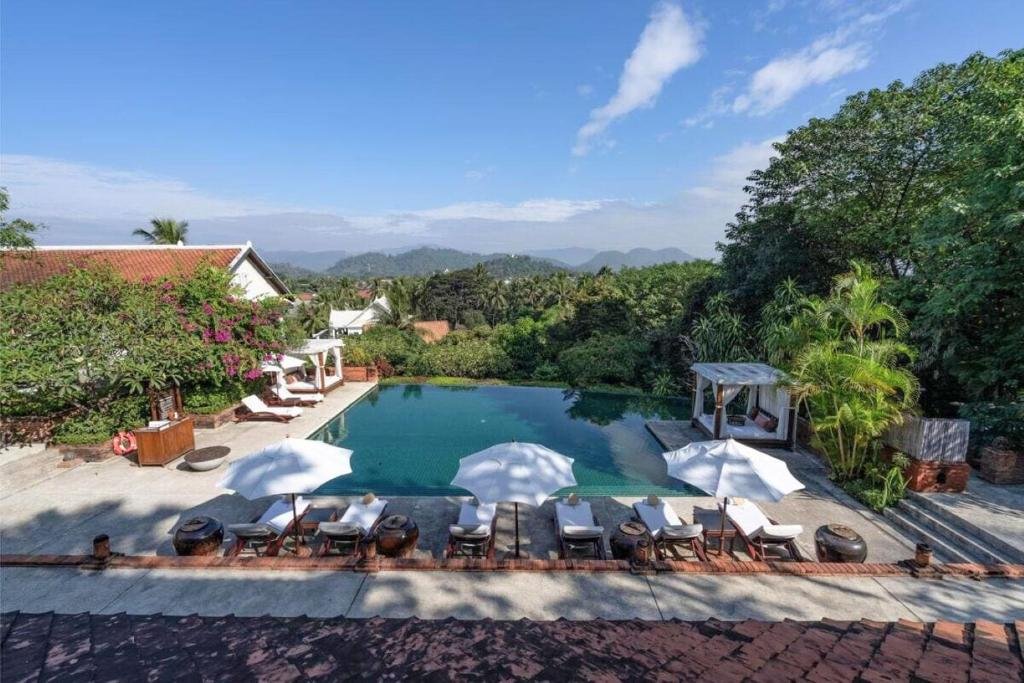
A Hill Property in a City That Rewards Elevation
Luang Prabang's premium hotel market has split cleanly in recent years. One cohort belongs to large international names with global reservation infrastructure: Amantaka holds its Michelin Key recognition and operates at the leading of that tier. A second cohort, smaller and less branded, occupies hillside or riverside sites where the physical setting does the work that a famous name might otherwise do. La Résidence Phou Vao sits in this second category, on Phu Vao Road above Naviengkham Village, at an elevation that makes the property feel detached from the street-level density of the old town without being far from it.
That separation matters in Luang Prabang. The city's UNESCO World Heritage designation protects its architectural fabric but also concentrates visitors inside a compact peninsula formed by the Mekong and the Nam Khan rivers. Properties positioned above or outside that core offer a different relationship to the place: quieter mornings, wider sightlines, and a sense that the traveller has found a vantage point rather than simply a bed. La Résidence Phou Vao's hillside address is not incidental to its appeal; it is the primary design decision that shapes everything that follows.
Design Philosophy: Colonial Frame, Lao Interior Logic
Southeast Asian luxury hotel design has cycled through several dominant idioms over the past three decades. The colonial-revival approach — whitewashed facades, pitched roofs, deep verandas — dominated the 1990s. A second wave introduced contemporary minimalism with local material accents. The most considered properties of the current moment tend to work in a third register: colonial or vernacular structure used as an armature for interior decisions that draw on local craft traditions without becoming ethnographic displays of them.
La Résidence Phou Vao operates within that third register. The property's architecture references the French colonial period that shaped Luang Prabang's built fabric between the late nineteenth century and independence, while its interior detailing draws on Lao weaving, woodwork, and material culture. This is an approach that requires genuine editorial restraint: the failure mode is a property where local craft becomes decoration applied over an essentially generic luxury hotel skeleton. The success condition is a property where the structure and the interior language are in conversation with each other and with the place outside the window.
Across Southeast Asia, properties attempting this balance include design-led small hotels in Chiang Mai, Hội An, and Ubud, as well as internationally recognised addresses like Rosewood Luang Prabang and the river-adjacent The Namkhan. Each makes different trade-offs between contemporary comfort and local design integrity. La Résidence Phou Vao's particular trade-off favours the colonial armature as a legible container , recognisable to guests arriving from European or American cities where similar architecture signals a specific class of heritage property.
What the La Liste Score Signals
The 2026 La Liste Leading Hotels ranking awarded La Résidence Phou Vao 92.5 points. La Liste's methodology aggregates editorial sources, guest reviews, and specialist assessments, which means a score in the low nineties typically reflects consistent performance across service, physical condition, and food and beverage rather than a single outstanding dimension. Properties scoring in this range internationally include addresses across multiple price tiers and geographies; the score is a quality floor indicator rather than a ceiling claim.
Within Luang Prabang specifically, a La Liste score of 92.5 places La Résidence Phou Vao in the city's documented upper tier, alongside Amantaka's Michelin Key recognition. These two credentialling systems measure different things , La Liste aggregates holistic hotel experience, while the Michelin Key focuses specifically on the hospitality and lodging dimension , but together they map a small group of Luang Prabang properties that have been assessed and ranked by named international authorities. For a city of Luang Prabang's size, the concentration of credentialled properties is high relative to regional peers, which reflects both the city's UNESCO status and the sustained interest of luxury travellers in what is still one of mainland Southeast Asia's least commercialised historic centres.
For comparison, properties scoring in comparable La Liste ranges in other markets include addresses like Hotel Esencia in Tulum and Casa Maria Luigia in Modena , design-led, independently positioned properties where setting and editorial identity carry significant weight alongside the physical product. The comparison is instructive: these are hotels that attract guests who have already done significant research and are booking on conviction rather than brand familiarity.
The Luang Prabang Context
Luang Prabang's appeal as a hotel destination rests on a specific combination of factors that remains unusual in mainland Southeast Asia. The city is small enough to move through on foot or by bicycle, the alms-giving ceremony at dawn has no real equivalent elsewhere in the region, and the density of temples within the UNESCO core means that cultural engagement is ambient rather than requiring planned excursions. The French colonial streetscape along Sakkaline Road and the night market on Sisavangvong Road give the city a legibility that larger Lao destinations lack.
The practical consequence for hotel choice is that location within or near the UNESCO core matters more in Luang Prabang than in cities where most attractions are accessed by car. Phu Vao Road sits to the southeast of the peninsula, within manageable distance of the old town, which means the elevation advantage does not come at the cost of access. The tradeoff that guests at hillside properties accept is a slightly longer walk or a tuk-tuk ride to the riverfront, offset by the quieter setting and wider views.
Getting to Luang Prabang itself involves either a direct flight from Bangkok, Hanoi, or other regional hubs into Luang Prabang International Airport, or an overland crossing that adds considerable time. The airport is close to the city centre, making arrival logistics direct. High season runs from November through February, when temperatures are cooler and the air is clearer; this is also when demand for properties in the La Résidence Phou Vao tier peaks, and planning several months ahead is advisable. The shoulder months of October and March offer good conditions with slightly reduced pressure on availability.
For broader orientation across the city's dining and drinking options, see our full Luang Prabang restaurants guide, our full Luang Prabang bars guide, and our full Luang Prabang experiences guide. For a complete view of the hotel market across price tiers and styles, our full Luang Prabang hotels guide covers the field. The Luang Prabang wineries guide rounds out the picture for those interested in the region's emerging wine and spirits scene.
Planning Practical Details
La Résidence Phou Vao's address on Phu Vao Road, Naviengkham Village, Luang Prabang 06000 provides the reference point for directions. Booking directly through the property is advisable for guests seeking room-category specifics or stay-length flexibility; for availability across the Luang Prabang market, third-party platforms allow comparison against peers including Amantaka and Rosewood Luang Prabang. For guests building a wider Asia itinerary, the design-led small-hotel category that La Résidence Phou Vao represents has counterparts in other markets: HOTEL THE MITSUI KYOTO in Japan and Castello di Reschio in Lisciano Niccone in Italy represent the same cohort of properties where architectural identity and setting are the primary product, with service and food and beverage organised around rather than ahead of that foundation.
Frequently Asked Questions
A Quick Peer Check
A fast peer set for context, pulled from similar venues in our database.
| Venue | Cuisine | Price | Awards | Notes |
|---|---|---|---|---|
| La Résidence Phou Vao, Luang Prabang | La Liste Top Hotels: 92.5pts | This venue | ||
| Amantaka | Michelin 1 Key | Michelin 1 Key | ||
| Rosewood Luang Prabang | ||||
| The Namkhan |
Preferential Rates?
Our members enjoy concierge-led booking support and priority upgrades at the world's finest hotels.
Get Exclusive Access