





Opened in 1963 and occupying a commanding position on Connaught Road in Central, Mandarin Oriental, Hong Kong has been at the centre of the city's social and commercial life for over six decades. Ranked 41st in the World's 50 Best Hotels (2025) and awarded 99 points by La Liste Top Hotels (2026), it remains a benchmark for how a large-scale luxury hotel can sustain genuine character across 447 rooms, ten food and beverage outlets, and one of Asia's most quietly serious spa programmes.
 Discover on Pearl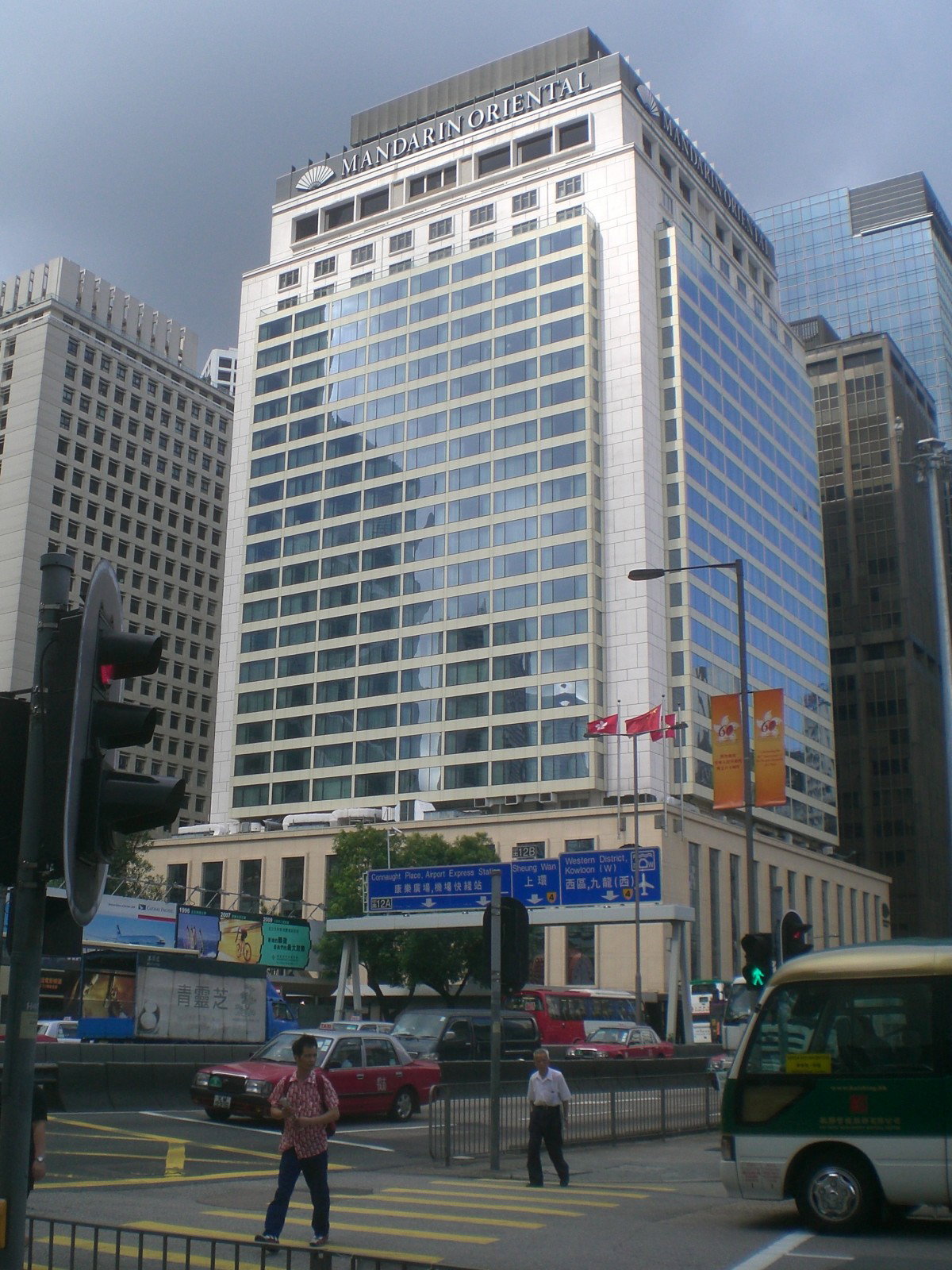
Central's Benchmark, Measured in Six Decades
There is a particular type of city hotel that functions less as accommodation and more as an institution: a place where the social, commercial, and gastronomic life of a metropolis converges under one roof. On Connaught Road in Central, Mandarin Oriental, Hong Kong occupies that role with a distinctiveness that newer arrivals in the market have not displaced. Opened in 1963 and celebrating its 50th year in 2013, the property has outlasted multiple hospitality cycles and, after a thorough interior overhaul that involved walls removed and floors stripped rather than a cosmetic refresh, it now presents rooms that read as contemporary without abandoning the seriousness the address has always carried. The 2025 World's 50 Best Hotels ranking placed it at 41st globally; La Liste awarded 99 points in 2026. Those figures position it comfortably inside the top tier of Hong Kong luxury hotels, alongside properties such as Four Seasons Hotel Hong Kong, Rosewood Hong Kong, and The Peninsula Hong Kong, each of which approaches the question of long-form luxury from a different architectural and operational stance.
The Architecture of the Overnight Stay
The 25-story tower distributes 447 rooms across two distinct design vocabularies, a decision that reflects the hotel's dual identity as both an international destination and a deeply local institution. Veranda rooms convert former balconies into enclosed workspaces, adding usable square footage without altering the building's external profile. The bathrooms in these rooms organise around a central single sink, with a vertical mirror containing an embedded television that rotates to face either the bathtub or the three-headed shower. Taipan rooms take a different material approach: chocolate-hued marble sinks and floors, a wet room combining shower and soaking tub, and a palette that reads more restrained and directional. Neither typology skews toward minimalism for its own sake. Both are larger than they were before the renovation, and both carry Diptyque bath products as standard.
The technology layer is worth noting on its own terms. Flat screens appear in both bedrooms and bathrooms. The lighting systems operate at a level of granularity that most hotels at this price point have not reached. Where the setup matters most is in connectivity: the hotel's IT butler service means that linking devices, configuring streaming, or resolving audio system issues becomes a hotel function rather than a guest problem. For a property in a city that runs on information speed, this is a practical asset rather than a marketing footnote. The in-room experience at the Mandarin Oriental sits closer to the structured, amenity-dense format than to the spare aesthetic adopted by design-first properties like The Upper House, which occupy a different position in the market.
Views follow the building's geography. Harbor-facing rooms command a premium and deliver on the promise; city-facing rooms look over Chater Road and Statue Square, which, given the density and architectural character of Central, represents a worthwhile perspective in its own right. The rooftop M Bar resolves the view question definitively for those who want the full harbor panorama over cocktails and Cantonese tapas, regardless of which room type they have booked.
Ten Outlets and What That Actually Means
The scale of the food and beverage program at a 447-room hotel in a city as food-serious as Hong Kong sets an immediate test. Ten outlets is a number that could represent either a genuine attempt at range or a collection of underperforming spaces filling square footage. At the Mandarin Oriental, the program sustains itself across formats and price tiers. Three Michelin-starred restaurants operate within the same building: Man Wah for regional Chinese cooking, Pierre carrying chef Pierre Gagnaire's approach to contemporary haute cuisine, and the Mandarin Grill + Bar in interiors designed by Sir Terence Conran. That combination under one roof is unusual even by the standards of Hong Kong's luxury hotel sector, where competition for F&B; distinction is structurally high.
The bar program extends the range further. Captain's Bar operates as an after-work institution, serving cold beer in chilled silver mugs to a crowd that has been doing the same thing for decades. The Chinnery holds a whisky list running past 120 labels, which places it in the specialist tier for spirits programming. The Aubrey offers an omakase cocktail format, a structure that has become one of the more reliable signals of serious bar investment in Asian cities over the past five years. See our full Hong Kong bars guide for how these outlets sit within the wider Central drinking scene.
Krug Room operates at the most exclusive end of the spectrum. Seating up to 12 guests behind the hotel's kitchen, it pairs executive chef Robin Zavou's contemporary cooking with what the hotel holds as Asia's largest collection of Krug champagne. Access is deliberately constrained, and the format belongs to the same category of ultra-small-capacity dining experiences now found at a handful of properties globally, from Cheval Blanc Paris to Bvlgari Hotel Tokyo. The Mandarin Cake Shop completes the picture at the informal end: individual cakes across a range of flavors, fresh coffee, hot chocolate, and a retail format that draws both hotel guests and local regulars.
For broader dining context across the city, see our full Hong Kong restaurants guide.
Spa, Fitness, and the Late Hours
The Mandarin Spa draws on a 1930s Shanghai design reference, a choice that creates visual and atmospheric separation from the main hotel aesthetic. The spa operates until 11 p.m. on most days, a practical advantage in a city where late-evening availability is a genuine differentiator. Evening massage bookings, in particular, allow guests to schedule treatments after dinner rather than sacrificing afternoon hours. The fitness centre operates around the clock. The indoor pool uses a counter-current system and carries underwater sound, a specification that moves it beyond the standard hotel pool into a purposeful training or recovery space. These amenities are not incidental: for business travelers and long-stay guests, a spa and fitness offering of this depth reduces the need to maintain external club memberships during a Hong Kong posting.
The Mandarin Salon occupies a specific niche within the hotel's broader wellness offer. Technician Samuel So has developed a following for his Shanghainese pedicure technique, and the waitlist for his appointments is genuine rather than manufactured. This kind of staff-specific reputation is a reasonable indicator of how embedded the hotel is in the life of the city's residents, not only its visitors.
The Mandarin Club and Dress Standards
Club rooms and suites unlock access to The Mandarin Club lounge, which handles private check-in and checkout alongside daily food and drink service running from breakfast through evening canapés with wine, cocktails, and champagne. The structure is consistent with executive lounge models at comparable properties, though the quality of the food program and the overall service standard of the hotel give it more substance than the average loyalty-tier benefit.
The hotel maintains a dress standard that extends through the lobby and restaurants, ruling out flip-flops and casual T-shirts. In a city where many luxury hotels have relaxed this position, the Mandarin Oriental's continued enforcement signals a deliberate positioning decision rather than institutional inertia. It defines the guest experience before the room is even reached.
For planning across the city's hotel options, see our full Hong Kong hotels guide. Other Central-area properties worth comparing include Conrad Hong Kong, Grand Hyatt Hong Kong, and Island, Hong Kong. Internationally, the Mandarin Oriental sits in a peer set that includes properties such as Badrutt's Palace Hotel in St. Moritz, Hotel Bel-Air in Los Angeles, Hôtel de Paris Monte-Carlo, Aman New York, Aman Venice, Amangiri in Canyon Point, Cipriani, A Belmond Hotel, Venice, Castello di Reschio, Casa Maria Luigia in Modena, The Fifth Avenue Hotel in New York City, and Hotel ICON in Hong Kong. For Hong Kong experiences and wine programming, see our full experiences guide and wineries guide.
The property sits at 5 Connaught Road, Central, placing it within walking distance of the MTR and the city's primary financial and commercial addresses. For guests arriving from the airport, the Airport Express to Hong Kong Station connects to Central in under 25 minutes, with the hotel a short taxi or walk from the exit.
Frequently Asked Questions
- What is the main draw of Mandarin Oriental, Hong Kong?
- The combination of a 60-year institutional history with a fully renovated physical plant sets it apart from newer entrants. Ranked 41st in the 2025 World's 50 Best Hotels and awarded 99 points by La Liste in 2026, the hotel operates three Michelin-starred restaurants within the building and a bar program that includes one of Hong Kong's most serious whisky lists and an omakase cocktail format at The Aubrey. For a city where both dining and lodging competition is structurally high, that convergence of credentials in a single address is difficult to replicate.
- What is the most popular room type at Mandarin Oriental, Hong Kong?
- The hotel offers two main room design orientations: Veranda rooms, which feature enclosed former balconies as workspaces and a bathroom with a rotating mirror television, and Taipan rooms, which use dark marble finishes and a wet-room bathroom layout. Both have been fully renovated and carry the same technology and amenity standard. Club rooms and suites of either type add access to The Mandarin Club lounge with private check-in, breakfast, afternoon tea, and evening canapés. Harbor-facing rooms at any tier command a premium and are in higher demand than city-view rooms.
- How far ahead should I plan for Mandarin Oriental, Hong Kong?
- For standard room bookings, lead times vary by season, with major Hong Kong trade fairs and public holidays compressing availability significantly. For dining within the hotel, the Krug Room's 12-seat capacity means reservations should be secured well in advance of arrival, particularly for weekend dates. Appointments with Mandarin Salon technician Samuel So carry a genuine waitlist. For bar access, Captain's Bar and The Chinnery operate without reservations, but The Aubrey's omakase cocktail format may require advance booking during peak periods. The hotel's position in Central means it competes for rooms during the same calendar windows as Four Seasons Hotel Hong Kong and The Peninsula Hong Kong, so treating it as a last-minute option during busy periods is not realistic for the room categories or experiences that matter most.
At-a-Glance Comparison
A small set of peers for context, based on recorded venue fields.
| Venue | Cuisine | Price | Awards | Notes |
|---|---|---|---|---|
| Mandarin Oriental, Hong Kong | La Liste Top Hotels: 99pts | This venue | ||
| Four Seasons Hotel Hong Kong | World's 50 Best | |||
| Rosewood Hong Kong | World's 50 Best | |||
| Conrad Hong Kong | ||||
| Grand Hyatt Hong Kong | ||||
| Island Shangri-La, Hong Kong |
Preferential Rates?
Our members enjoy concierge-led booking support and priority upgrades at the world's finest hotels.
Get Exclusive Access