The Fifth Avenue Hotel





A 153-room NoMad hotel combining a 1907 Renaissance-style structure with a 24-story glass tower, The Fifth Avenue Hotel holds two Michelin Keys, ranks #75 on the World's 50 Best Hotels (2025), and carries a 92-point La Liste rating. Café Carmellini, led by James Beard Award-winner Andrew Carmellini, anchors the dining program alongside the Portrait Bar, one of Midtown South's more considered drinking rooms.
 Discover on Pearl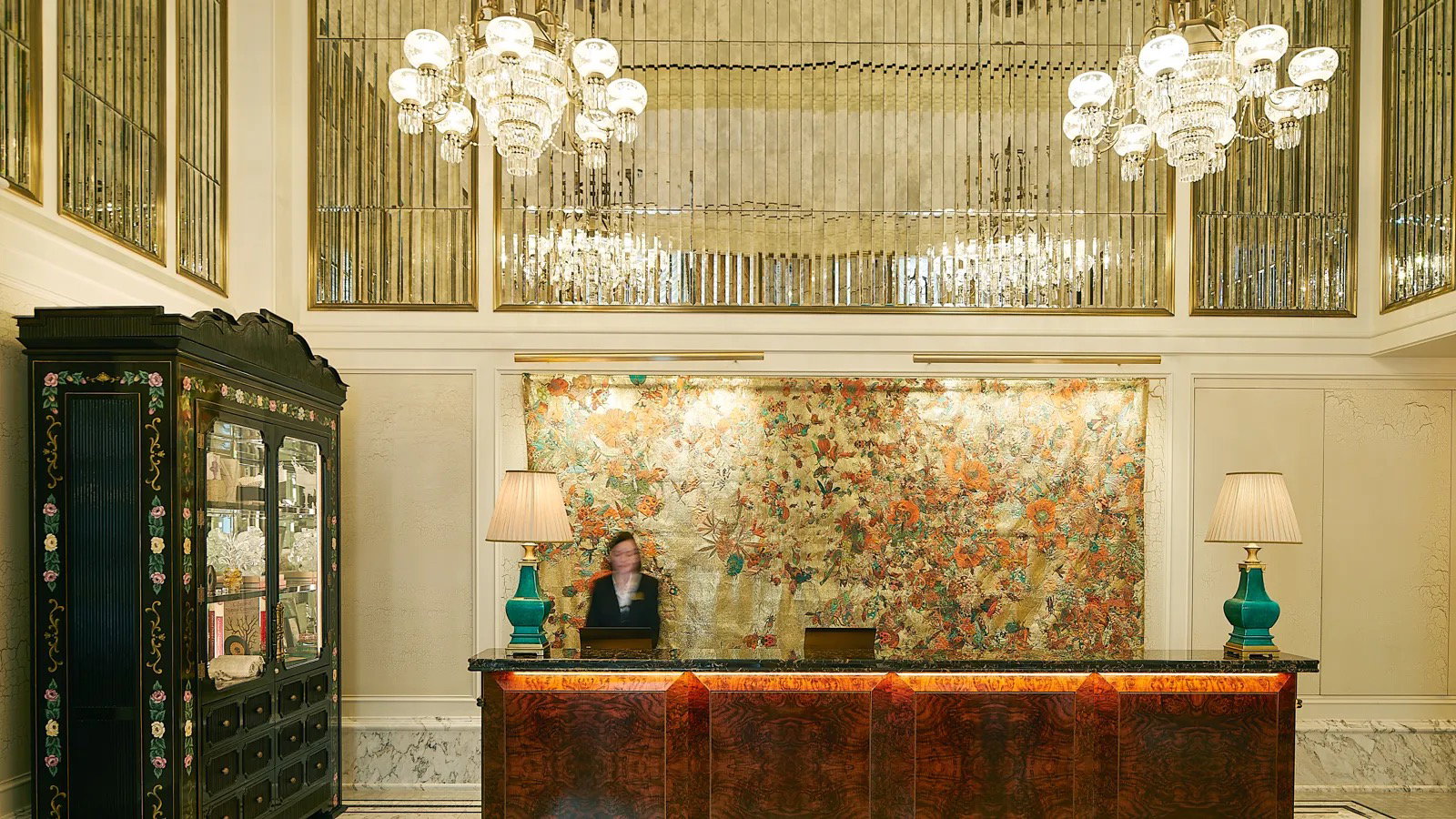
Where NoMad's Gilded Age Ambition Meets Contemporary Hotel Practice
Walk west along 28th Street from Madison Avenue and the building at the corner announces itself through architecture before anything else. The 1907 Renaissance-style facade, designed by the same firm behind the original Pennsylvania Station, reads as a period document of New York's Gilded Age confidence. Above it rises a 24-story glass tower, the addition that brought the property into its current form. The juxtaposition is deliberate: one of the more loaded architectural conversations happening in Manhattan's NoMad neighborhood, where the density of preserved pre-war structures makes every new vertical gesture a statement.
NoMad has spent the better part of a decade consolidating its identity as one of New York's more hotel-dense, food-serious corridors. The neighborhood sits between Flatiron and Midtown South, far enough from Times Square to attract a different kind of traveler, close enough to Chelsea and the Village to function as a genuine base. In that context, The Fifth Avenue Hotel occupies the upper tier of the local competitive set, priced from $1,295 per night and drawing recognition from three separate ranking bodies: two Michelin Keys (2024), a #75 placement on the World's 50 Best Hotels (2025), and a 92-point score from La Liste (2026). That cluster of credentials places it in a peer group that includes Aman New York and The Carlyle, A Rosewood Hotel, though its specific address and architectural DNA give it a character those properties don't share.
The shortlist, unlocked.
Hard-to-book tables, cellar releases, and concierge-planned trips.
Get Exclusive Access →Inside: The End of Manhattan Minimalism
The interior signals its intentions immediately. Designer Martin Brudnizki's approach across the 153 rooms and suites runs counter to the pared-back aesthetic that defined Manhattan luxury hotel design for much of the 2000s and early 2010s. Color returns here in force. Pattern accumulates. The ornament is heavy in the leading historical sense, drawing on the Gilded Age visual language of the building's original era without tipping into pastiche. One suite carries the name of Charles Baudelaire, which gives you a sense of the literary register the property is aiming at. The rooms are fitted with Nespresso machines and Marshall Bluetooth speakers, which keeps the comfort firmly in the present even when the decor conjures a different century.
That tension between historical reference and contemporary function defines much of what makes the property interesting as a design object. It is doing something different from the transparent modernism of The Mark on the Upper East Side, and something different again from the understated SoHo sensibility at Crosby Street Hotel. The ornate-maximalist approach has found its moment: enough hotels stripped their rooms down to concrete and white oak that the pendulum has swung back, and properties that go the other direction now feel genuinely contrarian rather than merely fussy.
The Portrait Bar and Café Carmellini: A Dining Program That Earns Attention
The social architecture of the ground floor matters as much as the rooms in any serious hotel, and this one makes a strong argument on both counts. The Portrait Bar operates as a contemporary riff on the drawing room format: wood-paneled walls, a carved stone fireplace, an eclectic collection of artworks that spans eras without committing to a single period. The drinks program runs under Darryl Chan, whose menu has received attention from New York's cocktail-aware press. For anyone tracking the city's movement from theatrical speakeasy formats toward more considered, ingredient-driven bar programs, the Portrait Bar sits in that latter camp.
Café Carmellini is the restaurant, and it carries real weight in that name. Andrew Carmellini is a James Beard Award-winning chef whose public profile rests substantially on Locanda Verde in TriBeCa, one of the more durable upscale Italian-American restaurants in New York. His presence at this address connects the hotel to a specific tier of serious New York dining, one where the chef's credentials are legible to the audience most likely to be staying here. The restaurant functions as its own destination rather than a hotel convenience, which is the mark of a dining program that actually works. For a fuller picture of the city's restaurant scene and where Café Carmellini sits within it, our full New York City restaurants guide provides the neighborhood-level context.
The Sustainability Angle in a Legacy Building
The environmental calculus at properties that occupy pre-existing structures is genuinely different from that of new builds. Adaptive reuse at this scale, integrating a 1907 masonry structure into a functioning 21st-century hotel, avoids the embodied carbon cost of demolition and full reconstruction. That is a material consideration in a city where building and demolition account for a significant share of total emissions, and it is one that gets underweighted in hotel sustainability conversations that focus primarily on operational metrics like linen reuse and LED retrofits.
The glass tower addition introduces its own thermal management considerations, a challenge any transparent high-rise in a four-season climate faces. Properties genuinely serious about their environmental footprint in this mold tend to focus on HVAC efficiency, sourcing local and seasonal ingredients for their food and beverage programs, and reducing single-use materials throughout operations. The Leading Hotels of the World membership, which this property holds as of 2025, requires adherence to a set of standards that includes sustainability criteria, though the depth of those criteria varies and the membership signal is leading read as a floor rather than a ceiling. For a sharper contrast with hotels that have built sustainability into their core identity from the ground up, properties like 1 Hotel San Francisco or SingleThread Farm Inn in Healdsburg represent a different model, one where the environmental program is the primary editorial statement rather than a supporting credential.
What adaptive reuse does contribute to a broader framework of responsible development is significant regardless of operational particulars. New York's Gilded Age stock of masonry buildings has survived in part because enough owners and developers found uses for them that justified preservation over replacement. Hotels have played a consistent role in that history, from the grand old dame properties of the Upper East Side to the boutique wave that swept through neighborhoods like NoMad in the 2010s. The Beekman in Lower Manhattan represents a comparable case in point, where a landmarked Victorian atrium became the center of a serious hotel operation rather than a vacancy awaiting demolition.
Placing This Property in Its Competitive Set
At $1,295 per night from a 153-room base, The Fifth Avenue Hotel prices at the leading of the NoMad neighborhood tier and competes directly with downtown design-led properties like Casa Cipriani New York and The Whitby Hotel, as well as the SoHo properties clustering around The Greenwich Hotel. The Michelin Key recognition at two levels is notable because the Michelin hotel guide for New York is still relatively young, and two Keys in an early cycle carries real signal weight. The World's 50 Best Hotels ranking at #75 places it in a genuinely competitive global tier, alongside properties like Badrutt's Palace Hotel in St. Moritz and Bvlgari Hotel Tokyo in terms of peer recognition, even if the property categories differ significantly.
For travelers weighing American alternatives at a similar price point, the comparison set widens considerably. Destination resort properties like Amangiri in Canyon Point or Post Ranch Inn in Big Sur offer a completely different proposition: landscape immersion versus urban density. Coastal choices like Four Seasons at The Surf Club in Surfside or the wellness-led Canyon Ranch Tucson push further into specific program territory. The Fifth Avenue Hotel is emphatically a city hotel, built for the traveler who wants access to New York's density as much as a room to sleep in.
Planning Your Stay
The hotel sits at 1 West 28th Street, in the heart of NoMad, within walking distance of both Penn Station and Grand Central, making it logistically sound as a base for arriving from either major rail hub. A Google rating of 4.7 across 144 reviews supports the recognition signals, though the review volume is modest relative to properties with longer track records or broader marketing reach. Booking well ahead is advisable given the property's award visibility and a room count of 153, which keeps demand relatively concentrated. The Leading Hotels of the World membership provides an additional booking channel for travelers who work with that program's benefits. Anyone interested in regional comparisons, particularly properties balancing history with contemporary programming, might also consider Raffles Boston or the farm-to-table seriousness of Troutbeck in Amenia for a different register of the same northeastern luxury conversation.
The shortlist, unlocked.
Hard-to-book tables, cellar releases, and concierge-planned trips.
Get Exclusive Access →Frequently Asked Questions
Awards and Standing
A quick peer snapshot; use it as orientation, not a full ranking.
| Venue | Awards | Cuisine | Notes |
|---|---|---|---|
| The Fifth Avenue Hotel | Michelin 2 Key | This venue | |
| Aman New York | Michelin 3 Key | ||
| The Carlyle, A Rosewood Hotel | Michelin 2 Key | ||
| Pendry Manhattan West | Michelin 2 Key | ||
| Ace Hotel Brooklyn | Michelin 1 Key | ||
| The Ludlow Hotel | Michelin 1 Key |
Preferential Rates?
Our members enjoy concierge-led booking support and priority upgrades at the world's finest hotels.
Get Exclusive AccessThe shortlist, unlocked.
Hard-to-book tables, cellar releases, and concierge-planned trips.
Get Exclusive Access →