Set in the forested highlands above Deshaies on Guadeloupe's Basse-Terre coast, Tendacayou occupies a different register from the island's beachside properties. The address at Matouba La Haut places it at elevation, where the architecture works with the rainforest rather than against it. For travellers looking beyond the standard Caribbean hotel formula, this is where the French Antilles' more grounded hospitality tradition becomes legible.
Pearl is the En Primeur Club membership app — saves, bookings, and concierge access live there. Same editors, same standards.
- Address
- Matouba La Haut, Deshaies 97126, Guadeloupe
- Phone
- +590 590 28 42 72
- Website
- tendacayou.com
- Directions
- Get directions
 Saves & bookings on Pearl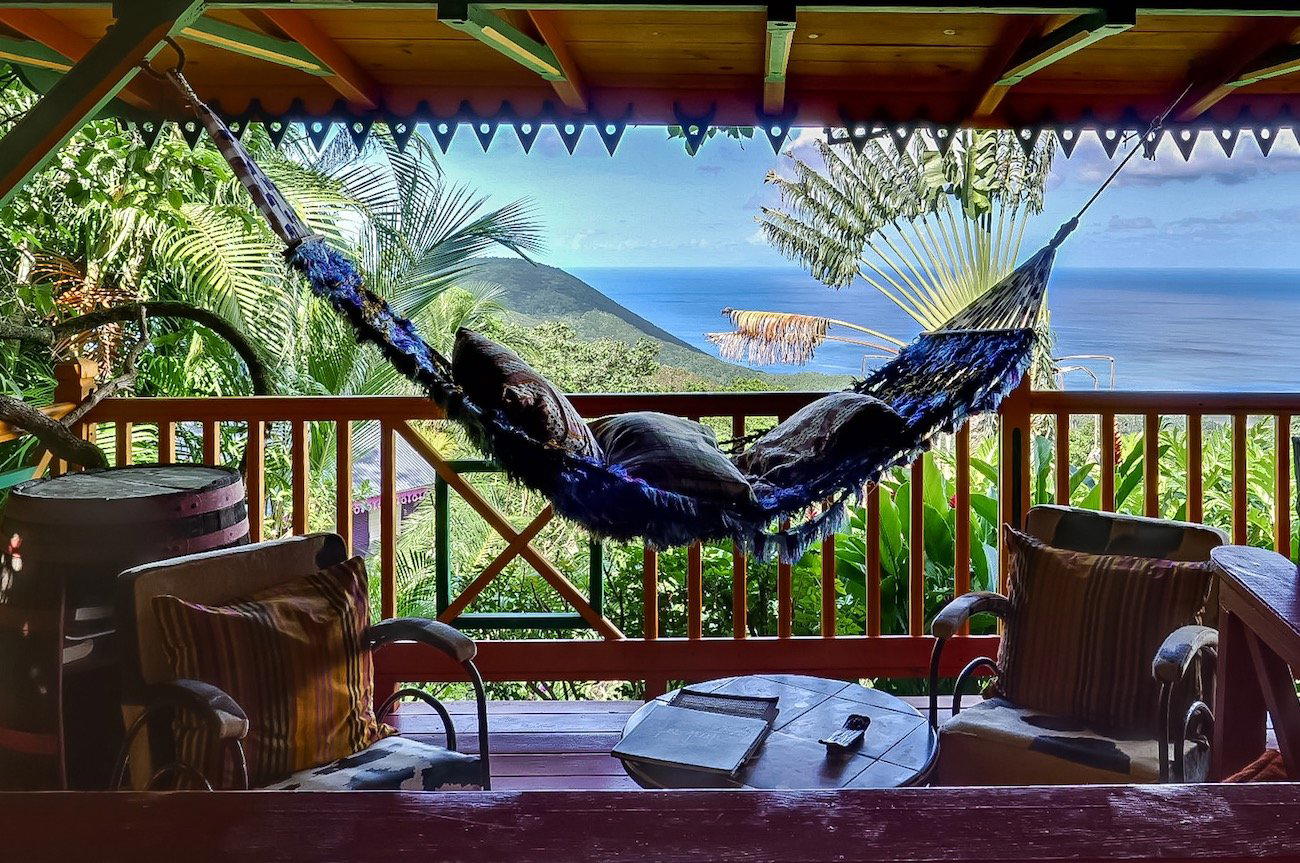
Elevation as Architecture: What Tendacayou's Address Tells You
The Caribbean hotel formula is well established: sea-facing rooms, a beach bar at grade, and a pool positioned for maximum exposure. Tendacayou, sitting at Matouba La Haut above Deshaies on Guadeloupe's Basse-Terre, refuses that formula in favour of a different set of spatial priorities. The address itself is the first signal. Coming up from the coast, the road climbs through dense vegetation before the property appears, embedded in hillside greenery rather than open to a shoreline. This is the French Antilles' other hospitality tradition — one that draws on the island interior, on volcanic soil and tropical forest, rather than the water's edge.
That positioning separates Tendacayou from the coastal properties that dominate most visitors' mental map of Guadeloupe. Where beach hotels orient their architecture toward the horizon, a hillside property like this one is oriented inward and downward — terraces that look into the canopy, structures that read as part of the topography rather than placed on top of it. The design conversation in this part of the Caribbean increasingly centres on how buildings negotiate the forest, and properties at elevation have more interesting answers to that question than their flatland counterparts.
For context on what premium hillside design looks like in the French tradition more broadly, properties like Château de la Chèvre d'Or in Èze and La Bastide de Gordes in Gordes have long demonstrated that verticality and integration into natural terrain can drive a distinct hospitality identity. Tendacayou works within that same tradition, transposed to a tropical register. See our full Deshaies restaurants and hotels guide for more on how the town's properties fit into Basse-Terre's hospitality picture.
The Rainforest as Context, Not Backdrop
Basse-Terre is the island half of Guadeloupe that most short-stay visitors skip in favour of Grande-Terre's flatter, more beach-ready terrain. That asymmetry is worth understanding. Basse-Terre carries the volcanic spine of the island, the Parc National de la Guadeloupe, and the kind of biodiversity, tree ferns, hot springs, waterfalls, that requires elevation and interior access to reach. A property positioned at Matouba La Haut places guests within reach of that landscape in a way no coastal hotel on the island can replicate. The physical setting is not incidental to the experience; it is the rationale for the property's existence at this particular address.
This matters architecturally because buildings in dense tropical forest must solve problems that sea-facing properties do not encounter. Humidity management, views that work through rather than over vegetation, the relationship between open-air and covered space, the orientation of rooms relative to prevailing wind and rainfall, these are the design constraints that produce genuinely interesting tropical architecture. Properties that solve them well tend to feel rooted in a way that beach resort construction rarely achieves, because the site demands more specific answers. Among French Caribbean properties, those that have committed to the forest rather than the shoreline occupy a distinct niche within the regional hospitality market.
Where Tendacayou Sits in the Guadeloupe Hotel Picture
Guadeloupe's accommodation market spans a wide range, from the large all-inclusive resorts concentrated on Grande-Terre's eastern coast to smaller, independently operated properties scattered across Basse-Terre and the outer islands of Les Saintes and Marie-Galante. Tendacayou's location in Deshaies, a town on Basse-Terre's northern coast that has attracted attention partly through its appearance in the BBC series Death in Paradise, places it at the quieter, more self-contained end of the island's visitor infrastructure. The town itself is small, and the properties around it tend toward the boutique end of the market rather than the resort scale.
Within French overseas territory hospitality, this positioning is increasingly coherent. Travellers choosing Guadeloupe over Martinique or Saint-Martin often do so precisely because Basse-Terre offers access to landscape that the other islands cannot match. A property that leans into that differentiation, through its address, its relationship to the forest, its distance from the resort strip, is making a deliberate argument about what a Caribbean stay can mean. That argument is more interesting, editorially, than the standard beach-facing proposition.
For comparison, the design-led, nature-integrated approach seen at properties like Casadelmar in Porto-Vecchio and La Réserve Ramatuelle illustrates how French-operated properties have learned to make landscape specificity a core part of their identity. Tendacayou operates in that same register, at a smaller scale and in a less-trafficked destination. Other properties that use terrain as architectural argument include Villa La Coste in Le Puy-Sainte-Réparade and The Maybourne Riviera in Roquebrune-Cap-Martin, both of which demonstrate how elevation and site-specific design can define a property's competitive position.
Planning a Stay: What to Know Before You Arrive
Deshaies is accessible from Pointe-à-Pitre, Guadeloupe's main entry point, by road along Basse-Terre's western coast, a drive that takes roughly ninety minutes depending on traffic and road conditions. The road quality on Basse-Terre's northern coast is adequate but not fast; the journey rewards patience and the scenery along the coast road is its own argument for the route. Guadeloupe receives direct flights from Paris and connections via several Caribbean hubs, making it more accessible from metropolitan France than most Caribbean destinations. The dry season runs broadly from January through April, which represents the most predictable window for outdoor activities linked to the surrounding national park. That said, the forest is at its most dramatically green during the wetter months, and some travellers specifically time visits to the rainier season for that reason.
For those assembling a broader French property itinerary, reference points in the luxury tier include Cheval Blanc Paris, Hotel Du Cap-Eden-Roc in Cap d'Antibes, Domaine Les Crayères in Reims, and Royal Champagne Hotel and Spa in Champillon. For design-forward alternatives in other regions, Baumanière Les Baux-de-Provence, Château du Grand-Lucé, Château de Montcaud in Sabran, Hôtel and Spa du Castellet, and Castelbrac in Dinard each represent the spectrum of how French properties negotiate site and architecture. International reference points for this category of terrain-responsive design include Aman Venice, Aman New York, The Fifth Avenue Hotel in New York City, Château de la Gaude in Aix-en-Provence, Airelles Saint-Tropez, Château Lafaurie-Peyraguey, Les Sources de Caudalie in Bordeaux, Four Seasons Megève, and Cheval Blanc Courchevel.
Comparison Snapshot
| Venue | Cuisine |
|---|---|
| TendacayouThis venue — the venue you are viewing | This venue |
| Cheval Blanc Paris | Michelin 3 Key, World's 50 Best |
| Cheval Blanc Courchevel | Michelin 3 Key |
| Le Meurice | Michelin 3 Key |
| Aman Le Mélézin | Michelin 2 Key |
| Hôtel Cheval Blanc St-Tropez | Michelin 2 Key |

At a Glance
- Romantic
- Scenic
- Rustic
- Intimate
- Whimsical
- Romantic Getaway
- Wellness Retreat
- Honeymoon
- Panoramic View
- Private Villa
- Spa
- Pool
- Mountain
- Spa
- Pool
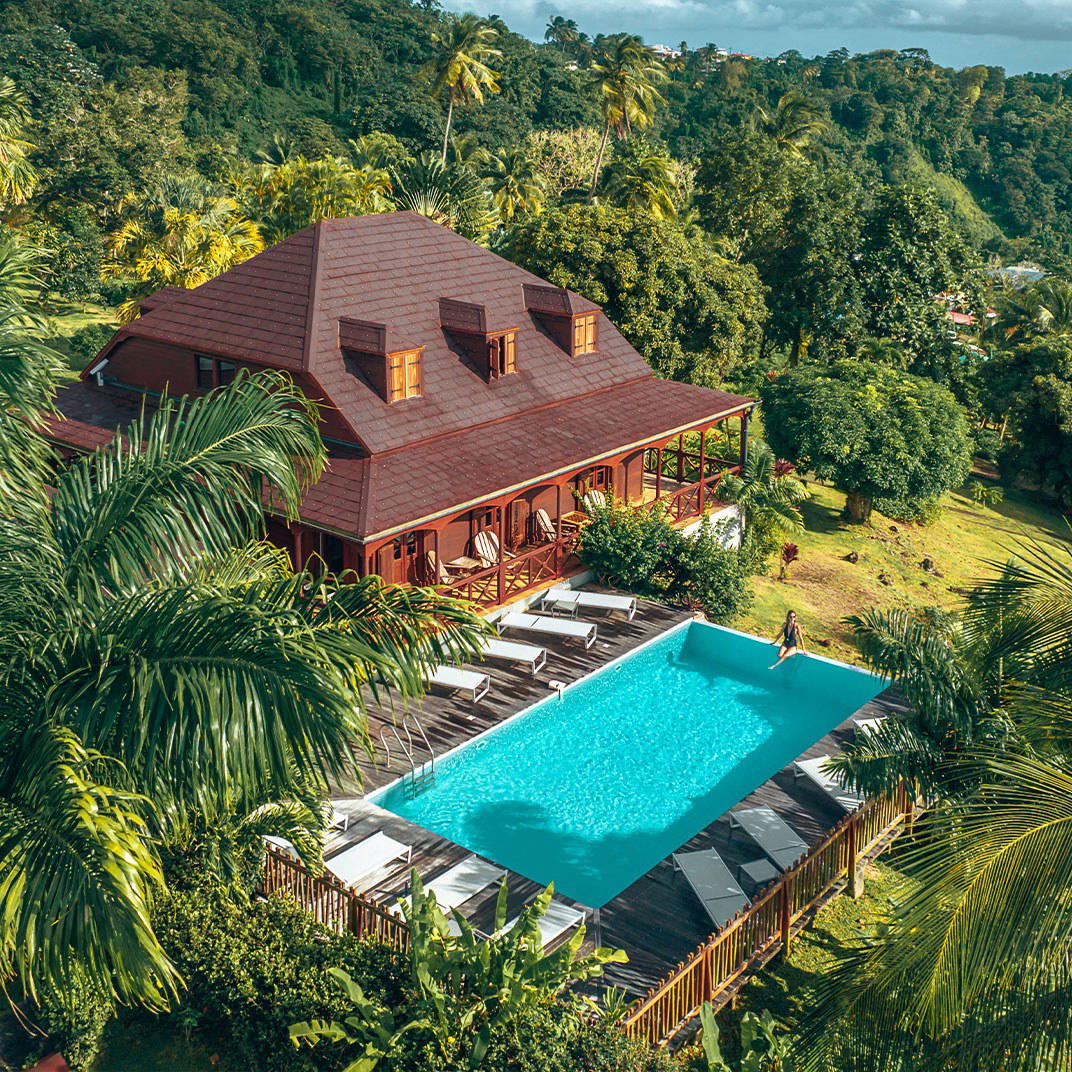
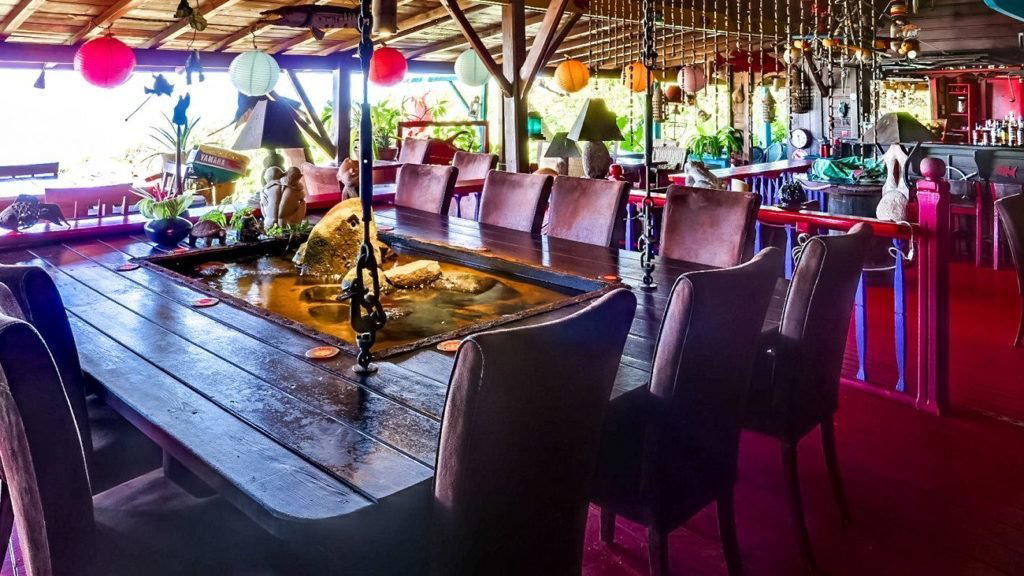
Peaceful and immersive natural atmosphere with bird songs as the only sound, eclectic colorful decor blending wood materials and fairy-tale charm amid lush rainforest.
Know Before You Go
- Getting there
- Matouba La Haut, Deshaies 97126, Guadeloupe