Google: 4.7 · 1,087 reviews
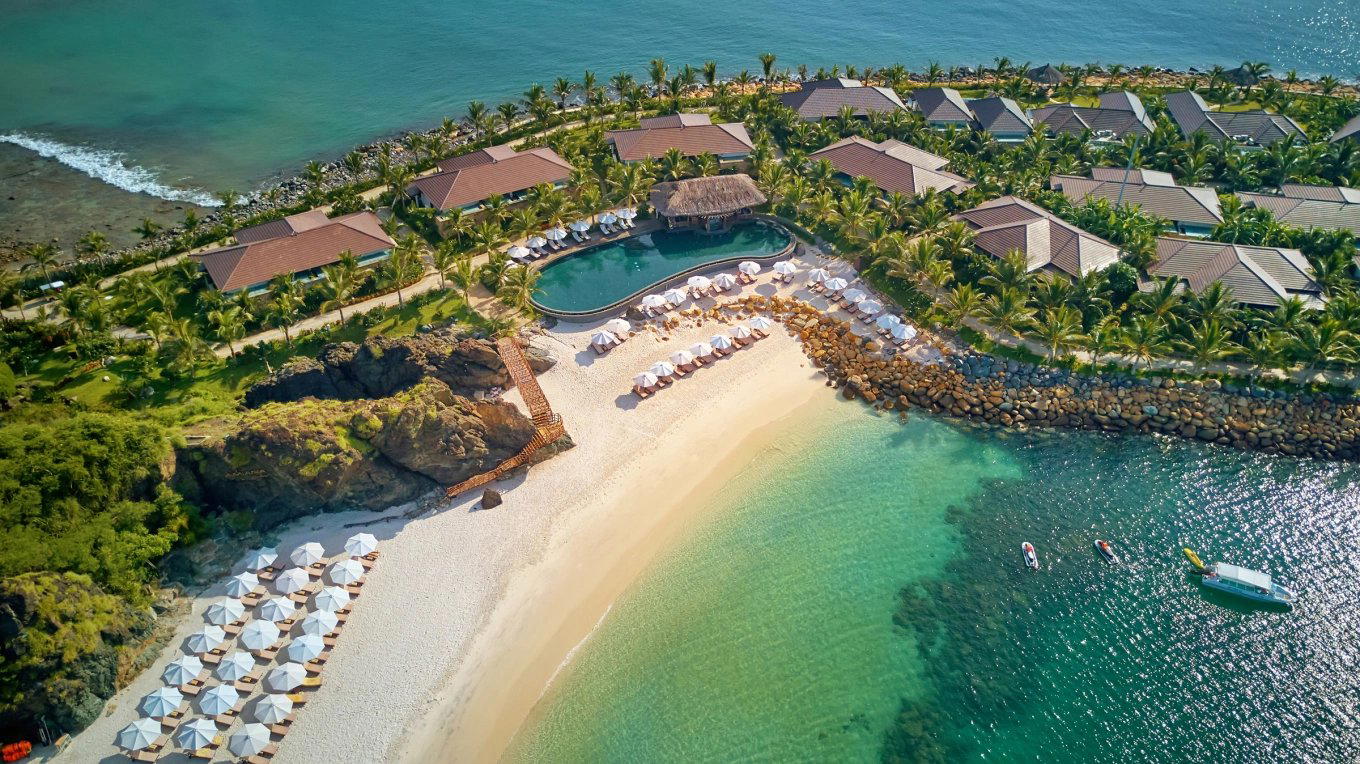
Six Senses Ninh Van Bay occupies a granite-boulder bay accessible only by boat, placing it in a category of Vietnamese coastal resorts where the architecture defers entirely to the terrain. The property sits within the Six Senses group's wellness-anchored portfolio, drawing guests who prioritize seclusion and design coherence over resort-scale amenities. For the central Vietnamese coast, it represents the quieter, more ecologically embedded end of the luxury spectrum.
 Discover on Pearl
Pearl is the En Primeur Club membership app — saves, bookings, and concierge access live there. Same editors, same standards.
A Bay That Demands Its Own Approach
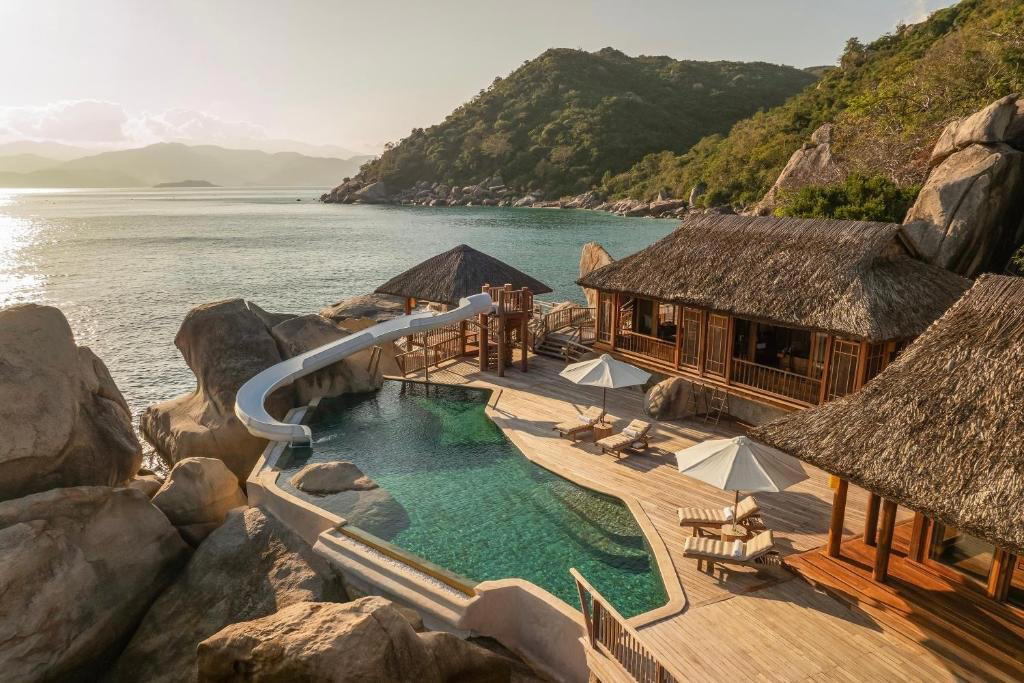
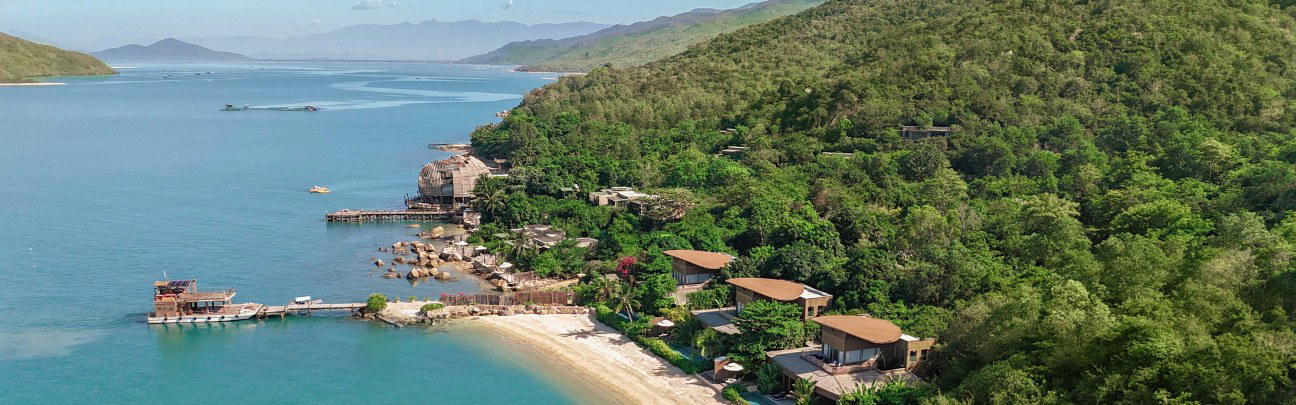
The south-central Vietnamese coast between Nha Trang and Ninh Hoa has spent two decades sorting itself into distinct tiers. At one end sit the high-density resort corridors of Nha Trang, where room counts climb into the hundreds and the architecture leans toward internationalist convention. At the other end, a smaller group of properties has taken the opposite position: low-key, geographically isolated, and designed around landscapes that cannot be replicated on a flatter, more accessible site. Six Senses Ninh Van Bay belongs firmly in that second cohort. The resort occupies a private bay near Ninh Hoa in Khanh Hoa province, reachable only by speedboat from the mainland — a ten-minute crossing that functions as a deliberate transition ritual, separating the property from the road-accessible hotel market entirely. For context on the broader Ninh Hoa area and what else the coastline offers, see our full Ninh Hoa restaurants guide.
Architecture Built Around Granite, Not Against It
The design logic at Ninh Van Bay is worth examining carefully, because it reflects a broader shift in how premium coastal resorts in Southeast Asia have approached site-specific architecture. The bay is defined by large granite boulder formations, the kind of geological feature that conventional resort planning would either clear or ignore. Here, the architecture has been threaded between and sometimes over these formations, so that villas sit against, beside, and occasionally cantilevered above the boulders rather than on cleared pads of uniform ground.
This approach places the property in a peer group that includes Amanoi in Vinh Hy, another bay-accessed property on the south-central coast that makes similar commitments to landscape deference. Both resorts use natural stone as a primary visual and structural reference rather than as decorative trim. The distinction matters: design restraint of this kind is harder to execute and more expensive to maintain than the polished minimalism that dominates newer luxury builds in Vietnam.
The Six Senses brand, which operates properties from the Maldives to Bhutan within its wellness-anchored portfolio, has consistently applied a design framework that prioritizes natural materials, low visual profile, and ecological integration. At Ninh Van Bay, that framework meets a genuinely demanding site. The result is a property that reads very differently from the glass-and-marble aesthetic at, say, larger urban or beach-strip properties. Travelers comparing options across Vietnam's central coast will find a useful contrast by looking at Four Seasons Resort The Nam Hai, Hoi An, which operates at a larger scale with a more classical luxury visual language, or Banyan Tree Lang Co, which occupies a lagoon site north of Da Nang with its own distinct ecological character.
The Wellness Framework as Structural Feature
Across the Six Senses portfolio globally, wellness programming has moved from amenity to architecture. At Ninh Van Bay, the spa and wellness facilities are not an adjunct to the accommodation offer; they are a primary reason guests select this property over coastal alternatives with comparable room quality. This positioning mirrors what has happened at other wellness-anchored properties in the region, where the program depth — sleep treatments, detox protocols, biometric assessments , creates a loyalty segment that returns specifically for the integrated approach rather than for the beach or the restaurant alone.
This dynamic differentiates Ninh Van Bay from conventional five-star beach resorts in Vietnam and places it in a narrower competitive set that also includes properties like Almanity Hoi An Wellness Resort, though at different price and format tiers. For guests whose primary travel motivation is a structured wellness stay rather than a leisure beach holiday, the resort-by-boat access model actually reinforces the offer: the physical separation from the mainland reduces ambient distraction in a way that road-accessed properties cannot replicate.
Positioning on Vietnam's Premium Coastal Map
Vietnam's premium coastal accommodation has diversified substantially since the mid-2000s, when a handful of international operators established the initial tier. The current market includes properties at multiple price points across Phu Quoc, Da Nang, Hoi An, Quy Nhon, and the Nha Trang corridor. Within this range, Ninh Van Bay occupies a high-cost, low-capacity position that sets it against a small peer group rather than the broader five-star market.
Guests assessing the central coast specifically might also consider Anantara Quy Nhon Villas, which applies a villa-only format on a clifftop site further north, or Amiana Resort Nha Trang for a closer-to-city alternative with its own bay setting. Further afield, InterContinental Phu Quoc Long Beach Resort represents the large-footprint international brand approach that Ninh Van Bay explicitly does not occupy.
For travelers whose Vietnam itinerary extends beyond the coast, the historic accommodation options in Hue , particularly Azerai La Residence, Hue , offer a colonial-heritage counterpoint, while Da Nang's Novotel Danang Premier Han River covers the urban transit-hotel need at a different price tier.
Planning a Stay
The boat-access format means arrival logistics require coordination with the resort in advance; guests typically arrange transfers from Nha Trang, which has both domestic flight connections and road access from Cam Ranh International Airport. The dry season along the Khanh Hoa coast runs roughly from February through August, with the clearest water conditions and lowest rainfall between March and June , timing that aligns with peak demand and, consequently, peak rates. The wetter months from September through January bring cooler temperatures and periodic rough weather that can affect boat crossings, so travelers with weather sensitivity should factor this into their planning.
The Six Senses brand operates at a premium price tier globally, and Ninh Van Bay sits at the upper end of the Vietnamese coastal market. Guests comparing value across the region will find the property most logically assessed against villa-format competitors with similar access constraints, rather than against larger, road-accessible five-star resorts where room rates reflect different cost structures.
Continue exploring
More in Ninh Hoa
Hotels in Ninh Hoa
Browse all →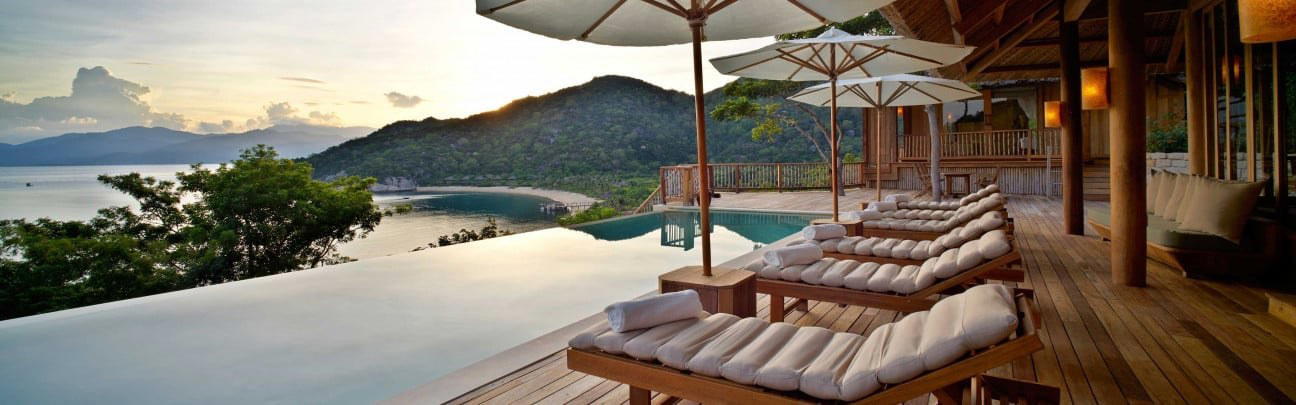
At a Glance
- Romantic
- Scenic
- Quiet
- Elegant
- Rustic
- Intimate
- Sophisticated
- Opulent
- Honeymoon
- Romantic Getaway
- Family Vacation
- Wellness Retreat
- Anniversary
- Weekend Escape
- Beachfront
- Infinity Pool
- Private Villa
- Destination Spa
- Panoramic View
- Pool
- Spa
- Fitness Center
- Room Service
- Concierge
- Beach Access
- Waterfront
- Mountain
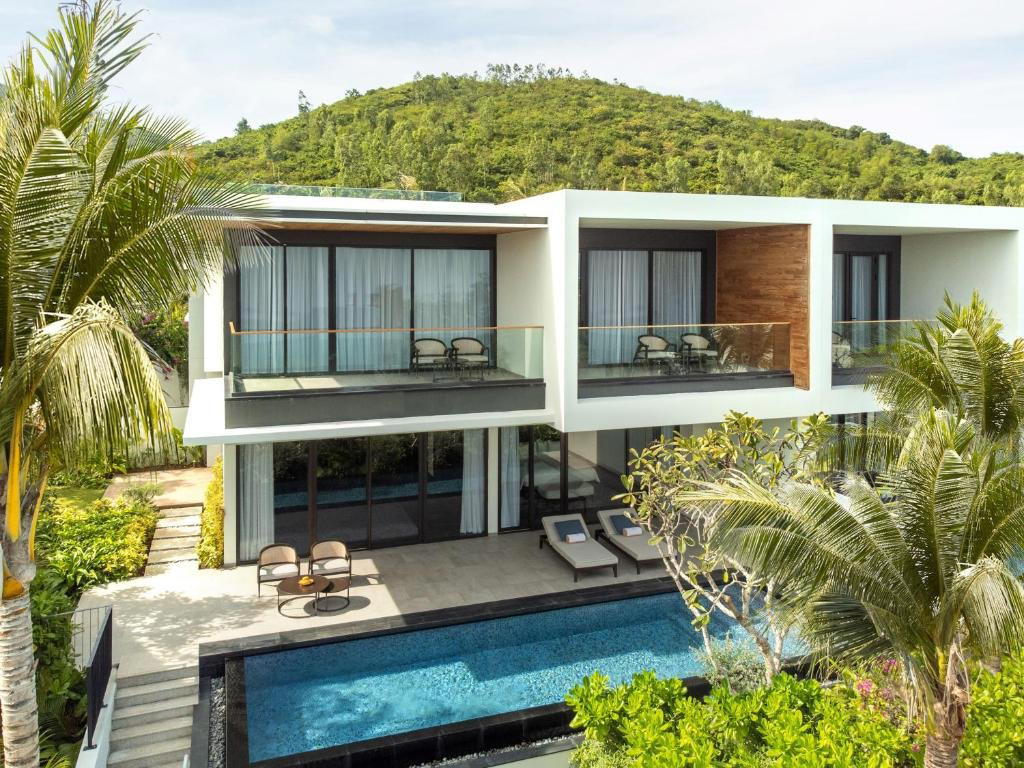
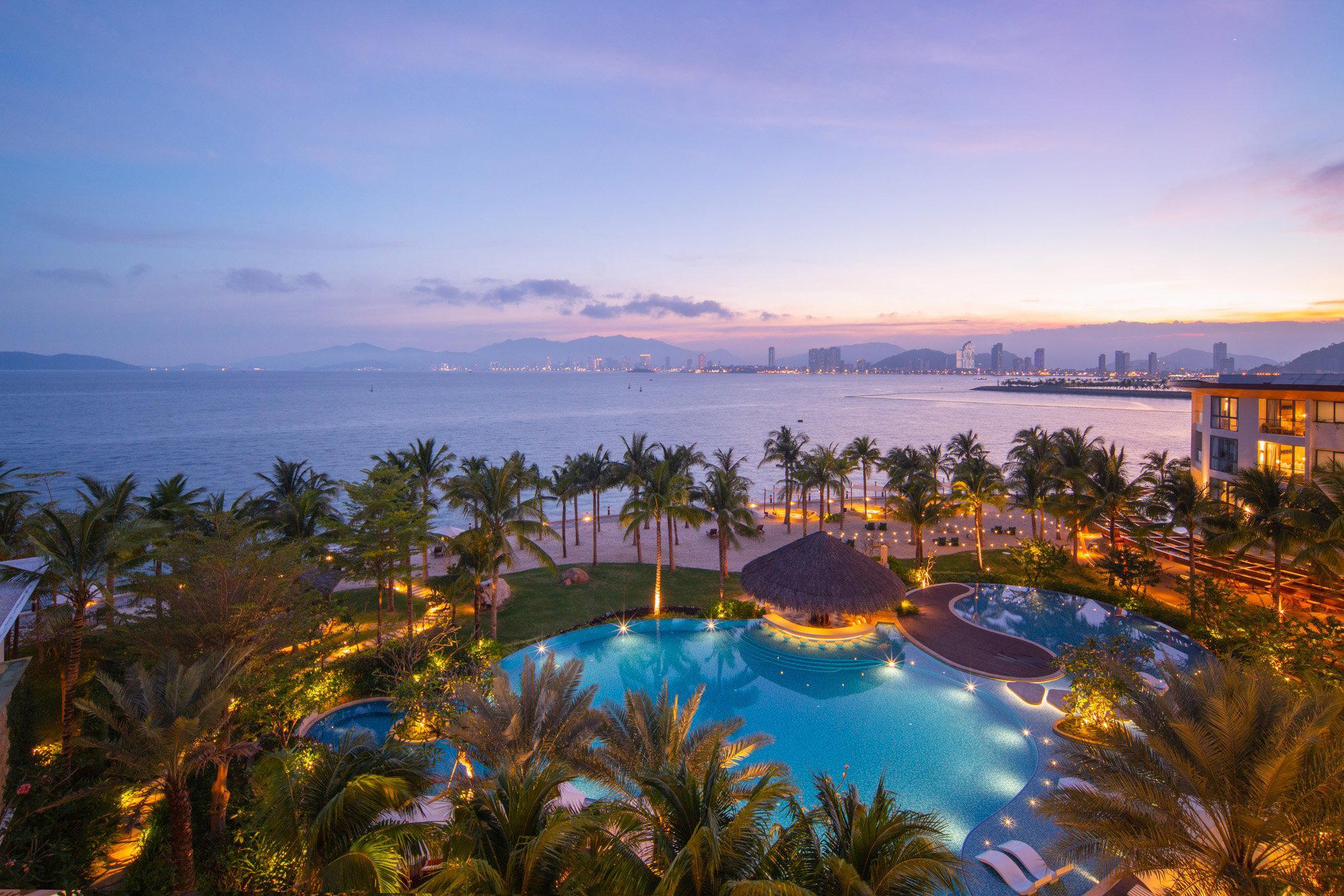
Serene and rustic with natural light flooding through glass walls, thatched roofs, bamboo elements, and a harmonious blend of contemporary elegance and traditional Vietnamese design creating an earthy, tranquil atmosphere.