



Five architecturally distinct lodges distributed across Bhutan's western and central valleys, Six Senses Bhutan operates at a scale and format that few luxury operators attempt anywhere. Rated 90.5 points on La Liste's 2026 Top Hotels list, the property spans 82 suites and villas from Thimphu's hilltop capital views to Paro's reconstructed stone ruins, with rates beginning at USD 1,450 per night.
 Discover on Pearl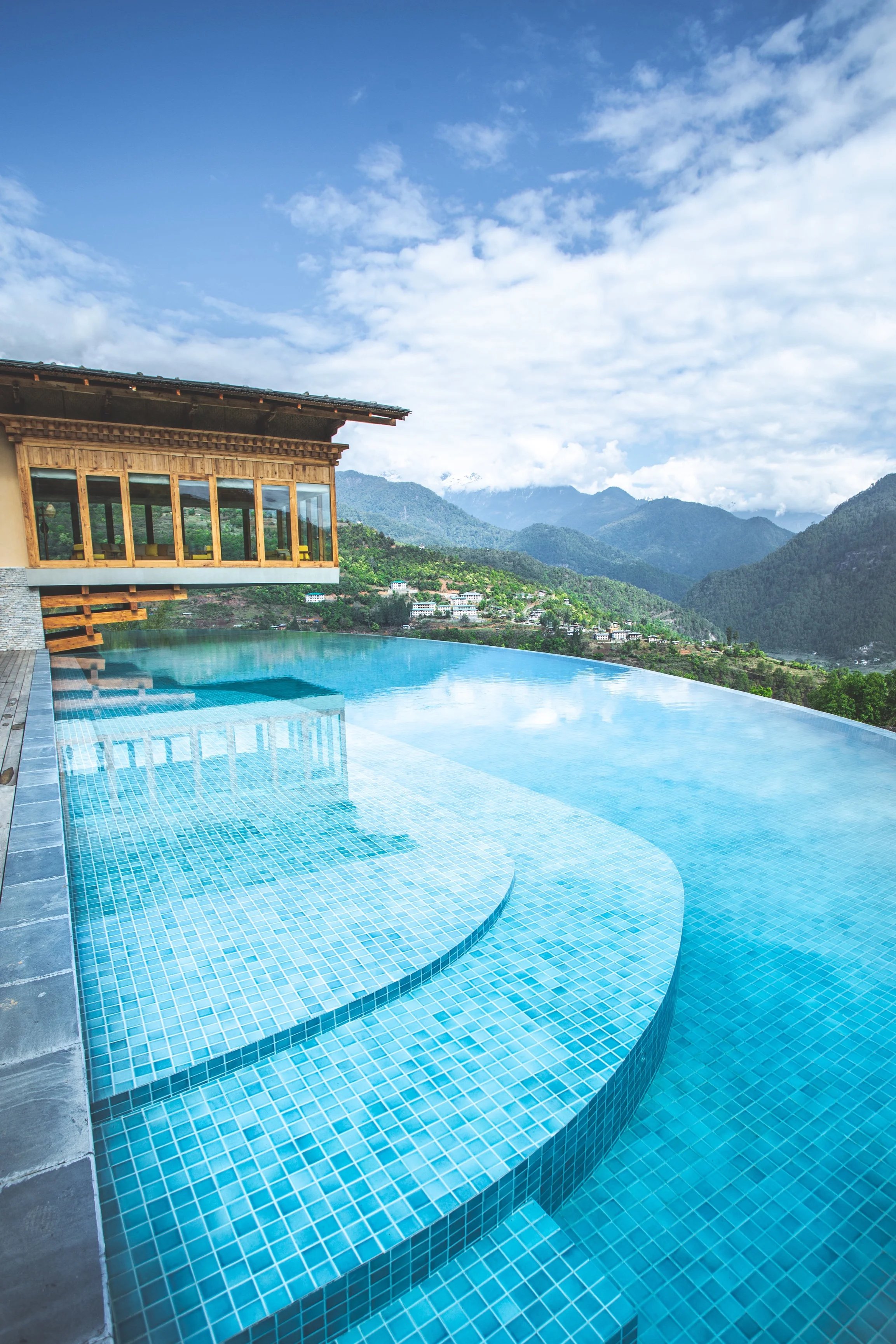
Five Buildings, One Country, One Argument About What Luxury Hotels Are For
Approaching Six Senses Thimphu from the valley floor, the lodge appears above the treeline at 8,695 feet, its silhouette sitting against a sky that, at altitude, arrives in a particular shade of blue that lower elevations rarely produce. The Bhutanese call the site auspicious — a word that, in this context, carries genuine architectural weight. The building faces down toward Thimphu's lights across fifteen acres of hillside, with outdoor ponds placed to catch the sky's reflection. The design team called it "the Palace in the Sky," and from the approach road, the description does not feel like marketing. It feels like orientation.
What makes Six Senses Bhutan structurally unusual, even within the premium tier of Himalayan hospitality, is not any single lodge but the decision to run five of them simultaneously, each designed to a different brief and each positioned in a valley with a different ecological and cultural character. That multi-lodge format places the property in a distinct competitive category from single-site competitors. Where Amankora in Paro operates within Aman's signature language of restrained minimalism, and where Gangtey Lodge in Gangtey offers a focused single-valley immersion, Six Senses Bhutan asks its guests to move through the country as a structured sequence rather than settle into one location.
The shortlist, unlocked.
Hard-to-book tables, cellar releases, and concierge-planned trips.
Get Exclusive Access →The Architecture of Five Different Answers
Bhutanese vernacular architecture has a set of recurring elements: rammed earth or stone walls, sloped timber rooflines, carved wooden window frames, and the prayer flags that mark high places and mountain passes. What distinguishes the five Six Senses lodges is how each property interprets this shared vocabulary through a different local constraint.
The Thimphu lodge reads as formal and refined, its grand scale suited to a hillside that overlooks a capital city. It includes banquet facilities for sixty guests, a pool, a prayer pavilion, and a sunken outdoor performance deck — a configuration that places it closer to a destination venue than a retreat, even within the Six Senses network. The Punakha lodge runs in the opposite direction: known internally as the Flying Farmhouse, it sits among rice fields at a warmer elevation, and its rustic character reflects the agricultural valley below rather than the governmental formality of the capital.
In Gangtey, the design brief was shaped by the landscape's defining feature: the Phobjikha Valley, which hosts black-necked cranes during their winter migration. The lodge is positioned to deliver a 180-degree view across a valley that remains genuinely little-visited by international travelers. The architecture serves the sightline. In Bumthang, described as a Forest within a Forest, the construction language is more embedded in the treeline, and the lodge serves as a base for reaching monasteries and winter festivals rather than as a spectacle in itself.
Paro's lodge, called Stone Ruins, is the most theatrically conceived of the five. The dining areas are placed within reconstructed stonework that references the dzong architecture of the surrounding valley. At properties like Castello di Reschio in Lisciano Niccone or Amangiri in Canyon Point, the decision to build around or within existing historic material produces a particular kind of spatial authority. The Paro lodge applies similar logic to a Himalayan context, where the ruins are reconstructed rather than preserved, but the visual grammar of age and stone sets the tone for the valley's own ancient sites nearby.
How the Lodges Sit Within Bhutanese Luxury
Bhutan's tourism model is by design a controlled one. The government's Daily Royalty fee of USD 65 per person per day, combined with an FIT surcharge of USD 30 to 40 per person per day for independent travelers, and a non-refundable visa fee of USD 40, means the visitor economy is structured to limit volume and concentrate spending. That framework has shaped the kind of hotels that exist here: the country's premium properties tend toward high nightly rates, small room counts, and experience-led programming rather than amenity accumulation.
Six Senses Bhutan's 82 rooms and villas across five lodges situate it among the larger multi-site operators in this market. Rates begin at USD 1,450 per night, which places it at the higher end of the Bhutanese luxury tier alongside andBeyond Punakha River Lodge in Punakha and above more recent entries like The Postcard Dewa, Thimphu and Zhiwaling Ascent. The La Liste 2026 Leading Hotels rating of 90.5 points provides an external reference point that places Six Senses Bhutan within the verified upper tier of global hotel rankings, a signal that matters for travelers who cross-reference against properties like Cheval Blanc Paris, Le Bristol Paris, or Mandarin Oriental Bangkok when building a high-end itinerary.
Also in Bhutan, Bhutan Spirit Sanctuary in Shaba occupies the wellness-focused niche with a narrower geographic scope, making the Six Senses Bhutan's multi-lodge format a structural differentiator rather than simply a matter of scale.
Programming and Place
Each lodge organizes its cultural programming around what its valley actually offers, rather than applying a standardized activity menu. Punakha provides access to the Punakha Dzong, one of Bhutan's most architecturally significant fortress-monasteries. Bumthang functions as a gateway to Bhutan's monastic heartland. Gangtey is timed well for the crane migration season between November and February. Paro sits at the foot of the valley containing the Tiger's Nest monastery, which is among the country's most visited sites and requires a hike at altitude.
The spa programming across all five lodges draws on traditional Bhutanese healing practices, incorporating local herbs and meditation traditions that reflect the kingdom's approach to wellness as a cultural rather than purely commercial category. The dining program sources from organic gardens and local farmers, with menus that place Bhutanese cuisine alongside international dishes rather than substituting one for the other.
Visa formalities for Bhutan require two to three weeks to process, and Six Senses Bhutan's reservations require direct engagement with the property's customer service team rather than a standard online booking channel. That detail alone signals the kind of trip this is: one that demands planning lead time comparable to properties like Hotel Du Cap-Eden-Roc in Cap d'Antibes or Badrutt's Palace Hotel in St. Moritz during peak season, but for logistical rather than demand-side reasons.
For broader context on Thimphu's hospitality and dining options, see our full Thimphu restaurants guide.
The shortlist, unlocked.
Hard-to-book tables, cellar releases, and concierge-planned trips.
Get Exclusive Access →Frequently Asked Questions
Quick Comparison
A fast peer set for context, pulled from similar venues in our database.
| Venue | Cuisine | Price | Awards | Notes |
|---|---|---|---|---|
| Six Senses Bhutan | This venue | |||
| Amankora | ||||
| Gangtey Lodge | ||||
| The Postcard Dewa, Thimphu | ||||
| Zhiwaling Ascent | ||||
| andBeyond Punakha River Lodge |
Preferential Rates?
Our members enjoy concierge-led booking support and priority upgrades at the world's finest hotels.
Get Exclusive AccessThe shortlist, unlocked.
Hard-to-book tables, cellar releases, and concierge-planned trips.
Get Exclusive Access →