

1 Michelin Key · Mr & Mrs Smith Seal of Approval
A ten-room palazzo in the Baroque heart of Noto, Seven Rooms Villadorata occupies the Nicolaci family palace, built in 1774 and awarded a Michelin Key in 2024. Frescoed ceilings, wind-named rooms, and an in-house osteria in the former wine cellar make it a considered retreat for travellers who want history without formality. Rates from $507 per night.

Pearl is the En Primeur Club membership app, where members save venues, book tables and use the concierge.
A Baroque Palace Repurposed as a Place of Deliberate Rest
Noto is one of the few cities in southern Europe where Baroque architecture arrives at urban scale rather than as isolated monuments. Rebuilt almost entirely after the 1693 earthquake, the city's stone grid reads as a single sustained aesthetic gesture, and the Nicolaci palace on Via Camillo Benso Conte di Cavour sits at the centre of that history. Corrado Nicolaci was granted the title of Prince of Villadorata in 1774, and the palace was designed from the outset as a demonstration of that status. What makes Seven Rooms Villadorata worth attention in 2024 is not the provenance alone but what has been done with it: a ten-room property that refuses the usual trade-off between grandeur and warmth.
Across Italy, the conversion of historic palazzi into hospitality has produced two recognisable types: the museum-hotel, where guests feel they are sleeping inside a preservation order, and the resort overlay, where a heritage shell is dressed in contemporary luxury with little regard for the building's logic. Seven Rooms sits in a third, smaller category, alongside properties like Passalacqua in Moltrasio and Corte della Maestà in Civita di Bagnoregio, where the architecture is legible and the atmosphere is calibrated rather than theatrical. At ten rooms, the property is small enough to feel residential without becoming precious.
The Physical Environment as a Restorative Framework
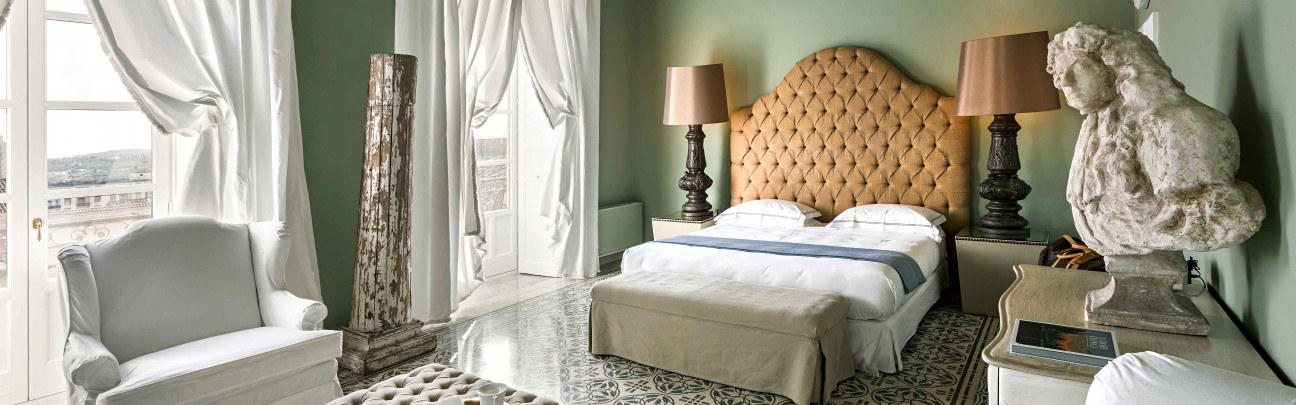
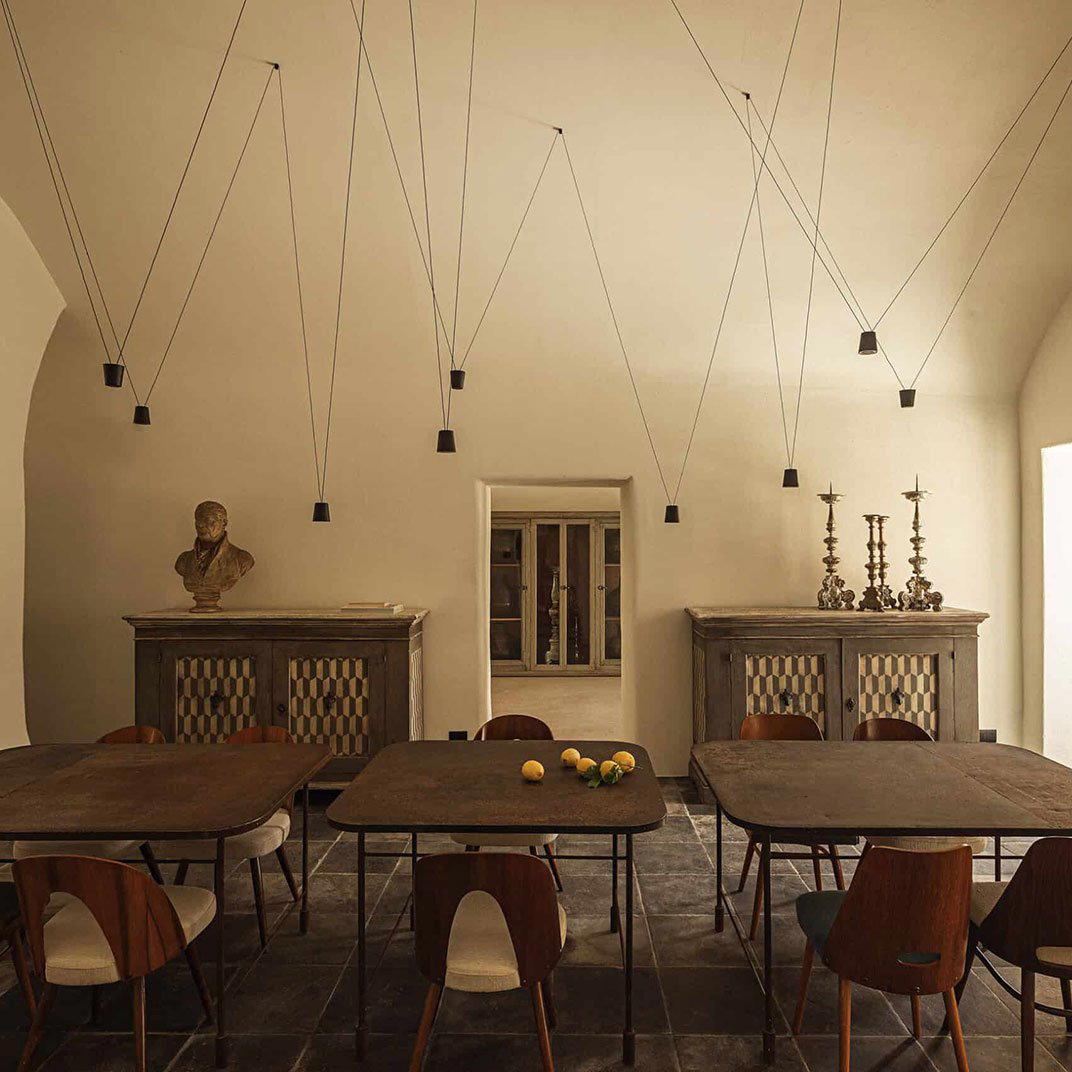
The retreat logic here is spatial before it is programmatic. Frescoed ceilings, stately columns, and furnishings sourced from Italian designers establish the visual register, while the planning of the interiors creates what the property describes as cozy spaces within an otherwise palatial frame. That compression, large architecture reduced to intimate pockets, is what smaller historic hotels do well when they get it right.
Each of the ten rooms is named after one of the mythical winds associated with Sicily, a geographic and mythological tradition rooted in Greek accounts of the island's origins. The naming convention gives the property a light conceptual coherence without becoming heavy-handed. Rooms are finished in a palette of white, silver, and black, with plush armchairs, rich drapery, and antique accents including bronze door handles and statuary. The suite-category rooms add French doors opening onto private balconies with views over the town, which in Noto means looking out over one of the most coherent Baroque streetscapes in the Mediterranean.
This kind of stay appeals to a specific sensibility: travellers who find restoration in architecture and quiet rather than in structured wellness programming. The comparison with properties like Amangiri in Canyon Point is instructive in reverse. Where Amangiri uses landscape and deliberate removal from urban stimulus as its restorative mechanism, Seven Rooms uses density of cultural material. Both approaches prioritise intentional atmosphere over activity schedules.
Osteria Villadorata and the Morning Ritual
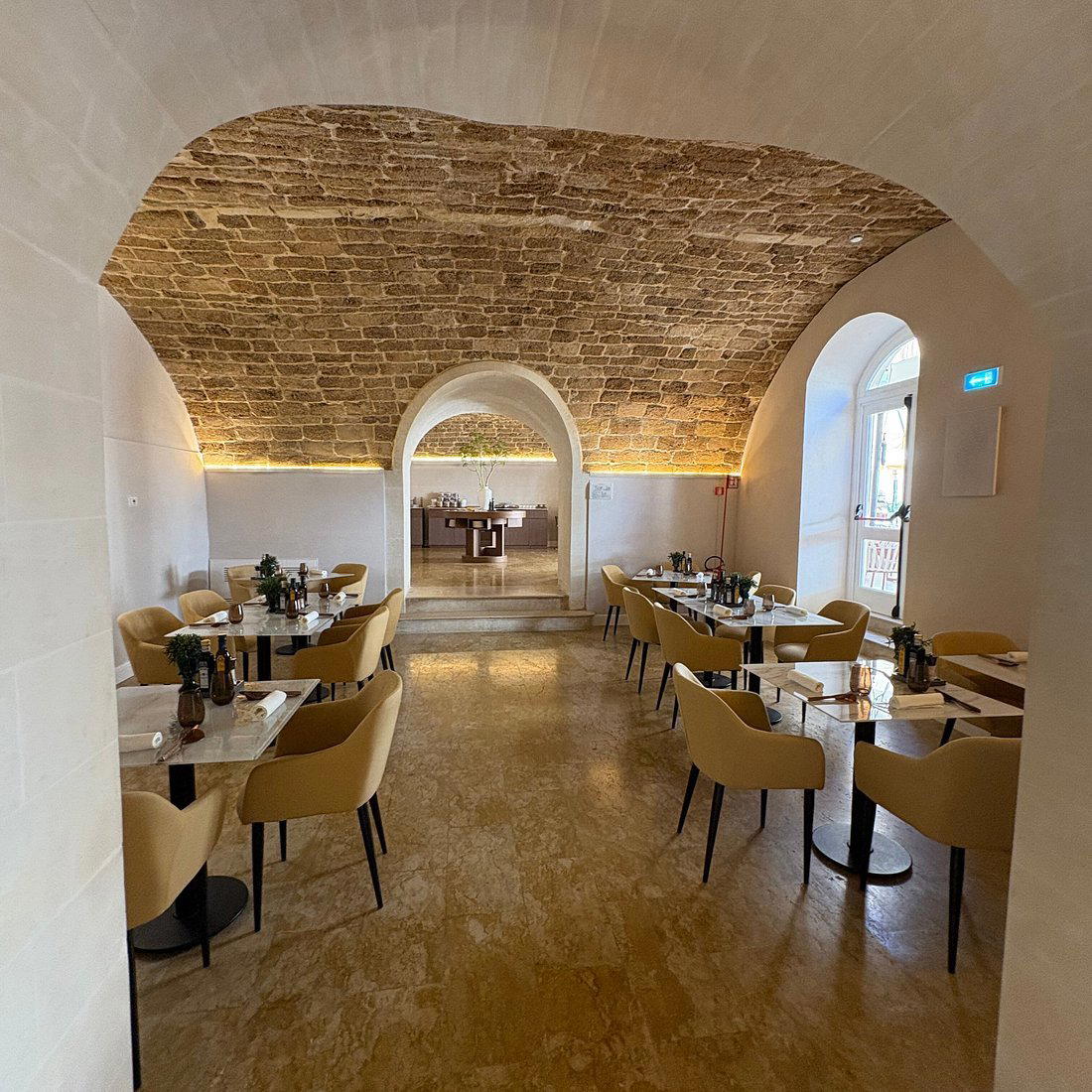
The in-house dining at Seven Rooms centres on two fixed points. In the morning, a breakfast described as suitably lavish is served within the palace. In the evening, Osteria Villadorata operates from the palace's former wine cellar, working with Mediterranean flavours in a space whose vaulted stone architecture would register as atmospheric even without the food. Restaurant cellars converted into dining rooms are common across Italy, but the Noto context adds a layer: the city sits in the Val di Noto, a zone whose agricultural output, including Pachino tomatoes, Nero d'Avola grapes, and Sicilian almonds, gives local kitchens a narrow but deep pantry to draw from.
The osteria format is worth noting in the context of the broader property. A smaller, more casual dining room within a formal palazzo signals that the property understands the rhythm of how guests actually want to eat on a recovery-oriented stay. Heavy multi-course dinners in chandeliered salons have their place, but the wine-cellar format suggests something closer to a neighbourhood osteria experience, accessible and unforced. For a broader view of where Osteria Villadorata sits within Noto's dining options, see our full Noto restaurants guide.
Noto's Position in the Sicilian Luxury Conversation
Noto has moved steadily into the upper tier of Sicilian travel over the past decade, largely on the back of its UNESCO World Heritage status (granted in 2002 as part of the Val di Noto Baroque towns recognition) and its increasing visibility in European luxury travel editorial. The city lacks the resort infrastructure of Taormina or the coastal access of Syracuse, which concentrates the accommodation market around a smaller number of carefully positioned properties. Seven Rooms, at $507 per night for a standard room and ten keys total, sits in a bracket that is expensive relative to the city but modest relative to comparable Italian palazzo hotels. Properties like Aman Venice or the Four Seasons Hotel Firenze in Florence operate in the same historic-building category but at a substantially higher price point and with far greater room counts.
Within Noto, the competitive set includes Country House Villadorata, Hotel Il San Corrado di Noto, Masseria della Volpe, and Q92 Noto Hotel, each operating at different points on the formality and setting spectrum. The masseria format represented by Masseria della Volpe, for instance, draws on the agricultural estate tradition of southern Italy, which offers a different environmental logic from the urban palazzo. Seven Rooms is specifically suited to guests who want the city rather than the countryside.
For those mapping a broader Italian itinerary, the property connects naturally with a route that might include Borgo Egnazia in Savelletri di Fasano to the north in Puglia, or Il San Pietro di Positano and Borgo Santandrea on the Amalfi Coast for a comparative reading of how historic southern Italian hospitality operates across different physical contexts.
Michelin Recognition and What It Signals
The 2024 Michelin Key award places Seven Rooms Villadorata within the first cohort of Italian hotels to receive that designation, since the Michelin Key programme for hotels launched globally in 2024. A single Key in the Michelin framework signals a property that meets a threshold of character, quality, and experience that Michelin's inspectors consider worth singling out, without implying the category-leading status of properties at the two- or three-Key level.
Travellers drawn to this type of stay, architecture-forward, culturally dense, and quietly restorative rather than activity-driven, will find Seven Rooms occupying a position that few Italian hotel towns can replicate. The combination of UNESCO-listed streetscape, a palace with documented eighteenth-century history, and in-house dining rooted in one of Sicily's most distinctive agricultural zones makes the property's rationale clear. It is not a wellness retreat in the programmatic sense, but the quality of rest it offers is specific and deliberate.
Planning Your Stay
Seven Rooms Villadorata is located at Via Camillo Benso Conte di Cavour, 53, in the historic centre of Noto, placing it within walking distance of the city's principal Baroque monuments and street life. With ten rooms and rates from $507 per night, availability is limited, and booking early is advisable particularly for the suite-category rooms with balcony access over the town. Noto is served by Catania Fontanarossa airport, approximately 75 kilometres to the north, with regular transfers available. The city is walkable once you arrive, and the palazzo's central position means most of what Noto offers is accessible on foot.
Standing Among Peers
Comparable venues nearby, for context on price, style, and recognition.
| Venue | Cuisine | Price | Awards | Notes |
|---|---|---|---|---|
| Seven Rooms VilladorataThis venue (the venue you are viewing) | Historic princely palace restored as intimate boutique hotel | $500–750 | 1 Michelin Key · Mr & Mrs Smith Seal of Approval | Not listed |
| Masseria della Volpe | Restored Sicilian masseria eco-resort with traditional rural architecture and contemporary comforts. | $300–500 | 1 Michelin Key | Noto |
| Hotel Il San Corrado di Noto | Contemporary luxury resort in restored farmhouse | Not listed | Michelin Selected · Mr & Mrs Smith Seal of Approval | Noto countryside |
| Country House Villadorata | Rustic elegance blending 19th-century Sicilian architecture with contemporary minimalist design, emphasizing natural materials and organic surroundings. | Not listed | 1 Michelin Key · Mr & Mrs Smith Seal of Approval | Val di Noto |
| Braccialieri | Boutique luxury resort and eco-villa retreat on a rural estate. | $300–500 | Michelin Selected · Town & Country Hotel Awards | Val di Noto |
| Zahir Country House | Authentic Sicilian country house blending rustic charm with luxury boutique elements. | Not listed | Michelin Selected | Contrada Eloro |
Recognition history
Dated appearances from independent guides and award organizations, with the underlying list record or original source where available.
Michelin 1 Key
Michelin
Mr & Mrs Smith Seal of Approval
Mr & Mrs Smith
Full recognition history (4 entries)
Michelin 1 Key
Michelin
Michelin 1 Key
Michelin
Continue exploring
More in Noto
Hotels in Noto
All hotels in Noto →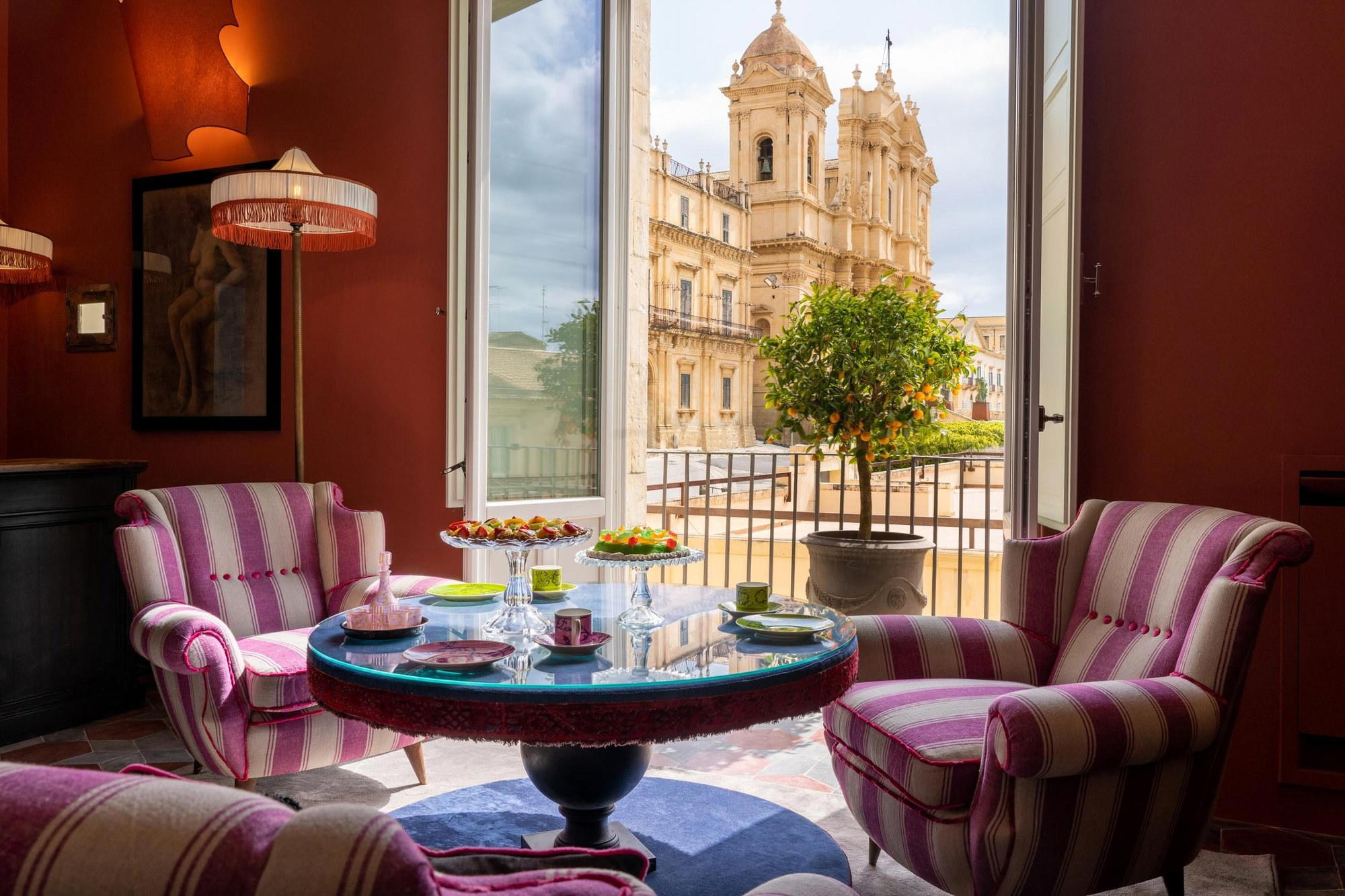

Details
- Elegant
- Romantic
- Quiet
- Sophisticated
- Intimate
- Classic
- Romantic Getaway
- Anniversary
- Honeymoon
- Weekend Escape
- Historic Building
- Terrace
- Wi Fi
- Air Conditioning
- Room Service
- Concierge
- Laundry Service
- Massage
- Elevator
- Street Scene
- Wheelchair Accessible
- Elevator
- Step Free Entrance
- Accessible Parking
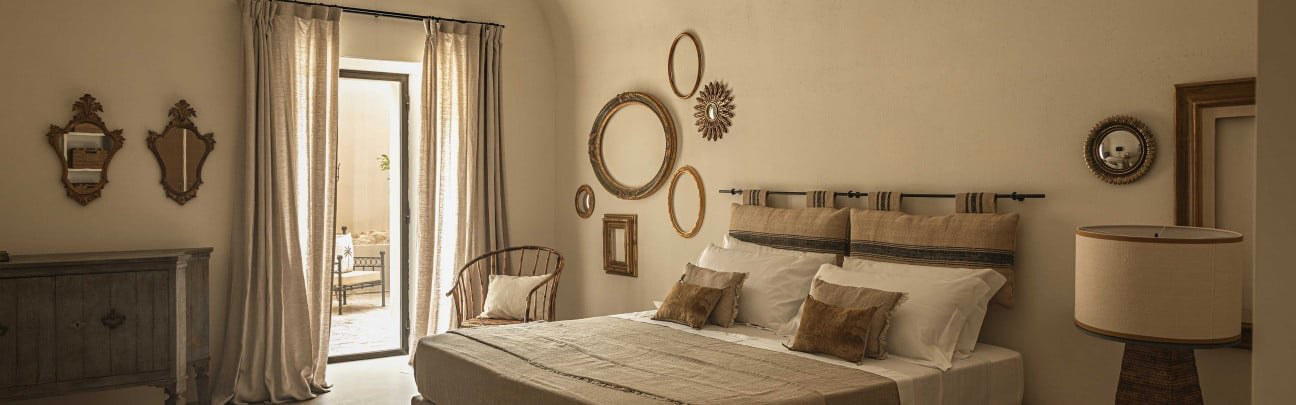
Tranquil and serene with natural light-filled bathrooms, high ceilings, and peaceful courtyard views, creating a sophisticated noble living room atmosphere.