Phantom Ranch
Phantom Ranch sits at the bottom of the Grand Canyon, accessible only on foot, by mule, or by river raft, making it one of the most logistically demanding overnight destinations in the American Southwest. The historic stone-and-timber structures, designed by Mary Colter in 1922, occupy a narrow corridor along Bright Angel Creek. For travellers willing to earn the approach, it offers a genuinely remote base within one of the continent's most dramatic geological environments.

Pearl is the En Primeur Club membership app — saves, bookings, and concierge access live there. Same editors, same standards.
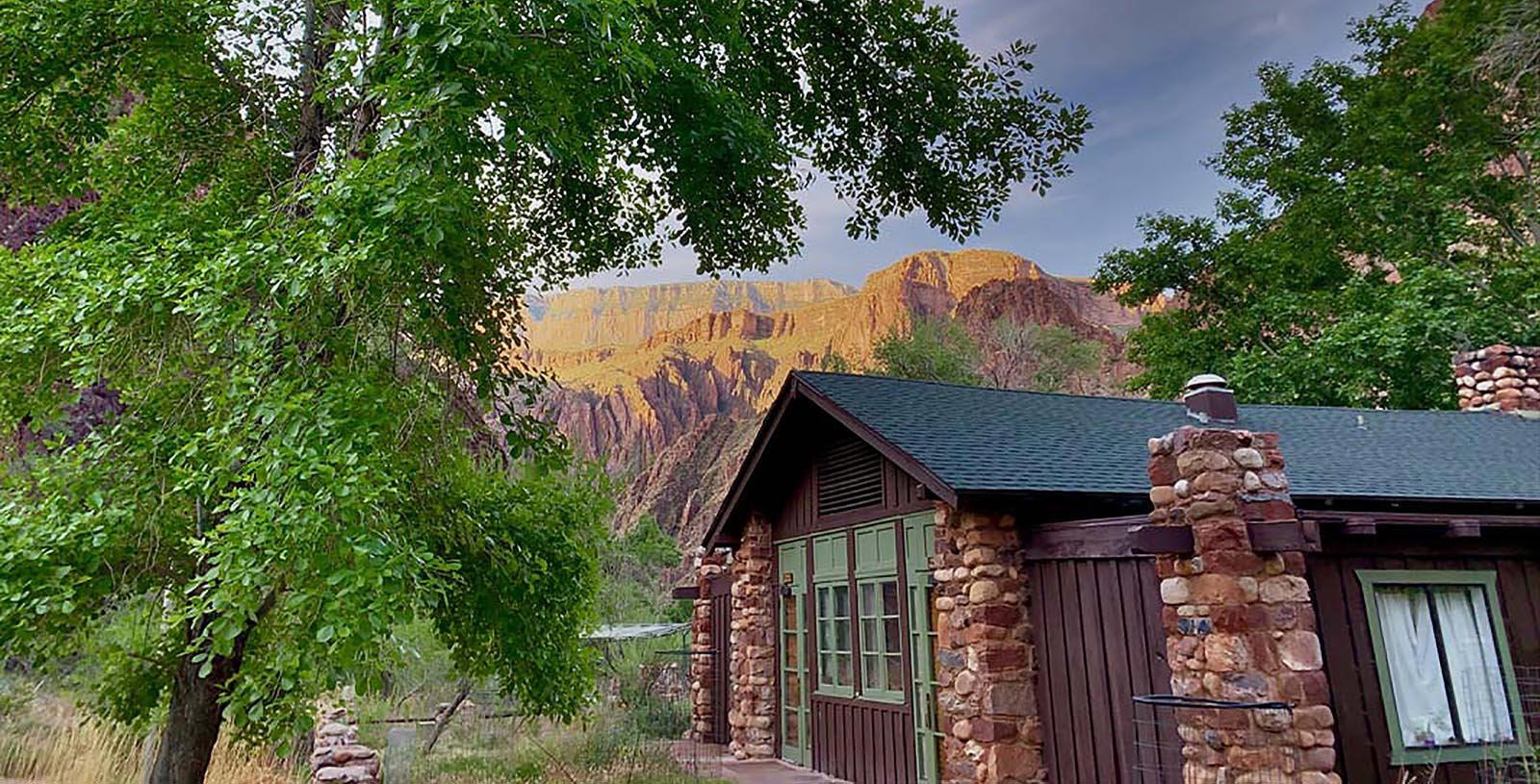
At the Canyon Floor: What the Architecture Tells You
Most lodges in the American West work hard to reference their landscape. Phantom Ranch, sitting at an elevation of roughly 2,480 feet along the Colorado River corridor at the base of the Grand Canyon, does something more direct: it was built from the canyon itself. The structures, designed by architect Mary Colter for the Fred Harvey Company and completed in 1922, use native stone pulled from the surrounding geology. The result is a cluster of low cabins and a central canteen that read less like construction and more like an outgrowth of the canyon walls behind them. This is one of the few sites in the American national park system where the design philosophy and the physical environment are genuinely inseparable.
Colter's approach at Phantom Ranch anticipated what later architects would call contextual design by several decades. Where peers like the Grand Canyon Lodge on the North Rim positioned guests to look out across the canyon from above, Colter's brief was different: she was designing for immersion, not panorama. The buildings hug Bright Angel Creek rather than commanding it, and the rooflines stay low against the surrounding schist and granite. Scale is deliberately compressed. That compression is the point.
What It Means to Stay Here
The question of access defines everything about Phantom Ranch as an overnight experience. There is no road to the bottom of the Grand Canyon. Guests arrive by hiking the Bright Angel or North Kaibab Trail (the South Kaibab is a common descent route), by mule on guided trips, or by multi-day Colorado River rafting expeditions that pass through Phantom Ranch as a resupply point. The minimum round-trip hike from the South Rim covers approximately 18 miles with around 4,800 feet of elevation change. That barrier is not incidental to the experience; it is the experience.
This model of access-as-editorial-filter places Phantom Ranch in a category occupied by very few American destinations. Remote lodge properties like Amangiri in Canyon Point require a flight or a long desert drive. Properties like Post Ranch Inn in Big Sur or Sage Lodge in Pray are remote by road standards. Phantom Ranch has no road equivalent. It is in a different access tier entirely, one where the physical commitment required to arrive shapes who shows up and what they want from the place.
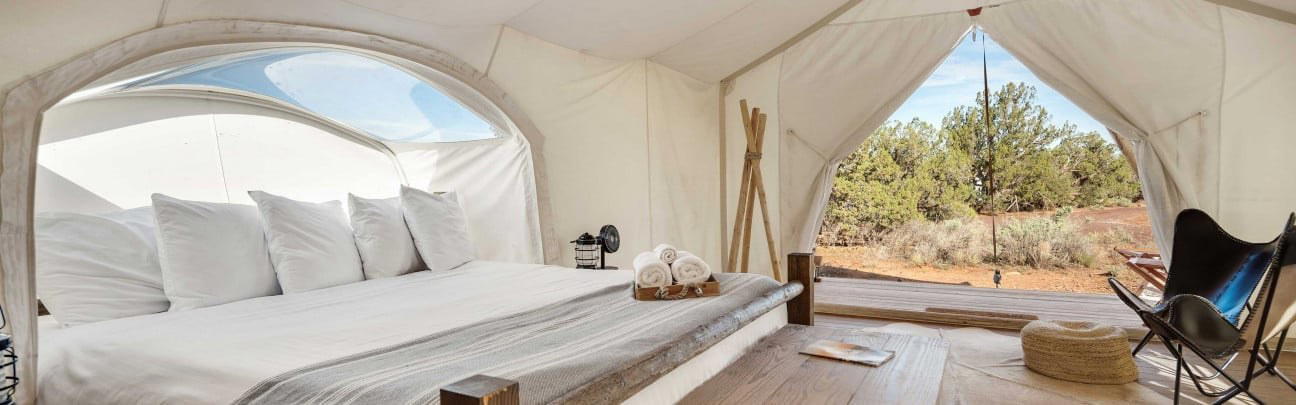
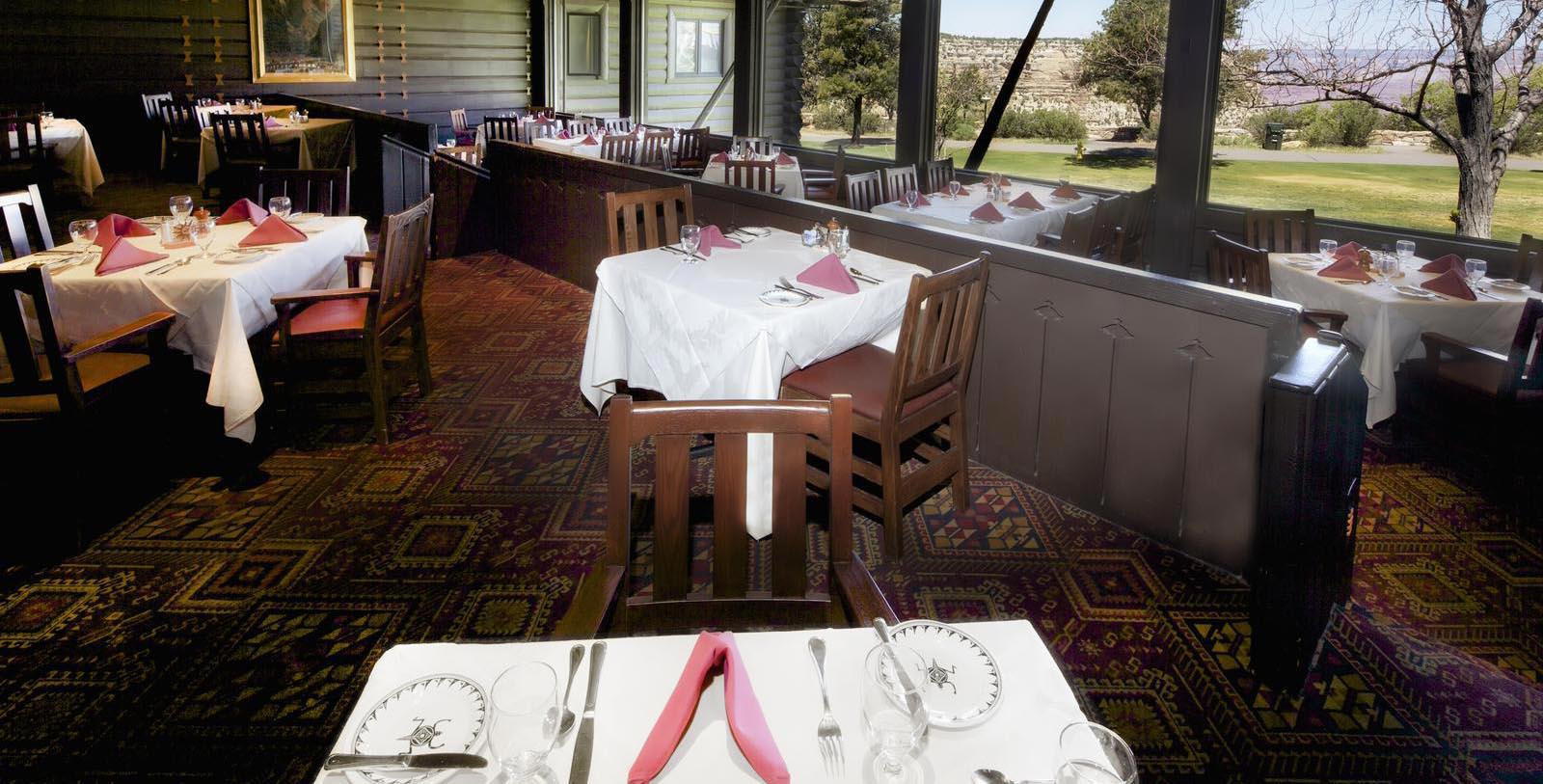
Accommodation is split between dormitory-style bunkhouses and a small number of private cabins. Neither category is luxury in any conventional sense. The canteen serves meals on a set schedule, and guests who plan to eat there must arrange that in advance as part of their stay booking. The Colorado River Corridor sits within Grand Canyon National Park, so all overnight stays at Phantom Ranch require coordination through the park's concessioner reservation system, which opens allocations up to 15 months ahead and operates a waiting-list lottery for high-demand dates. Dates in spring (March through May) and autumn (September through November) book earliest, as summer temperatures on the canyon floor regularly exceed 100 degrees Fahrenheit.
The Colter Legacy and Its Place in American Architectural History
Mary Colter designed several structures across the Grand Canyon's South Rim, including Hopi House (1905), Hermit's Rest (1914), the Lookout Studio (1914), and Desert View Watchtower (1932). Phantom Ranch was her only commission at the canyon floor, which gave her a fundamentally different brief than the rim-side observation structures. Those buildings perform for day visitors. Phantom Ranch had to function as a working camp for travellers who had already committed to the landscape.
The National Park Service added Phantom Ranch to the National Register of Historic Places in 1978, recognising the integrity of the original 1922 construction. That recognition matters for understanding what the site is and is not: it is a preserved historic property within a federally managed wilderness corridor, not a resort that happens to use stone cladding. The peer comparison here is not with hotel brands. Properties like Ambiente in Sedona or Blackberry Farm in Walland share an interest in environmental integration, but they operate within different frameworks of preservation and access entirely.
For travellers drawn to the intersection of architectural history and landscape immersion, Phantom Ranch is worth examining alongside other American properties that take site-specificity seriously: Amangani in Jackson Hole and Alpine Falls Ranch in Superior both reflect considered responses to dramatic Western terrain, though both operate at a comfort level and price point well above what Phantom Ranch offers.
How to Approach Planning
The reservation system for Phantom Ranch operates through Xanterra Travel Collection, the park's authorised concessioner. Demand consistently outpaces supply. The lottery system for overnight stays opens 15 months before the target date, and travellers who miss the lottery window can join a day-before waitlist that sometimes clears, though it is not a reliable fallback. Mule trips, which include accommodation and meals as a package, book through the same system and carry their own separate allocation. Anyone planning to hike in independently should treat the Phantom Ranch canteen reservation as a separate logistical item from the accommodation booking.
Travellers arriving from other premium Southwest destinations can use Phantom Ranch as part of a broader Arizona itinerary. Canyon Ranch Tucson sits roughly four hours south by road. Amangiri in Canyon Point is approximately two and a half hours north, just across the Utah border. See our full Coconino County guide for additional context on the broader region, which includes some of the most geologically distinct terrain in North America.
For readers benchmarking remote American lodging more broadly, the properties worth holding alongside Phantom Ranch on any consideration list include Kona Village in Kailua Kona, Little Palm Island in Little Torch Key, and SingleThread Farm Inn in Healdsburg. Each sits in a category defined more by what surrounds it than by what's inside it, which is the same logic that makes Phantom Ranch worth the considerable effort of getting there.
In Context: Similar Options
| Venue | Price | Awards |
|---|---|---|
| Phantom RanchThis venue (the venue you are viewing) | Not listed | Not listed |
| Aman New York | Not listed | 3 Michelin Keys · World's 50 Best #87 |
| Amangiri | $1,000–1,500 | 3 Michelin Keys · World's 50 Best #45 |
| Hotel Bel-Air | $750–1,000 | 3 Michelin Keys · World's 50 Best #57 |
| The Beverly Hills Hotel | Not listed | 3 Michelin Keys · World's 50 Best #65 |
| The Carlyle, A Rosewood Hotel | $1,500–2,500 | 2 Michelin Keys · World's 50 Best #64 |
Continue exploring
More in North Rim
Hotels in North Rim
All hotels in North Rim →
Details
- Rustic
- Scenic
- Well Known
- Cozy
- Romantic Getaway
- Weekend Escape
- Group Retreat
- Historic Building
- Panoramic View
- Mountain
Rustic and serene with stone and wood architecture in a remote canyon setting.