Our verdict
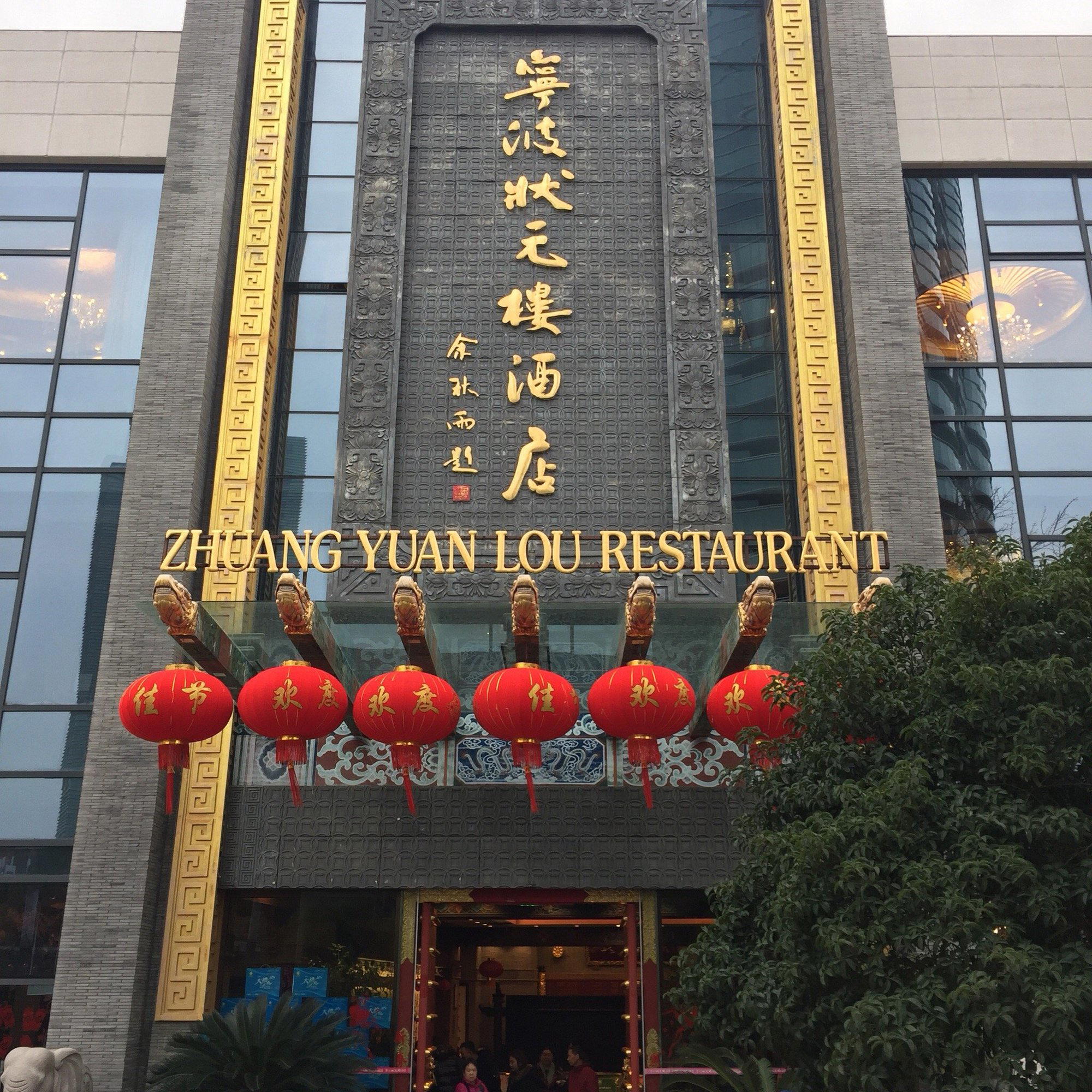
Zhuangyuanlou occupies a commanding position in Ningbo's Yinzhou district dining scene, where the city's Bang-cai tradition meets a formal banquet register that few restaurants in the region attempt at this scale. The address on Zhongshan East Road places it within reach of Ningbo's commercial core, making it a reference point for regional cuisine alongside peers like Chen House and MING COURT.

Pearl is the En Primeur Club membership app, where members save venues, book tables and use the concierge.
The menu
What to order
- Yellow croaker soup
Zhongshan East Road and the Weight of Ningbo's Dining Tradition
Ningbo's restaurant culture occupies a specific position in the broader map of eastern Chinese cuisine. The city gave the world Bang-cai, the coastal school of Zhejiang cooking defined by its precise handling of seafood, its restrained use of seasoning, and its insistence that the product speak without heavy intervention. That tradition has its formal expression in a tier of full-service restaurants along Zhongshan East Road and its surrounding arteries in the Yinzhou district, where the commercial density of modern Ningbo meets a dining culture that still prizes the banquet hall over the casual counter. Zhuangyuanlou Restaurant sits firmly within that tier, its address at Hongtai Plaza on Zhongshan East Road placing it in one of the district's higher-traffic corridors for business and celebratory dining.
The name itself carries historical resonance. Zhuangyuan refers to the top-ranking scholar in China's imperial examination system, a figure celebrated across the eastern provinces with a particular intensity in Ningbo, which produced a disproportionate share of the empire's leading intellectuals. A restaurant carrying that name is staking a claim to a specific cultural register: aspirational, ceremonially grounded, and oriented toward occasions that matter. This is not the kind of framing that happens accidentally in Chinese restaurant naming.
What the Location Says About the Dining Proposition
The Yinzhou district is not Ningbo's oldest dining quarter, but it functions as the city's contemporary commercial spine, drawing the kind of business banquets and family celebrations that define formal Chinese restaurant economics. In that context, an address at a development like Hongtai Plaza signals something about the intended clientele and the expected service register. The surrounding area sustains a competitive peer group that includes Chen House·Champion Tower, MING COURT, and HAI WEI SHI JIA RESTAURANT, each competing for the same occasion-driven dining occasions that anchor the formal Chinese restaurant segment.
That competitive set matters because it establishes what diners are comparing when they choose Zhuangyuanlou. These are not casual drop-in venues. They operate in a register where private dining rooms, multi-course banquet structures, and the careful orchestration of a shared meal across a large table define the experience. The neighbourhood enforces that expectation. Arriving at a Yinzhou commercial plaza for dinner carries a different social signal than arriving at a converted heritage building in Ningbo's older quarters near Tianyi Square, and restaurants in this corridor calibrate their offer accordingly.
For visitors comparing Ningbo against other Zhejiang destinations, the city's formal dining scene occupies a middle position between the more internationally profiled restaurants of Hangzhou, where venues like Ru Yuan draw a wider tourist audience, and the strictly local registers of smaller coastal towns. Ningbo's top-tier restaurants serve a clientele that is predominantly domestic, commercially connected, and deeply familiar with the cuisine's technical standards. That audience is a demanding one.
Bang-Cai at the Formal Register
Understanding what a restaurant like Zhuangyuanlou is doing requires some grounding in what Bang-cai actually demands at the formal level. The cuisine is built around local seafood, freshwater ingredients, and a set of preserved and fermented components (salted fish, fermented tofu, aged wine) that give it a depth unavailable in cuisines relying purely on fresh ingredients. The technical difficulty lies in balancing those intensely flavoured preserved elements against the delicacy of live seafood without flattening either. At the banquet level, that challenge is multiplied across eight to twelve courses for a table of ten, where pacing, temperature control, and the sequencing of flavour weights become as important as any individual dish.
The formal Ningbo banquet tradition differs from Cantonese banquet culture in meaningful ways. Where Cantonese formal dining often foregrounds roasting techniques and dim sum traditions, Ningbo's banquet structure tends to emphasize braised preparations, steamed whole fish, and the ceremonial presentation of seasonal shellfish. The result is a slower, more textural progression through a meal. Comparable formal expressions of regional Chinese cuisine in peer cities include venues like Xin Rong Ji on Xinyuan South Road in Beijing and Dai Yuet Heen in Nanjing, each anchoring a specific regional tradition in a banquet-capable setting. Ningbo occupies a different culinary register, but the structural ambition is the same: a full-service venue capable of hosting the most formally significant meals a local or business visitor might need to arrange.
Within Ningbo itself, the question of where to anchor an important dinner involves comparing venues across this peer group. Ning bo meiyan and the Dining Room (悦轩) operate in adjacent registers, and each has a specific orientation that affects which occasion suits it leading. Our full Ningbo restaurants guide maps these options against different visitor needs and dining contexts.
Planning Your Visit
Zhuangyuanlou is located at Building 12, Hongtai Plaza, 1665 Zhongshan East Road, Yinzhou District, Ningbo. The address is accessible by taxi or rideshare from Ningbo's central areas, and the Yinzhou district's commercial infrastructure means parking is available for those arriving by private car. For first-time visitors, the venue is most naturally suited to group dining rather than solo or couple visits, given the banquet orientation of formal Ningbo restaurant culture in this tier.
For visitors building a broader itinerary across eastern China's formal dining scene, useful reference points include 102 House in Shanghai, Xin Rong Ji in Chengdu, Fleurs Et Festin in Xiamen, Jiangnan Wok‧Rong in Fuzhou, Dingshan·Jiangyan in Suzhou, and Imperial Treasure Fine Chinese Cuisine in Guangzhou, each anchoring a distinct regional tradition in a comparable formal register. For those curious how Chinese fine dining compares to its international peers, Le Bernardin in New York City and Atomix in New York City represent the western and Korean-American benchmarks that often appear in cross-cultural dining conversations. Chef Tam's Seasons in Macau offers another point of comparison for formal Chinese cuisine at the Michelin-recognised level.
Frequently asked questions
How do I find Zhuangyuanlou Restaurant (宁波状元楼酒店)?
Zhuangyuanlou Restaurant (宁波状元楼酒店) is located at 鄞州区中山东路1665号宏泰广场12幢, 宁波, 浙江, Ningbo.
Is Zhuangyuanlou Restaurant a good choice for a business dinner in Ningbo?
The venue's location in Yinzhou District's Hongtai Plaza, on Zhongshan East Road, places it squarely within Ningbo's commercial business corridor, and the restaurant's formal Bang-cai positioning maps closely to the kind of setting that suits structured corporate entertaining. Bang-cai's emphasis on composed, coastal Zhejiang dishes carries strong regional cultural weight, a meaningful signal in a city that takes its culinary heritage seriously. That combination of address, cuisine register, and format makes it a logical shortlist option for business meals where local character matters.
What should I order at Zhuangyuanlou Restaurant (宁波状元楼酒店)?
Zhuangyuanlou is positioned as a formal-register Bang-cai venue, so the menu is rooted in the coastal Ningbo tradition, a cuisine built on precision salt-curing, fresh East China Sea seafood, and restrained seasoning that preserves the ingredient rather than transforming it. Given its Yinzhou district address and business-dining profile, the kitchen is likely running classic preparations that showcase these principles.
How far ahead should I plan for Zhuangyuanlou Restaurant (宁波状元楼酒店)?
Zhuangyuanlou sits in Hongtai Plaza on Zhongshan East Road, Ningbo's contemporary commercial spine, which means weekday lunch and dinner slots tied to business entertaining fill faster than a neighbourhood spot would. For group bookings or private dining rooms, contacting the restaurant directly at least several days in advance is advisable. Walk-in availability during peak meal periods is difficult to predict without current reservation data, so erring on the side of advance notice is the practical default.
A Tight Comparison
A quick peer reference to anchor this venue in its category.
| Venue | Cuisine | Price | Awards | Notes |
|---|---|---|---|---|
| Zhuangyuanlou Restaurant (宁波状元楼酒店)This venue (the venue you are viewing) | Traditional Ningbo Cuisine | $20–30 | Not listed | Not listed |
| 钱湖渔港 Qianhu Yugang at Park Hyatt | Modern Zhejiang Seafood | Not listed | La Liste Top Restaurants | Chinese Seafood |
| Chen House·Champion Tower | Cantonese and Jiangzhe Fine Dining | Not listed | Black Pearl 1 Diamond | Not listed |
| HAI WEI SHI JIA RESTAURANT | Traditional Ningbo Seafood | $100–150 | Black Pearl 1 Diamond | Not listed |
| MING COURT | Innovative Cantonese | $50–100 | Black Pearl 1 Diamond | Not listed |
| Ning bo meiyan | Contemporary Lakeside Chinese | Not listed | Black Pearl 1 Diamond | Not listed |
Continue exploring
More in Ningbo
Restaurants in Ningbo
All restaurants in Ningbo →
Hotels in Ningbo
All hotels in Ningbo →
Details
- Classic
- Elegant
- Cozy
- Business Dinner
- Group Dining
- Family
- Celebration
- Special Occasion
- Historic Building
- Hotel Restaurant
- Waterfront
- A La Carte
- Set Menu
Traditional and old-fashioned, with a classic Chinese restaurant atmosphere that feels formal but conversational.