Our verdict
Set on the shores of Dong Qian Lake in Ningbo, Dining Room (悦轩) operates within a dining tradition rooted in Zhejiang's coastal and freshwater larder. The restaurant's lakeside address signals a direct relationship with the region's ingredient geography, placing it inside a small tier of Ningbo restaurants where provenance and setting are inseparable from the plate.

Pearl is the En Primeur Club membership app, where members save venues, book tables and use the concierge.
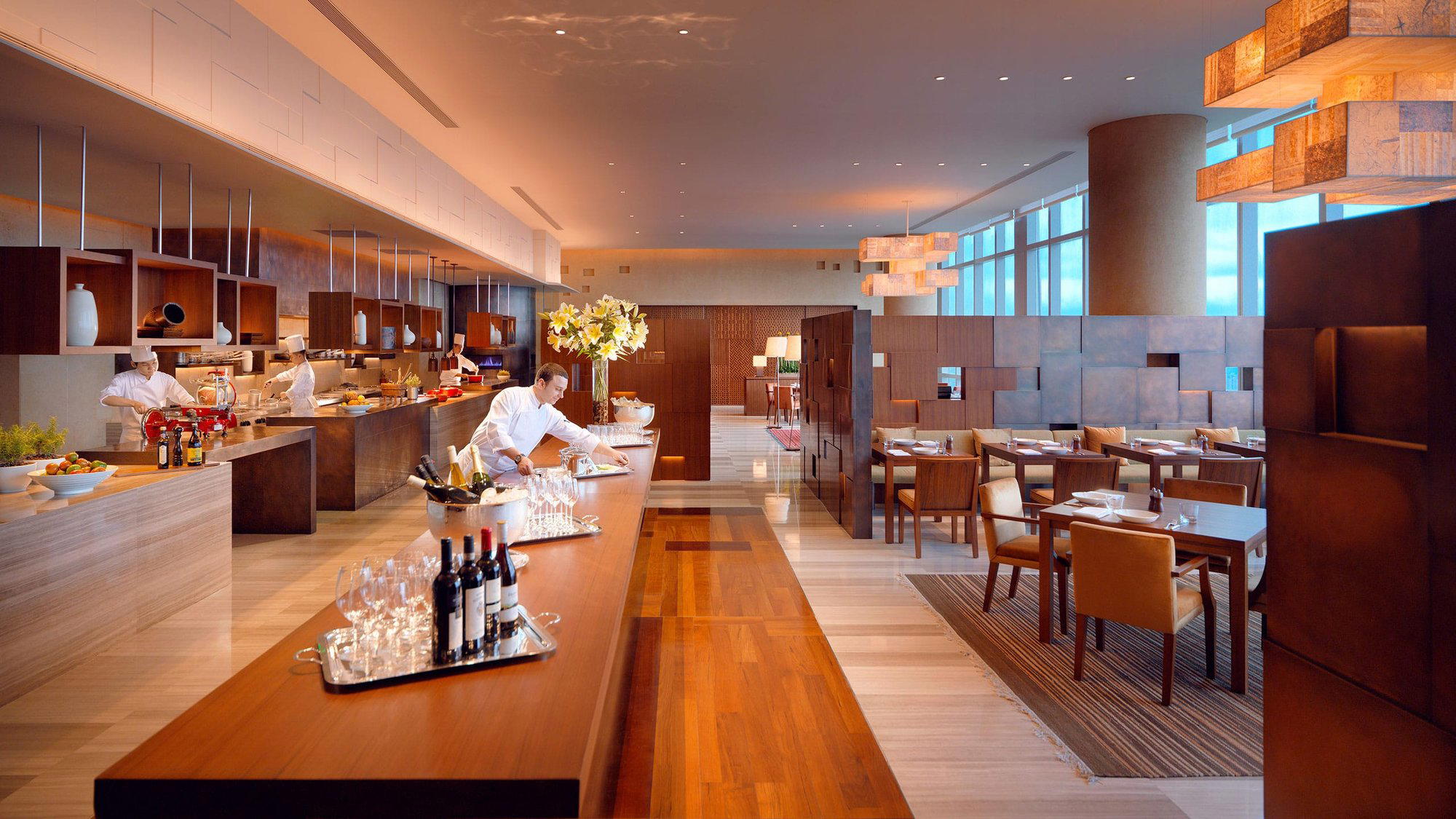
Lakeside, Not Incidental: Why Dong Qian Lake Changes the Dining Equation
In Zhejiang province, the distance between a kitchen and its water source has always mattered. Ningbo's dining identity rests on a specific geography: the East China Sea to the east, the Yong River threading through the city, and Dong Qian Lake sitting twelve kilometres to the south as a freshwater reserve of unusual ecological depth. Restaurants that place themselves on that lake's edge are not simply choosing a scenic address. They are making a claim about what arrives in the kitchen, how quickly, and in what condition. Dining Room (悦轩), at 188 Dayan Road on the lake's western flank, occupies that position.
The approach along Dayan Road gives the context before the food does. Dong Qian Lake covers roughly twenty square kilometres, and the drive around its perimeter passes wetland margins, fish cultivation areas, and the low hills that separate this basin from the coastal plain. By the time a guest arrives at the restaurant, the lakeside setting has already established a frame of reference that a city-centre dining room cannot replicate. That framing is not atmospheric decoration; in Zhejiang cuisine, proximity to freshwater sources has historically determined what a kitchen can promise about its produce.
The Ingredient Logic of Zhejiang Cooking
Zhejiang cuisine, one of China's eight recognised culinary traditions, is built around restraint in technique and directness in sourcing. Where Sichuan cooking announces itself through spice and Cantonese through the precision of high-heat wok work, Zhejiang's prestige dishes tend to let ingredient quality carry the argument. Freshwater fish braised with minimal intervention, river shrimp barely touched by heat, seasonal vegetables from the region's alluvial plains: the tradition prizes what the land and water produce over what the kitchen imposes. This is a cuisine in which sourcing is not a marketing point but a structural requirement.
Dong Qian Lake has been a supplier to Ningbo tables for centuries. The lake's freshwater species, particularly its carp, grass carp, and the smaller baitfish that inform local broths, sit inside a culinary memory that predates any individual restaurant. A dining room on the lake's edge inherits that history and, more practically, inherits a supply chain that city restaurants have to reconstruct through logistics. For diners making the journey from central Ningbo, that difference in origin translates into a difference on the plate, specifically in texture and in the absence of the flatness that accompanies extended transit.
Ningbo's broader dining scene has developed several restaurants focused on this coastal and freshwater sourcing argument. HAI WEI SHI JIA RESTAURANT and Seafood House both work within the coastal seafood register, while MING COURT and Ning bo meiyan approach the city's culinary identity from more formal angles. Dining Room (悦轩) occupies a distinct position in this set by virtue of its lakeside address, which shifts the sourcing base from marine to freshwater and places it in a sub-category with fewer direct competitors within the city.
What the Lake Setting Means in Practice
The wider context of premium Chinese dining along the eastern seaboard has moved toward a clearer separation between hotel dining rooms and independent restaurants, and between venues that perform provenance and those that can substantiate it with geography. At the high end, restaurants like Xin Rong Ji in Beijing and Ru Yuan in Hangzhou have built reputations on specific ingredient sourcing and regional specificity. In Macau and Shanghai, Chef Tam's Seasons and Fu He Hui represent the formal, award-documented tier of Chinese fine dining, where the sourcing argument is embedded in tasting menus and published credentials.
Dining Room (悦轩) operates outside that formally documented tier, at least in terms of published awards. What the Dong Qian Lake address provides instead is a form of geographical credentialing: the restaurant is positioned where the ingredients are, which in Zhejiang culinary logic is its own form of authority. Across the region's dining scene, from Xin Rong Ji in Chengdu to Imperial Treasure in Guangzhou, the restaurants that hold sustained reputations tend to be explicit about where their primary ingredients originate. A lakeside address is the most direct form that explicitness can take.
Ningbo as a Dining City: Where 悦轩 Sits in the Wider Picture
Ningbo is consistently underrepresented in the international conversation about Chinese food cities despite sitting inside one of the country's most historically rich culinary regions. The city's port history shaped a cuisine that integrates preserved fish, fermented pastes, and dried seafood alongside fresh catch, giving Ningbo dishes a depth that differentiates them from the cleaner, lighter profiles associated with Hangzhou or Suzhou. This is a local cuisine with its own logic, not simply a regional variant of a larger Yangtze Delta tradition.
Within Ningbo, the dining scene splits broadly between city-centre restaurants serving a business and local clientele and destination restaurants on the Dong Qian Lake periphery that draw visitors willing to make the drive for a more specific experience. Chen House at Champion Tower anchors the urban formal end, while the lake district represents the ingredient-led, destination model. That split mirrors patterns visible in other Chinese cities with strong regional culinary identities: compare the urban-versus-source-adjacent divide in Nanjing's dining scene or the coastal sourcing arguments made by restaurants in Xiamen and Fuzhou.
For international visitors, Ningbo's dining culture offers a different register than the more globally familiar profiles of Beijing or Shanghai. It rewards the kind of attention that diners bring to destination restaurants in other contexts, whether that is the sourcing-first philosophy evident at Shang Palace in Yangzhou or the produce-driven precision of Western equivalents like Le Bernardin in New York or Lazy Bear in San Francisco. The common thread is a dining proposition built around where the food comes from, not just what is done to it in the kitchen.
Planning a Visit
Dining Room (悦轩) sits at 188 Dayan Road, Dong Qian Lake, Ningbo, a journey of roughly thirty to forty minutes from the city centre depending on traffic. The Dong Qian Lake area has developed a cluster of hospitality and dining venues over the past decade, making a half-day or full-day trip to the lake district a reasonable itinerary for visitors based in central Ningbo. For broader context on what the city offers across price points and cuisine types, the EP Club Ningbo restaurants guide maps the full dining scene. Specific booking details, hours, and pricing for 悦轩 are best confirmed directly with the venue, as this information was not available at the time of writing.
Frequently asked questions
Is Dining Room (悦轩) child-friendly?
Dining Room (悦轩) sits at 188 Dayan Road on the Dong Qian Lake circuit, a destination setting that draws families making a deliberate day trip rather than a casual neighbourhood outing. The lakeside environment tends to accommodate multigenerational groups, which is common in Ningbo's dining culture for weekend meals. That said, the restaurant's destination character suggests a considered, sit-down format rather than a drop-in one, booking ahead is advisable regardless of group composition.
What's the vibe at Dining Room (悦轩)?
The address at Dong Qian Lake, roughly thirty to forty minutes from central Ningbo, sets the tone before you arrive: this is a purpose-made journey, not a convenience stop. Lakeside destination restaurants along this stretch of Zhejiang province tend toward composed, unhurried dining rather than the faster tempo of urban Ningbo. Expect a setting oriented around the water and the kind of deliberate pacing that suits a long lunch or early dinner.
Is Dining Room (悦轩) worth the drive from central Ningbo to Dong Qian Lake?
The thirty-to-forty-minute journey from Ningbo city centre to 188 Dayan Road is a recurring calculation for anyone considering the Dong Qian Lake dining circuit. Zhejiang's tradition of sourcing-led cooking means that restaurants positioned directly on the lake carry a geographical argument that urban Ningbo venues cannot replicate, proximity to freshwater ingredients is a functional distinction, not a scenic one. For visitors already committed to understanding Ningbo's regional food culture, the drive is part of the premise rather than a drawback.
What should I eat at Dining Room (悦轩)?
Zhejiang cuisine, one of China's eight recognised culinary traditions, builds around light technique and proximity to source, braised and steamed preparations typically outperform anything that competes with the ingredient rather than showcasing it. Prioritise whatever the kitchen identifies as seasonally current.
What part of town is Dining Room (悦轩) in?
Dining Room (悦轩) is located at 188 Dayan Road, Dong Qian Lake, 宁波, 浙江, 315123, Ningbo.
Do I need a reservation for Dining Room (悦轩)?
Given the location on Dayan Road at Dong Qian Lake, outside Ningbo's city centre and accessible only by a deliberate drive, arriving without a booking is a genuine risk. Destination restaurants in this part of Zhejiang fill on weekends with Ningbo residents making a specific trip, and the journey makes a turned table far more disruptive than it would be in the city. Contacting the venue before travelling is the practical position.
What's the signature at Dining Room (悦轩)?
Within the context of Zhejiang's culinary tradition and the restaurant's direct position on Dong Qian Lake, the reasonable working assumption is that freshwater fish and lake-sourced ingredients anchor the menu, these are the credentials that give lakeside Ningbo restaurants their specific identity within the broader Zhejiang scene. Confirming the current focus with the restaurant directly remains the most reliable approach.
Comparable Spots, Quickly
| Venue | Cuisine | Price | Awards | Notes |
|---|---|---|---|---|
| Dining Room (悦轩)This venue (the venue you are viewing) | Western and Chinese Comfort Food | Not listed | Not listed | Not listed |
| 钱湖渔港 Qianhu Yugang at Park Hyatt | Modern Zhejiang Seafood | Not listed | La Liste Top Restaurants | Chinese Seafood |
| Chen House·Champion Tower | Cantonese and Jiangzhe Fine Dining | Not listed | Black Pearl 1 Diamond | Not listed |
| Ning bo meiyan | Contemporary Lakeside Chinese | Not listed | Black Pearl 1 Diamond | Not listed |
| Seafood House | Authentic Ningbo Seafood | $50–100 | La Liste Top Restaurants · Black Pearl 1 Diamond | Not listed |
| MING COURT | Innovative Cantonese | $50–100 | Black Pearl 1 Diamond | Not listed |
Continue exploring
More in Ningbo
Restaurants in Ningbo
All restaurants in Ningbo →
Hotels in Ningbo
All hotels in Ningbo →
Details
- Elegant
- Serene
- Sophisticated
- Business Dinner
- Family
- Special Occasion
- Hotel Restaurant
- Waterfront
- Garden
- A La Carte
- Buffet
Elegant and serene home-style atmosphere.