Pacuare Lodge


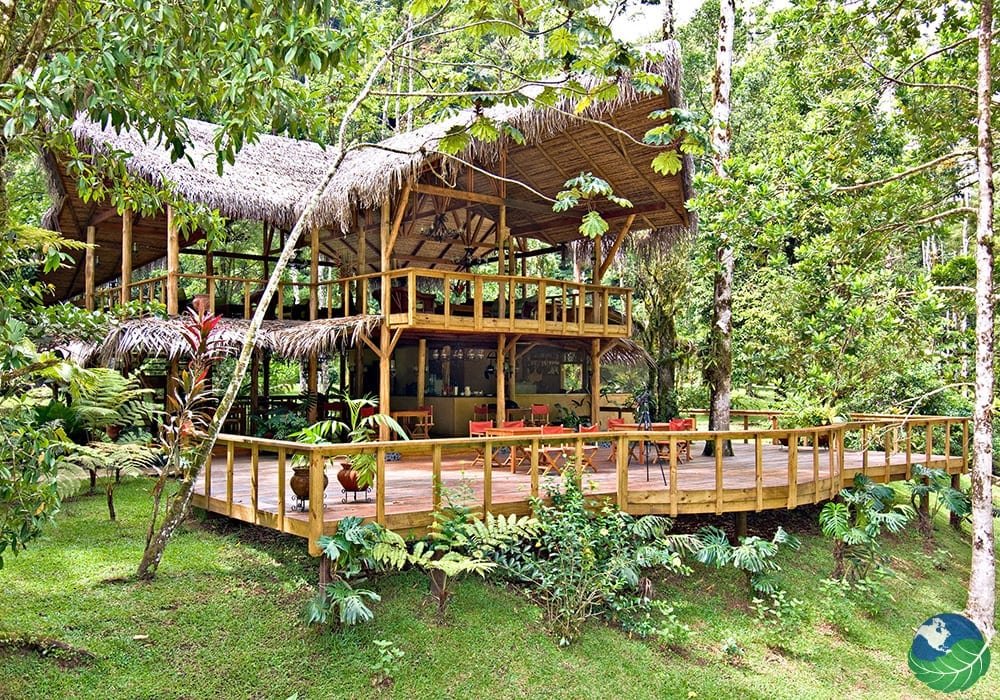
Reached by whitewater raft through the jungle of central Costa Rica's Limón province, Pacuare Lodge places 18 suites and villas in a remote river canyon with no road access. Palm-thatched bungalows with canopied king beds, tiled bathrooms with jungle views, and private hammock terraces define the standard; the Jaguar Villa adds a spring-fed pool accessible only by suspension bridge. At $803 per night, it sits at the premium end of Costa Rica's eco-lodge tier.
Arriving by River
The approach to Pacuare Lodge sets the register for everything that follows. Rather than a paved driveway or a lobby drop-off, guests arrive by inflatable raft, luggage sealed in waterproof bags, after a whitewater run through the Río Pacuare canyon. For a property that prices at $803 per night and competes with Costa Rica's more conventionally appointed luxury resorts, including Andaz Costa Rica Resort at Peninsula Papagayo in Guanacaste and Hacienda AltaGracia, Auberge Resorts Collection in Pérez Zeledón, this entry sequence is a deliberate architectural choice, not a logistical quirk. The river is the threshold. Crossing it transforms the guest from traveler to inhabitant of a place that operates on the jungle's terms, not the hospitality industry's defaults.
That framing matters because it explains almost every other design decision on the property. The 18 suites and villas are distributed through the rainforest canopy rather than grouped around a central building. Limited electricity is a policy, not a limitation. Wi-Fi works only in the lobby. These are not failings in the infrastructure; they are the infrastructure, shaped around the founding logic of sustainable tourism and the specific character of a remote river canyon in central Costa Rica.
The Architecture of Immersion
Costa Rica's eco-lodge category has matured considerably over the past two decades. Early iterations of the format meant rustic conditions dressed up with environmental credentials. The more recent cohort, which includes properties like El Silencio Lodge & Spa in Bajos del Toro, Origins Luxury Lodge in Bijagua, and Nayara Tented Camp in Arenal Volcano National Park, operates at the intersection of ecological seriousness and accommodation quality that requires no apology. Pacuare Lodge belongs firmly to that second generation.
The bungalows carry palm-thatched roofs constructed by members of the native Cabécar tribe, a community with deep ties to this stretch of the Limón province. The craftsmanship is not decorative heritage-washing; it reflects a working relationship between the lodge and local communities that extends to its kitchen staffing, drawn predominantly from nearby towns. Bathrooms are tiled with care and positioned to frame jungle views. Beds are king-sized and made with Egyptian cotton linens. The combination signals a particular design philosophy: materials and methods that are specific to place, paired with comfort standards that require no trade-off. The canopied beds and hammocked terraces are not rustic gestures; they are the primary furniture of a stay organized around the sounds and rhythms of the river below.
The property's most architecturally considered spaces are the Jaguar Villa and the Canopy Suite. Both are accessible only by private suspension bridge, refined well above the forest floor. The Jaguar Villa adds a spring-fed swimming pool and an outdoor shower, making it the closest the lodge comes to a self-contained retreat within a retreat. At 18 rooms total, the property operates at a scale where the suspension bridge to your suite is not a theatrical flourish but a practical reality of where, exactly, your accommodation sits in the tree cover.
Eating in the Canopy
Dining at Pacuare Lodge operates without the anchor of a named chef or a tasting menu built for press coverage. The kitchen runs on local staff cooking with farm-sourced ingredients, served by candlelight. What distinguishes the food program architecturally is a single venue: The Nest, an intimate treetop dining space accessible only by zip line. Arriving to dinner via a 400-foot cable descent is not a gimmick appended to the restaurant; it is structurally part of the meal, and guests who request it are committing to a sequence in which the journey and the table are the same experience. For a lodge that limits electricity and positions itself around environmental restraint, this is a considered design decision: the most memorable dining moment requires no fossil fuel at all.
For context on how Costa Rica's premium lodge dining compares across the country, see our full Río Pacuare restaurants guide.
The Competitive Set
Placing Pacuare Lodge accurately in Costa Rica's lodging market requires separating it from beach-resort comparisons. Properties like Hotel Nantipa in Santa Teresa de Cobano, Casa Chameleon at Las Catalinas in Potrero, or Kura Boutique Hotel in Uvita De Osa operate along the Pacific coast, where the logic of a stay is organized around ocean access and surf conditions. Pacuare operates in a different register entirely: interior jungle, river canyon, no road access. Its closer peer set includes rainforest lodges that accept remoteness as a feature rather than a limitation, such as Lapa Rios in Puerto Jimenez and Drake Bay Getaway Resort in Drake Bay.
At $803 per night, Pacuare sits toward the upper end of that jungle-lodge cohort. What distinguishes it within the group is the architectural specificity of the arrival experience and the suspension-bridge access to certain suites, which go beyond the usual formula of a well-positioned deck with canopy views. The zip-line dinner option also gives the property a vertical dimension, literally and experientially, that most competitors do not replicate.
Guests for whom the remoteness itself is the draw will find fewer options nationally. Those who want adventure-lodge credentials alongside coastal convenience can compare broader options in our full Río Pacuare hotels guide.
What a Stay Involves
Whitewater rafting is the standard arrival method, and the river journey is graded for novices, meaning no prior experience is required. Once settled, the activity options include jungle hikes and canopy tours alongside the zip-line dinner, but the property's design also supports doing very little: hammocks face the river, wildlife moves through the canopy overhead without prompting, and toucans and monkeys are regular presences in the trees. For guests accustomed to properties like Nayara Gardens in La Fortuna or Hotel Belmar in Monteverde, where structured programming anchors the stay, Pacuare's pacing will feel deliberately open-ended. The lodge does not push a schedule. The river canyon does.
Practical note: the lodge is located in the Limón province of central Costa Rica, with no road access to the property itself. Planning should account for the raft arrival as a fixed element of the journey, not an optional upgrade. For further context on the region's experiential options, see our full Río Pacuare experiences guide, our full Río Pacuare bars guide, and our full Río Pacuare wineries guide.
Frequently Asked Questions
Is Pacuare Lodge more formal or casual?
Pacuare Lodge sits firmly in the casual register, but it is casual in the way that remote jungle properties tend to be: the informality is structural rather than accidental. There is no dress code implied by the architecture, meals are served by candlelight rather than in a formal dining room, and the wildlife and river set the ambient conditions. Guests arriving from properties like Aman New York in New York City or The Fifth Avenue Hotel in New York City should recalibrate expectations accordingly. The comfort level is high — Egyptian cotton linens, tiled bathrooms, spring-fed pool in the Jaguar Villa — but the formality of service is minimal by design. At $803 per night in the Limón province, the price reflects remoteness and ecological specificity, not white-glove ceremony.
What room category do guests prefer at Pacuare Lodge?
Across the 18-room property, the Jaguar Villa draws the most attention for its combination of spring-fed pool, outdoor shower, and private suspension bridge access. It represents the most architecturally self-contained option on the property and functions as a separate treehouse within the larger lodge. The Canopy Suite shares the suspension-bridge access, giving it a similar sense of elevation and separation from the main grounds without the additional pool. For guests whose primary interest is the river and canopy views rather than a private pool, the standard suites with hammocked terraces and king beds deliver the core Pacuare experience at the base rate. More context on how these compare to other Costa Rican properties at a similar tier is available in our full Río Pacuare hotels guide, alongside comparisons to properties like Aman Venice in Venice for those cross-referencing international jungle-to-city alternatives, and regional peers including Hotel Aguas Claras in Puerto Viejo, Hotel Three Sixty in Ojochal de Osa, Los Altos Resort in Manuel Antonio, M/Y Kontiki Wayra in Quepos, and Esh Hotel & Spa in Nosara.
Peer Set Snapshot
These are the closest comparables we have in our database for quick context.
| Venue | Cuisine | Price | Awards | Notes |
|---|---|---|---|---|
| Pacuare Lodge | Price: $803 Rooms: 18 Rooms If you like, you could arrive at Pacuare Lodge in a chauffeured Jeep. But why go overland when you can roll up to the hotel’s entrance in an inflatable raft, your suitcase secured in a waterproof bag, dripping wet and triumphant after a rollicking whitewater journey through the jungle? The adventure of getting to this elegant eco-lodge is half the fun, and the trip, which is apt for novices, is a spectacular introduction to the lush tropical landscape of this remote region of central Costa Rica. But don’t expect a thrill a minute from the moment you settle in with a welcome cocktail. The exhilaration of the whitewater approach is the opposite of the relaxation you’ll experience while actually staying at Pacuare Lodge. This is an extremely peaceful place, tranquil and treehouse-like, with nineteen rather lavish suites and villas. Standard features include canopied king-sized beds made up with Egyptian cotton linens, beautifully tiled bathrooms with jungle views, and private terraces with hammocks overlooking the river. The Jaguar Villa has its own spring-fed swimming pool and outdoor shower and is accessible, like the nearby Canopy Suite, only by a private suspension bridge high in the trees. There’s limited electricity at Pacuare Lodge, and the wi-fi only works in the lobby. (Consider it a blessing.) That’s because the hotel was founded on the tenets of sustainable tourism and environmentally conscious practices. It’s staffed almost entirely by locals: members of the native Cabécar tribe constructed the bungalows’ palm-thatched roofs, and the kitchen staff is made up of young people from nearby communities. No namedrop-worthy chefs here, just fresh farm-to-table cuisine and candlelight, served, on request, at “The Nest,” an intimate treetop venue reachable only by zip line. Who said there’s no adventure after the welcome cocktail? Whether you plan a jungle hike or a canopy tour, or just plan to glide, in a harness, down a 400-foot cable to your dinner table, there’s plenty to keep you entertained at Pacuare Lodge. But no one will blame you for just swinging in a hammock all afternoon: the wildlife spectacle, starring a cast of colorful toucans and playful monkeys overhead, is free. | This venue | ||
| Andaz Costa Rica Resort at Peninsula Papagayo | ||||
| Four Seasons Resort at Peninsula Papagayo, Costa Rica | ||||
| Hacienda AltaGracia, Auberge Resorts Collection | ||||
| Casa Chameleon at Las Catalinas | ||||
| Drake Bay Getaway Resort |
Preferential Rates?
Our members enjoy concierge-led booking support and priority upgrades at the world's finest hotels.
Access the Concierge