


1 Michelin Key · Virtuoso Luxury Hotel Partner · Mr & Mrs Smith Seal of Approval
Sitting on eight hectares along the shore of the Lagoon of Seven Colors, Our Habitas Bacalar offers 34 A-frame rooms built with low-impact materials, a plant-focused restaurant drawing from nearby farms, and a wellness program rooted in Maya tradition. At $299 per night, it occupies the lower end of Bacalar's boutique-luxury tier while sitting well ahead of the area's budget ecolodge market.

Pearl is the En Primeur Club membership app, where members save venues, book tables and use the concierge.
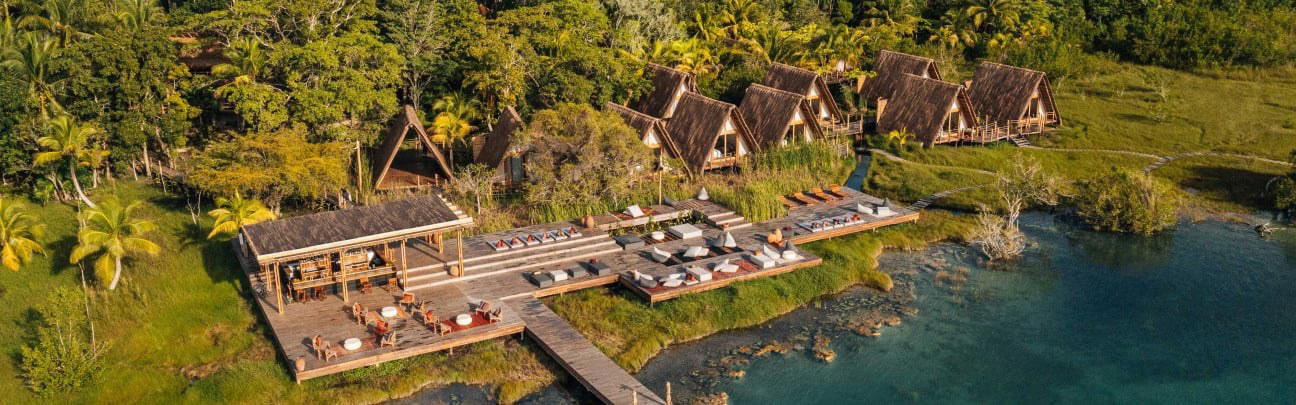
Where the Lagoon Sets the Terms
Approaching Bacalar from the north, the road from Tulum runs two hours through scrub jungle before the water appears. When it does, it arrives in layers: shallow turquoise over white sand, deeper jade over rock, then a blue so saturated it reads as artificial. The Lagoon of Seven Colors earns its name at every hour of the day, and Our Habitas Bacalar is built around exactly that fact. Positioned on an eight-hectare property directly on the lagoon's edge, the property makes no attempt to compete with or contain its setting. Instead, the architecture defers to it.
That deference is the first thing a guest notices. The 34 A-frame rooms sit on raised platforms, a structural choice made to protect local flora rather than for visual effect. Tented and timber-framed, they face either the lagoon or the jungle, and the outdoor shower in each unit is not a boutique affectation but a functional extension of the outdoor-first ethos the property is built around. Earth-toned interiors and private decks reinforce the same point: the room is a frame, not the picture.
Habitas was the first international hospitality group to open in Bacalar, arriving before the town attracted the attention of the broader design-hotel circuit. That timing matters. Properties like Boca de Agua Bacalar and Casa Hormiga now compete in the same small-luxury tier, but Habitas set the terms for what that tier could look like here: low-impact construction, a programming-led model, and a price point (from $299 per night) that sits below what comparable design-led properties charge elsewhere on the Yucatán coast.
Service as Orientation, Not Transaction
The guest experience at Our Habitas Bacalar is structured around orientation rather than transaction. This is a model that has become more common at small-footprint ecolodges across Latin America, where the property's remoteness makes self-directed exploration difficult. Bacalar is genuinely off the main tourist circuit: just a few miles from the Belize border, it draws a fraction of the traffic that reaches Tulum or Playa del Carmen. Guests arrive without the context that comes from an established tourist infrastructure, and the property's programming model addresses that gap directly.
The arts and culture program brings local musicians and traditional craft practitioners to the property, which means access to Maya cultural traditions that would otherwise require research and logistics most guests won't undertake on their own. The wellness center extends this further, with treatments built around local ingredients including Melipona honey, coconut, and cacao. These are not generic spa additions. Melipona bees are native to the Yucatán and were sacred to the ancient Maya; their honey appears in traditional medicine and remains commercially rare. Using it as a treatment component reflects a sourcing philosophy that runs through every part of the property's programming.
Yoga shala and daily wellness schedule mean guests don't need to seek out activities. They arrive to find a structure that can absorb as much or as little participation as they want. For properties at this remoteness level, that programming density is what separates a good stay from an isolating one. At comparable properties elsewhere in Mexico, including Xinalani in Quimixto or Playa Viva in Juluchuca, the same logic applies: the more remote the property, the more the programming has to work.
Siete and the Lagoon Deck
Two-story open-air restaurant, Siete, takes its name from the lagoon's seven colors. It operates on a sourcing model that the property's location makes both a constraint and a selling point: ingredients are hand-selected from nearby farms, and the menu is built around what Quintana Roo produces rather than what a resort kitchen might otherwise import. Plant-based preparations are central, framed not only in terms of flavor but as medicinally informed cooking drawing on local tradition.
This puts Siete in a category that several of the more thoughtful properties in the region share, though not many at this price tier. The farm-to-table model in the Yucatán carries real specificity: the peninsula's cuisine sits apart from central Mexican cooking, shaped by Maya ingredients and techniques that predate the Spanish colonial period. Achiote, chaya, and the region's distinctive citrus tradition give Yucatecan plant-based cooking a character that distinguishes it from the generic wellness-menu format found at many resort properties.
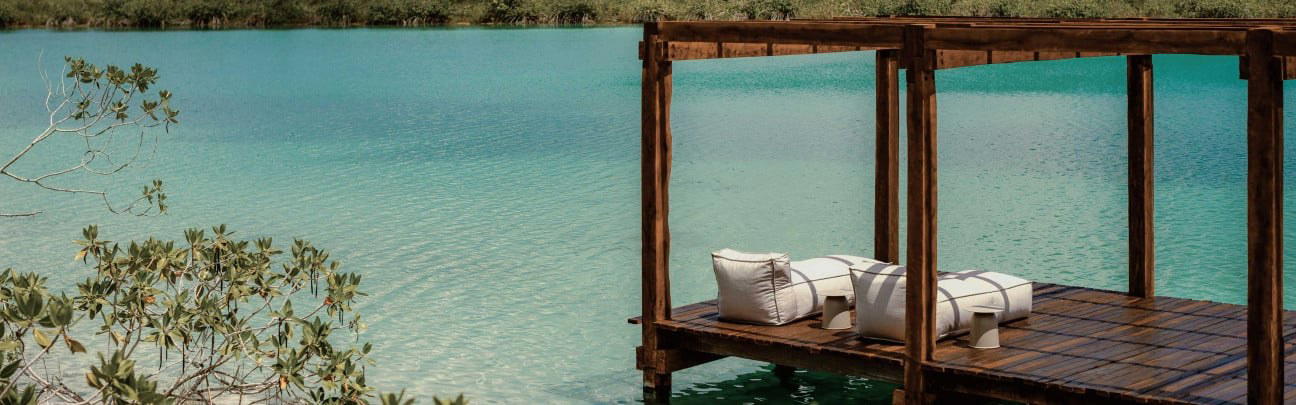
The Lagoon Deck bar, positioned to face the water, functions as the social anchor of the property. For guests who are not on a strict wellness schedule, it offers the most direct engagement with the lagoon short of getting into it. A sunrise paddleboard excursion is among the outdoor activities on offer; the lagoon's calm, shallow waters make it accessible to most fitness levels. For context on how this compares to the broader Riviera Maya hotel experience, properties like Maroma in Riviera Maya or Etéreo, Auberge Resorts Collection in Punta Maroma offer similar outdoor programming at a higher price point, but without Bacalar's particular remoteness or the lagoon's unusual optical qualities.
Bacalar Against the Yucatán Luxury Map
The Yucatán Peninsula's premium hotel market has expanded considerably over the past decade, distributing itself across a range of settings from Tulum's cenote-adjacent jungle properties to the established resort corridors of Los Cabos. Habitas Bacalar occupies a specific position in that expansion: a design-led, low-key property at the edge of the established tourist zone, priced to attract travelers who have already processed the more saturated options further north.
Comparing it to Hotel Esencia in Tulum, which draws on a longer legacy and a broader amenity set, or to Chablé Yucatán in Merida, which positions itself as a dedicated wellness destination with broader infrastructure, clarifies what Habitas Bacalar is and is not. It is not a full-scale resort. At 34 rooms across eight hectares, it operates at a scale where the staff-to-guest ratio allows for genuine attentiveness but where guests looking for extensive F&B; variety or large-scale amenities will find the offer narrow by comparison.
That narrowness is the point. The property's appeal depends on guests who are choosing Bacalar specifically, not guests defaulting to Bacalar because they couldn't get a room elsewhere. For that traveler, the remoteness, the lagoon, the low-impact construction, and the programming-led model compose a coherent case that few properties at this price level match anywhere in the peninsula. See our full Bacalar restaurants guide for what the town itself offers beyond the property's gates.
Planning Your Stay
Our Habitas Bacalar sits on Carretera Federal 307, approximately 30 minutes from Chetumal Airport. For travelers arriving from the north, the drive from Tulum runs around two hours. The Cancún corridor, including properties like Palmaïa in Playa del Carmen, is a longer transit, making Chetumal the practical entry point for Bacalar. Rooms start at $299 per night. With 34 keys, availability tightens during the winter dry season when the lagoon's colors are at their clearest; planning six to eight weeks ahead is prudent for December through March travel.
Category Peers
Comparable venues nearby, for context on price, style, and recognition.
| Venue | Cuisine | Price | Awards | Notes |
|---|---|---|---|---|
| Our Habitas BacalarThis venue (the venue you are viewing) | Wellness-focused eco-luxury resort with tented A-frame accommodations | $300–500 | 1 Michelin Key · Virtuoso Luxury Hotel Partner | Not listed |
| Casa Hormiga | Wabi-sabi design philosophy emphasizing natural imperfection, Moroccan-influenced decor with locally-sourced Yucatecan materials, and minimalist luxury aesthetic. | $200–300 | 1 Michelin Key · Mr & Mrs Smith Seal of Approval | Bacalar |
| Boca de Agua Bacalar | Polished treehouse villas crafted from local FSC wood, harmoniously integrated into the jungle and lagoon. | $500–750 | 1 Michelin Key · Mr & Mrs Smith Seal of Approval | Bacalar |
| Viceroy Riviera Maya | Exclusive luxury villa resort emphasizing privacy, natural integration, and personalized service with butler options. | $1,000–1,500 | 1 Michelin Key · La Liste Top Hotels | Playa del Carmen |
| Chablé Maroma | Mayan-inspired luxury villas in jungle-beach setting | $1,000–1,500 | 1 Michelin Key · Virtuoso Luxury Hotel Partner | Punta Maroma |
| Hotel CIGNO | Restored 19th-century colonial mansion with contemporary interpretation | Not listed | 1 Michelin Key · Mr & Mrs Smith Seal of Approval | Barrio de la Ermita |
Recognition history
Dated appearances from independent guides and award organizations, with the underlying list record or original source where available.
Michelin 1 Key
Michelin
Mr & Mrs Smith Seal of Approval
Mr & Mrs Smith
Virtuoso Luxury Hotel Partner
Virtuoso
Full recognition history (4 entries)
Michelin 1 Key
Michelin
Continue exploring
More in Bacalar
Restaurants in Bacalar
All restaurants in Bacalar →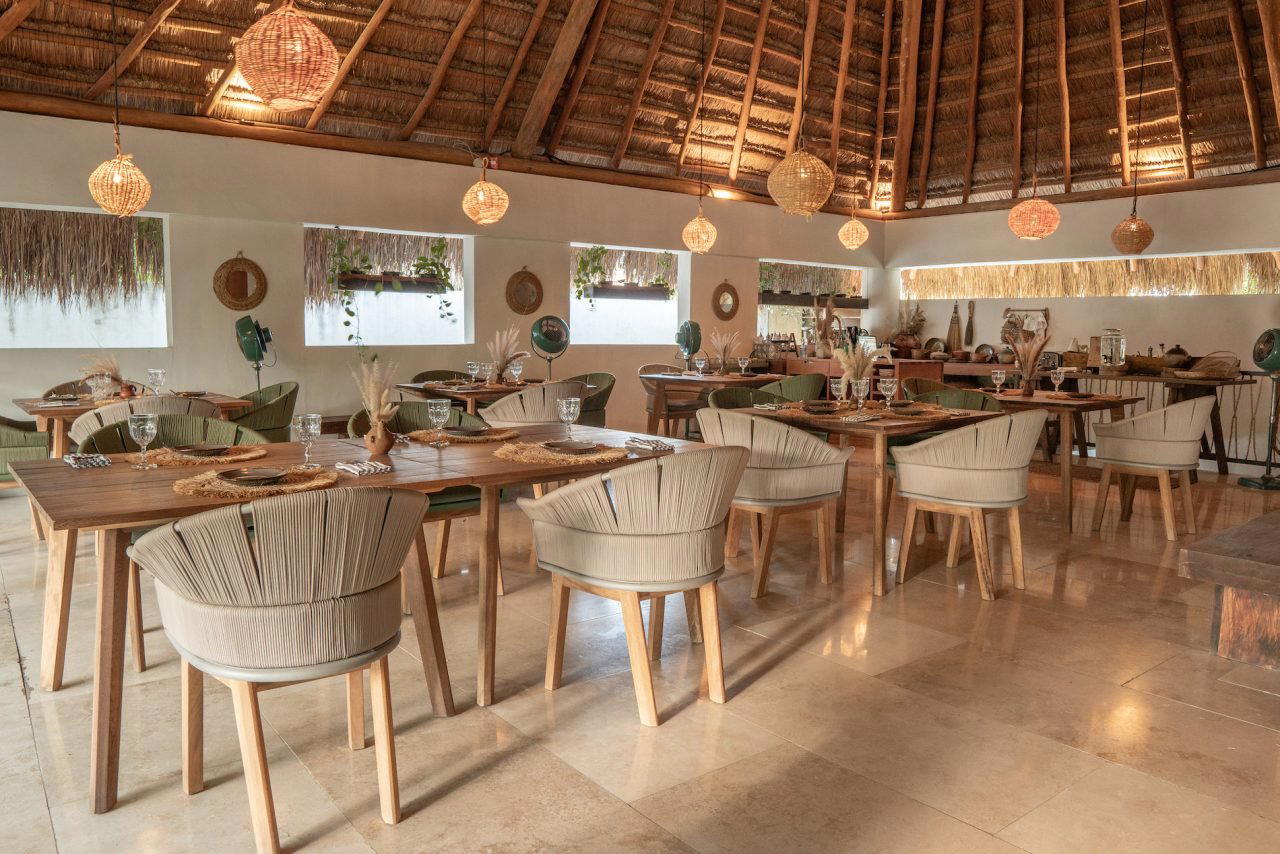
Details
- Quiet
- Bohemian
- Scenic
- Intimate
- Minimalist
- Honeymoon
- Romantic Getaway
- Wellness Retreat
- Weekend Escape
- Waterfront
- Garden
- Terrace
- Wi Fi
- Pool
- Spa
- Fitness Center
- Restaurant
- Massage
- Waterfront
- Garden
- Step Free Entrance
Tranquil and rejuvenating atmosphere with natural lighting from jungle and lagoon views, enhanced by garden settings and outdoor entertainment areas.