


1 Michelin Key · Mr & Mrs Smith Seal of Approval · Design Hotels Member
Boca de Agua Bacalar sits at the edge of one of the Yucatán's most extraordinary bodies of water, where 22 treehouse-style rooms on stilts frame uninterrupted views of the Bacalar lagoon. Rates from $380 position it in Bacalar's premium, design-conscious tier alongside a handful of low-key eco-properties that trade resort scale for immersive jungle proximity.

Pearl is the En Primeur Club membership app, where members save venues, book tables and use the concierge.
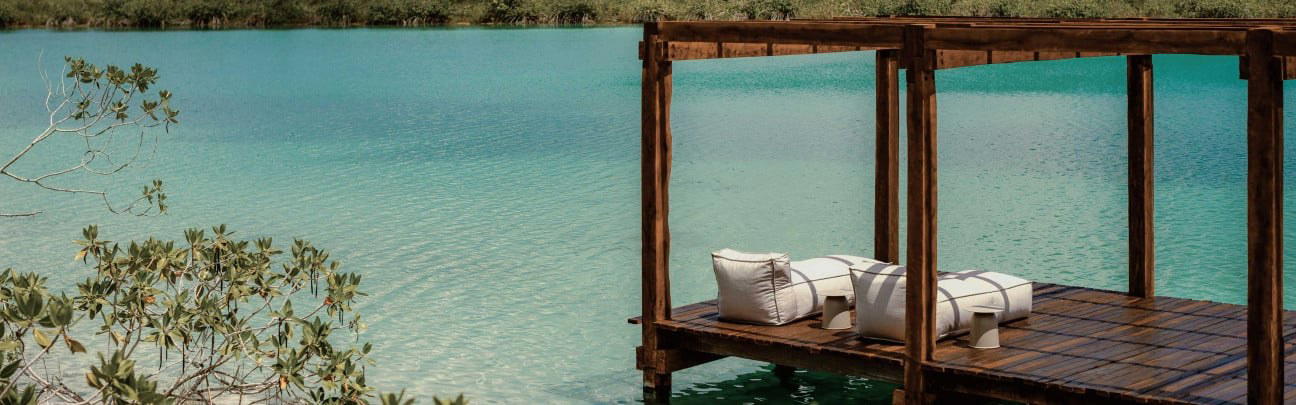
Architecture Built Around Disappearing Into the Landscape
Bacalar's lagoon has a quality that photographs consistently fail to convey: the water changes colour across its width, shifting from jade to a deep cobalt depending on depth and light, which is how it earned the name Lagoon of Seven Colours. The hotels that have appeared along its banks in the past decade reflect two divergent approaches. The first places a structure at the water's edge and calls it done. The second asks how a building might sit within the environment so lightly that guests feel the architecture itself is participating in the natural world around it. Boca de Agua Bacalar belongs firmly to the second school.
The property's 22 rooms are designed as treehouses lifted on stilts above the forest floor. This is not a decorative gesture. Raising a structure on stilts reduces its physical footprint on the ground, preserves root systems and understory growth beneath, and creates a spatial relationship between guest and canopy that a ground-level room cannot replicate. From the upper level of a stilted room, sightlines clear the lower vegetation and meet the lagoon on equal terms. The visual effect, depending on the morning, may include a spider monkey in the branches or an iguana tracking sun along a nearby trunk. These are incidental details of the place's design logic, not marketed features.
Across Mexico's premium coastal and lagoon-side hospitality, the stilted or refined structure has become a design shorthand for environmental seriousness. Properties like Playa Viva in Juluchuca and Xinalani in Quimixto have used similar elevation strategies in different coastal ecosystems. What distinguishes the Bacalar version is the lagoon itself: the water is shallow enough in places to see its sandy bottom in high definition, and dense jungle presses close to the shoreline on all sides, so the interplay between constructed and natural feels particularly compressed.
The Conscious Hospitality Model
Boca de Agua positions itself explicitly around what it calls a conscious form of hospitality, a framing that has become common enough in the premium eco-resort segment to require some unpacking. In practice, this tends to mean a combination of low-impact building design, proximity to cultural and ecological sites, and programming oriented around the natural environment rather than resort amenities. At Boca de Agua, the surrounding area reinforces this ambition: Mayan ruins are accessible from the property, and the lagoon provides a direct route into kayaking, paddleboarding, and swimming in water of a clarity more associated with cenotes than open lagoons.
Properties like Etéreo, Auberge Resorts Collection in Punta Maroma or Maroma in Riviera Maya deliver high-end programming with larger infrastructure and brand-backed assurance. Boca de Agua's appeal operates differently: it is small-scale, lagoon-specific, and the experience depends on the place's natural character rather than on constructed entertainment. The 22-room count keeps the property intimate enough that the environment remains the dominant presence rather than the guest count.
Bacalar in Context
Bacalar is located in the southern reaches of Quintana Roo, significantly closer to Chetumal and the Belize border than to Cancún, which shapes both its visitor profile and its pace. The town has grown in visibility over the past five years as travellers looking for an alternative to the Riviera Maya's resort corridor have discovered the lagoon. That growth has brought boutique hotels of varying quality, and Bacalar now sits in an interesting transitional moment: defined enough to attract a discerning traveller, but not yet so developed that the environmental qualities that make it appealing have been compromised.
Boca de Agua's address on Carretera Chetumal-Cancún at KM 4.5 places it just outside the town's main strip, close enough to access the pueblo's restaurants and sailboats but with sufficient separation to maintain the sense of isolation the property depends on. For practical comparison, Our Habitas Bacalar and Casa Hormiga are among the other serious options in town; each has a distinct architectural language and guest proposition. Boca de Agua's treehouse format and its emphasis on jungle immersion represent one specific answer to what a Bacalar stay should be.
Travellers who arrive expecting the infrastructure of a full-service international resort, along the lines of One&Only; Mandarina in Riviera Nayarit or Las Ventanas al Paraíso in San José del Cabo, will find a different proposition here. The comparison to make is rather with properties like Chablé Yucatán near Merida, where the surrounding landscape is built into the experience as a central feature rather than as a backdrop.
What the Rooms Ask of You
At $380 per night, Boca de Agua occupies the premium tier for Bacalar, where price points span a wide range and the relationship between rate and experience can be inconsistent. For context, the rate is modest relative to comparable eco-luxury in other Mexican coastal markets: Montage Los Cabos or Zadun, A Ritz-Carlton Reserve in Los Cabos operate in a significantly higher bracket with commensurately different amenity sets. What Boca de Agua offers at that rate is environmental specificity: the lagoon is immediately accessible, the jungle is not a landscaped garden, and the treehouse rooms are designed to hold you inside the experience rather than insulate you from it.
The structure of a treehouse stay changes the relationship between guest and environment in a way worth understanding before booking. Birdsong arrives at volume. Humidity is present. Light behaves differently through a canopy than through blackout curtains against a sea view. These are features of the format, not shortcomings. The property's mindfulness framing is most coherent understood in these physical terms: it is a setting that creates attentiveness whether you arrive intending it or not.
Planning Your Stay
The Yucatán's dry season runs broadly from November through April, and the Bacalar lagoon is most reliably clear and swimmable in that window. The region's rainy season, from May through October, brings afternoon downpours that are typically brief but intense, and humidity rises considerably. A treehouse stay in the wet season is a specific sensory experience that some guests find compelling; others should plan accordingly and adjust expectations for outdoor time.
Bacalar town is accessible by ADO bus from Chetumal and by driving from Cancún in roughly three to four hours. The property's KM 4.5 location on the main highway makes it direct to reach by car or taxi from the town centre. For context on where Boca de Agua fits within Bacalar's broader dining and activity offer, our full Bacalar restaurants guide maps the town's current food and drink scene.
Travellers building a longer Yucatán itinerary might consider pairing Bacalar with Hotel Esencia in Tulum for a contrast between jungle lagoon and Caribbean coast, or extending south toward Chetumal before looping back north. Guests who value the eco-architecture and small-room-count format and want to explore comparisons elsewhere in Mexico will find analogs in Casa Silencio in Oaxaca or Las Alamandas on the Costalegre, each of which solves the problem of luxury in a remote natural setting with a similarly reduced footprint.
Side-by-Side Snapshot
| Venue | Cuisine | Price | Awards |
|---|---|---|---|
| Boca de Agua BacalarThis venue (the venue you are viewing) | This venue | $500–750 | 1 Michelin Key · Mr & Mrs Smith Seal of Approval |
| One&Only Mandarina | Michelin 3 Key, World's 50 Best | Not listed | 3 Michelin Keys · World's 50 Best #23 |
| Las Ventanas al Paraíso, A Rosewood Resort | Michelin 2 Key, World's 50 Best | $750–1,000 | 2 Michelin Keys · World's 50 Best #25 |
| Montage Los Cabos | Michelin 2 Key, World's 50 Best | $1,000–1,500 | 2 Michelin Keys · World's 50 Best #67 |
| Rosewood Mayakoba | Michelin 2 Key, World's 50 Best | $1,000–1,500 | 2 Michelin Keys · World's 50 Best #95 |
| Zadun, A Ritz-Carlton Reserve | Michelin 2 Key, World's 50 Best | Not listed | 2 Michelin Keys · La Liste Top Hotels |
Recognition history
Dated appearances from independent guides and award organizations, with the underlying list record or original source where available.
Michelin 1 Key
Michelin
Design Hotels Member
Design Hotels
Mr & Mrs Smith Seal of Approval
Mr & Mrs Smith
Full recognition history (4 entries)
Michelin 1 Key
Michelin
Continue exploring
More in Bacalar
Hotels in Bacalar
All hotels in Bacalar →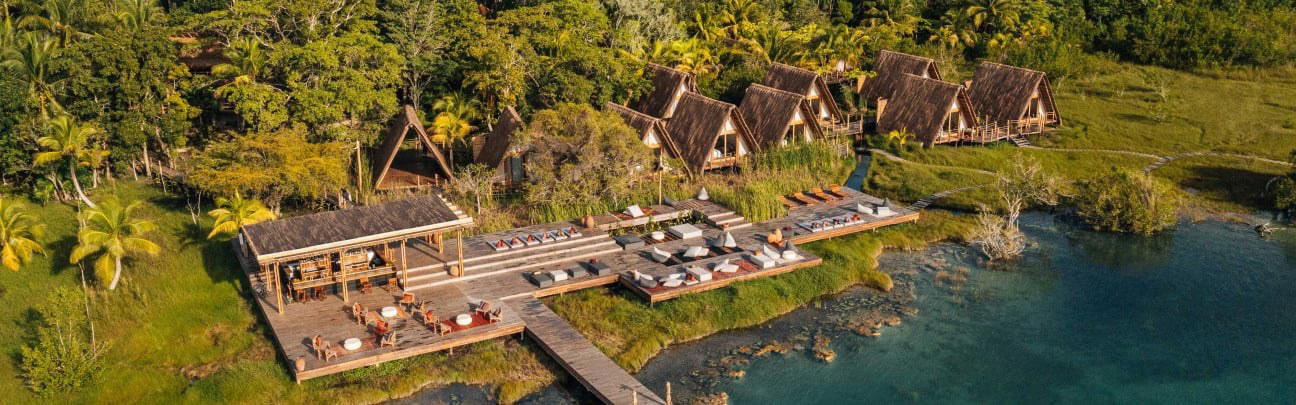
Restaurants in Bacalar
All restaurants in Bacalar →
Details
- Quiet
- Scenic
- Intimate
- Sophisticated
- Minimalist
- Romantic Getaway
- Wellness Retreat
- Weekend Escape
- Honeymoon
- Anniversary
- Private Villa
- Garden
- Waterfront
- Design Destination
- Panoramic View
- Wi Fi
- Pool
- Spa
- Restaurant
- Bar
- Concierge
- Room Service
- Waterfront
- Garden
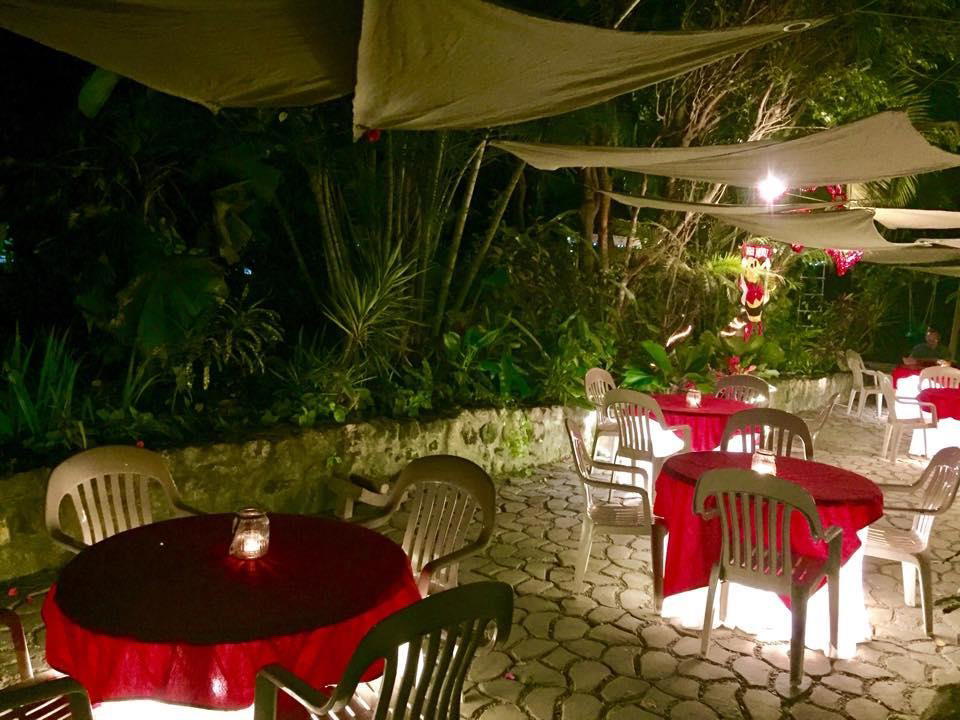
Quiet, serene, and nature-immersed, with a calming atmosphere shaped by jungle surrounds, lagoon views, soft natural light, and low-density treehouse villas.