New-build hotel project - Valmontone
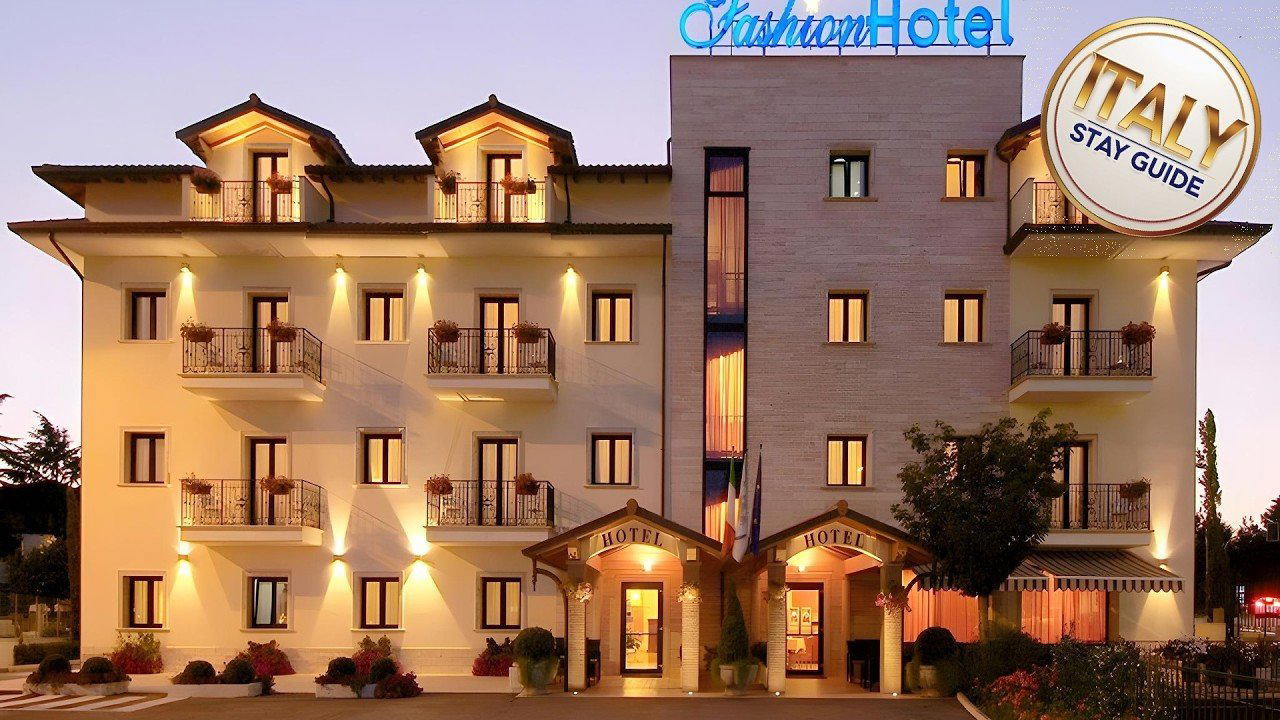
A new hotel development taking shape in Valmontone, a hilltop town in the Castelli Romani district southeast of Rome. The project positions itself within a region where medieval architecture, volcanic tufa geology, and proximity to the capital create a compelling case for design-led hospitality. Early-stage details remain limited, but the location alone places it in a competitive conversation with Lazio's most interesting emerging properties.

Pearl is the En Primeur Club membership app — saves, bookings, and concierge access live there. Same editors, same standards.
A New Property in the Castelli Romani: What the Location Signals
Valmontone sits in the Lepini hills southeast of Rome, roughly 40 kilometres from the capital by the A1 autostrada. The town is part of the broader Castelli Romani area, a volcanic plateau historically associated with papal summer retreats, local Frascati production, and the kind of compact hill-town urbanism that defines this quadrant of Lazio. What makes a new hotel project here architecturally interesting is precisely this layering: ancient tufa substructure, Baroque civic additions, and the physical drama of a ridge-leading settlement with views across the Roman Campagna. Any serious design response to the site has to take a position on all three.
Italian hospitality has split along a clear fault line. On one side sit the large international-brand properties concentrated in Rome, Florence, and Milan, from the Bulgari Hotel Roma to the Four Seasons Hotel Firenze. On the other, a growing cohort of smaller, design-led properties has been converting historic rural fabric into high-specificity destinations, as seen at Castello di Reschio in Lisciano Niccone or Rosewood Castiglion Del Bosco in Montalcino. A new-build project in Valmontone occupies a different position again: it is not a restoration, and it is not a branded urban tower. That places it in a genuinely open space architecturally, where the dialogue between new construction and an ancient hill town will define the property's identity more than any interior specification.
What New-Build Means in This Context
New construction in a protected Italian hill town carries a particular set of constraints and opportunities. The Soprintendenza regulations governing settlements in the Castelli Romani require new buildings to engage with existing streetscape proportions, material palettes, and sight-line considerations. This is not the blank-slate design freedom available to, say, a resort carved into a desert plateau like Amangiri in Canyon Point. It demands a more disciplined architectural approach, one where contemporary language is either reconciled with historic context or held in deliberate, legible contrast to it.
Particularly successful Italian hospitality projects of recent years have used new-build elements within or adjacent to historic fabric to create exactly this kind of productive tension. Forestis Dolomites in Plose demonstrates how a property can use landscape and material honesty to make a new structure feel grounded rather than imposed. In Valmontone, the relevant variables are different: the geology is volcanic rather than alpine, and the vernacular is central-Italian rather than South Tyrolean, but the principle of material accountability holds in either case.
Atmosphere and What to Expect
With the project still in development, specific atmospheric details are not yet available in verified form. What the location does establish, without speculation, is a certain character of light and topography. The Castelli Romani at altitude receives strong southern light that flattens in the afternoon and turns amber in the hour before sunset across the Campagna. Hill-town streets in this part of Lazio tend toward narrow corso typologies, with covered passages, loggia fragments, and sudden piazza openings. A hotel that engages honestly with that urban grain, whether through room orientation, outdoor terrace placement, or how circulation routes are threaded through the property, will feel of its place. One that does not will be apparent within the first five minutes of arrival.
For comparison, properties that have handled this relationship well in adjacent regions include Corte della Maestà in Civita di Bagnoregio, where the extreme site constraints of a tufa promontory town forced an architectural clarity that became the property's defining characteristic. Valmontone is more accessible and considerably larger as a settlement, which gives a new project more spatial options but also more room for architectural equivocation.
How This Project Sits in the Wider Italian Hotel Conversation
The appetite for properties that sit outside the obvious Italian circuits, Venice, the Amalfi Coast, Tuscany, has grown measurably over the past several years. Lazio beyond Rome remains comparatively underserved by premium hospitality, which creates genuine opportunity for a well-executed project. The regional comparison set would include properties like Borgo Egnazia in Savelletri di Fasano, which built its reputation on a specific reading of Puglian vernacular architecture, and Borgo San Felice Resort in Castelnuovo Berardenga, where a Chianti Classico village setting anchors the entire guest experience in a legible regional identity.
For Valmontone, the regional identity is less immediately legible than Tuscany or the Amalfi Coast, and that is part of the interest. The Castelli Romani are productive wine country, primarily Frascati DOC and Cesanese del Piglio, and a hotel that engages the local food and wine culture seriously would occupy a space that few properties currently claim. The area also sits within day-trip range of Palestrina's archaeological museum, the Anagni cathedral, and the Parco dei Castelli Romani. A property that maps those resources intelligently for guests adds real practical value beyond its own four walls.
Comparable properties across regions that inform Italian hospitality today include Passalacqua in Moltrasio, Il Pellicano in Porto Ercole, and Casa Maria Luigia in Modena, each of which has established a strong identity through a specific relationship between architecture, place, and hospitality approach.
Planning Your Stay: What We Know and What to Watch
Room categories, pricing, booking channels, and opening dates are not yet confirmed.
Those details will position the property within the tier of Italian hotels that have earned sustained attention from travellers for whom Aman Venice, Borgo Santandrea on the Amalfi Coast, or Castel Fragsburg in Merano already represent a reference standard.
Fast Comparison
Comparable venues nearby, for context on price, style, and recognition.
| Venue | Cuisine | Price | Notes |
|---|---|---|---|
| New-build hotel project - ValmontoneThis venue — the venue you are viewing | midscale collection with local character | $$ | Not listed |
| 25hours Hotel Piazza San Paolino | Lifestyle hotel rooted in local culture with expansive common areas including cinema and garden sauna. | $$$ | San Frediano |
| Splendid Venice Venezia - Starhotels Collezione | Hotel | Not listed | Venice |
| Agriturismo La Fiorida | Authentic alpine agriturismo blending farm life with luxury hospitality | $$$ | Mantello |
| Oltrarno Splendid | 18th-century palazzo with 19th-century refurbishments | $$$ | Santo Spirito |
| Hotel Palazzo Guadagni | Historic Renaissance palazzo converted into a luxury boutique hotel preserving original architectural details and aristocratic character. | $$$ | Santo Spirito |
Continue exploring
More in Valmontone
Restaurants in Valmontone
Browse all →
At a Glance
- Modern
- Weekend Escape
- Terrace
- Wi Fi
- Wi Fi
Modern accommodations with functional design and neighborhood-led aesthetics.