

Aveiro's first five-star hotel occupies a restored 18th-century palacete that once housed Portuguese novelist Eça de Queiroz. Moorish tilework, coffered ceilings, and a neoclassical facade survive intact alongside polished parquet floors and Art Deco detailing across 39 rooms, each named for a character from Queiroz's literary canon. Rates from $232 per night place it in the accessible bracket of Portugal's heritage hotel tier.
Pearl is the En Primeur Club membership app — saves, bookings, and concierge access live there. Same editors, same standards.
- Address
- R. José Estevão 50, 3800-201 Aveiro
- Phone
- +351 234 245 630
- Website
- mscollection.pt
- Directions
- Get directions
 Saves & bookings on Pearl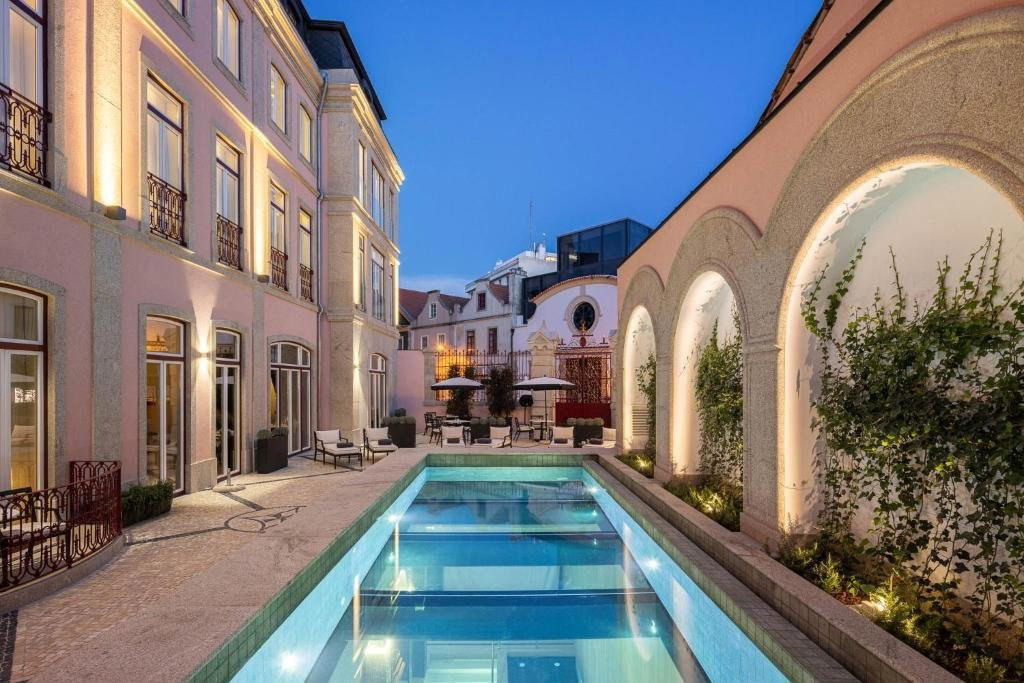
A Palacete on the Canal Waterfront
Aveiro arrives quietly. The canals are narrower than Venice's and the moliceiro boats are painted with scenes more folk-art than Renaissance, but the comparison the city invites, and which has followed it for well over a century, does capture something real about the place: waterfront architecture accumulated over generations, facades that layer Baroque, Moorish, and Art Nouveau influences without obvious hierarchy. Against that backdrop, the MS Collection Aveiro - Palacete Valdemouro occupies a specific and historically grounded position. Located on Rua José Estevão 50, it is not simply a converted aristocratic residence; it is the former home of Eça de Queiroz, the 19th-century novelist and diplomat often treated as Portugal's answer to Flaubert. That provenance shapes everything about how the building has been restored and presented, and it gives the hotel a literary seriousness that most heritage conversions in this part of Europe cannot claim.
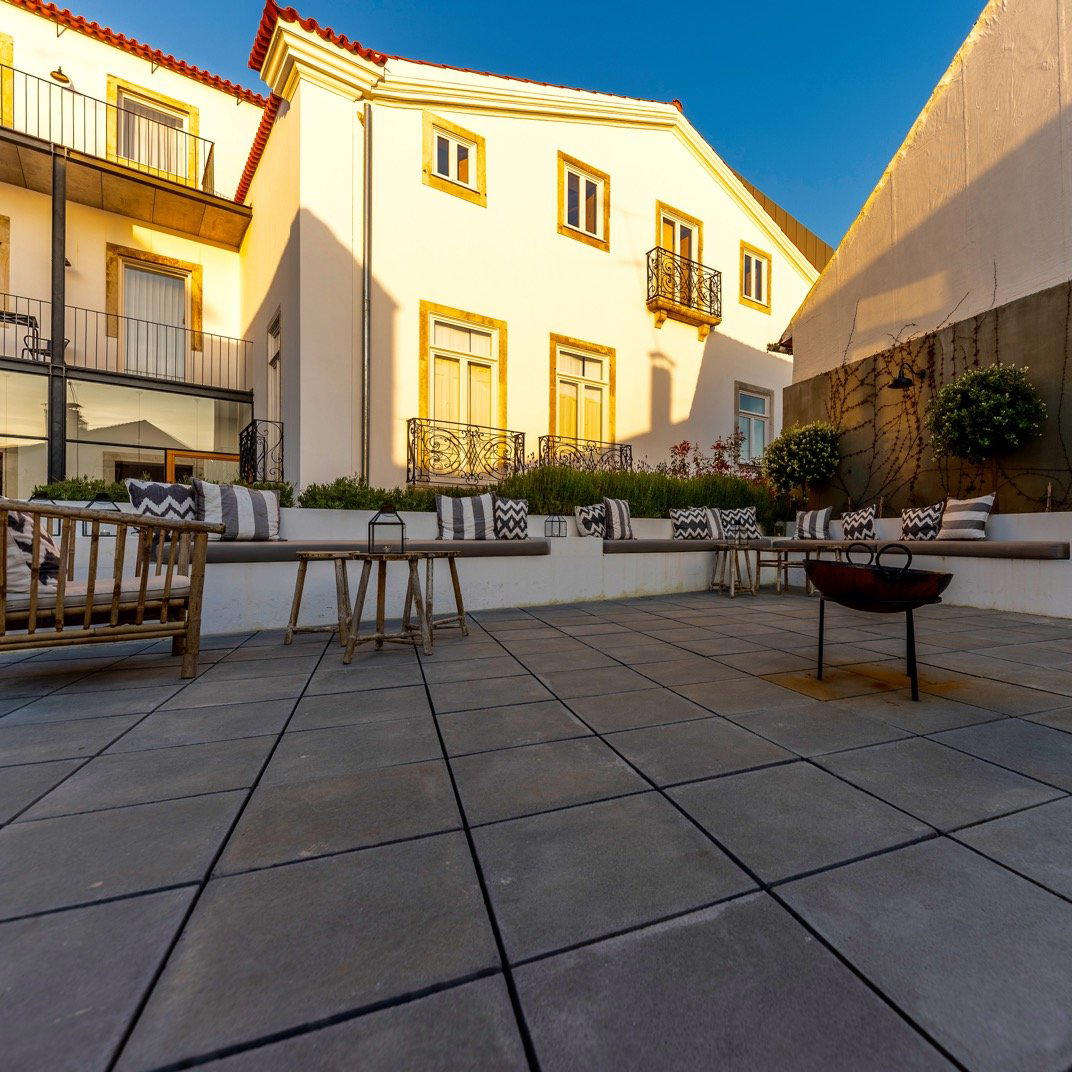
For visitors arriving on foot from the central canal district, the neoclassical facade signals the building's original ambitions clearly. The proportions are formal, the detailing restrained but precise, this is not the exuberant azulejo excess you find further north in Porto, but the measured grandeur of a property built to house a figure who moved between Lisbon drawing rooms and European diplomatic postings. What has been preserved across the restoration is the architectural logic of that era: coffered ceilings that demand a certain ceiling height, Moorish-inflected decorative details that reflect the 18th-century Portuguese fascination with Orientalist motifs, chandeliers scaled to the original room volumes. These elements were not imported for atmosphere; they are structural survivors.
How the Interior Layers Old and New
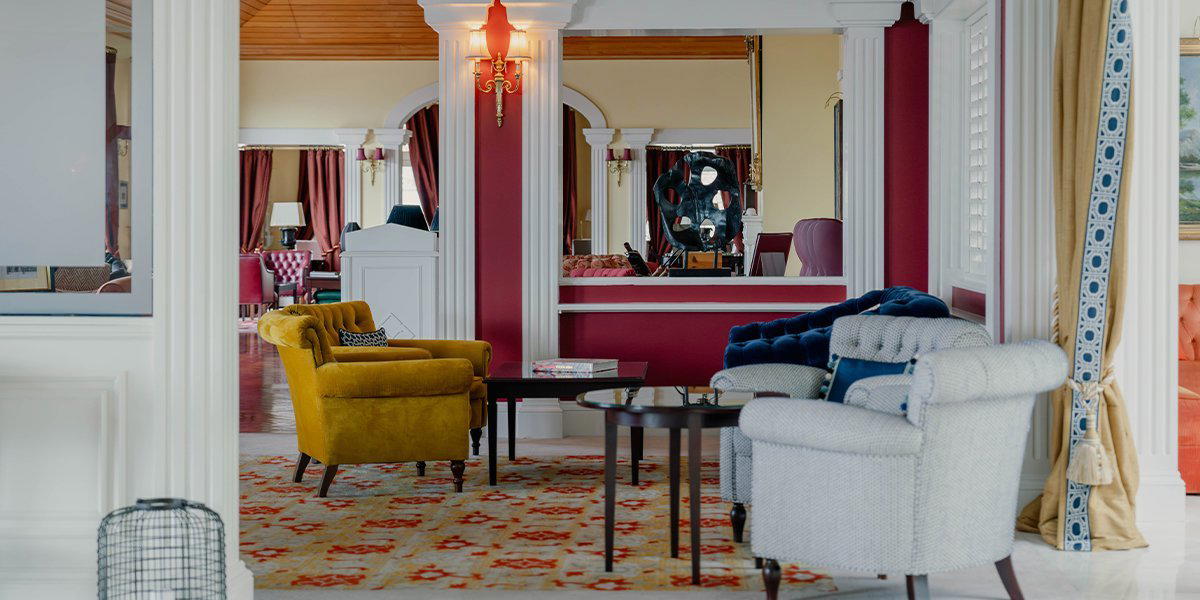
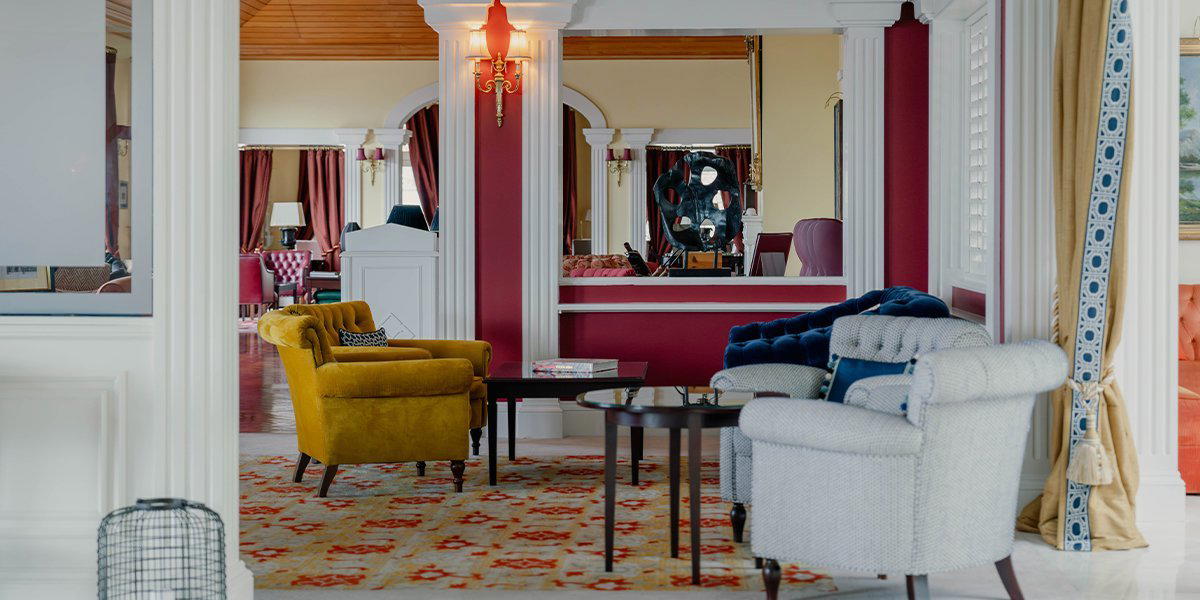
The calibration of heritage hotel restorations in Portugal has sharpened considerably over the past decade. The approach that once produced heavy-handed period recreations, reproduction furniture, overly literal historical staging, has given way to a more considered vocabulary: original architectural fabric preserved or carefully restored, contemporary furnishings introduced where the historical record is incomplete or impractical, and circulation spaces redesigned to meet modern hospitality standards without erasing their genealogy. The Palacete Valdemouro sits within this newer tradition. Polished parquet floors run through the interior alongside floor-to-ceiling drapery that reads as contemporary in weight and finish while respecting the scale of the original rooms. Art Deco detailing appears as a secondary layer, historically adjacent to the building's later uses and not jarring against the 18th-century bones.
The 39 rooms are named for characters from Eça de Queiroz's novels, a curatorial decision that gives the hotel intellectual texture without requiring guests to already know the literary references. A reading room serves as the formal expression of that theme, and writing quills fashioned into decorative objects appear through the property. Particularly spatially significant piece is the large Queiroz mural positioned by the courtyard swimming pool and café, where the literary framing and the leisure infrastructure meet. This is the kind of detail that distinguishes a restoration project with a genuine editorial point of view from one that simply monetizes square footage. For comparable examples of how Portuguese heritage properties have handled the tension between historical identity and contemporary comfort, Hotel Britania Art Deco in Lisbon and Bussaco Palace Hotel in Luso represent different positions on the same spectrum.
Aveiro's Five-Star Supply Problem
Aveiro is a city that has attracted considerable day-tripper traffic from Porto, roughly 70 kilometres to the north, without historically retaining overnight visitors at the upper end of the market. The absence of a five-star property until the Palacete Valdemouro conversion meant that travellers who wanted canal-town Portugal with serious accommodation infrastructure were effectively redirected elsewhere. That supply gap explains both the hotel's positioning and its pricing. At rates from $232 per night across 39 rooms, it occupies the accessible tier of Portugal's five-star market, well below the flagship InterContinental and Four Seasons properties in Lisbon, and priced to compete with design-led boutique hotels in secondary cities rather than against the country's established luxury circuit.
Ventozelo Hotel & Quinta in Ervedosa Do Douro, Casa da Calçada in Amarante, and Carmo's Boutique Hotel in Ponte de Lima each represent variations on the same thesis: that Portuguese travellers and informed international visitors will pay for well-restored architectural heritage outside the major cities if the product is coherent and the context is compelling. Aveiro, with its UNESCO-considered canal district and Art Nouveau building stock, had the context. The Palacete now provides the product.
For those building a wider Portugal itinerary, the hotel's position in the central coast makes it a practical stopping point between Porto and Coimbra, or as a base for the Ria de Aveiro lagoon. Visitors spending more than one night will find the city's covered market, the 16th-century Mosteiro de Jesus (which houses the national tile museum annex for the region), and the seafront at Costa Nova within direct reach.
Planning Your Stay
The property is located at Rua José Estevão 50, in Aveiro's historic centre and within walking distance of the main canal. With 39 rooms and five-star designation, it functions as Aveiro's reference luxury address rather than a small inn requiring months-ahead planning, but periods around the Festa da Ria and summer canal season (July and August) will see tighter availability. Rates from $232 per night make it accessible relative to comparable heritage properties in Porto or Lisbon, where architecturally equivalent hotels typically price considerably higher. M Maison Particulière Porto in Porto, Casa Mãe Hotel in Lagos, Craveiral Farmhouse in Sao Teotonio, Villa Epicurea in Sesimbra, Hospedaria da Pensão Agrícola in Conceicao E Cabanas De Tavira, Douro Valley - Casa Vale do Douro in Cambres, Q.ta da Corte in Valenca Do Douro, Casa das Penhas Douradas in Manteigas, Casas da Lapa, Nature & Spa Hotel in Seia, Masana Algarve in Albufeira, Anantara Vilamoura Algarve Resort in Quarteira, Bela Vista Hotel & Spa in Praia da Rocha, 3HB Faro in Faro, Boutique Hotel Teatro in Angra do Heroísmo, Colégio Charm House in Tavira, and Casa Velha do Palheiro in São Gonçalo. Aman Venice in Venice, Aman New York in New York City, and The Fifth Avenue Hotel in New York City each demonstrate what sustained commitment to architectural identity produces at the upper end of the market.
Comparison Snapshot
Comparable venues nearby, for context on price, style, and recognition.
| Venue | Cuisine | Price | Awards | Notes |
|---|---|---|---|---|
| MS Collection Aveiro - Palacete ValdemouroThis venue — the venue you are viewing | Historic boutique palace hotel | $$$$ | Michelin 1 Key | Not listed |
| GA Palace Hotel & SPA | Luxurious XIXth-century villa blending historic charm with modern luxury | $$$$ | Michelin 1 Key | Sé |
| Art Legacy Hotel Baixa-Chiado | Artistic boutique luxury hotel with individually themed rooms | $$$$ | Michelin 1 Key | Baixa |
| Santiago de Alfama - Boutique Hotel | Historic boutique in Lisbon's Alfama district | $$$$ | Michelin 1 Key | Castelo |
| Sublime Lisboa | Luxury boutique hotel blending understated elegance with personalized service in a grand historic townhouse. | $$$$ | Michelin 1 Key | Amoreiras |
| Palácio Ludovice Wine Experience Hotel | Historic palace transformed into a luxury wine experience hotel | $$$$ | Michelin 1 Key | Bairro Alto |
Recognition history
Dated appearances from independent guides and award organizations, with the underlying list record or original source where available.
Michelin 1 Key
Michelin
Small Luxury Hotels of the World Member
Small Luxury Hotels of the World
Continue exploring
More in Aveiro
Hotels in Aveiro
Browse all →
Bars in Aveiro
Browse all →
Restaurants in Aveiro
Browse all →

At a Glance
- Elegant
- Sophisticated
- Intimate
- Classic
- Romantic Getaway
- Anniversary
- Weekend Escape
- Historic Building
- Terrace
- Wi Fi
- Pool
- Spa
- Fitness Center
- Room Service
- Concierge
- Restaurant
- Wi Fi
- Pool
- Spa
- Fitness Center
- Room Service
- Concierge
- Restaurant
Elegant blend of historical charm and modern luxury with soundproofed rooms creating a quiet, pampered retreat.