Mateya Safari Lodge

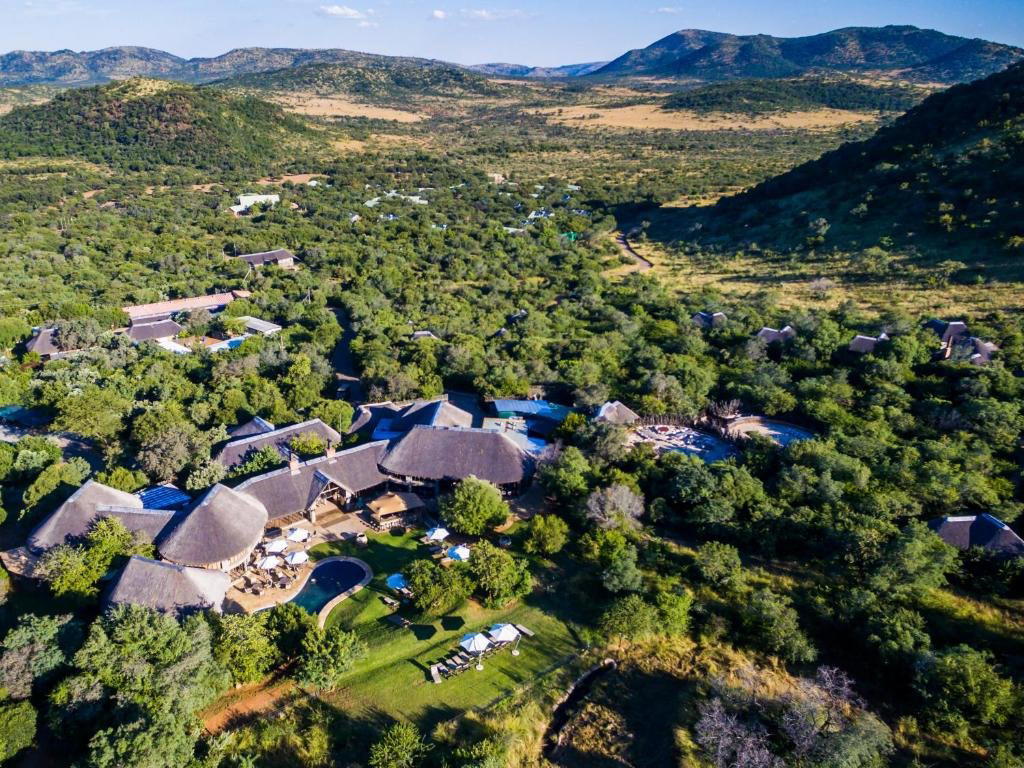
Mateya Safari Lodge occupies a rocky Gabbro hillside inside Madikwe Reserve, South Africa's malaria-free wilderness three and a half hours from Johannesburg. With just five suites and a maximum of ten guests, the lodge operates at a scale where sightlines, privacy, and personal attention are structural features rather than promises. The private wine cellar, star-dining format, and hillside rim-flow pools make it one of Madikwe's most architecturally considered small-capacity properties.
 Discover on Pearl
Pearl is the En Primeur Club membership app — saves, bookings, and concierge access live there. Same editors, same standards.
Architecture as Safari Strategy
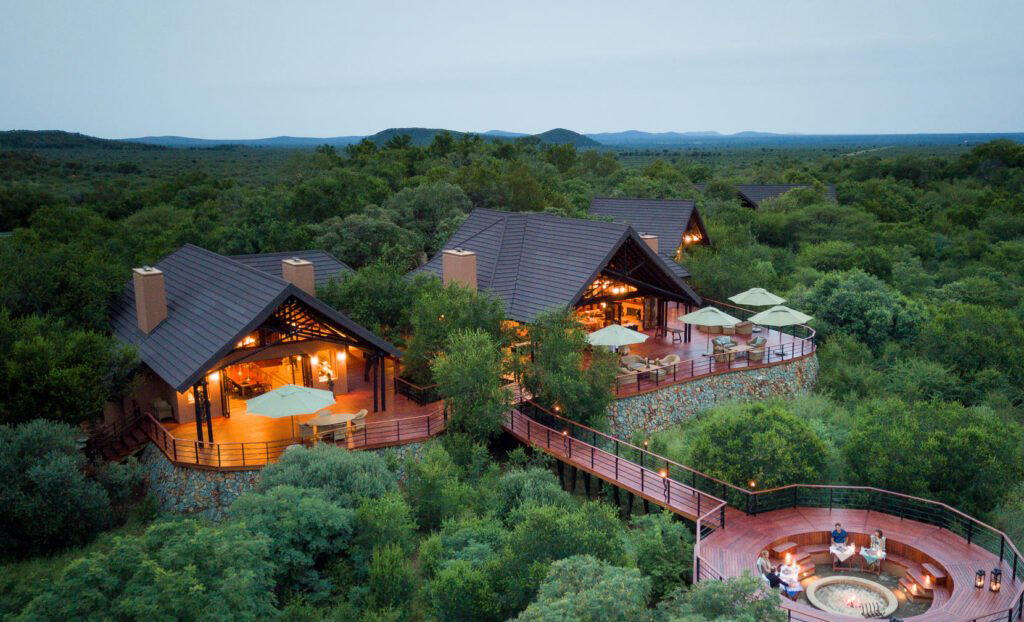
Mateya Safari Lodge is a 5-star hotel in Madikwe Reserve near Molatedi. Mateya Safari Lodge sits squarely in that tier. Positioned on a rocky Gabbro hill outcrop, the structure uses topography rather than enclosure to create the sense of separation from the surrounding reserve. Guests at this elevation look outward and downward across open plains and a waterhole below, rather than inward toward a resort core. That orientation is a deliberate design decision, and it shapes every aspect of the guest experience that follows.
The five thatched suites are arranged in a radial configuration around the hill, a layout that distributes privacy structurally. No suite looks onto another. Each opens onto its own rim-flow pool deck and a natural window sala, a shaded open platform that frames the waterhole and plains as a living panorama rather than a backdrop. The thatched form integrates with the hill's rock face rather than clearing it, which keeps the lodge's silhouette low against the granite and acacia of the Madikwe treeline. For a lodge with a maximum occupancy of ten guests, that architectural restraint signals a conscious decision to remain in proportion with its site.
Inside the Lodge's Social Architecture
Singita – Kruger National Park or andBeyond Ngala Safari Lodge carry significantly more guests across their lodge footprints. That compression at Mateya has architectural consequences: the dining room, lounge, and relaxation areas function as genuine gathering spaces rather than hotel-scale public rooms. The glass-walled main dining room and the lounge deck both offer uninterrupted panoramas of the reserve, meaning the view is built into the social architecture of the lodge rather than reserved for suites alone.
The wine cellar adds a second dining register. Available for private dining, it offers a contained, enclosed setting that reads as a shift in register from the open-plan lodge areas above. In the broader South African lodge context, a dedicated wine cellar at this scale is relatively uncommon. Properties like Babylonstoren and Bushmans Kloof Wilderness Reserve and Wellness Retreat integrate food and wine culture at property level, but they operate in the Winelands rather than bush environments. At Mateya, the cellar represents an unusual crossover of fine-dining infrastructure with safari lodge programming.
Dining Under Madikwe's Night Sky
Outdoor dining in safari lodge contexts exists on a spectrum from picnic-table pragmatism to genuine theatrical commitment. Mateya positions itself toward the latter end. The open-air fire format under the night sky draws the lodge's refined position into the dining experience directly: at this altitude and in a malaria-free reserve with low surrounding light pollution, the star visibility above Madikwe is substantial. Bush picnic lunches are available on request and accompany guided walking safaris, extending the dining format further into the reserve itself. The kitchen's stated approach draws on locally sourced produce and an African-influenced culinary direction.
The wellness centre, which includes cardiovascular gym equipment, a Jacuzzi, and body and facial treatments, completes the lodge's amenity set. The treatment programme is described as internationally trained, though the specific therapist certifications are not listed. In the context of small-capacity bush lodges, this level of wellness infrastructure is more typical of properties operating above a certain nightly rate threshold, placing Mateya in the upper segment of the Madikwe market. Comparable North West Province properties with similar wellness integration include Makanyane Safari Lodge and African Flair Boutique Safari Lodge.
Getting to Madikwe
Madikwe's malaria-free status is one of the reserve's most significant practical advantages over Limpopo and Mpumalanga alternatives, removing the need for prophylaxis that most Kruger-adjacent lodges require. The reserve sits in the North West Province, approximately three and a half hours by road from Johannesburg and 120 kilometres from Sun City. SA Airlink operates scheduled flights from Johannesburg and Cape Town into Sun City, with onward connections to the lodge. Mount Nelson, A Belmond Hotel, Cape Town or the Hyatt Regency Cape Town offer convenient stopover options. Johannesburg-based travellers might look at African Pride Melrose Arch, Autograph Collection or Hyatt Regency Johannesburg for an overnight before or after the reserve.
Game activities run through experienced rangers and trackers with specific knowledge of Madikwe's ecology and cultural history. Both game drives and guided walking safaris are available, the latter also incorporating bush lunch stops on request. andBeyond Kirkman's Kamp, andBeyond Phinda Forest Lodge, Abelana River Lodge, and andBeyond Phinda Private Game Reserve Lodges.
In Context: Similar Options
Comparable venues nearby, for context on price, style, and recognition.
| Venue | Cuisine | Price | Awards | Notes |
|---|---|---|---|---|
| Mateya Safari LodgeThis venue — the venue you are viewing | Contemporary luxury safari lodge with African heritage design; handcrafted mahogany furnishings and thatched architecture integrated into natural rocky outcrops. | $$$$ | 5-Star | |
| Hyatt Regency Cape Town | Modern urban hotel in historic district | $$$$ | 5-Star | Bo-Kaap |
| The Munro Boutique Hotel | Opulent eclectic luxury villa on 1.5 acres with lush gardens and rim flow pool | $$$$ | 5-Star | Houghton Estate |
| Vuyani Safari Lodge | Exclusive private safari lodge in vast game reserve | $$$$ | 4-Star | Moditlo Private Game Reserve |
| The Houghton Hotel Spa, Wellness and Golf | Contemporary luxury urban resort with striking glass and wooden beam architecture. | $$$$ | 5-Star | Houghton Estate |
| African Pride Melrose Arch, Autograph Collection® | Curator-designed luxury blending heritage and modern African dynamism | $$$$ | 5-Star | Birnam |
Continue exploring
More in Molatedi
At a Glance
- Romantic
- Quiet
- Elegant
- Sophisticated
- Intimate
- Scenic
- Honeymoon
- Romantic Getaway
- Anniversary
- Wellness Retreat
- Celebration
- Private Villa
- Destination Spa
- Panoramic View
- Private Dining
- Garden
- Waterfront
- Spa
- Fitness Center
- Wifi
- Room Service
- Concierge
- Business Center
- Laundry Service
- Wine Cellar
- Library
- Curio Shop
- Garden
Warm, intimate, and luxurious with soft natural lighting from floor-to-ceiling windows overlooking the savanna; fireplaces in suites create cozy evenings; main lodge features gallery-like spaces with curated African artwork creating an elegant, gallery-like atmosphere.