Ivory Tree Game Lodge

A Continent Winner for Luxury Game Lodge, Ivory Tree sits inside Pilanesberg National Park, one of the few Big Five reserves within easy reach of Johannesburg. The design language draws on the surrounding bushveld rather than fighting it, placing guests close to the rhythms of the park in a setting that reads as considered rather than conspicuous.
Pearl is the En Primeur Club membership app — saves, bookings, and concierge access live there. Same editors, same standards.
- Address
- Kgabo Drive, Bagatla Gate, Pilanesberg National Park, 0316, South Africa
- Phone
- +27 14 556 8100
- Website
- ivorytreegamelodge.com
- Directions
- Get directions
 Saves & bookings on Pearl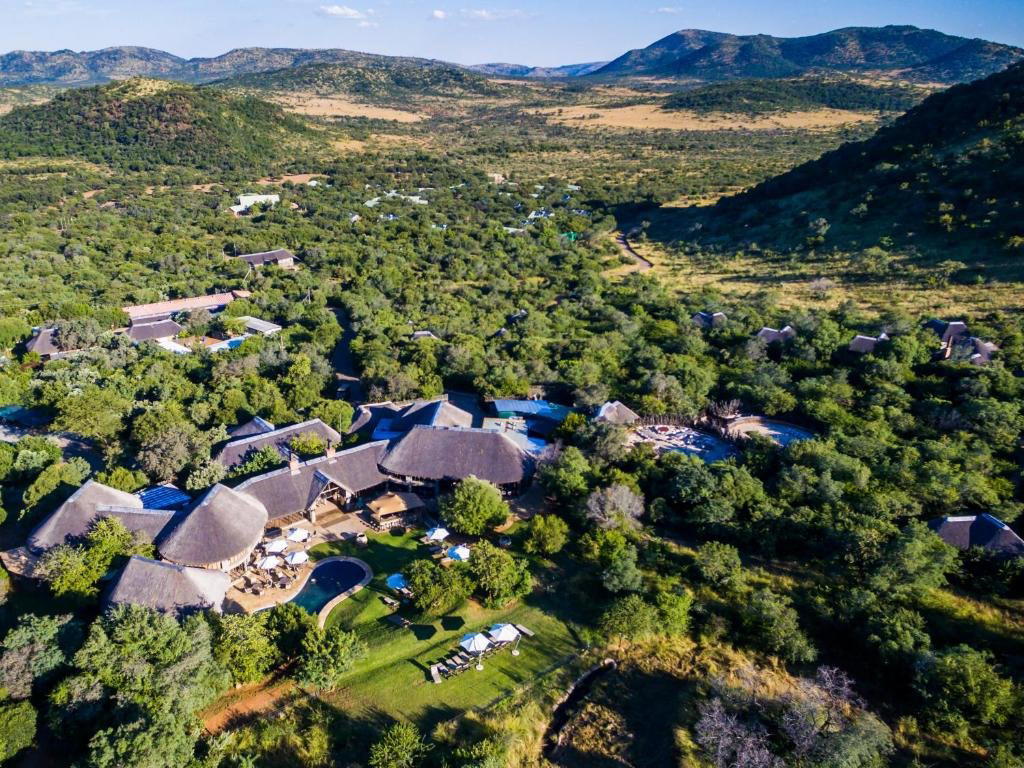
The Bush as Architecture
Pilanesberg occupies a geological anomaly: an alkaline ring complex formed by volcanic activity roughly 1.3 billion years ago, whose circular ridges and central basin create a contained wilderness that feels older and stranger than the savanna flatlands surrounding it. Within that basin, the park holds one of South Africa's more accessible Big Five populations, sitting roughly two hours from Johannesburg and positioned as a serious alternative to the longer-haul Kruger corridor for travellers with limited time. For context on how the wider Kruger experience compares, see our notes on Singita in Kruger National Park.
Ivory Tree Game Lodge sits at the Bagatla Gate entrance on Kgabo Drive, a location that functions as both a practical threshold and an architectural signal. Arriving through a park gate rather than a hotel porte-cochere means the transition from road to lodge happens inside the reserve itself. The surrounding vegetation does not give way to a manicured forecourt; the bush presses close, and the built elements of the property are arranged to acknowledge rather than override that fact. In South African game lodge design, this approach places Ivory Tree in the tradition of properties that treat the terrain as the primary design element and position structures as respectful insertions rather than impositions.
Design Logic in a Volcanic Basin
The prevailing design vocabulary at upper-tier South African game lodges has moved through several phases: the early colonial references of tented camps, the heavy thatch-and-stone vernacular of the 1990s boom, and, more recently, a quieter idiom that favours natural material palettes and sightline management over statement architecture. Properties of comparable standing, including Makanyane Safari Lodge in Thabazimbi and andBeyond Ngala Safari Lodge, have pursued this quieter register to varying degrees.
At Ivory Tree, the physical environment of Pilanesberg itself shapes the design brief in ways that distinguish the property from lodges built on flat private reserves. The volcanic ridgelines provide natural elevation changes that allow terraced or stepped layouts, creating separation between guest areas without requiring large footprints. Water features and rocky outcrops recur through the park, and lodge design that echoes those formations tends to feel grounded in place rather than transplanted from a hospitality catalogue. The result is a property where the aesthetic coherence comes less from a single signature gesture and more from the accumulated decisions of how to place a building when the landscape already has something to say.
Continent Recognition and What It Signals
Ivory Tree holds a Continent Winner designation for Luxury Game Lodge, a category award that positions it against peer properties across Africa rather than only within South Africa. That scope matters. The continent-level game lodge category includes properties in Botswana, Kenya, Tanzania, and Zimbabwe, markets where the benchmark for space, service density, and design ambition runs high. A Continent Winner designation in this field is a signal about competitive positioning, not merely local reputation.
For South Africa specifically, the luxury game lodge sector has bifurcated. One stream runs through the large, high-investment private reserve properties: Singita, andBeyond's Phinda Forest Lodge, and comparable operators who control significant land and price accordingly. The other stream includes properties inside national parks or smaller reserves, where the land concession model differs and the pricing and format reflect those economics. Ivory Tree operates within the latter structure, inside a national park rather than a private reserve, which means guests share the game-viewing area with other lodge vehicles under park authority protocols. That is a different experience from exclusive-traverse properties, and travellers choosing between them should understand the distinction before booking.
For comparison across South Africa's broader luxury accommodation options, properties such as Mount Nelson in Cape Town, Babylonstoren in Paarl, and Bushmans Kloof in Clanwilliam represent the design-led, fixed-location end of the luxury spectrum, while Ivory Tree belongs to the category where the game-viewing activity is the core product and the lodge design frames it.
Proximity, Access, and the Johannesburg Factor
The geographic argument for Pilanesberg is direct: the park is approximately two hours by road from Johannesburg and sits adjacent to Sun City, making it the accessible Big Five reserve for travellers connecting through O.R. Tambo International or spending limited nights in the interior. That accessibility is a design constraint as much as a selling point. Lodges in Pilanesberg serve a clientele that includes short-break travellers, families, and visitors combining a safari night with Johannesburg business travel, a different mix from the dedicated safari market that drives bookings at properties deeper in the Kruger ecosystem.
Ivory Tree's location at Bagatla Gate makes it direct to self-drive into the park from Johannesburg without requiring charter flights or internal transfers, a practical distinction from lodges in the Phalaborwa or Skukuza corridors. Travellers continuing to other regions of South Africa can connect onward to properties in the Cape winelands, such as Clouds Estate in Stellenbosch or Akademie Street in Franschhoek, as part of a broader itinerary.
For Johannesburg-based stays on either end of a Pilanesberg visit, African Pride Melrose Arch and Hyatt Regency Johannesburg cover the main business-district options, while Clico Boutique Hotel offers a smaller-scale alternative.
Planning Your Stay
Game activity in Pilanesberg follows patterns common to southern African bushveld reserves: early morning and late afternoon drives capture the animal movement, with midday hours well suited to the lodge itself. The Pilanesberg calendar splits roughly between a green season from November through April, when vegetation is dense and migratory bird species are present, and a dry winter season from May through September, when thinner cover makes game-viewing from vehicles more productive. Most travellers with Big Five priorities favour the dry months, though the green season offers a different visual register and typically lower occupancy at lodges across the park.
Bookings at lodges holding continent-level award recognition in South Africa tend to compress during peak dry-season windows, particularly the South African school holidays in July. Direct contact well ahead of those periods is advisable.
Comparable Venues
Comparable venues nearby, for context on price, style, and recognition.
| Venue | Cuisine | Price | Awards | Notes |
|---|---|---|---|---|
| Ivory Tree Game LodgeThis venue — the venue you are viewing | Luxurious safari lodge with thatched huts in a natural amphitheatre | $$$$ | 5-Star | Not listed |
| Morukuru Family Madikwe | Exclusive-use private safari houses combining colonial exteriors with contemporary luxury design, emphasizing privacy and personalized service in an off-grid eco-conscious setting. | $$$$ | 5-Star | Madikwe Game Reserve, North West Province |
| Shamwari Sindile | Contemporary luxury tented camp designed as a nomadic explorer's retreat reimagined for modern comfort, blending seamlessly with the African bushveld. | $$$$ | 5-Star | Sundays River Valley |
| Jock Safari Lodge | colonial safari lodge with historical heritage | $$$$ | 5-Star | Marloth Park |
| Palala Boutique Game Lodge & Spa | Luxury African bushveld lodge combining contemporary comfort with traditional design elements, positioned as an exclusive retreat for informed travelers. | $$$$ | 5-Star | Lephalale |
| Hyatt Regency Cape Town | Modern urban hotel in historic district | $$$$ | 5-Star | Bo-Kaap |
Recognition history
Dated appearances from independent guides and award organizations, with the underlying list record or original source where available.
World Luxury Hotel Awards WLHA Continent Winner
World Luxury Hotel Awards
Continue exploring
More in Pilanesberg
Hotels in Pilanesberg
Browse all →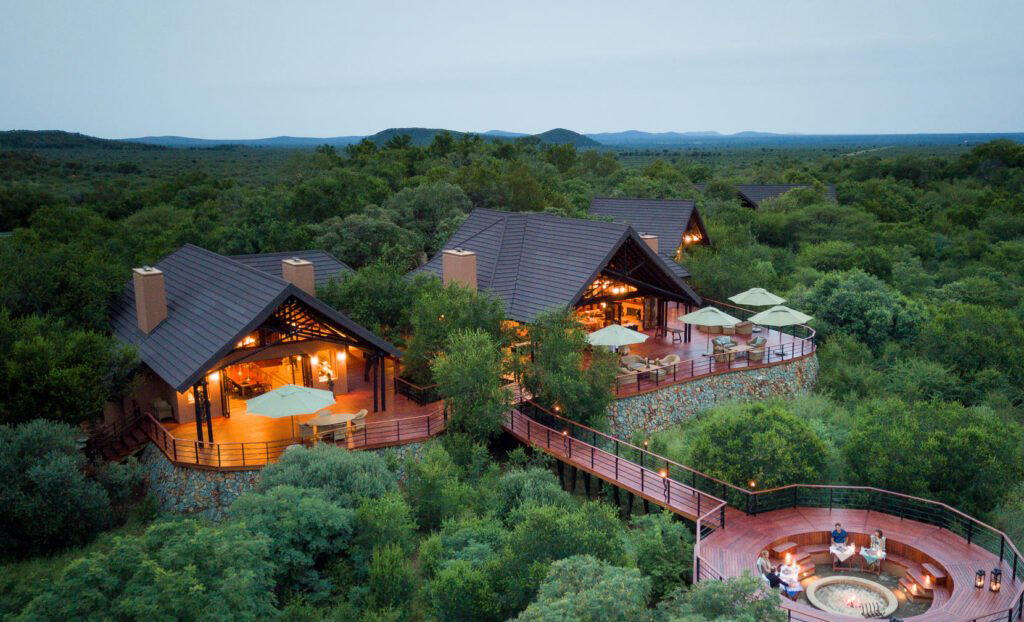
At a Glance
- Scenic
- Elegant
- Rustic
- Cozy
- Intimate
- Romantic Getaway
- Family Vacation
- Weekend Escape
- Group Retreat
- Panoramic View
- Pool
- Spa
- Room Service
- Concierge
- Mountain
- Garden
- Pool
- Spa
- Room Service
- Concierge
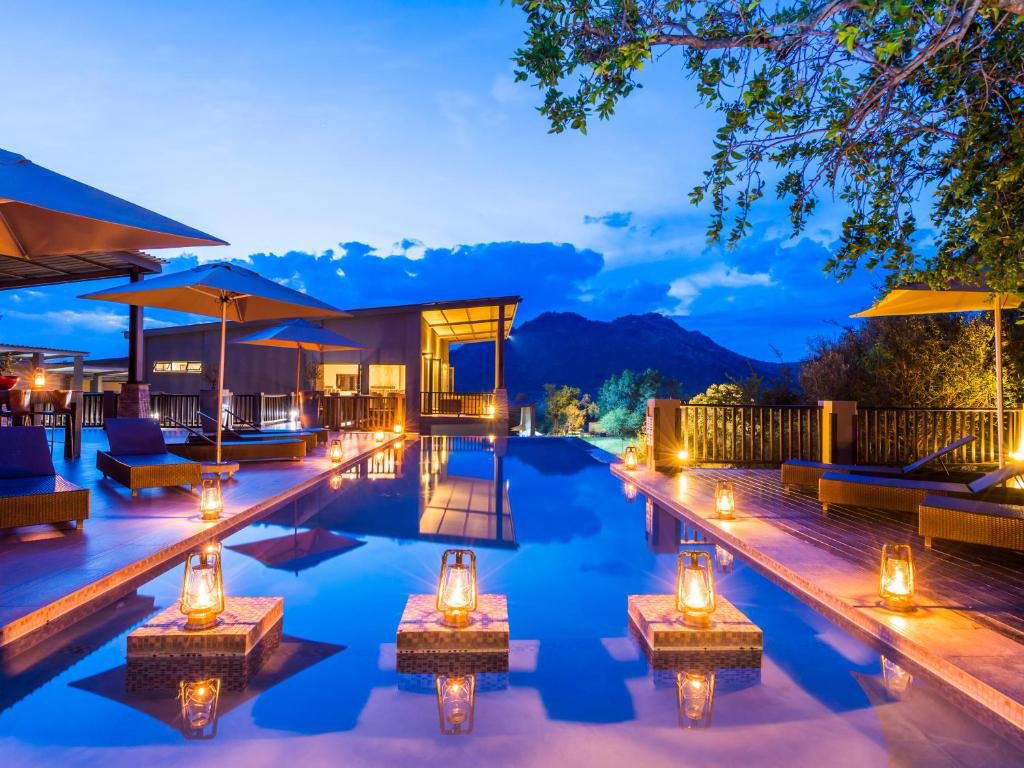
Tranquil and elegant bushveld atmosphere with warm earthy tones, cozy lounges using organic materials, and balmy African nights around the boma.