
Michelin Selected
Manoir Carpe Diem sits on Prins Karellaan in De Haan, one of the Belgian coast's few Belle Époque resort towns with a protected architectural heritage. Recognised in the Michelin Selected Hotels 2025 list, the property belongs to a small tier of Belgian coastal stays where historic fabric and considered hospitality take precedence over resort-scale amenities. It is the kind of address that rewards guests who arrive with an interest in place rather than programme.

Pearl is the En Primeur Club membership app, where members save venues, book tables and use the concierge.
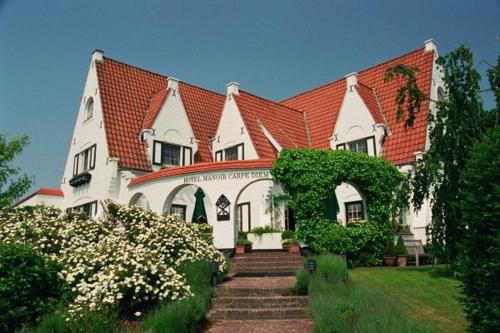
De Haan's Architectural Inheritance and Where Manoir Carpe Diem Sits Within It
De Haan is an anomaly on the Belgian North Sea coast. While most coastal municipalities rebuilt aggressively through the twentieth century, De Haan retained its late-nineteenth and early-twentieth century resort architecture under heritage protection, leaving the town with one of the most coherent concentrations of Belle Époque and Art Nouveau villa stock in the country. The result is a streetscape that reads more like a curated inventory of Flemish coastal romanticism than a working seaside town, gabled rooflines, verandas, ornamental ironwork, and the kind of mature tree cover that takes a century to establish. Prins Karellaan, where Manoir Carpe Diem sits, is part of this protected fabric.
Within that context, the manoir typology carries specific architectural weight. The Belgian manoir tradition draws from French country house forms adapted for the prosperous bourgeoisie of the late industrial period: moderate scale, decorative ambition, and a siting logic that prioritises garden depth over street presence. Staying in a property of this kind is as much an engagement with a regional building tradition as it is a hotel stay, and that distinction matters when assessing what De Haan offers relative to, say, the larger resort hotels in Ostend or the contemporary coastal inventory at Knokke-Heist.
Michelin Selection and What It Signals About the Property
Manoir Carpe Diem holds a place on the Michelin Selected Hotels 2025 list, the guide's designation for properties that meet a standard of quality and character without necessarily competing at the starred or palace tier. It does not imply the scope of a large hotel group or the amenity density of a resort, but it does signal that the property cleared Michelin's threshold for quality and coherence.
For the Belgian coast specifically, that distinction narrows the field considerably. The selection places Manoir Carpe Diem alongside properties recognised for character-led hospitality rather than branded consistency, a category that includes a small number of similarly scaled historic houses along the Flemish coast. Comparable properties in Belgium's Michelin-recognised tier, such as La Réserve in Knokke-Heist or Andromeda Hotel in Ostend, each occupy distinct positions within the coastal market, but the common thread is an emphasis on considered hospitality over scale.
Approaching the Property: What the Physical Setting Tells You
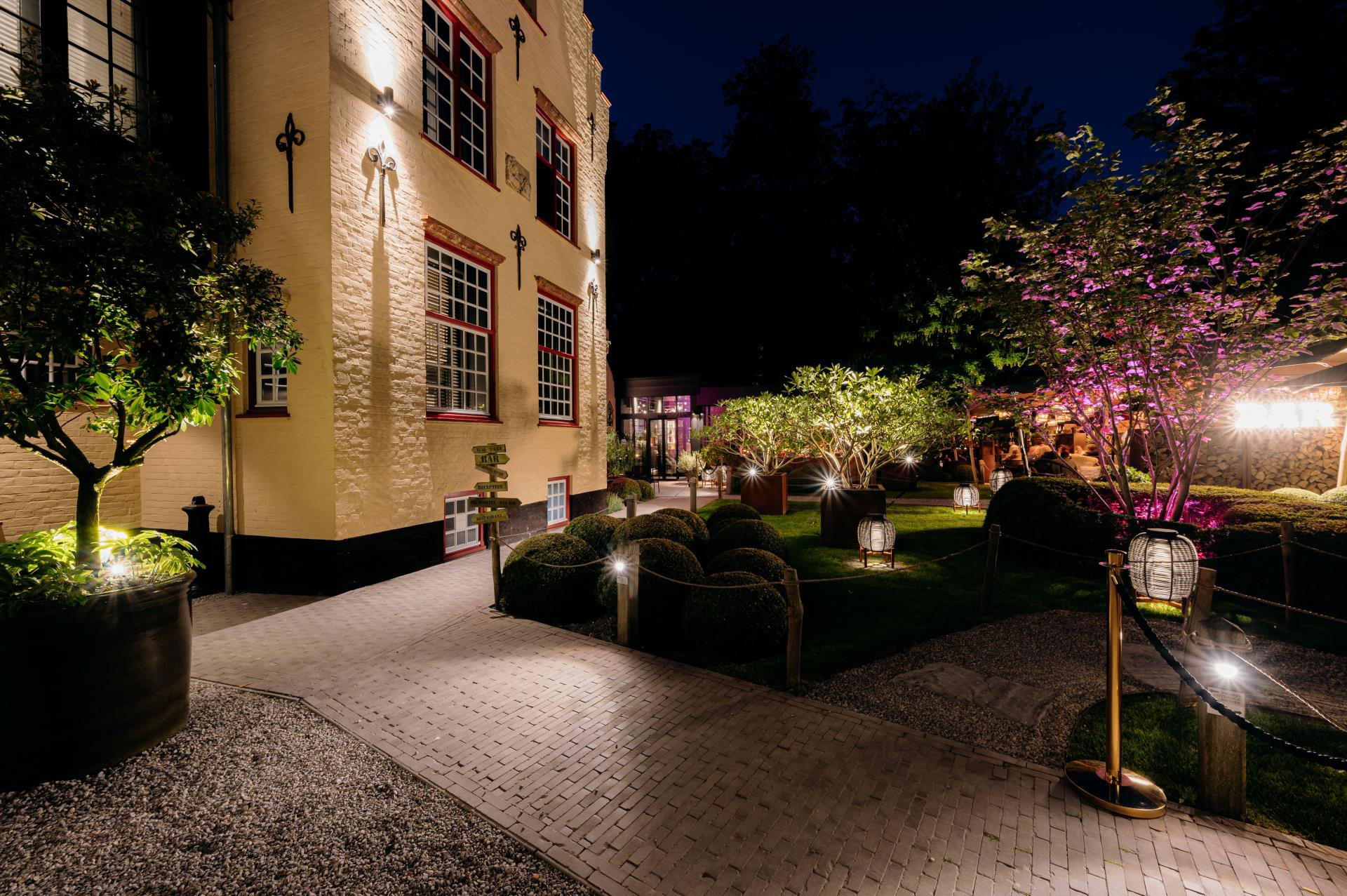
Arriving on Prins Karellaan, the immediate impression is of architectural restraint in dialogue with ornamental detail, a combination that defines the leading De Haan villas. The manoir format means the property reads from the street as a substantial private residence rather than a commercial hotel, which is precisely the point. De Haan's heritage zone enforces this quality across the neighbourhood, meaning the surrounding streetscape supports rather than undermines the property's character. This is not a historic building surrounded by later intrusions; it sits within a neighbourhood that has maintained its period coherence over more than a century.
That physical coherence is what separates De Haan from other Belgian coastal destinations where individual heritage properties operate as exceptions within an otherwise generic built environment. The town's protected status creates a consistent backdrop that amplifies rather than isolates the manoir's architectural identity.
The Belgian Coastal Stay: How De Haan Compares
Belgium's coast is compact, roughly 67 kilometres from the French border at De Panne to the Dutch border at Knokke-Heist, but the hospitality offer across that strip varies considerably by town. Ostend functions as the coast's commercial hub, with a correspondingly broader and more variable hotel stock. Knokke-Heist operates at the luxury end, with higher average rates and a gallery-and-boutique character that attracts a different demographic. De Haan occupies a quieter middle position: more architecturally coherent than Ostend, less commercially driven than Knokke-Heist, and consistently popular with guests who prioritise the town's village-scale calm over resort amenities.
Within that positioning, a Michelin-selected manoir on a heritage street is a specific offer. It sits above the standard coastal hotel tier and below the full-service luxury resort bracket, in the space where architecture, scale, and personal hospitality carry more weight than branded facilities. Guests considering alternatives along the coast might also look at C-Hotels Silt in Middelkerke for a contemporary coastal counterpoint, though the architectural and character propositions differ significantly.
For those extending a Belgian trip inland, the country's Michelin-selected property roster extends well beyond the coast. Manoir de Lébioles near Liège offers a comparable historic house format in an Ardennes setting, while Le Château de Mirwart and Château Beausaint in La Roche-en-Ardenne represent the castle-hotel variant of the same character-led category. In Bruges, Hotel De Orangerie provides a useful urban reference point for the historic conversion approach. Brussels options in the recognised tier include Juliana Hotel Brussels and Le Louise Hotel. For design-led smaller properties, Ganda Rooms and Suites in Ghent and Villa Copis in Borgloon both operate in the boutique-historic category. Further afield, Botanic Sanctuary Antwerp and Kasteelhoeve de Kerckhem in Wijer extend the regional picture, as do Hof te Spieringen in Vollezele, Ariane in Ypres, Le Sanglier des Ardennes in Durbuy, Louis1924 in Dilbeek, NE5T Hotel and Spa in Namur, Hôtel des Bains in Robertville, and Le Florentin in Florenville.
Planning a Stay
De Haan is accessible by coastal tram, the Kusttram, which runs the full length of the Belgian coast and connects to Ostend with its mainline rail links to Brussels and Ghent. The tram stop for De Haan centre is within walking distance of Prins Karellaan, making car-free arrival direct. The town's peak season runs from July through August, when the heritage villas fill and the beach draws significant day-tripper traffic; late spring and early autumn offer a quieter rhythm that suits the manoir's character more naturally. Given the limited room inventory implied by the property's scale, advance booking is advisable for summer weekends. For additional context on the town's dining and broader offer, see our full De Haan guide.
Quick Comparison
Comparable venues nearby, for context on price, style, and recognition.
| Venue | Cuisine | Price | Awards | Notes |
|---|---|---|---|---|
| Manoir Carpe DiemThis venue (the venue you are viewing) | Belle Epoque manor house with country house ambience | $100–200 | Michelin Selected | Not listed |
| Hotel Les Nuits | urban boutique design hotel | Not listed | 4-Star | Historical Center |
| Tafelrond - The Fourth | Historic luxury hotel in neogothic building with modern additions | Not listed | Michelin Selected | Grote Markt |
| Main Street Hotel | Quirky boutique hotel with individually themed rooms and curated curiosities; positioned as a charming alternative to standard accommodations. | $100–200 | Michelin Selected | Ypres city center |
| Quay 17 | Historic townhouse B&B with modern updates | Not listed | Michelin Selected | Historic Centre |
| C-Hotels Silt | Contemporary beachfront design hotel with minimalist architecture inspired by coastal forms and integrated into an artificial dune landscape. | $100–200 | Michelin Selected | Middelkerke |
Recognition history
Dated appearances from independent guides and award organizations, with the underlying list record or original source where available.
Michelin Selected
Michelin
Continue exploring
More in De Haan
Hotels in De Haan
All hotels in De Haan →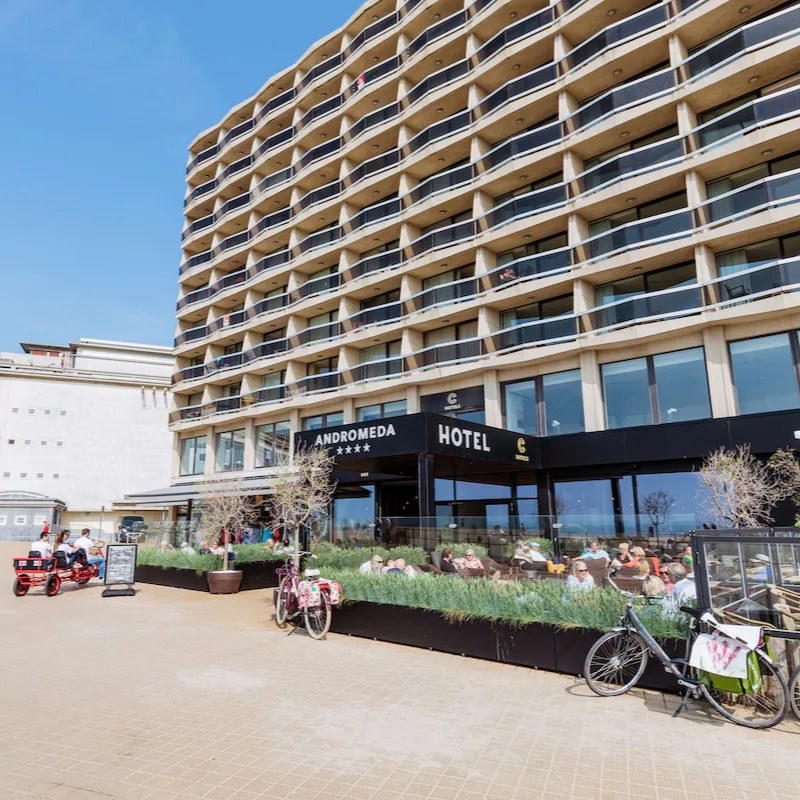
Bars in De Haan
Browse all →
Restaurants in De Haan
All restaurants in De Haan →
Wineries in De Haan
Browse all →
Details
- Romantic
- Quiet
- Elegant
- Cozy
- Classic
- Romantic Getaway
- Honeymoon
- Weekend Escape
- Beachfront
- Garden
- Terrace
- Wi Fi
- Pool
- Garden
- Room Service
- Concierge
- Bicycle Rental
- Golf Course
- Garden
- Elevator
Warm, homely environment with refinement and romance, featuring spacious rooms with British touches, cozy seating areas, and a peaceful garden setting.